Meaning and everyday life
Humility is the human value concerned with recognising one's relative insignificance within the larger scheme of things and accepting that personal interests, achievements and importance exist within a wider context. In Shalom Schwartz's refined Theory of Basic Human Values, it represents a motivation to maintain a modest understanding of one's place in the world rather than assuming exceptional entitlement or superiority. People who strongly prioritise Humility may be reluctant to place themselves above others, seek excessive recognition or regard their own interests as inherently more important than those of the wider community. The defining motivation is not self-disparagement, but a willingness to recognise the limits of personal importance.
Humility can be expressed through modest conduct, an absence of self-importance and a willingness to acknowledge the contributions of other people. Someone who strongly values it may be uncomfortable with excessive personal praise, reluctant to claim special privileges or inclined to regard their accomplishments as part of a broader collective effort. They may appreciate the contributions of colleagues, predecessors or institutions that made their achievements possible, rather than interpreting success exclusively as evidence of personal superiority. Nevertheless, Humility should not be confused with an absence of ambition or confidence. An individual can recognise their abilities accurately, pursue demanding objectives and occupy a position of considerable authority while maintaining a relatively modest conception of their personal significance.
Related values and distinctions
Schwartz's refined theory introduced Humility as a distinct value after earlier research instruments had included aspects of modesty within the broader Tradition category. The refined framework recognised that accepting one's limited importance within a larger social or moral order was not identical to preserving inherited customs. Tradition concerns respect for established cultural and religious practices, whereas Humility concerns an individual's understanding of their relative position within the world. Someone may be deeply humble without attaching particular importance to conventional traditions, just as another person may strongly defend traditional institutions while believing themselves entitled to exceptional admiration or authority.
Within the refined circular model, Humility occupies a position between Conformity–Interpersonal and Benevolence–Dependability, near the boundary between Conservation and Self-Transcendence. This location reflects its relationship with restraint, consideration for others and the acceptance of obligations that extend beyond immediate personal interests. It contrasts particularly with motivations involving personal superiority, dominance and the elevation of one's own status. However, these relationships should not be interpreted as rigid oppositions. A person may desire professional achievement or exercise authority while also recognising that their personal importance is limited and that other people's contributions deserve respect.
An important distinction exists between Humility and low self-esteem. Someone with low self-esteem may doubt their abilities, feel inadequate or experience persistent insecurity about their personal worth. Humility, by contrast, does not require negative self-evaluation. A humble person may possess considerable confidence and recognise genuine accomplishments without regarding them as justification for superiority over others. Similarly, Humility is not equivalent to submissiveness, passivity or an inability to defend oneself. Someone may be willing to challenge authority, express strong convictions or resist unfair treatment while maintaining a modest understanding of their own significance.
Humility can also be distinguished from Benevolence and Universalism. Benevolence concerns the welfare of familiar others, while Universalism emphasises concern for humanity and the natural world more broadly. Humility instead concerns the individual's relationship to their own importance. These motivations can reinforce one another because recognising the limits of one's personal significance may make it easier to consider the needs and perspectives of others. Nevertheless, someone may behave generously because helping others is important to them without being particularly modest, while another person may display genuine Humility without being unusually active in humanitarian or interpersonal pursuits.
Everyday decisions
In everyday life, Humility may influence how people respond to success, criticism, authority and disagreement. Consider two accomplished researchers discussing an important discovery. One may emphasise their personal brilliance and the exceptional significance of their contribution, while the other acknowledges the work of colleagues, earlier discoveries and the possibility that their conclusions may eventually require revision. Both individuals may possess considerable confidence in their abilities, but the second response more clearly illustrates an emphasis on Humility. The distinction concerns the interpretation of personal achievement rather than the achievement itself.
Higher and lower priorities
A strong emphasis on Humility may encourage openness to correction, recognition of other people's contributions and resistance to exaggerated self-importance. However, difficulties can arise if modesty becomes excessive self-effacement or prevents someone from acknowledging legitimate accomplishments and advocating for their interests. Conversely, a person who places relatively little importance on Humility may be comfortable asserting their superiority, pursuing recognition or presenting their achievements in particularly emphatic terms. This does not automatically establish that they are dishonest, narcissistic or incapable of respecting others. Their priorities may simply place greater emphasis on achievement, influence or personal distinction.
Ultimately, Humility concerns how individuals understand their own importance within a world that extends beyond their immediate interests and accomplishments. It is not a measure of weakness, submission or personal inadequacy, but a motivational orientation involving modesty and the recognition that one's place in the wider scheme of things is limited.
Illustrative figures
Higher Humility
Fictional:
 Samwise Gamgee (The Lord of the Rings) — returns to the Shire and ordinary family life after acts of extraordinary courage, later serving his community as mayor. The story pairs remarkable achievement with an unshowy sense of service, presenting Humility as compatible with real responsibility.
 Uncle Iroh (Avatar: The Last Airbender) — runs a tea shop in Ba Sing Se and guides Zuko without constantly asserting his old status as a celebrated general. His considerable ability and experience coexist with an unassuming manner, making Humility compatible with real influence in his portrayal.
 Atticus Finch (To Kill a Mockingbird) — keeps quiet about his skill as a marksman, so Scout and Jem are surprised to discover how capable he is. The episode pairs considerable ability with little desire to advertise it, showing how Humility can coexist with competence.
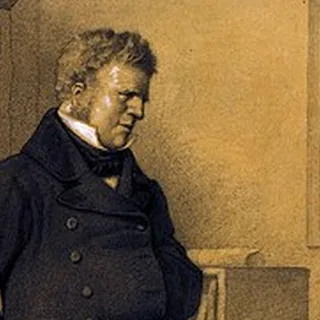 Jean Valjean (Les Misérables) — risks losing his respected position as mayor by revealing his identity at Champmathieu's trial to prevent an innocent man's conviction. His willingness to put someone else's welfare ahead of his own standing contrasts with treating social distinction as a measure of greater personal worth.
Nonfictional:
 Francis of Assisi — left his father's wealthy household, adopted a life of material simplicity and instructed his followers to live without personal property. By making simplicity an ongoing practice, he placed spiritual service ahead of material status and personal grandeur.
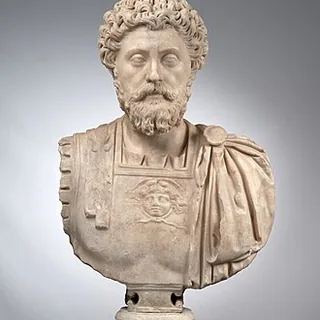 Marcus Aurelius — in his private Meditations, repeatedly considered how quickly individual lives and reputations pass within the scale of time and nature. These reflections place personal achievement in a wider context, illustrating Humility as a modest view of one’s importance rather than a denial of ability.
 Abdul Sattar Edhi — continued hands-on welfare work as his foundation became widely recognised, while living simply in a small room connected to its dispensary. His modest daily circumstances contrast with the personal luxury or grandeur that public recognition can make possible.
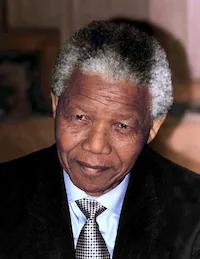 Nelson Mandela — in a 1993 address to the British Parliament, credited many South Africans and supporters with helping bring the country closer to freedom. This public framing shares achievement across a movement rather than presenting it as exclusively his own, illustrating Humility alongside his public stature.
Lower Humility
Fictional:
 Gaston (Beauty and the Beast) — boasts of his strength and hunting prowess and expects the villagers to celebrate him as the most impressive man in town. The story turns this self-praise into comedy, offering a fictional contrast with Humility’s modest view of personal importance.
 Gilderoy Lockhart (Harry Potter) — publishes accounts of heroic adventures that he has stolen from other wizards, then promotes himself as an expert. His celebrity depends on claiming exceptional credit for others’ work, a clear fictional contrast with Humility’s resistance to self-importance.
 Homelander (The Boys) — presents himself as the nation’s unrivalled superhero and expects public adulation, while using his position to demand deference from others. The series portrays him placing his own importance above those around him, a stark fictional contrast with Humility.
 Lord Farquaad (Shrek) — plans to gain kingship by marrying Princess Fiona and stages a tournament to find someone to rescue her. His demand for status and deference makes personal importance central to his comic portrayal, in sharp contrast with Humility.
Nonfictional:
 Louis XIV — placed the monarch at the centre of court life through royal portraits, Sun King symbolism and tightly ordered ceremonies at Versailles. These public displays contrast with Humility’s modest view of personal importance; the example concerns royal presentation and political symbolism, not his private outlook.
 Napoleon Bonaparte — used imperial portraits, ceremony and symbols of historical greatness to place his own authority at the centre of public life. This self-elevating presentation contrasts with modesty, while also serving the political purposes of imperial government.
 Gabriele D'Annunzio — cultivated a public identity as an exceptional poet-soldier and created the grand Vittoriale complex as a monument to his life and Italy's wartime exploits. His carefully fashioned public persona offers a historical contrast with Humility's modest view of personal importance.


