Meaning and everyday life
Tradition is the human value concerned with respecting, preserving and maintaining customs, beliefs and practices inherited from previous generations. Within Schwartz's Theory of Basic Human Values, it represents the importance individuals attach to cultural continuity, established rituals and the institutions that provide a connection with their community's history. People who strongly prioritise Tradition may find meaning in familiar customs, religious observances, family practices or long-standing cultural arrangements. The underlying motivation is not simply resistance to change, but the belief that inherited ways of living can possess significance and deserve preservation.
Tradition can provide individuals with a sense of belonging, identity and continuity across time. Family celebrations, religious ceremonies, established social practices and cultural customs can connect people with earlier generations and reinforce shared experiences. Someone who strongly values Tradition may regard these connections as important even when the practices themselves offer little immediate practical advantage. Their significance may arise from what they represent: respect for ancestors, community membership, historical continuity or participation in something larger than the individual. Tradition can therefore be personally meaningful without necessarily involving an elaborate philosophical or political commitment.
Related values and distinctions
The distinction between Tradition and Conformity is particularly important. Both concern expectations that originate beyond the individual, but they differ in the nature of those expectations. Conformity primarily involves regulating behaviour in relation to rules and the expectations of people within one's social environment. Tradition concerns practices and beliefs inherited from cultural, religious or historical institutions. Someone may conform to a workplace dress code without attaching any special value to its history, while another individual may preserve a family ritual even when it is no longer widely expected. In Schwartz's original circular model, Tradition and Conformity were placed particularly close together because of their shared emphasis on subordinating personal inclinations to socially established expectations.
Tradition belongs to the broader Conservation orientation and is closely associated with Security, since familiar customs and established institutions can provide a sense of stability. It is more distant from Stimulation and Self-Direction, which emphasise novelty, exploration and independence. These tensions become apparent when inherited expectations restrict personal choice or when social changes threaten practices that individuals consider meaningful. A person may value cultural continuity while also appreciating technological innovation or intellectual freedom, but particular decisions can force them to weigh those priorities against one another.
Higher and lower priorities
A strong emphasis on Tradition may encourage respect for heritage, a sense of historical connection and commitment to shared practices. However, difficulties can arise when inherited customs are preserved without sufficient consideration of whether they remain appropriate or fair. Conversely, someone who places relatively little importance on Tradition may prefer to evaluate ideas and institutions according to their present usefulness rather than their age or historical authority. This does not necessarily mean they dislike their culture, reject family relationships or possess no appreciation of history.
The refined nineteen-value theory retains Tradition as a single category, while distinguishing the neighbouring value of Humility, which concerns accepting one's relative insignificance within the wider scheme of things. Tradition itself remains focused on preserving inherited cultural, family and religious practices.
Illustrative figures
Higher Tradition
Fictional:
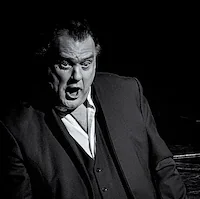 Tevye (Fiddler on the Roof) — turns to religious observances and inherited community customs as anchors while his daughters make choices that unsettle them. He tries to preserve their meaning while adapting to family change, capturing the pull between continuity and new circumstances.
 Robert Crawley, Earl of Grantham (Downton Abbey) — regards Downton's inherited household, customs and family name as obligations to carry forward. His attachment to the estate and established social order illustrates the importance he places on continuity, even as the series shows him adapting to a changing world.
Nonfictional:
 Edmund Burke — argued in Reflections on the Revolution in France that inherited institutions and customs embody accumulated experience and should not be discarded lightly. His defence of continuity and political inheritance makes Tradition a central theme of his thought.
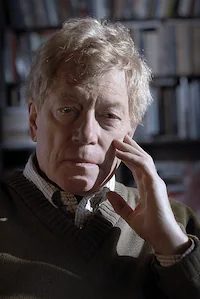 Roger Scruton — argued that customs and institutions carry accumulated meaning and should be conserved through stewardship, themes he developed in his writing on conservatism. His philosophical work places cultural continuity and inherited practices at the centre of his public argument.
Lower Tradition
Fictional:
 Jo March (Little Women) — resists the domestic future conventionally expected of women and seeks a life shaped by writing and independence, while remaining deeply attached to her family. Her desire to make her own choices challenges inherited gender expectations without requiring her to reject familial bonds.
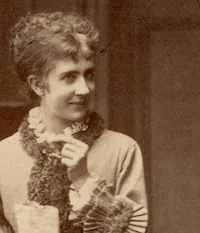 Nora Helmer (A Doll's House) — leaves her husband and children at the play's end to educate herself and understand her own life, rejecting the domestic role prescribed for her. Her departure challenges inherited expectations about marriage and women's obligations in the home.
Nonfictional:
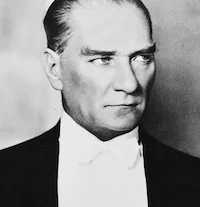 Mustafa Kemal Atatürk — led a government that replaced major Ottoman-era institutions with a secular republic, reforming education, law, language and public practice. These changes made deliberate breaks with inherited political and social arrangements part of his state-building programme.


