Meaning and everyday life
Benevolence is the human value concerned with preserving and improving the welfare of people with whom an individual has frequent personal contact. In Schwartz's Theory of Basic Human Values, it represents motivations involving care, loyalty, helpfulness, dependability and the maintenance of supportive relationships. People who strongly prioritise Benevolence may place considerable importance on the wellbeing of family members, friends, colleagues and others within their immediate social environment. The defining motivation is concern for familiar others, rather than the pursuit of personal recognition or the welfare of humanity in general.
Benevolence plays a central role in maintaining close relationships because personal bonds depend partly on trust, cooperation and a willingness to respond to another person's needs. Someone who strongly values Benevolence may be motivated to support a friend during difficult circumstances, fulfil responsibilities towards relatives or help colleagues even when doing so brings little personal advantage. Their satisfaction may come from knowing that people they care about are safe, supported and treated considerately. However, the value does not necessarily imply unlimited generosity or a willingness to sacrifice every personal interest. Someone can be deeply concerned about others while maintaining boundaries and recognising competing obligations.
Finer distinctions
Schwartz's refined theory distinguishes Benevolence–Caring and Benevolence–Dependability. Benevolence–Caring concerns devotion to the welfare of familiar others, while Benevolence–Dependability involves being a reliable and trustworthy member of one's group. These motivations are closely related but not identical. Someone may express considerable warmth and compassion yet struggle to fulfil commitments consistently, while another individual may be exceptionally dependable without being particularly expressive or emotionally demonstrative. The distinction highlights the difference between wanting to care for others and attaching importance to being someone upon whom others can rely.
Related values and distinctions
Benevolence is closely associated with Universalism because both belong to the broader Self-Transcendence orientation and involve concern beyond immediate self-interest. Their difference concerns the scope of that concern. Benevolence emphasises people within one's immediate social world, whereas Universalism extends to unfamiliar individuals, humanity more generally and the natural environment. These motivations often reinforce one another, but they can conflict when protecting the interests of loved ones disadvantages others. For example, someone may feel a strong obligation to provide opportunities for a family member while also recognising the importance of treating unrelated applicants fairly.
High Benevolence should not be confused with high Agreeableness in the Big Five or with an absence of selfish behaviour. Agreeableness describes habitual interpersonal tendencies, whereas Benevolence concerns the importance attached to caring for familiar others. Someone may strongly value loyalty and family responsibility while behaving assertively or appearing emotionally reserved. Conversely, an agreeable individual may behave pleasantly in social situations without attaching exceptional importance to enduring personal obligations. Values and personality traits provide related but different kinds of psychological information.
Higher and lower priorities
A strong emphasis on Benevolence may encourage supportive relationships, loyalty and dependable cooperation, although difficulties can arise when concern for others leads someone to neglect their own needs or tolerate unreasonable demands. People who place relatively little importance on Benevolence may prioritise independence, achievement or other goals, but a low value score does not establish that they are cruel, incapable of attachment or indifferent to suffering. The distinction concerns how strongly the welfare of familiar others influences their overall priorities.
Illustrative figures
Higher Benevolence
Fictional:
 Samwise Gamgee (The Lord of the Rings) — repeatedly shares food, keeps watch and stays beside Frodo through a dangerous journey, finally carrying him when he can no longer continue. His practical care places a close companion’s welfare first, a clear expression of Benevolence.
 Molly Weasley (Harry Potter) — protects her children throughout the series and steps between Ginny and Bellatrix in the Battle of Hogwarts. Her response expresses Benevolence towards close family in a crisis, putting their immediate safety before her own, even in danger.
Nonfictional:
 Fred Rogers — addressed young viewers directly in a calm, respectful style, inviting conversation about feelings, friendship and everyday worries. His sustained child-centred work on television offers a public example of care and dependability, both closely tied to Benevolence.
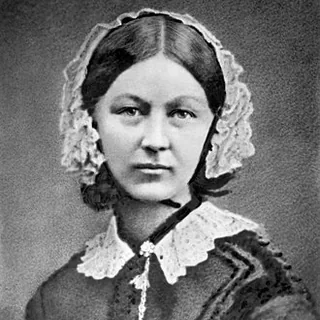 Florence Nightingale — organised nurses at Scutari during the Crimean War, where she improved care for soldiers in overcrowded hospitals and used records to press for better conditions. These actions addressed the welfare of people entrusted to her care, a concrete form of Benevolence.
Lower Benevolence
Fictional:
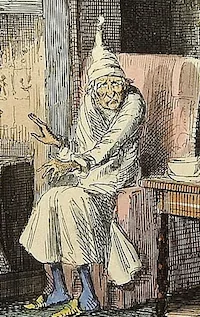 Ebenezer Scrooge (A Christmas Carol, before his transformation) — refuses a request to aid poor people, treats his clerk Bob Cratchit’s need for heat as an expense, and regards Christmas as a nuisance. Dickens shows how little attention Scrooge initially gives to others’ hardship, a sharp contrast with Benevolence.
 Charles Montgomery Burns (The Simpsons) — in “Last Exit to Springfield”, tries to remove plant workers’ dental coverage during contract negotiations, treating an employee benefit as an avoidable cost. The episode makes his disregard concrete: the welfare of his employees carries little weight in his decisions.
Nonfictional:
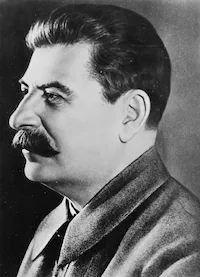 Joseph Stalin — presided over the show trials and executions of former Bolshevik colleagues such as Zinoviev, Kamenev and Bukharin. Those documented attacks on people from his own political circle form an extreme historical contrast with care, loyalty and concern for familiar others.


