Meaning and everyday life
Universalism is the human value concerned with understanding, tolerance, equality and the protection of people and the natural world. Within Schwartz's Theory of Basic Human Values, it represents concern extending beyond one's immediate relationships to include unfamiliar individuals, different communities, humanity more generally and the environment. People who strongly prioritise Universalism may regard fairness, social justice, respect for differences and the reduction of unnecessary suffering as important guiding principles. Its defining feature is the breadth of concern involved, rather than personal kindness or loyalty towards familiar people alone.
Universalism can influence how individuals evaluate social arrangements, political decisions, environmental issues and the treatment of people from different backgrounds. Someone who strongly values it may be particularly concerned with discrimination, unequal opportunities, humanitarian suffering or environmental destruction. They may support efforts to protect vulnerable groups or preserve natural environments even when the benefits do not directly affect themselves or their immediate community. However, Universalism does not prescribe a single political ideology or policy programme. People may share broad commitments to fairness and human welfare while disagreeing considerably about which practical arrangements best serve those goals.
Finer distinctions
Schwartz's refined theory distinguishes Universalism–Concern, Universalism–Nature and Universalism–Tolerance. Universalism–Concern involves commitment to equality, justice and protection for all people, while Universalism–Nature concerns preservation of the natural environment. Universalism–Tolerance reflects acceptance and understanding of people whose beliefs, practices or backgrounds differ from one's own. These motivations are related but can vary independently. Someone may be deeply committed to environmental protection while attaching less importance to particular questions of social equality, whereas another person may prioritise humanitarian concerns without taking an especially strong interest in nature conservation.
Related values and distinctions
Universalism is closely related to Benevolence because both involve the welfare of others and belong to the broader Self-Transcendence orientation. The principal distinction concerns the range of people or interests included. Benevolence emphasises close relationships and familiar others, whereas Universalism encourages concern beyond those immediate connections. These values frequently reinforce one another, but tensions can arise when loyalty to one's own family or community conflicts with impartial treatment of outsiders. A person may sincerely value both motivations while finding that a particular decision requires favouring one obligation over another.
Within Schwartz's circular structure, Universalism lies opposite the region associated with Power, reflecting a potential conflict between concern for equal welfare and the pursuit of dominance or personal advantage. It is also adjacent to Self-Direction, partly because both can involve openness to unfamiliar perspectives and a willingness to evaluate circumstances beyond established conventions. Nevertheless, Universalism should not be equated with intellectual independence, Agreeableness or any particular political identity. It concerns the importance of broadly inclusive welfare and tolerance as motivational goals.
Higher and lower priorities
A strong emphasis on Universalism may encourage concern for social fairness, humanitarian responsibility and environmental protection. However, valuing such principles does not guarantee that someone behaves consistently with them or possesses an accurate understanding of complex social problems. Conversely, a relatively low Universalism score does not automatically indicate prejudice, cruelty or hostility towards others. An individual may simply place greater priority on personal autonomy, family responsibilities, achievement or security. As with the other human values, its significance lies in how it relates to competing motivations rather than serving as a measure of moral worth.
Illustrative figures
Higher Universalism
Fictional:
 Jean-Luc Picard (Star Trek: The Next Generation) — in “Darmok”, finds himself stranded with the Tamarian captain Dathon and tries to understand a language built from cultural stories. Picard’s effort to communicate across difference, rather than dismiss it, gives a clear fictional example of Universalism’s openness to people outside his own group.
 Aang (Avatar: The Last Airbender) — when facing Fire Lord Ozai, searches for a way to stop the war without killing him, despite advice that offers no easy answer. The choice keeps concern for a person on the opposing side within his moral horizon, reflecting Universalism beyond national divisions.
Nonfictional:
 Eleanor Roosevelt — helped steer the UN Commission on Human Rights as it drafted the Universal Declaration of Human Rights with delegates from different countries. The document expressed equal dignity and rights across national boundaries, a public expression of Universalism.
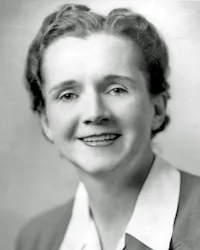 Rachel Carson — used Silent Spring to marshal evidence about pesticide harms to wildlife and people, drawing attention to chemical effects across interconnected ecosystems. Her work widened public concern beyond immediate human interests to the natural world, a defining emphasis of Universalism.
Lower Universalism
Fictional:
 Lord Voldemort (Harry Potter) — builds his movement around blood purity, targeting people without wizarding ancestry and treating some groups as inherently lesser. His political system enforces that hierarchy, directly opposing Universalism’s emphasis on equal consideration across group boundaries.
 President Coriolanus Snow (The Hunger Games) — rules the Capitol’s districts through coercion and uses the annual Games to punish their children after rebellion. The system gives the capital’s power priority over the welfare and dignity of people outside it, a stark contrast with Universalism’s wider concern.
Nonfictional:
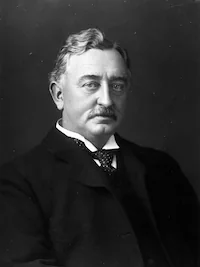 Cecil Rhodes — argued in his recorded 1877 Confession of Faith for the expansion of British rule and described the British as a superior race. That racial hierarchy conflicts directly with equal consideration across peoples and nations, one of Universalism's central concerns.


