The 478 label identifies the unordered Enneagram family formed by Types 4, 7 and 8, not a specific ordered result. The Messenger family combines these three types: the Individualist from the Heart centre, the Enthusiast from the Head centre and the Challenger from the Gut centre. Within the Tritype framework, these three types form a broader personality archetype characterised by individuality, emotional intensity, imaginative energy, independence and a strong desire to experience life directly rather than passively accepting the roles or limitations offered by the surrounding environment. Four contributes the concern with authenticity and personal meaning, Seven adds curiosity and the attraction of possibility, while Eight brings force, autonomy and resistance to unwanted control.
The Messenger can appear in six possible stacking orders: 478, 487, 748, 784, 847 and 874. Each contains the same underlying three types, but the ordering indicates which type leads the overall pattern and which of the remaining two receives greater secondary emphasis. This distinction can create noticeably different personalities within the same archetype family. A Four-led 478 may appear emotionally reflective, imaginative and concerned with expressing a distinctive identity, while an Eight-led 874 may present first as forceful, energetic and determined to preserve personal freedom. A Seven-led 748 may be more visibly exploratory and future-oriented than either. What connects them is the deeper combination of Four's concern with authenticity, Seven's concern with possibility and Eight's concern with autonomy.
Across its different forms, the Messenger tends to resist experiences that feel deadening, restrictive or psychologically false. There is often a desire not merely to understand life but to participate in it intensely, communicate something personal through it and retain the freedom to change direction when existing circumstances become too limiting. This can create a personality that is simultaneously emotionally serious and restless, capable of becoming deeply invested in something while also resisting anything that begins to feel like confinement. The Messenger may therefore be drawn towards people, ideas, projects and environments that offer both intensity and freedom.
Looking for a particular stacking order?
478 — Four-led · 487 — Four-led · 748 — Seven-led · 784 — Seven-led · 847 — Eight-led · 874 — Eight-led
The Messenger at a Glance
| Feature | Description |
|---|---|
| Archetype | The Messenger |
| Family code | 4 · 7 · 8 |
| Possible orders | 6 |
| Centres | Heart (4) · Head (7) · Gut (8) |
| All six orders | 478 · 487 · 748 · 784 · 847 · 874 |
| Theoretical Dynamics | Frustration overlap (4,7) · Assertive overlap (7,8) · Reactive overlap (4,8) |
| Core Tendency | Authentic self-expression combined with exploration, intensity and personal autonomy |
| Central Tension | Emotional depth and self-examination versus movement, stimulation and forceful action |
| Characteristic Strength | Original, energetic and highly individual expression |
| Potential Blind Spot | Impulsiveness, emotional escalation or resistance to necessary limitation |
How Common Is the Messenger Tritype?
There are currently no large, representative population datasets that allow the prevalence of the Messenger Tritype or its six individual stacking orders to be estimated reliably. This is an important limitation because Tritype frequency claims often circulate with a level of numerical confidence that the available evidence does not justify. Unlike personality dimensions such as the Big Five, which can be examined across very large psychometric datasets, Tritype estimates generally come from self-selected online test takers, personality communities, practitioner observations or relatively small specialist Enneagram samples. These sources may provide useful impressions about how the archetype is discussed or recognised within those communities, but they cannot establish how common it is in the wider population.
The Messenger is sometimes described as an unusual or especially intense combination because all three component types are associated, in different ways, with resisting restriction. Four resists being reduced to a generic identity, Seven resists being trapped in limitation or deprivation, and Eight resists being controlled by external power. That theoretical combination may indeed produce a vivid personality description, but it does not justify claiming that 478 or any of its related stackings occurs in a particular percentage of the population. The most responsible approach is therefore to treat rarity claims cautiously and focus instead on the internal structure of the archetype and the differences between its six stacking orders.
| Question | Current Position |
|---|---|
| Reliable population estimate? | None currently available |
| Representative prevalence dataset? | No |
| Six recognised stacking orders? | Yes |
| Confidence in exact frequency claims? | Low |
What Does 478 Mean?
Tritype theory proposes that an individual relies on one preferred Enneagram strategy from each of three traditional centres: Heart, Head and Gut. For the Messenger, these are Type 4 from the Heart centre, Type 7 from the Head centre and Type 8 from the Gut centre. The interest of the combination lies not simply in placing three personality descriptions next to one another but in considering how the strategies interact. Type 4 contributes concern with identity, emotional authenticity and personal meaning; Type 7 contributes curiosity, imagination, variety and the need to retain options; Type 8 contributes directness, personal strength and resistance to external control.
| Component | Centre | Broad concern | Contribution to the Messenger |
|---|---|---|---|
| 4 — Individualist | Heart | Identity, authenticity and meaning | Individuality, emotional depth, self-expression and resistance to bland conformity |
| 7 — Enthusiast | Head | Possibility, freedom and stimulation | Curiosity, imagination, variety, optimism and movement towards new experience |
| 8 — Challenger | Gut | Autonomy, strength and boundaries | Assertiveness, directness, independence and resistance to external control |
Together, the three tendencies can produce someone who wants life to feel genuine, expansive and self-directed. Four asks whether an experience reflects something personally meaningful, Seven asks what else might be possible, and Eight asks whether the individual remains free to choose and act. Those questions can reinforce one another. If a situation feels emotionally false, imaginatively narrow and externally imposed at the same time, the Messenger may experience an especially strong urge to leave, challenge or reinvent it. Different stackings alter which of these concerns appears first, but all three contribute to the wider pattern.
The Messenger Personality
The defining feature of the Messenger is the combination of individuality, possibility and force. This is generally not an archetype that is comfortable disappearing quietly into a pre-existing role. Four introduces the desire for a life that feels personally authentic, Seven keeps attention directed towards unexplored possibilities, and Eight adds a strong instinct to preserve autonomy. The resulting personality may therefore experience life as something that should be actively shaped rather than simply inherited. Conventions, expectations and routines are not necessarily rejected automatically, but they may be subjected to an unusually personal test: does this feel real, does it leave enough room to breathe, and have I actually chosen it for myself?
The Four component gives the Messenger much of its emotional and expressive depth. There may be a strong sensitivity to whether a person, relationship, project or environment feels genuine rather than merely acceptable on the surface. The Messenger may dislike having complicated reactions simplified into generic explanations and may be particularly resistant to being told what they are supposed to feel. This can encourage unusually distinctive forms of self-expression because the person may prefer to communicate an imperfect but personally meaningful truth rather than adopt a polished identity that feels artificial. Art, writing, humour, personal style, argument, storytelling or unconventional life choices can all become ways of making inner experience visible.
Seven changes the character of this emotional depth considerably. Four alone can become absorbed in what is missing, painful or psychologically significant, whereas Seven continually introduces alternative possibilities. The Messenger may therefore move between deep emotional involvement and bursts of imaginative expansion, asking not only what an experience means but what could come next. This can create substantial creative energy. A painful event might become a project, an idea, a journey, a new social environment or an entirely different interpretation of the future. The strength of this pattern is that emotional intensity need not remain static; the risk is that movement can become a way of escaping something before it has been fully processed.
Authenticity gains depth when it can remain present after the first surge of feeling.
Eight adds a further element by connecting expression and possibility with personal sovereignty. The Messenger may be able to tolerate disagreement quite well when it is experienced as genuine disagreement between equals, yet react much more strongly when disagreement turns into coercion, condescension or an attempt to define the person from outside. The issue is often not simply whether someone else is correct but whether the Messenger is being denied the right to reach a conclusion independently. This can create strong boundaries and considerable courage, particularly when confronting authority that appears arbitrary or manipulative. It can also make ordinary guidance feel more intrusive than intended if the person's sensitivity to control becomes excessive.
These three tendencies create an interesting internal contrast. Four is capable of lingering with complicated feelings and assigning substantial meaning to them, while Seven naturally seeks movement, novelty and an exit from situations that feel emotionally or practically confining. Eight, meanwhile, dislikes helplessness and tends to prefer decisive engagement. The Messenger may therefore cycle between feeling something intensely, imagining an alternative and then acting forcefully to change the situation. When this process is well regulated, it can produce remarkable adaptability and personal reinvention. When it is poorly regulated, the individual may make major changes before distinguishing a genuine need for transformation from a temporary surge of frustration.
The archetype's name, Messenger, captures the tendency to transmit experience outward. A Messenger may feel a strong need to communicate what has been seen, felt or discovered rather than keeping it entirely private. This does not mean that every Messenger is socially extraverted or wants an audience. Four-led variants in particular may remain selective and private. The deeper point is that the archetype often contains an expressive impulse: an internal perception becomes a statement, image, argument, project, performance, decision or way of living that communicates something to the surrounding world.
At their best, Messengers can combine emotional perception with imaginative possibility and enough courage to make something happen. They may see alternatives that more conventional personalities overlook because they are less willing to assume that existing arrangements are inevitable. They can bring vitality into stagnant situations, articulate tensions that other people avoid and transform difficult experience into creative or practical action. Their independence can also make them unusually difficult to intimidate when they believe something important is at stake.
The risks emerge when freedom becomes too closely associated with constant movement or resistance. A person who is highly sensitive to confinement may begin treating every obligation as oppression, every frustration as proof that a situation is fundamentally wrong and every disagreement as an attempt at control. Four can intensify the personal significance of the conflict, Seven can quickly generate alternatives and Eight can provide the force to act before reflection has caught up. The developmental challenge is therefore not to suppress intensity but to become more selective about which impulses deserve to reorganise one's life.
How the Dominant Type Changes the Presentation
The Messenger should not be imagined as one uniformly dramatic, extroverted or confrontational personality. Four-led Messengers — 478 and 487 — are likely to place relatively greater emphasis on identity, emotional truth and the need for experience to feel personally meaningful. Their adventurous and assertive qualities operate in support of that broader concern with authenticity. They may therefore be more introspective than the Messenger stereotype suggests and may spend considerable time developing a distinctive internal perspective before expressing it outwardly.
Seven-led Messengers — 748 and 784 — are more likely to lead with possibility, curiosity and the desire to keep life open. Their Four and Eight influences make the Seven pattern especially individualistic and resistant to constraint. These variants may move rapidly between interests, environments or projects, not merely because they seek stimulation but because movement itself can represent freedom. Four ensures that experience still needs some personal significance, while Eight makes them less willing to accept barriers simply because someone else insists that they are fixed.
Eight-led Messengers — 847 and 874 — may present most immediately through autonomy, strength and direct engagement. They can be creative and psychologically complex, but those qualities are likely to operate inside a personality whose first concern is retaining control over its own direction. Compared with Four-led Messengers, they may be less inclined to begin with introspection; compared with Seven-led Messengers, they may be more willing to confront an obstacle directly rather than simply moving towards another possibility. Their originality may therefore appear through leadership, unconventional strategy, entrepreneurship, outspoken communication or refusal to accept prescribed roles rather than through conventionally artistic expression.
Inner Dynamics in Enneagram Theory
The internal structure of the Messenger becomes clearer when Types 4, 7 and 8 are considered through several of the broader groupings used within Enneagram theory. These classifications belong to the Enneagram's theoretical framework rather than representing independently established psychological mechanisms, but they provide a useful language for understanding why 4–7–8 is often described as unusually intense, independent and resistant to confinement. Each pair of types contributes a different kind of pressure against accepting the world exactly as it is presented.
The Frustration Overlap: Types 4 and 7
Types 4 and 7 are commonly placed within the Enneagram's Frustration or Idealist object-relations grouping. Both are theoretically sensitive to the difference between present reality and an imagined version of how experience could be, although they respond to that discrepancy in markedly different ways. Four tends to focus on emotional significance, identity and what appears to be missing from the present experience, while Seven directs attention towards alternative possibilities, future options and experiences that may be more stimulating or liberating. Four can therefore deepen the awareness of dissatisfaction, while Seven expands the number of possible responses to it.
Within the Messenger, this overlap can create a strong resistance to settling for something merely because it is conventional or familiar. If a relationship feels emotionally shallow, a career path feels psychologically deadening or an environment feels too narrow, the individual may find it difficult to reassure themselves that everyone else tolerates similar compromises. Four asks whether the situation is true to the self, while Seven immediately begins imagining alternatives. At its best, this combination can produce creativity, experimentation and the ability to recognise possibilities that other people overlook. At its least balanced, it can produce chronic dissatisfaction in which reality is continually compared with a more vivid imagined alternative and therefore struggles to feel sufficient.
The Four–Seven interaction also helps explain why the Messenger can alternate between emotional seriousness and apparent lightness. The person may enter a feeling with considerable intensity and then suddenly shift towards humour, possibility or a new project. This does not necessarily mean that the earlier feeling was insincere. Rather, the personality contains two different strategies for dealing with frustration: one moves deeper into its significance while the other searches for a way beyond it. Learning to use both deliberately rather than reactively is an important part of development.
The Assertive Overlap: Types 7 and 8
Types 7 and 8 are both commonly placed within the Enneagram's Assertive Hornevian grouping. Both tend to move towards what they want rather than primarily withdrawing from the environment or adapting themselves to other people's expectations. Their methods are different, however. Seven tends to preserve freedom by multiplying options, reframing problems and seeking alternative routes, while Eight tends to preserve autonomy more directly through strength, confrontation and firm boundaries. Seven often asks how the obstacle can be bypassed; Eight is more inclined to ask whether the obstacle can simply be removed.
This overlap contributes much of the Messenger's forward momentum, particularly in Seven- and Eight-led variants. When circumstances become limiting, the individual may have relatively little instinct to remain passive and wait indefinitely for permission. They may generate another strategy, create a new opportunity or directly challenge the restriction. This can be extremely useful in entrepreneurial, creative and crisis-oriented situations because the person is less likely to assume that the existing rules exhaust the available possibilities.
The same tendency can become problematic when every delay, rule or obligation is treated as an illegitimate obstruction. Some limits exist because reality itself imposes them rather than because another person is trying to control the individual. Skill, expertise, financial security, trust and long-term creative work frequently require repetition and delayed gratification. The Messenger grows when assertiveness is combined with enough patience to recognise that some forms of structure actually increase future freedom rather than reducing it.
The Reactive Overlap: Types 4 and 8
Types 4 and 8 are commonly placed within the Enneagram's Reactive harmonic grouping. Within this theoretical framework, Reactive types are associated with a stronger tendency to acknowledge emotionally charged problems rather than immediately minimising them, smoothing them over or replacing them with a more comfortable interpretation. Four tends to react strongly when something feels emotionally false or invalidating, while Eight reacts strongly to power imbalances, intrusion and threats to autonomy. Their combination can therefore make the Messenger unusually unwilling to pretend that a significant conflict does not exist merely because acknowledging it would disturb the atmosphere.
This interaction gives the archetype considerably more emotional force than might be expected from Seven alone. Seven can introduce optimism, humour and future orientation, but Four and Eight may insist that certain realities first need to be named. The Messenger can therefore be capable of both energetic positivity and blunt confrontation. They may use humour to expose something uncomfortable, turn personal frustration into creative expression or directly challenge a situation that everyone else has learned to tolerate.
The danger is escalation. Four can make the issue feel personally significant, Eight can intensify the need to respond and Seven can provide the speed with which a response becomes action. At their best, Messengers can say what needs to be said while other people remain paralysed by politeness. At their worst, they may experience the very intensity of their reaction as evidence that the interpretation behind it must be correct. Development requires separating the legitimacy of feeling strongly from the accuracy of every conclusion reached while feeling that way.
Strengths and Potential Blind Spots
Likely Strengths
One of the strongest qualities associated with the Messenger is originality combined with expressive courage. Four creates sensitivity to personal meaning, Seven supplies imaginative breadth and Eight reduces the pressure to conform merely for social approval. This can produce someone who is willing to develop an idea, style or point of view that does not fit comfortably within existing categories. The Messenger may be particularly effective when originality requires not only imagination but the willingness to tolerate misunderstanding while a new direction is being established.
- Another potential strength is adaptability. Seven makes it easier to generate alternatives when circumstances change, while Eight contributes the determination to act on those alternatives rather than merely imagining them. Four can then integrate the experience into a broader personal narrative, allowing setbacks to become material for reinvention rather than simply evidence of defeat. The resulting resilience may not look calm or stoic; it is more likely to involve repeatedly finding a way to transform the situation.
- The Messenger can also possess considerable communication power. Four contributes emotional nuance, Seven contributes verbal or conceptual flexibility and Eight adds conviction. Whether the medium is writing, conversation, performance, teaching, campaigning, creative work or leadership, the individual may have a talent for making something feel immediate and alive. Ideas are not necessarily presented as detached abstractions; they may be connected to stories, imagery, humour, challenge or personal experience in a way that gives them emotional force.
- A further strength is the willingness to challenge unnecessary limitations. The combination of Four, Seven and Eight offers relatively little theoretical incentive to accept something purely because it has always been done that way. Four asks whether the convention fits the individual, Seven imagines alternatives and Eight questions who has the authority to insist on the existing arrangement. This can make the Messenger valuable in stagnant organisations, creative fields and periods of rapid change, provided their resistance is directed towards limitations that genuinely deserve to be challenged.
Potential Blind Spots
The most obvious difficulty is impulsiveness disguised as authenticity. Because the archetype places so much value on living genuinely and freely, a strong immediate reaction may be experienced as evidence that action is necessary. Yet authenticity does not require obeying every feeling, and autonomy does not require rejecting every constraint. A person can genuinely dislike a situation while still deciding that the wisest response is to wait, gather more information or tolerate temporary frustration.
Another risk is chronic restlessness. Seven can make new possibilities appear vivid, Four can make the present situation feel emotionally deficient and Eight can supply the force required to break away. This combination may repeatedly produce the impression that fulfilment lies somewhere just beyond the current arrangement. Careers, relationships, projects or locations can therefore be abandoned prematurely if the ordinary loss of novelty is mistaken for proof that something has become fundamentally wrong.
The Messenger may also struggle with proportionality during conflict. If criticism is interpreted simultaneously as emotional invalidation, restriction of options and attempted control, the reaction can become much larger than the original disagreement. The person may be defending several psychological concerns at once without realising it. Recognising which part of the issue actually matters can prevent a manageable conflict from becoming a symbolic battle over identity and freedom.
The exact blind spots differ by stacking. A Four-led Messenger may become too identified with being exceptional, misunderstood or uncompromisingly authentic. A Seven-led Messenger may become scattered, impatient with routine or addicted to the feeling of a new beginning. An Eight-led Messenger may become overly controlling, confrontational or reluctant to acknowledge vulnerability. The shared challenge is not to abandon intensity but to develop enough internal stability that freedom no longer depends upon continually proving that nobody can limit you.
Relationships and Communication
Messengers are likely to value relationships that combine depth with freedom. A connection may feel unsatisfying if it offers stability but little emotional or intellectual vitality, yet a relationship can also become difficult if closeness is experienced as control. The person may therefore seek partners and friends who are capable of substantial intimacy while still respecting strong individuality. They may prefer people who have independent interests and opinions of their own rather than relationships built around continual agreement or fusion.
The Four component contributes the desire to be understood in a psychologically meaningful way. The Messenger may want another person to recognise not simply their actions but the motives, values and experiences behind them. Seven adds the need for the relationship to remain alive and developing, whether through humour, conversation, travel, creativity, shared interests or changing experiences. Eight introduces the requirement for mutual respect and may make condescension, manipulation or possessiveness especially difficult to tolerate. Together these tendencies can create intense loyalty when trust is present, but they can also produce sharp reactions when the individual feels misrepresented or confined.
Communication can be vivid and direct. Four-led Messengers may place considerable emphasis on emotional accuracy and may resist language that feels sanitised or generic. Seven-led Messengers may communicate rapidly, associatively and with considerable humour, often moving between serious and playful material very quickly. Eight-led Messengers may be more concise and forceful, preferring to name a problem openly rather than allowing resentment to accumulate beneath surface politeness.
Closeness and individuality can support one another when limits are respected.
Across the family, there can be a tendency to associate intensity with truthfulness. A strong statement may feel more authentic than a measured one because it better reflects the emotional force of the moment. Yet effective communication sometimes requires preserving the truth while reducing the unnecessary force around it. One of the Messenger's most useful developmental lessons is that precision can be more powerful than escalation. Being able to state a difficult truth calmly does not dilute the truth; it often makes it much harder for other people to dismiss.
Work and Career Preferences
The Messenger archetype is likely to appreciate work that offers some combination of autonomy, creativity, stimulation, expression and the ability to influence outcomes. Highly repetitive environments can become frustrating when there is little opportunity to experiment or develop an individual approach. Likewise, close supervision may be particularly difficult if it feels less like useful coordination and more like distrust or arbitrary control. The person may respond better when given a meaningful objective and enough freedom to determine how to reach it.
- Four-led Messengers may be particularly attracted to fields where individual interpretation and distinctive expression matter. Writing, visual art, design, filmmaking, music, photography, psychology, cultural criticism, journalism and creative entrepreneurship can provide opportunities to translate personal perception into something visible to others. They may be less interested in producing work that is technically competent but emotionally anonymous, preferring projects in which some recognisable part of the creator remains present.
- Seven-led Messengers may be drawn towards environments characterised by variety, experimentation and rapidly changing problems. Entrepreneurship, media, marketing, product development, consulting, travel, creative technology, broadcasting, events and innovation-oriented roles may be appealing because they allow the individual to continue exploring new possibilities. The strongest version of this pattern does not merely chase novelty; it uses curiosity to connect ideas and respond flexibly to changing circumstances.
- Eight-led Messengers may prefer environments where independence can be translated into direct influence. Leadership, entrepreneurship, campaigning, law, negotiation, organisational strategy, production, investigative work or roles involving difficult decisions may be particularly attractive. Their creativity may appear less through artistic self-expression and more through unconventional problem-solving, strong strategic instincts or a willingness to challenge assumptions that other people regard as untouchable.
Communication-oriented work can appeal across all three dominant styles because the archetype combines expressive individuality with considerable energy. The name Messenger should not be interpreted too literally. The underlying idea is broader: something internally significant is carried outward into the world. A Messenger might communicate through a novel, a business, a political argument, an invention, a film, a teaching style or a highly distinctive way of solving problems.
The overall working environment may matter more than the job title. A Messenger may tolerate demanding work when it feels self-directed and purposeful, while finding an objectively easier role intolerable if it requires continual self-suppression or pointless deference. These are personality preferences rather than career prescriptions, however. Ability, education, opportunity, financial needs, values and personal interests remain more important than any personality classification.
Stress and Growth
Under prolonged stress, the Messenger's characteristic strengths can become exaggerated. Healthy individuality may harden into alienation, curiosity can become restless escape and assertiveness may become unnecessary conflict. The desire to keep life open can make commitment feel dangerous, while the desire to remain authentic can make adaptation feel like self-betrayal. At the same time, Eight's concern with autonomy can lead the person to interpret increasing numbers of external demands as attempts at control.
A common stress pattern may involve becoming dissatisfied with a situation, imagining a dramatic alternative and then acting rapidly in order to restore a sense of freedom. If the new situation eventually develops ordinary limitations of its own, the cycle can begin again. Four-led Messengers may initially experience the problem as emotional wrongness or a loss of identity, Seven-led Messengers may respond first through new plans and possibilities, while Eight-led Messengers may attempt to force the surrounding environment to change before considering withdrawal.
Another difficulty can arise from the tension between emotional depth and avoidance of confinement. The person may genuinely need to process a painful experience, yet another part of the personality strongly resists feeling trapped inside it. New relationships, projects, environments or ideas can therefore become vehicles for rapid movement away from discomfort. This may work temporarily, but unresolved patterns can reappear in the next situation because the external change occurred faster than the internal processing.
Growth does not require the Messenger to become conventional, passive or emotionally muted. The healthier direction is to become more selective about where intensity is useful. A feeling can be authentic without demanding immediate action; an obligation can be frustrating without being oppressive; a relationship can become temporarily ordinary without becoming lifeless. The stronger the individual becomes internally, the less often freedom needs to be demonstrated through rupture.
A feeling can be real without requiring an immediate decision.
The strongest Messenger is therefore not someone who refuses every limitation. It is someone who can distinguish deadening restriction from useful structure, authentic transformation from restless escape and necessary confrontation from impulsive resistance. When those distinctions become clearer, the archetype's energy can be directed towards long-term creation rather than repeatedly being consumed by the need to break free.
The Six Messenger Stackings
The six Messenger codes contain the same three Enneagram types, but their order is intended to describe which strategy receives priority. The first number represents the dominant or core type, the second represents the more prominent of the remaining two centre strategies, and the third occupies the tertiary position. These differences should be treated as shifts in emphasis rather than as six entirely separate personalities.
| Stacking | Lead Type | Secondary Emphasis | Typical Presentation |
|---|---|---|---|
| 478 | Four | Seven | Identity-led, imaginative, expressive and possibility-seeking |
| 487 | Four | Eight | Identity-led, intense, forceful and boundary-conscious |
| 748 | Seven | Four | Possibility-led, creative, individualistic and expressive |
| 784 | Seven | Eight | Possibility-led, bold, energetic and autonomy-focused |
| 847 | Eight | Four | Autonomy-led, expressive, intense and strongly self-defining |
| 874 | Eight | Seven | Autonomy-led, energetic, adventurous and expansive |
The Four-Led Messengers: 478 and 487
For both 478 and 487, Type 4 provides the core orientation, meaning that questions of identity, emotional authenticity and personal meaning are theoretically expected to organise the personality most strongly. These variants may care deeply about whether their life reflects something genuinely their own rather than simply reproducing the expectations of family, culture or social convention. Their Seven and Eight influences make them considerably more energetic and resistant to restriction than some other Four combinations, but those qualities still tend to operate in service of a primarily identity-focused orientation. The key distinction between 478 and 487 lies in whether possibility or boundary defence comes forward more readily after the Four core.
478 — Four → Seven → Eight
In 478, Type 7 follows the dominant Four, connecting the concern with authenticity relatively closely to imagination, exploration and future possibility. The person may not simply want to understand or express an identity but continually experiment with what that identity could become. Emotional experience can therefore function as material for reinvention. A period of dissatisfaction may lead not only to introspection but to new interests, environments, projects or forms of expression that allow the individual to construct a different future.
This can create a particularly imaginative version of the Messenger. Four gives personal experience emotional significance, while Seven prevents the personality from remaining entirely absorbed in what has been lost or what is missing. Even difficult material can become the starting point for a new direction. The individual may possess a strong ability to reframe experience creatively without necessarily reducing its seriousness. They can acknowledge that something hurt while still asking what can now be made from it.
Eight remains important but occupies the tertiary position, giving the pattern underlying strength and resistance to control. The 478 may not always begin with confrontation, but an important boundary violation can reveal a much harder edge beneath the imaginative and expressive exterior. Compared with 487, the 478 is theoretically more likely to move first towards a new possibility than immediately towards a struggle over control. The broad sequence can be summarised as authenticity first, possibility second, boundary enforcement third.
487 — Four → Eight → Seven
In 487, Type 8 follows the dominant Four, so identity and authenticity are connected more directly to strength, boundaries and resistance to intrusion. The person may experience external pressure not merely as inconvenient but as an attempt to overwrite something psychologically fundamental. As a result, they may defend their sense of self more immediately and forcefully than the 478, especially when they believe another person is being manipulative, dismissive or controlling.
This can produce one of the more intense presentations within the Messenger family. Four heightens sensitivity to personal meaning, while Eight makes it difficult to remain passive when that meaning feels threatened. The individual may therefore be highly expressive but also formidable in conflict. They may prefer open disagreement to polite accommodation when accommodation requires pretending that an important issue does not exist.
Seven remains present in the tertiary position, providing imagination, humour and the ability to see alternative routes once the immediate issue of autonomy has been addressed. It can prevent the Four–Eight combination from becoming entirely fixed or heavy, adding movement and a capacity for reinvention. Compared with 478, however, the 487 is theoretically expected to establish boundaries sooner and explore alternatives later. The broad sequence becomes authenticity first, autonomy second, possibility third.
The Seven-Led Messengers: 748 and 784
Both 748 and 784 begin with Type 7, meaning that possibility, freedom, stimulation and the desire to keep life open provide the central organising theme. These variants may be the most visibly energetic members of the Messenger family because the Seven core is reinforced by two additional types that strongly resist feeling confined. Four ensures that experience still needs personal meaning, while Eight contributes enough force to turn imaginative alternatives into practical action. The difference between the two stackings lies in whether identity or autonomy colours the Seven core more strongly.
748 — Seven → Four → Eight
In 748, Type 4 follows the dominant Seven. The desire for possibility is therefore closely linked with individuality and emotional significance. New experiences may be attractive not merely because they are stimulating but because they offer new ways of discovering or expressing the self. The individual can be drawn towards unconventional interests, people and environments precisely because these provide both variety and a sense of personal distinctiveness.
Four may also give the 748 more emotional depth than stereotypical descriptions of Type 7 suggest. The person can still dislike feeling trapped inside painful states, but they may be more willing to acknowledge complexity, sadness or alienation when those experiences feel meaningful. Seven then attempts to keep the story moving. The result can be a personality that is emotionally colourful rather than simply optimistic, capable of shifting between seriousness, humour, enthusiasm and introspection without experiencing those states as contradictory.
Eight occupies the tertiary position and contributes independence, firmness and the willingness to resist control. It may become particularly visible when someone attempts to restrict the person's freedom or dismiss their unconventional choices. Compared with 784, the 748 is theoretically expected to filter possibility more strongly through personal meaning before moving into direct assertion. The broad sequence can therefore be expressed as possibility first, meaning second, autonomy third.
784 — Seven → Eight → Four
In 784, Type 8 follows the dominant Seven, creating a highly energetic combination of possibility-seeking and personal autonomy. The individual may dislike blocked paths intensely and respond by creating another route, challenging the restriction or simply acting before more cautious personalities have finished debating whether action is permitted. Seven generates options rapidly, while Eight provides confidence and force. This can make the 784 especially entrepreneurial, adventurous or willing to improvise under uncertain conditions.
Compared with 748, the 784 may appear more pragmatic and action-oriented. The person may still possess substantial creativity, but it is often channelled towards making something happen rather than primarily towards exploring identity. Obstacles can become stimulating because they provide an opportunity to find another route or demonstrate that the supposedly fixed boundary was not actually fixed at all.
Four remains important in the tertiary position and ensures that the personality is not simply expansive and assertive. There remains a concern with individuality and the need for life to feel personally meaningful, although these qualities may become clearer after the more obvious Seven–Eight energy has already established the person's direction. Compared with 748, the 784 is theoretically expected to defend freedom sooner and examine its personal meaning later. The broad sequence becomes possibility first, autonomy second, meaning third.
The Eight-Led Messengers: 847 and 874
Both 847 and 874 begin with Type 8, making autonomy, strength and control over personal boundaries the primary orientation. These variants can therefore look quite different from Four-led Messengers even though they contain exactly the same three component types. Their first instinct may be to act upon the environment, establish a position or make clear what they will and will not accept. Four and Seven still contribute individuality and imaginative range, but they operate inside a personality whose organising principle is personal sovereignty.
847 — Eight → Four → Seven
In 847, Type 4 follows the dominant Eight, linking autonomy closely with identity and emotional authenticity. The person may resist control not only because they dislike being constrained but because external pressure can feel like an attempt to define who they are. This gives the pattern a particularly personal intensity. Boundaries can become expressions of identity, and refusing something may sometimes feel just as psychologically significant as choosing something.
The 847 may therefore be highly self-defining and unwilling to soften distinctive qualities simply to gain approval. They may prefer the risks of openly being themselves to the security of acceptance that depends upon performing a role. Four gives the Eight core greater emotional and aesthetic complexity, while Eight prevents that complexity from remaining purely introspective. Feelings and values are more likely to be translated into visible choices or direct statements.
Seven occupies the tertiary position, adding flexibility, humour and appetite for experience. This can lighten the otherwise intense Eight–Four combination and provide additional routes when direct confrontation becomes unproductive. Compared with 874, however, the 847 is theoretically more likely to interpret autonomy through the lens of identity before moving towards new possibilities. Its broad sequence is autonomy first, authenticity second, possibility third.
874 — Eight → Seven → Four
In 874, Type 7 follows the dominant Eight, producing a particularly expansive and energetic version of the Messenger. Autonomy remains the primary concern, but Seven adds a strong preference for freedom of movement, multiple options and stimulating experience. The person may therefore defend independence not only through confrontation but by ensuring that no single environment, relationship or system becomes capable of trapping them. Having alternatives can itself become a form of power.
This combination can produce substantial confidence and practical boldness. Eight provides decisiveness, while Seven encourages experimentation and makes it easier to change strategy when one route closes. Rather than remaining locked in a prolonged conflict, the 874 may sometimes decide that creating a better alternative is more satisfying than continuing to argue with the existing structure. This can make the pattern particularly effective in entrepreneurial or fast-moving environments where flexibility and nerve matter simultaneously.
Four remains present in the tertiary position and contributes individuality, emotional depth and a need for life to feel personally distinctive. These themes may not be the first qualities other people notice, but they prevent the Eight–Seven combination from becoming purely practical or sensation-seeking. Compared with 847, the 874 is theoretically more likely to prioritise freedom of movement before exploring the deeper identity significance of the choice. The broad sequence becomes autonomy first, possibility second, authenticity third.
Wings and Other Secondary Influences
The dominant type of each Messenger stacking can be modified further by wings and other secondary elements of Enneagram theory. Because the Messenger family contains three possible dominant types, there is no single wing distinction that applies to every member of the archetype. A Four-led Messenger may show stronger influence from Type 3 or Type 5, a Seven-led Messenger may show stronger influence from Type 6 or Type 8, and an Eight-led Messenger may show stronger influence from Type 7 or Type 9.
These modifiers can noticeably change the surface presentation without altering the underlying 4–7–8 structure. A Four-led Messenger with stronger Three influence may appear somewhat more socially adaptive, ambitious or performance-oriented, whereas stronger Five influence could add greater privacy and intellectual depth. A Seven-led Messenger with stronger Six influence may be more cautious, loyal or concerned with reliability than the stereotype suggests, while stronger Eight influence can intensify assertiveness and appetite. An Eight-led Messenger with stronger Seven influence may appear especially expansive and energetic, while stronger Nine influence could make the same underlying autonomy calmer and less immediately confrontational.
Wings should therefore be treated as secondary modifiers rather than separate Tritype archetypes. They can help explain why two people who identify with the same stacking still present quite differently, but they do not replace the more fundamental distinction between the Messenger family and its six ordering patterns.
Related Tritype Archetypes
Comparing the Messenger with neighbouring Tritype families helps clarify what each component contributes. The 468 Truth Teller retains Types 4 and 8 but replaces Seven with Type 6. Emotional intensity, authenticity and strong boundaries therefore remain, but the Head strategy shifts from possibility-seeking towards vigilance, uncertainty and the search for reliability. Compared with the Messenger, the Truth Teller may consequently appear more questioning, security-conscious or conflict-focused, while the Messenger is theoretically more inclined to generate alternatives and move towards new experience.
The 458 Scholar also retains Types 4 and 8 but replaces Seven with Type 5. Individuality, emotional depth and autonomy remain important, but the mental strategy shifts from Seven's expansive exploration towards Five's detached investigation. The Scholar is therefore more likely to emphasise understanding, analysis and intellectual self-sufficiency, whereas the Messenger generally introduces more movement, experimentation and appetite for direct experience.
The 378 Mover & Shaker retains Types 7 and 8 but replaces Four with Type 3. Energy, assertiveness and possibility remain central, but the Heart strategy becomes more oriented towards achievement, effectiveness and external accomplishment. Compared with the Messenger, this may create a personality that is more willing to adapt its presentation to the demands of a goal and somewhat less preoccupied with maintaining a distinctive emotional identity.
The 479 Seeker retains Types 4 and 7 but replaces Eight with Type 9. Imagination, individuality and the desire for possibility remain, while the Gut strategy shifts towards accommodation, inner stability and conflict reduction. This comparison is especially useful because it highlights what Eight contributes to the Messenger: stronger boundaries, greater willingness to confront and a more explicit concern with personal sovereignty.
These comparisons matter because they show not merely that neighbouring Tritypes share traits but which component changes and what theoretical difference that substitution is expected to make. This is generally more informative than treating each archetype as an isolated collection of adjectives.
The Messenger and the Big Five
The Enneagram and Big Five describe personality through fundamentally different models, so there is no direct conversion between the Messenger Tritype and a particular Big Five profile. A person identifying with 478, 784 or another Messenger stacking should not automatically be expected to receive a particular Big Five result. The Enneagram is primarily concerned with motivations and recurring strategies, while the Big Five measures broad behavioural and emotional tendencies.
Some descriptive similarities can nevertheless be discussed cautiously. The combination of Four's individuality and Seven's curiosity may resemble aspects of higher Openness to Experience, particularly where Openness involves imagination, aesthetic sensitivity, novelty-seeking and attraction to unconventional ideas. Eight's independence may sometimes resemble aspects of lower Agreeableness where Agreeableness reflects compliance or willingness to defer, although this does not imply that the individual is unkind or incapable of cooperation.
Extraversion is more difficult to generalise. Seven- and Eight-led Messengers may often appear energetic and assertive, which can resemble higher Extraversion, while Four-led variants may be substantially more introspective or socially selective. Assertiveness should also not be treated as identical to global Extraversion. A person can be socially reserved while still being very difficult to intimidate.
The Messenger and 16-Type Systems
The Messenger can resemble several descriptions found within Jungian and MBTI-style systems, particularly profiles emphasising imagination, individuality, independence and rapid engagement with possibilities. Seven-led Messengers may sometimes recognise aspects of ENFP or ENTP descriptions because of the emphasis on exploration, experimentation and generating alternatives. Four-led Messengers may identify more strongly with intuitive profiles such as INFP, INFJ or ENFP, especially when identity, personal meaning and expressive individuality are prominent.
Eight-led Messengers may appear more decisive or outwardly forceful and could identify with a wider variety of intuitive profiles, including ENTP, ENFP, ENTJ or ENFJ, depending on whether the person's style is more analytical, relational, strategic or values-oriented. These similarities should nevertheless remain loose comparisons rather than conversions. The two systems ask different questions and organise personality differently.
Someone identifying as 748 is therefore not automatically ENFP, just as an ENFP should not automatically be expected to belong to the Messenger Tritype. Treating the systems as complementary perspectives rather than interchangeable labels preserves the distinctions that make each framework useful.
The Messenger in One Sentence
The 478 Messenger Tritype combines individualistic depth, imaginative possibility and strong personal autonomy into a personality that seeks to experience and express life intensely without allowing convention or external control to define its limits.
Famous People and Fictional Characters Associated with 478
These examples offer illustrative comparisons with the 478 family, not confirmed personality assessments. The family includes all six orders of its three types; an example need not use the ascending 478 order. A public career or fictional story cannot establish someone's private motivations. Fictional examples refer to the works or versions named below, and are illustrations rather than role models.
Famous People Associated with 478
 David Bowie — Musician and performer. His repeated artistic reinvention illustrates individual expression, imaginative possibility and resistance to remaining within a single public identity.
 Angelina Jolie — Actor and filmmaker. Her independent creative choices and humanitarian work offer a comparison with individual conviction expressed through visible engagement.
 Pink — Singer-songwriter. Her direct voice and physically adventurous performances illustrate self-expression that combines emotional openness with a refusal to appear easily constrained.
 Prince — Musician. His distinctive sound and concern with artistic control illustrate originality joined to a forceful claim over the direction of creative work.
 Miley Cyrus — Singer and actor. Her changing performance styles illustrate the effort to establish an individual voice beyond expectations attached to an earlier public role.
 Robert Downey Jr. — Actor. His quick, expressive public presentation offers a limited comparison with improvisation and individuality, distinct from the type assigned to Tony Stark.
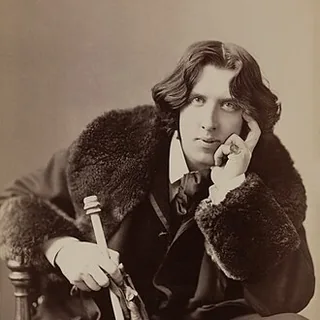 Oscar Wilde — Writer. His wit and challenges to social convention illustrate a distinctive personal voice that tests accepted claims about taste, morality and how a life should be presented.
 Salvador Dalí — Artist. His surreal images and theatrical self-presentation illustrate imaginative originality combined with a strong wish to shape his own public terms.
 Walt Disney — Animation producer and entrepreneur. His ambitious imagined environments illustrate creative possibility developed into large, concrete experiences for an audience.
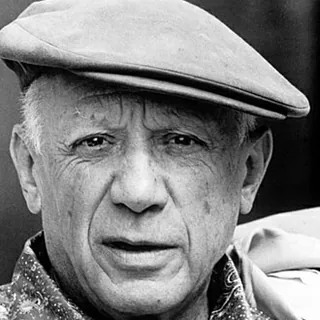 Pablo Picasso — Artist. His repeated stylistic experiments illustrate independence and the willingness to overturn a familiar visual language rather than remain confined by an established success.
Fictional Characters Associated with 478
 Rick Sanchez — Rick and Morty. His invention and resistance to limits offer a cautionary exploration of what happens when freedom is treated as exemption from responsibility to others.
 Coraline Jones — Coraline (2009). Her curiosity and refusal to accept a pleasing false world illustrate independence that develops into a more discerning understanding of what matters.
 Merida — Brave (2012). Her resistance to an imposed future illustrates personal authenticity, appetite for freedom and the need to make room for another person's perspective.
 Cruella de Vil — Cruella (2021). Her theatrical self-invention and defiance illustrate an individual creative identity that can become entangled with retaliation and control.
 Hobie Brown / Spider-Punk — Spider-Man: Across the Spider-Verse (2023). His challenge to authority illustrates individuality and a refusal to accept rules merely because an institution presents them as necessary.
 Johnny Silverhand — Cyberpunk 2077. His confrontational artistic identity illustrates resistance to domination, while the story questions the costs of turning defiance into an absolute personal mission.
 Max Mayfield — Stranger Things. Her directness and guarded independence illustrate self-protection that must gradually allow genuine support and connection.
 Rocket Raccoon — Marvel Cinematic Universe. His inventions, irreverence and fierce autonomy illustrate a defended individuality that becomes more sustainable as he accepts belonging.
 The Joker — The Dark Knight trilogy. His destructive challenges to social order are an extreme antagonistic contrast, not an equation between originality and cruelty.
 Eleanor Shellstrop — The Good Place. Her irreverence and appetite for freedom gradually develop into a more accountable individuality through relationships that challenge her habitual escape routes.
Sources and scope
The Enneagram Tritype framework is attributed to Katherine Chernick Fauvre. This independent educational guide is not affiliated with or endorsed by Fauvre. It describes a theoretical framework for reflection; it is not a validated assessment, diagnosis or population study.

.jpg)
_(cropped).jpg)
.png)
_(cropped).jpg)
.jpg)
.jpg)

.JPG)


