The 468 label identifies the unordered Enneagram family formed by Types 4, 6 and 8, not a specific ordered result. The Truth Teller family combines these three types: the Individualist from the Heart centre, the Loyalist from the Head centre and the Challenger from the Gut centre. Within the Tritype framework, these three types form an archetype associated with emotional honesty, vigilance, strong reactions to perceived injustice or manipulation, and a pronounced desire to identify what is really happening beneath appearances.
The Truth Teller is often described as a personality pattern that has difficulty ignoring contradiction, falseness or unspoken tension once it has been noticed. Where some personalities are inclined to smooth over conflict in order to preserve harmony, the 468 family is theoretically more likely to acknowledge the conflict directly, examine where the threat or dishonesty lies and insist that the uncomfortable part of the situation should not simply be buried.
The Truth Teller can appear in six possible stacking orders: 468, 486, 648, 684, 846 and 864. Each contains the same underlying combination of Types 4, 6 and 8, but the ordering changes which psychological concern tends to organise the overall personality most strongly. A Four-led 468 may experience the pattern primarily through authenticity, identity and emotional truth, whereas an Eight-led 864 may be more immediately concerned with autonomy, strength and confronting pressure directly. A Six-led 648 may instead begin with uncertainty, loyalty, risk assessment and the need to determine whom or what can actually be trusted. What unites all six variants is the interaction between Four's concern with authenticity, Six's concern with trust and security, and Eight's concern with autonomy and power.
This combination gives the Truth Teller a particularly intense theoretical profile because Types 4, 6 and 8 are all classified within the Enneagram's Reactive harmonic group. That does not mean every 468 individual is constantly angry, dramatic or confrontational. It means that, within the theory, all three component types are comparatively reluctant to neutralise emotionally significant problems simply for the sake of keeping the atmosphere comfortable. A Truth Teller may therefore feel compelled to name what appears false, dangerous, unfair or manipulative, especially when other people seem unwilling to address it.
At its healthiest, this can create courage, perceptiveness and an unusual willingness to confront realities that others would rather avoid. At its least balanced, the same tendency can become chronic suspicion, escalating conflict, emotional overidentification with problems or an expectation that hidden motives must exist whenever something feels wrong.
If you are looking for a particular stacking order, the six variants are 468 and 486 as Four-led Truth Tellers, 648 and 684 as Six-led Truth Tellers, and 846 and 864 as Eight-led Truth Tellers.
The Truth Teller at a Glance
| Feature | Description |
|---|---|
| Archetype | The Truth Teller |
| Family code | 4 · 6 · 8 |
| Possible orders | 6 |
| Centres | Heart (4) · Head (6) · Gut (8) |
| All six orders | 468 · 486 · 648 · 684 · 846 · 864 |
| Theoretical Dynamics | Triple Reactive combination · authenticity, vigilance and boundary defence |
| Core Tendency | Seeking emotional and interpersonal truth while questioning motives and resisting coercion |
| Central Tension | The need for trust and connection versus distrust, defensiveness and strong autonomy |
| Characteristic Strength | Willingness to recognise and confront difficult truths |
| Potential Blind Spot | Escalation, suspicion or treating emotional intensity as proof that a threat is real |
How Common Is the Truth Teller Tritype?
There are currently no large, representative population datasets capable of estimating reliably how common the 468 Truth Teller Tritype or any of its six stacking orders are. This limitation applies broadly across the Tritype system. Unlike major trait frameworks such as the Big Five, which can be studied using large psychometric datasets and continuous measurements, Tritype prevalence claims are generally based on self-selected test takers, Enneagram communities, practitioner experience or relatively small samples. Such sources can provide interesting impressions about which combinations appear more or less frequently, but they do not justify precise claims about population frequency.
The 468 family is sometimes characterised within Enneagram communities as a comparatively intense or distinctive combination, partly because all three component types belong to the Reactive harmonic group. That theoretical structure may make the archetype feel psychologically conspicuous, but conspicuousness should not be confused with statistical rarity. A pattern that produces more visible conflict, strong language or emotionally charged self-description may simply be easier to notice in personality communities than quieter combinations. Without representative sampling, there is no sound basis for claiming that the Truth Teller makes up a particular percentage of the population or that one stacking is objectively rarer than another.
| Question | Current Position |
|---|---|
| Reliable population estimate? | None currently available |
| Representative prevalence dataset? | No |
| Six recognised stacking orders? | Yes |
| Confidence in exact frequency claims? | Low |
The most responsible approach is therefore to treat the Truth Teller as a theoretical personality configuration and examine how Types 4, 6 and 8 are proposed to interact, rather than attaching false demographic precision to the archetype.
What Does 468 Mean?
Tritype theory proposes that a person relies upon one preferred Enneagram strategy from each of three traditional centres: Heart, Head and Gut. In the Truth Teller family, these strategies are Type 4 from the Heart centre, Type 6 from the Head centre and Type 8 from the Gut centre. The interest of the model is not simply that the individual supposedly possesses traits from all three types, but that these motivational patterns repeatedly influence one another and may create recognisable tensions that cannot be understood by looking at any single component in isolation.
| Component | Centre | Broad concern | Contribution to the Truth Teller |
|---|---|---|---|
| 4 — Individualist | Heart | Identity, authenticity and meaning | Emotional honesty, individuality, sensitivity to falseness and concern with what is personally genuine |
| 6 — Loyalist | Head | Security, trust and uncertainty | Questioning, vigilance, testing, scepticism and sensitivity to potential danger or inconsistency |
| 8 — Challenger | Gut | Autonomy, power and boundaries | Assertiveness, protection, directness and resistance to coercion or domination |
Type 4 contributes an interest in emotional truth, personal identity and whether something feels genuine rather than merely conventional. Type 6 introduces questions about reliability, hidden risks, loyalty and whether the apparent situation can actually be trusted. Type 8 brings attention to power, strength, autonomy and whether anyone is attempting to dominate, deceive or manipulate the individual. When combined, these concerns can produce a person who is unusually unwilling to accept a socially convenient explanation if it appears emotionally false, logically questionable or politically self-serving.
The dynamic can be summarised through three recurring questions. Four asks whether something is genuine, Six asks whether it is trustworthy, and Eight asks who holds the power and whether that power is being used fairly. The precise order of those questions differs between stackings, but the broader Truth Teller pattern repeatedly returns to authenticity, reliability and autonomy. This helps explain why the archetype is often associated with confronting contradictions. A situation that another person experiences merely as awkward may be interpreted by the Truth Teller as evidence that something important has not yet been said.
The Truth Teller Personality
The defining characteristic of the Truth Teller is not simply bluntness. It is the interaction between emotional authenticity, threat detection and resistance to domination. A healthy 468 individual may have a strong instinct for noticing when the emotional atmosphere of a situation does not match what people are publicly saying. Four can register the discrepancy at the level of identity and feeling, Six can begin examining whether the discrepancy indicates unreliability or concealed danger, and Eight can generate the impulse to confront the issue rather than remain passive in front of it. The result can be someone who feels that reality should be named accurately even when doing so makes the room less comfortable.
This orientation can produce substantial interpersonal perceptiveness. Truth Tellers may notice changes in tone, inconsistencies between words and behaviour, evasiveness, power imbalances or subtle signs that someone is suppressing what they really think. They can be interested not merely in the explicit content of communication but in what the interaction reveals about motives, loyalties and unspoken tensions. In healthy form, this can make them perceptive advocates, protective friends, incisive investigators and people who are difficult to manipulate through superficial reassurance. They may be particularly valuable in situations where everyone else has become too invested in politeness, institutional conformity or group consensus to acknowledge a real problem.
Yet the same perceptiveness can create difficulties when interpretation becomes fused with emotional certainty. Because all three component types are classified as Reactive, the Truth Teller may have a relatively strong response when something feels wrong. Four may experience the issue personally, Six may search for evidence of danger or betrayal, and Eight may prepare to resist or confront. These processes can reinforce one another. An ambiguous event can therefore acquire significance quickly: emotional discomfort suggests that something is false, uncertainty suggests that something may be unsafe, and perceived threat creates pressure to establish control. The individual may then become increasingly convinced that immediate confrontation is necessary.
A forceful interpretation still needs room for evidence and uncertainty.
This does not mean that Truth Tellers are irrational or that their concerns are usually mistaken. Quite the opposite: some may become highly accurate precisely because they have repeatedly learned to pay attention to inconsistencies that other people ignore. The developmental problem lies in distinguishing accurate intuition from self-reinforcing suspicion. A strong internal alarm can occasionally identify something important before clear evidence appears, but intensity itself is not evidence. One of the central challenges for the archetype is therefore learning that a feeling can be psychologically significant without necessarily providing a complete account of external reality.
The Four component adds another important layer. Truth Tellers may not only want factual accuracy; they may want emotional accuracy. A technically correct explanation can still feel deeply unsatisfactory if it hides the human reality of what occurred. This may be particularly evident in conflicts. Whereas another person might be satisfied once the practical problem has been resolved, the Truth Teller may still want acknowledgement of what the behaviour meant, who was hurt, whether the explanation was sincere and whether anyone is attempting to rewrite what happened after the fact.
Six contributes a more explicitly questioning quality. The Truth Teller may test claims rather than accepting reassurance at face value, particularly when the person providing reassurance is also the person with something to gain from being believed. Institutional statements, social niceties and appeals to authority can therefore receive considerable scrutiny. This scepticism can be constructive when it encourages verification and prevents naïveté, but it becomes less useful when every ambiguity is interpreted as deliberate concealment. Healthy questioning asks, “What evidence would help me determine whether this is true?” Unhealthy suspicion increasingly asks, “What are they hiding from me?” and then interprets the absence of evidence as further evidence of concealment.
Eight makes the combination much less likely to remain entirely internal. A Four may privately experience that something is false, and a Six may privately worry that something is unsafe, but Eight contributes pressure to respond. This can make the Truth Teller unusually capable of challenging intimidation. Someone who recognises that authority is behaving unfairly may be willing to say so even when doing so is socially costly. The individual may also defend other people forcefully when they believe those people are being bullied, dismissed or exploited.
This protective quality is an important counterweight to stereotypes of the archetype as merely combative. Many Truth Tellers are theoretically motivated not by conflict for its own sake but by a dislike of power being used dishonestly. They can react strongly to hypocrisy because hypocrisy combines several of the pattern's central concerns at once: Four experiences the falseness, Six questions the reliability of the person or system involved, and Eight objects to the possibility that someone is using status or power while refusing accountability. That convergence can make hypocrisy especially provocative.
At their best, Truth Tellers may therefore become people who can tolerate the emotional cost of telling the truth when others cannot. They can say what everyone else has noticed but no one has been willing to articulate. They may be willing to remain loyal during genuine crisis while simultaneously refusing false loyalty that requires pretending a problem does not exist. They can have a strong sense that trust must be built upon truth rather than purchased through compliance.
At their least balanced, however, the same personality architecture can create a world in which almost every disagreement feels loaded with deeper significance. Conflict may cease to be one event among many and become evidence of disrespect, betrayal, manipulation or domination. If this pattern becomes entrenched, the individual can end up repeatedly generating the very hostility they expect from other people. Strong reactions make others defensive, defensiveness looks suspicious, suspicion intensifies the reaction and the cycle reinforces itself.
The mature Truth Teller therefore does not become less perceptive, less independent or less willing to confront difficult realities. Development instead involves increasing discrimination. Some situations require confrontation; others require clarification. Some people are manipulative; others are merely confused. Some inconsistencies reveal deception; others arise from ordinary human error. Psychological strength comes from knowing the difference.
How the Dominant Type Changes the Presentation
The Truth Teller should not be imagined as one uniform personality style. Four-led Truth Tellers — 468 and 486 — are likely to experience the combination primarily through questions of identity, authenticity and emotional meaning. They may be especially sensitive to invalidation, misrepresentation and the feeling that something important about the emotional reality of a situation is being denied. Six and Eight then shape how strongly that authenticity concern becomes associated with suspicion, testing and boundary defence.
Six-led Truth Tellers — 648 and 684 — may appear more obviously vigilant and questioning. Their attention is likely to move first towards uncertainty, loyalty, reliability and potential danger. They may seek confirmation, examine contradictions and test whether people can be trusted before becoming fully secure in a relationship or situation. Four contributes emotional depth and personal meaning, while Eight gives the Six core a more forceful response when uncertainty becomes interpreted as threat.
Eight-led Truth Tellers — 846 and 864 — may be the most immediately assertive forms of the archetype. Autonomy, strength and protection tend to organise the personality first, with Four and Six adding sensitivity to authenticity and hidden danger. These variants may therefore look less like anxious questioners and more like strong personalities who rapidly notice inconsistency and refuse to be controlled by it. Their suspicion may be expressed through direct challenge rather than prolonged hesitation.
The differences matter because the same underlying components can generate very different surface behaviour. One Truth Teller may spend hours analysing whether something feels authentic before confronting the issue, another may repeatedly question the situation until they feel secure, and another may challenge the perceived problem immediately and investigate the details afterwards. The archetype is therefore best understood as a shared motivational structure with multiple routes of expression, not as a single behavioural stereotype.
Inner Dynamics in Enneagram Theory
The Truth Teller becomes especially interesting when Types 4, 6 and 8 are examined through the broader classifications used within Enneagram theory. These categories are theoretical rather than independently demonstrated psychological mechanisms, but they help explain why the 468 family is often described as one of the more emotionally intense Tritype combinations.
The Triple Reactive Pattern
Types 4, 6 and 8 are all placed within the Reactive harmonic group, making 468 one of the Tritype combinations in which the same harmonic strategy appears across all three centres. Within Enneagram theory, Reactive types tend to respond to difficulty by acknowledging the problem directly and seeking a response from the surrounding environment rather than immediately reframing, minimising or moving away from it. The emphasis is not necessarily on aggression. The deeper theme is a belief that something important should be recognised honestly before genuine resolution can occur.
Type 4 tends to react around emotional truth, identity, rejection or the fear that something meaningful is being trivialised. Type 6 reacts around uncertainty, loyalty, security and whether the situation or people involved can be trusted. Type 8 reacts around power, boundaries, injustice and attempts at control. Because the Truth Teller contains all three, one conflict can activate several layers simultaneously. A dismissive remark may not merely feel rude; it can feel emotionally invalidating, suspiciously motivated and potentially controlling at the same time.
This helps explain the archetype's reputation for intensity, but intensity can take many forms. A Truth Teller may raise their voice, but another may become extraordinarily precise, persistent or unwilling to let the issue drop until the contradiction has been addressed. Reactivity can also operate internally. The individual may replay an event repeatedly, examining whether they missed a warning sign, whether the other person's explanation was sincere and whether they should have defended themselves more strongly.
Healthy use of this reactive capacity can be extremely valuable. Some situations genuinely require a person who refuses to pretend everything is fine. Organisations can become dysfunctional when everyone knows that something is wrong but collective politeness prevents anyone from naming it. Families can maintain destructive patterns because truth is experienced as more dangerous than dysfunction. The Truth Teller's willingness to disturb artificial calm can therefore become a genuine strength.
The risk arises when reaction becomes its own source of evidence. If feeling strongly about a situation is interpreted as confirmation that the situation must be dangerous, the person can become trapped inside escalating certainty. The developmental task is not emotional suppression but emotional differentiation: identifying what is felt, what is known, what is inferred and what remains uncertain.
Heart, Head and Gut in Conflict
The 468 family also illustrates a broader Tritype theme: the interaction of three different centres of processing. Four represents the Heart centre and therefore contributes concerns with identity, emotional meaning and interpersonal recognition. Six represents the Head centre and introduces forecasting, doubt, evaluation of risk and attempts to determine what can be trusted. Eight represents the Gut centre and contributes instinctive judgement, embodied boundary awareness and the impulse to act decisively against unwanted pressure.
These centres can support one another, but they can also compete. The Heart may say, “I know what this means emotionally.” The Head may reply, “But can I prove what is happening?” The Gut may respond, “I do not need perfect proof to know that I will not tolerate this.” This internal conversation can make the Truth Teller psychologically dynamic but also exhausting. The person may oscillate between feeling, questioning and acting, with each new perspective intensifying rather than resolving the previous one.
In balanced form, the three centres can correct one another. Four reminds Six and Eight that human meaning matters, Six asks Four and Eight to test assumptions, and Eight prevents Four and Six from becoming paralysed by introspection or uncertainty. In unbalanced form, however, the centres can amplify one another. Four personalises the event, Six generates increasingly elaborate threat possibilities and Eight prepares for confrontation. The resulting certainty may feel internally coherent even when important information is missing.
One of the healthiest developmental possibilities for the Truth Teller is therefore to turn the three centres into a system of checks and balances. Emotional intuition can generate the question, analysis can test the question and instinct can determine whether action is genuinely necessary. The person remains perceptive and strong, but reaction is converted into judgement.
Trust Versus Autonomy
Another central dynamic emerges from the relationship between Six and Eight. Six is highly concerned with trust and may seek reliable structures, relationships or principles that can provide orientation under uncertainty. Eight is strongly concerned with autonomy and may resist dependence on anything that could become controlling. The Truth Teller can therefore want dependable connection while simultaneously fearing that dependence creates vulnerability.
This produces a paradox. The individual may long for people who can be trusted absolutely while also subjecting those people to tests that make relaxed trust difficult. Reassurance may be desired, but reassurance that arrives too easily can itself look suspicious. Strong relationships can therefore become highly significant because the person is not merely asking whether someone is pleasant or compatible; they may be asking whether that person will remain honest under pressure.
At its healthiest, this can produce unusually durable loyalty. A Truth Teller who has concluded that someone is trustworthy may defend that person strongly, especially when the individual believes they are being treated unfairly. Loyalty, however, is unlikely to mean unquestioning agreement. The 468 pattern may define loyalty precisely as the willingness to tell someone the truth rather than flattering them.
The danger lies in treating trust as something that must become completely certain before vulnerability is safe. No human relationship can eliminate ambiguity. Growth therefore requires tolerating the reality that another person can be basically trustworthy while still being inconsistent, mistaken, emotionally clumsy or occasionally self-interested.
Strengths and Potential Blind Spots
Likely Strengths
One of the most distinctive strengths associated with the Truth Teller is courage in the presence of uncomfortable reality. The combination offers relatively little theoretical incentive to maintain artificial harmony when a serious problem is visible. Four objects to emotional falseness, Six questions whether denial creates danger and Eight resists pressure to remain silent simply because silence is convenient for more powerful people. This can make Truth Tellers particularly valuable in situations where candour is necessary but socially costly.
- Another important strength is interpersonal detection. The 468 combination may pay close attention to discrepancies between what people say and what they actually do. When this ability is disciplined by evidence rather than governed entirely by suspicion, it can produce a strong capacity for reading motives, identifying weak explanations and noticing dynamics that remain invisible to people who interpret communication more literally.
- The archetype may also display substantial protective loyalty. Six contributes concern with bonds and dependability, while Eight contributes the willingness to defend. Four adds emotional investment and a desire for relationships that are real rather than superficial. Once trust has been established, the Truth Teller may therefore be willing to stand beside people through situations that would cause more casual relationships to disappear.
- There can also be considerable moral independence. Truth Tellers may dislike being told that something is acceptable simply because an institution, authority or majority says that it is. They may evaluate the legitimacy of power separately from the existence of power. This distinction can be particularly valuable in environments where formal authority has become detached from accountability.
Another potential strength is emotional resilience in situations that require difficult conversations. Many people avoid confrontation because the emotional atmosphere itself becomes intolerable. A balanced Truth Teller may be more willing to remain present while anger, fear, disagreement or grief is openly acknowledged. This can make them useful in roles requiring advocacy, negotiation, investigation or crisis response.
Potential Blind Spots
The most obvious blind spot is escalation. Because all three component types can respond strongly when an important issue is activated, the individual may increase the emotional intensity of a situation before determining whether such intensity is actually necessary. Once escalation has begun, the reactions of other people may then appear to confirm the original suspicion. Someone becomes defensive because they feel accused; the defensiveness is interpreted as evidence that they have something to hide; the accusation becomes stronger; and the interaction deteriorates.
A related difficulty is confirmation bias under threat. The Truth Teller may be very good at generating hypotheses about what could be wrong, but once one hypothesis feels emotionally convincing, contradictory evidence may receive less attention. Six can search for danger, Four can invest the interpretation with personal meaning and Eight can defend the conclusion forcefully. The resulting interpretation may therefore become unusually resistant to correction.
Another potential problem is the belief that bluntness and honesty are identical. They are not. Honesty concerns whether the content is sincere and accurate; bluntness concerns the manner in which it is delivered. A Truth Teller may occasionally justify unnecessary harshness by assuming that softening communication would somehow falsify the message. Yet a statement does not become less truthful because it is expressed with precision, proportion and consideration for the listener.
The archetype may also struggle with premature certainty about motives. Human behaviour is multiply determined. Someone can act inconsiderately without intending harm, avoid a subject because they feel ashamed rather than because they are deceptive, or contradict themselves simply because memory is imperfect. The Truth Teller's talent for detecting possible hidden motives becomes problematic when possibility is automatically converted into certainty.
Finally, the 468 family can become excessively identified with being the person who sees what others refuse to see. This identity can be psychologically rewarding because it combines Four's distinctiveness, Six's vigilance and Eight's resistance to authority. If it hardens too far, however, disagreement itself may become evidence that other people are naïve, cowardly or compromised. Growth requires retaining the ability to recognise uncomfortable truth while also accepting that other people can disagree in good faith.
Relationships and Communication
Truth Tellers are likely to value honesty, loyalty, emotional depth and reliability in close relationships. Superficial harmony may be less important than the confidence that difficult subjects can be discussed without the relationship collapsing. The individual may prefer a smaller number of relationships in which disagreement is possible but deception is not. There can be a strong desire to know where one genuinely stands with another person rather than maintaining a pleasant connection built upon ambiguity.
Trust may develop slowly. Six can be alert to inconsistency, Eight can resist vulnerability and Four can be sensitive to whether the relationship feels emotionally genuine. The person may therefore watch what someone does over time rather than relying heavily on reassuring words. Behaviour under stress can be particularly revealing because the Truth Teller may believe that pressure exposes character more reliably than polished everyday interaction.
Once trust has been established, loyalty can be substantial. A Truth Teller may defend people strongly and may expect similar solidarity in return. Betrayal can therefore be experienced with unusual intensity. Four experiences the emotional wound, Six experiences the collapse of trust and Eight reacts to the violation of boundaries. A relatively ordinary relationship rupture can consequently acquire a much larger psychological meaning.
Honesty becomes more useful when it can distinguish directness from escalation.
Communication can be direct, but the style varies considerably by stacking. Four-led Truth Tellers may emphasise emotional sincerity and whether the communication accurately reflects the underlying reality. Six-led forms may ask more questions, test interpretations and seek clarification before feeling secure. Eight-led forms may state the perceived issue immediately and expect the other person to respond directly rather than circling around it.
The healthiest relationships for the Truth Teller are unlikely to be those in which disagreement is forbidden. They are more likely to involve people capable of saying no, correcting misunderstandings and maintaining boundaries without becoming deceptive or punitive. Excessive accommodation can actually make the Truth Teller more suspicious because agreement that appears too easy may seem inauthentic.
The developmental challenge is learning that not every conflict must be resolved at maximum emotional intensity. Sometimes the most effective communication is simply to say what was noticed, explain why it matters and ask for clarification before constructing a larger interpretation. Directness becomes more powerful, not less powerful, when it is proportionate.
Work and Career Preferences
The Truth Teller archetype may be drawn towards work that offers some combination of autonomy, meaningful stakes, investigation, advocacy and the ability to challenge problems rather than merely administer them. Highly political organisations in which everyone is expected to recognise obvious problems privately while maintaining a cheerful public fiction can be especially frustrating. The individual may struggle when hierarchy requires deference to people whose competence or integrity appears questionable.
- Four-led Truth Tellers may be particularly attracted to fields in which personal interpretation, social criticism or emotionally difficult subjects can be explored. Writing, documentary filmmaking, psychology, cultural criticism, investigative art, journalism, social research and advocacy can provide opportunities to combine authenticity with an interest in exposing what lies beneath conventional narratives. The exact occupation matters less than whether the individual is permitted to address subjects with genuine emotional or moral significance.
- Six-led Truth Tellers may be drawn towards roles where scepticism and risk detection have practical value. Investigative journalism, compliance, security analysis, law, auditing, safeguarding, intelligence analysis, quality assurance and certain forms of research can reward the ability to identify inconsistencies before they become larger problems. A healthy Six-led Truth Teller can be especially useful when institutions need someone capable of asking the question that everyone else has assumed away.
- Eight-led Truth Tellers may prefer environments in which understanding can be translated into action. Leadership, entrepreneurship, litigation, advocacy, crisis management, organisational reform, investigative roles or positions involving protection and decisive responsibility may suit a more assertive expression of the archetype. They may be less satisfied in roles where they can identify a problem clearly but have no authority to address it.
These are broad preferences rather than career prescriptions. A 468 individual can work successfully in almost any field if their abilities, interests and circumstances fit the role. The deeper question is often whether the environment allows the person to maintain integrity without constant submission to unnecessary control.
The working atmosphere may matter as much as the subject matter. Truth Tellers may perform well in organisations where disagreement is tolerated, competence is respected and problems can be raised without retaliation. They may perform poorly in cultures where criticism is interpreted as disloyalty, leaders demand constant emotional conformity or unofficial politics matter more than explicit rules.
Stress and Growth
Under prolonged stress, the Truth Teller's characteristic strengths can become exaggerated. Healthy scepticism can become pervasive suspicion, emotional honesty can become fixation, assertiveness can become combativeness and loyalty can become repeated testing of other people. Because the three component types are all reactive, distress may be experienced as something that demands an immediate psychological response rather than something that can simply be observed and allowed to pass.
A common theoretical stress cycle might begin with an ambiguous event that feels emotionally significant. Four gives the event personal meaning, Six begins searching for hidden risk and Eight moves towards defence or confrontation. The reaction of the surrounding environment then becomes new evidence. If people withdraw because the intensity feels overwhelming, their withdrawal may be interpreted as proof that something was wrong. The cycle can therefore become self-reinforcing.
Another stress pattern involves repeated testing. The person wants reassurance but distrusts reassurance that has not survived scrutiny. They therefore question, challenge or provoke the relationship in order to discover whether it is genuine. Unfortunately, repeated testing can eventually exhaust people who were initially trustworthy. Their eventual frustration then appears to confirm the fear that they could not be relied upon after all.
Growth does not require the Truth Teller to become passive, agreeable or naïvely trusting. The healthier direction is to develop greater tolerance for uncertainty between perception and action. Something can feel wrong without immediate confrontation being necessary. A suspicion can be investigated before it becomes an accusation. An emotional reaction can provide useful information without functioning as a verdict.
This may involve learning to separate four different questions: What happened? What did I feel? What do I think it means? What evidence would change my interpretation? That distinction can be transformative because it preserves the archetype's perceptiveness while reducing the risk that intuition becomes indistinguishable from certainty.
Perception does not always need to become immediate action.
The strongest Truth Teller is therefore not the person who confronts everything. It is the person who is capable of confrontation when confrontation is genuinely required, while also possessing enough internal security to recognise when clarification, patience, evidence or simple disengagement would produce a better result.
The Six Truth Teller Stackings
The six Truth Teller codes contain the same three Enneagram types, but their order is intended to indicate which strategy receives priority. The first number represents the dominant or core type, while the second and third positions describe the relative prominence of the remaining centre strategies. These distinctions are best understood as differences in emphasis rather than six entirely separate personalities.
| Stacking | Lead Type | Secondary Emphasis | Typical Presentation |
|---|---|---|---|
| 468 | Four | Six | Identity-led, questioning, emotionally perceptive and vigilant |
| 486 | Four | Eight | Identity-led, forceful, boundary-conscious and confrontational |
| 648 | Six | Four | Vigilance-led, emotionally sensitive, sceptical and individualistic |
| 684 | Six | Eight | Vigilance-led, assertive, protective and challenge-oriented |
| 846 | Eight | Four | Autonomy-led, expressive, intense and authenticity-focused |
| 864 | Eight | Six | Autonomy-led, strategic, sceptical and strongly protective |
The Four-Led Truth Tellers: 468 and 486
Both 468 and 486 begin with Type 4, which means identity, emotional meaning and authenticity provide the primary organising perspective. These variants are likely to be particularly sensitive to the feeling that reality is being misrepresented or that an emotionally important truth is being dismissed. The difference lies in whether Six's questioning or Eight's assertiveness comes forward more strongly after the Four core.
468 — Four → Six → Eight
In 468, Type 6 follows the dominant Four. The concern with authenticity is therefore filtered relatively early through questions of trust, reliability and uncertainty. The individual may not simply experience something as emotionally false; they may immediately begin asking why it feels false, whether the person involved can be trusted and what hidden risk the inconsistency might represent.
This can create a highly interpretive and psychologically vigilant version of the Truth Teller. Personal experience may be examined repeatedly because the person wants to understand whether their emotional reaction reflects something significant about the situation. They can be sensitive to subtle changes in behaviour and may spend considerable time trying to determine whether those changes indicate rejection, deception or genuine danger.
Eight remains important, but its assertiveness may emerge after the individual has already become emotionally and mentally engaged with the problem. A 468 may therefore appear questioning and intensely analytical before becoming openly confrontational. Once the person concludes that the threat or dishonesty is real, however, Eight can make the eventual response extremely firm.
The broad pattern can be described as authenticity first, verification second and boundary enforcement third. Compared with 486, the 468 may therefore hesitate or investigate somewhat longer before acting, even though the eventual response can still be powerful.
486 — Four → Eight → Six
In 486, Type 8 follows the dominant Four. Authenticity and identity remain central, but the secondary Eight influence can make the response to falseness, invalidation or disrespect more immediate and forceful. The person may be less inclined to spend extended periods privately evaluating whether they have the right to react. If something feels fundamentally wrong, they may confront it first and analyse the wider implications afterwards.
This can create a more visibly intense Four-led Truth Teller. Personal identity and autonomy become closely connected, so attempts to define the person from the outside can feel not merely inaccurate but intrusive. The individual may strongly resist being told what they feel, what they intended or what they are allowed to consider important.
Six remains present in the tertiary position and contributes scepticism, vigilance and concern with trust. Once conflict has begun, the Six component may become highly active in examining whether the other person's response confirms or undermines the original interpretation.
The broad tendency becomes authenticity first, boundary protection second and verification third. Compared with 468, the 486 may therefore appear more immediately assertive, less hesitant and more willing to create open conflict in defence of what feels emotionally true.
The Six-Led Truth Tellers: 648 and 684
Both 648 and 684 begin with Type 6. Trust, uncertainty, loyalty and potential danger therefore provide the central organising themes. These variants may be particularly attentive to whether situations are stable, whether people are behaving consistently and whether apparent reassurance can actually be believed.
Six-led Truth Tellers can alternate between considerable caution and considerable courage. Six is sometimes stereotyped as timid, but the 468 family demonstrates why this is misleading. Once uncertainty is interpreted as genuine threat or injustice, the Four and Eight components can produce a highly determined response.
648 — Six → Four → Eight
In 648, Type 4 follows the dominant Six. The individual's search for certainty and trust is therefore strongly coloured by emotional meaning, personal identity and sensitivity to interpersonal nuance. Doubt may become especially focused on whether relationships are genuine, whether other people truly understand the situation and whether apparent loyalty is emotionally sincere rather than merely conventional.
Compared with 684, the 648 may appear somewhat more introspective and personally sensitive. The individual can spend substantial time processing how a situation feels before deciding how forcefully to respond. There may also be a greater tendency to experience uncertainty through questions of belonging, rejection or being misunderstood.
Eight nevertheless gives the pattern considerable backbone. Once the person believes the evidence supports their concern, the response can become unexpectedly strong. The shift from questioning to confrontation may surprise people who interpreted the earlier uncertainty as weakness.
The broad tendency can be described as trust first, emotional meaning second and boundary enforcement third. This makes 648 a particularly relational and psychologically interpretive form of the Truth Teller.
684 — Six → Eight → Four
In 684, Type 8 follows the dominant Six. The central concern with security and trust therefore connects more directly to assertiveness, protection and the need to control exposure to threat. Compared with 648, the person may be quicker to move from uncertainty into action.
Knowledge about danger may be valued because it allows the individual to prepare rather than remain vulnerable. A 684 can therefore become highly pragmatic under pressure. Instead of merely wondering whether something is wrong, they may test the situation directly, challenge inconsistencies or establish stronger boundaries until they feel secure.
Four remains important in the tertiary position and adds sensitivity to authenticity and emotional truth. The individual may therefore care deeply about sincerity even when the outward style appears more practical or confrontational.
The broad tendency becomes trust first, protection second and emotional meaning third. Compared with 648, the 684 may appear tougher, more outwardly decisive and somewhat less likely to remain in prolonged introspection before acting.
The Eight-Led Truth Tellers: 846 and 864
The Eight-led variants demonstrate why the Truth Teller should not be reduced to anxiety or emotional sensitivity. Both 846 and 864 begin with Type 8, meaning autonomy, strength, boundary protection and resistance to domination provide the primary orientation.
These individuals may confront problems quickly and can appear highly self-assured even when the Four and Six components are generating substantial emotional and cognitive activity underneath. Their questions about authenticity and trust are often organised around a larger instinctive assumption: I need to know what is happening so that I cannot be controlled by it.
846 — Eight → Four → Six
In 846, Type 4 follows the dominant Eight. Autonomy is therefore closely connected to identity and authenticity. The person may experience attempts at control as especially offensive when those attempts also seem to misrepresent who they are or invalidate something emotionally important.
This can produce one of the more expressive forms of the Truth Teller. The individual may be direct about both anger and personal meaning, making it clear not only that a boundary has been crossed but why the violation matters. Emotional intensity can therefore be highly visible.
Six contributes scepticism and vigilance in the tertiary position. After the initial instinctive and emotional response, the person may begin examining the wider implications: whether the other party can be trusted, whether the behaviour is likely to recur and whether stronger precautions are necessary.
The broad tendency becomes autonomy first, authenticity second and verification third. Compared with 864, the 846 may therefore appear more personally expressive, emotionally charged and focused on the symbolic meaning of conflict.
864 — Eight → Six → Four
In 864, Type 6 follows the dominant Eight. Autonomy remains primary, but the Eight core is supported relatively early by vigilance, scepticism and attention to potential threats. This can produce a particularly strategic and protective version of the Truth Teller.
Rather than reacting mainly because something feels personally invalidating, the 864 may focus first on whether the situation creates danger, manipulation or loss of control. Information becomes valuable because information reduces vulnerability. The person may therefore question motives, test structures and anticipate how other people might respond before deciding what level of force is necessary.
Four contributes emotional depth and individuality in the tertiary position, preventing the pattern from becoming purely strategic. Personal meaning still matters, but it may be expressed less immediately than in 846.
The broad tendency becomes autonomy first, threat assessment second and personal meaning third. Compared with 846, the 864 may appear somewhat more controlled, tactical and focused on concrete reliability rather than immediate emotional expression.
Wings and Other Secondary Influences
The dominant type of each Truth Teller stacking can be modified further by wings and other elements of Enneagram theory. Because the family contains three possible dominant types, there is no single wing pattern that applies to every 468 individual. A Four-led Truth Teller can be influenced more strongly by Type 3 or Type 5, a Six-led Truth Teller by Type 5 or Type 7, and an Eight-led Truth Teller by Type 7 or Type 9.
These modifiers can alter the surface tone considerably without changing the basic 4–6–8 structure. A Four-led Truth Teller with stronger Five influence may appear more inward, analytical and conceptually focused, while stronger Three influence may make the same underlying emotional intensity more outwardly purposeful or image-aware. A Six-led Truth Teller with stronger Five influence may appear more cautious, investigative or technically minded, whereas stronger Seven influence may contribute greater speed, humour, flexibility or outward energy.
Likewise, an Eight-led Truth Teller with stronger Seven influence may appear expansive, energetic and quick to take action, while stronger Nine influence could make the same individual more controlled or slower to escalate until a boundary has clearly been crossed.
Wings should therefore be treated as secondary modifiers rather than separate Tritype archetypes. They add nuance after the basic distinction between the Truth Teller family and its six stacking orders has already been established.
Related Tritype Archetypes
Comparing the Truth Teller with neighbouring Tritype families can clarify what each component contributes. The 458 Scholar retains Types 4 and 8 but replaces Six with Type 5. Both combinations can be intense, independent and sceptical of superficial explanations, but the substitution changes the Head-centre strategy substantially. Five tends towards detached investigation and intellectual self-sufficiency, whereas Six introduces greater concern with trust, uncertainty, loyalty and potential threat. The 458 may therefore ask, “What is really true?”, while the 468 is more likely to add, “Can this be trusted, and what happens if it cannot?”
The 469 Seeker retains Types 4 and 6 but replaces Eight with Type 9. Emotional depth and questioning remain, but the Gut strategy shifts from confrontation and boundary enforcement towards accommodation, stability and reduction of conflict. Comparing these combinations helps reveal how much of the Truth Teller's forcefulness comes from Eight.
The 368 Justice Fighter retains Types 6 and 8 while replacing Four with Type 3. Vigilance, loyalty, assertiveness and resistance to unfairness remain important, but the Heart-centre strategy becomes more oriented towards effectiveness, achievement and demonstrable competence. Compared with 468, the 368 may therefore place relatively greater emphasis on practical outcomes and external effectiveness, while the 468 may remain more concerned with authenticity, emotional meaning and whether the response feels personally true.
These comparisons are useful because they identify which theoretical component has changed rather than simply saying that two archetypes are similar. This makes the Tritype model easier to understand as a system of interacting strategies.
The Truth Teller and the Big Five
The Enneagram and Big Five describe personality through fundamentally different models, so there is no direct conversion between the 468 Truth Teller and any particular Big Five profile. Some broad descriptive similarities can nevertheless be discussed cautiously.
The emotional intensity and sensitivity to meaningful experience associated with Type 4 may sometimes resemble aspects of higher Openness to Experience, particularly where imagination, introspection and resistance to convention are involved. Six's vigilance and anticipation of potential problems could sometimes resemble aspects of higher Neuroticism, although this comparison should be handled carefully because Big Five Neuroticism is an empirically measured trait whereas Enneagram Six describes a much broader theoretical motivational pattern.
Eight's assertiveness and resistance to external control may sometimes resemble lower Agreeableness, particularly the politeness or compliance aspects of that domain. However, lower Agreeableness should not automatically be interpreted as hostility. A person can be compassionate and loyal while still being highly unwilling to defer when they believe another person is wrong.
Extraversion can vary widely across the family. Four-led or Six-led Truth Tellers may be socially selective or introspective, while Eight-led variants can appear considerably more outwardly assertive. Assertiveness itself should not automatically be equated with high global Extraversion.
The Truth Teller and 16-Type Systems
The Truth Teller may also resemble descriptions found within Jungian and MBTI-style systems, especially profiles emphasising independence, pattern detection, strong values or direct engagement with problems. However, there is no reliable one-to-one relationship between 468 and any particular 16-type category.
Four-led Truth Tellers may sometimes recognise elements of INFJ, INFP, INTJ or other introspective intuitive descriptions, particularly where personal meaning, interpretation and authenticity are prominent. Six-led forms could identify with a wide range of types depending on whether their vigilance is expressed analytically, relationally or practically. Eight-led variants may appear more naturally assertive and could identify with more outwardly decisive types.
These similarities should be treated as loose descriptive overlaps rather than conversions. Enneagram theory focuses primarily on motivations, defensive strategies and recurring emotional patterns, while Jungian and MBTI-style systems organise personality around different assumptions about cognition and psychological preference.
Someone identifying as 468 is therefore not automatically an INFJ, just as someone identifying as an INTJ, ENFP, ENTJ or any other 16-type should not be expected to belong to the Truth Teller family. The systems are more useful when treated as separate lenses rather than interchangeable labels.
The Truth Teller in One Sentence
The 468 Truth Teller Tritype combines emotional authenticity, vigilant questioning and forceful boundary awareness into a personality that seeks to recognise what is really happening, determine whom and what can be trusted, and confront important truths rather than allowing them to remain hidden for the sake of comfort.
Famous People and Fictional Characters Associated with 468
These examples offer illustrative comparisons with the 468 family, not confirmed personality assessments. The family includes all six orders of its three types; an example need not use the ascending 468 order. A public career or fictional story cannot establish someone's private motivations. Fictional examples refer to the works or versions named below, and are illustrations rather than role models.
Famous People Associated with 468
 Eminem — Rapper and songwriter. His confrontational wordplay illustrates a forceful individual voice that responds directly to perceived challenge and contradiction.
 Amy Winehouse — Singer-songwriter. Her emotionally direct music illustrates distinctive expression and resistance to a polished public mask, not an explanation of her personal difficulties through a type.
 Martin Scorsese — Film director. His sustained interest in conflict, loyalty and conscience offers an artistic comparison with probing what lies beneath an acceptable public account.
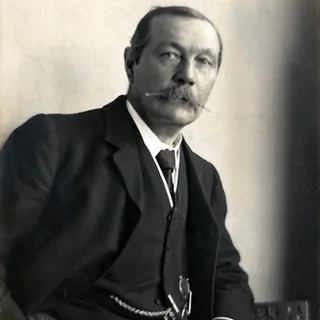 Arthur Conan Doyle — Writer. His investigative fiction offers a comparison with testing a claim against detail rather than accepting the most immediate or socially convenient explanation.
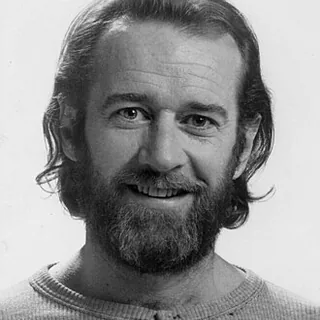 George Carlin — Comedian. His scrutiny of language and social contradictions illustrates an independent, challenging voice unwilling to take reassuring public formulas at face value.
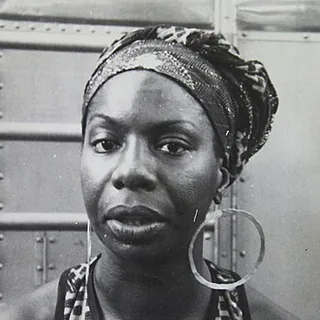 Nina Simone — Singer and pianist. Her expressive intensity and public convictions illustrate art that connects individual experience with a forceful challenge to injustice.
 Bruce Springsteen — Singer-songwriter. His portraits of ordinary lives illustrate attention to loyalty, frustrated hopes and the distance between public promises and lived experience.
 Frida Kahlo — Painter. Her personal symbolic language illustrates individuality and direct engagement with difficult experience, without making the artwork evidence of a confirmed private type.
 Robert De Niro — Actor. His detailed character work offers a comparison with close observation and intensity, distinct from the motivations of the fictional people he portrays.
 Chester Bennington — Singer. His emotionally candid performances offer an artistic illustration of expressing difficult feelings rather than maintaining an invulnerable surface; they are not a clinical explanation.
Fictional Characters Associated with 468
 Sasuke Uchiha — Naruto Shippuden. His responses to loss and betrayal illustrate how identity, distrust and a need for autonomy can become bound to a self-defeating pursuit of confrontation.
 Eren Yeager — Attack on Titan. His insistence on freedom offers an extreme fictional exploration of what happens when conviction becomes unable to tolerate restraint or competing perspectives.
 Wednesday Addams — Wednesday (2022). Her suspicion of appearances and sharply defined individuality illustrate the Truth Teller themes through an investigative, guarded teenage portrayal.
 Darth Vader — Star Wars. His entrenched defensive identity and conflict between power and attachment offer an antagonistic comparison, not an endorsement or a clinical analogy.
 Jinx — Arcane. Her fractured loyalties and forceful self-definition illustrate a fictional struggle with belonging and control; a type label cannot explain or diagnose her distress.
 Loki — Marvel Cinematic Universe. His need to define himself against an imposed family role illustrates individuality, defensive challenge and an unstable relationship with belonging.
 Katniss Everdeen — The Hunger Games franchise. Her guarded loyalty and resistance to public manipulation illustrate the effort to retain an honest personal position within competing agendas.
 Arya Stark — Game of Thrones. Her refusal of an assigned social role illustrates autonomy and fierce loyalty, while her story questions the personal cost of defining a life through retaliation.
 Ellie Williams — The Last of Us games. Her directness and guarded attachments illustrate a difficult tension between wanting connection and refusing to become powerless within it.
 Travis Bickle — Taxi Driver (1976). His alienation and self-justifying mission offer a cautionary fictional contrast, not an equation between this family and violent behaviour.
Sources and scope
The Enneagram Tritype framework is attributed to Katherine Chernick Fauvre. This independent educational guide is not affiliated with or endorsed by Fauvre. It describes a theoretical framework for reflection; it is not a validated assessment, diagnosis or population study.


_Publicity_(cropped).jpg)

.jpg)

.jpg)


