The 458 label identifies the unordered Enneagram family formed by Types 4, 5 and 8, not a specific ordered result. The Scholar family combines these three types: the Individualist from the Heart centre, the Investigator from the Head centre and the Challenger from the Gut centre. Within the Tritype framework, these three types form a broader personality archetype characterised by depth, independent thought, authenticity and a strong desire to retain personal autonomy.
The existing 548 Scholar profile describes the specific Five-led order within this broader family; it does not represent all six 4–5–8 orders. The Scholar can appear in six possible stacking orders: 458, 485, 548, 584, 845 and 854. Each contains the same underlying three types, but the ordering indicates which type leads the overall pattern and which of the remaining two is given greater secondary emphasis.
That distinction matters. A Five-led 548 and an Eight-led 854 belong to the same Scholar family, but they need not look especially similar at first glance. The 548 is more likely to lead with observation, analysis and intellectual self-sufficiency, whereas the 854 is more likely to lead with autonomy, direct engagement and strong boundaries. What connects them is the deeper combination of Four's concern with authenticity, Five's concern with understanding and Eight's concern with independence.
Across its different forms, the Scholar tends to resist accepting reality at face value. There is often a desire to investigate beneath appearances, reach an independent interpretation and retain the freedom to act according to that understanding rather than simply following convention.
Looking for a particular stacking order?
458 — Four-led · 485 — Four-led · 548 — Five-led · 584 — Five-led · 845 — Eight-led · 854 — Eight-led
The Scholar at a Glance
| Feature | Description |
|---|---|
| Archetype | The Scholar |
| Family code | 4 · 5 · 8 |
| Possible orders | 6 |
| Centres | Heart (4) · Head (5) · Gut (8) |
| All six orders | 458 · 485 · 548 · 584 · 845 · 854 |
| Theoretical Dynamics | Withdrawn overlap (4,5) · Rejection overlap (5,8) · Reactive overlap (4,8) |
| Core Tendency | Independent understanding combined with authenticity and strong personal autonomy |
| Central Tension | Introspection and withdrawal versus forceful engagement and boundary defence |
| Characteristic Strength | Deep, original and independently developed insight |
| Potential Blind Spot | Isolation, defensiveness or excessive distrust of outside influence |
How Common Is the Scholar Tritype?
There are currently no large, representative population datasets that allow the prevalence of the Scholar Tritype or its six individual stacking orders to be estimated reliably.
This is an important limitation. Personality frameworks such as the Big Five can be studied using very large psychometric datasets in which traits are measured continuously across thousands of participants. Enneagram and Tritype frequency estimates generally do not have that kind of representative empirical foundation.
Claims about how common particular Tritypes are usually emerge from self-selected test takers, online personality communities, practitioner observations or relatively small specialist Enneagram samples. These sources may be interesting, but they cannot establish how common a type is in the wider population.
The Scholar is sometimes described within Enneagram communities as an unusual or relatively uncommon combination, but such descriptions should be understood as community impressions rather than demographic facts. There is not presently a sound basis for claiming that the Scholar represents a particular percentage of the population or that one of its six stacking orders occurs in one person out of a specific number.
| Question | Current Position |
|---|---|
| Reliable population estimate? | None currently available |
| Representative prevalence dataset? | No |
| Six recognised stacking orders? | Yes |
| Confidence in exact frequency claims? | Low |
The most responsible approach is therefore to examine the theoretical structure and personality descriptions associated with the Scholar without attaching false numerical precision to its rarity.
What Does 458 Mean?
Tritype theory proposes that an individual uses one preferred Enneagram strategy from each of three traditional centres: Heart, Head and Gut. For the Scholar, these are Type 4 from the Heart centre, Type 5 from the Head centre and Type 8 from the Gut centre.
| Component | Centre | Broad concern | Contribution to the Scholar |
|---|---|---|---|
| 4 — Individualist | Heart | Identity, authenticity and meaning | Individuality, emotional depth and resistance to superficial conformity |
| 5 — Investigator | Head | Knowledge, competence and autonomy | Observation, analysis, conceptual mastery and intellectual independence |
| 8 — Challenger | Gut | Autonomy, strength and boundaries | Assertiveness, directness and resistance to external control |
The Scholar is therefore not intended to be understood simply as three separate collections of traits placed beside one another. The interest lies in how the three tendencies interact.
Type 4 introduces a concern with authenticity, meaning and personal identity. Type 5 contributes analytical distance, intellectual curiosity and the desire to understand something independently. Type 8 contributes force, boundary awareness and resistance to coercion.
Together, they can produce someone who is unwilling to settle easily for superficial explanations, artificial identities or unwanted control. One simple way of expressing the interaction is through three questions:
Four asks: Is this genuine?
Five asks: Is this actually true? Eight asks: Am I free to decide for myself? Different Scholar stackings place different weight on those questions, but all three remain part of the broader pattern.
The Scholar Personality
The defining feature of the Scholar is the combination of depth with independence. The Five component creates a tendency to step back from immediate experience and examine how something works. A Scholar may want to understand the underlying structure of a situation rather than simply responding to its surface appearance. Complex subjects, hidden mechanisms, contradictions and questions without simple answers can therefore be particularly attractive.
The Four component adds another dimension. Knowledge alone may not feel sufficient if it appears impersonal or disconnected from meaning. The Scholar may care not only about whether an interpretation is logically coherent but whether it captures something psychologically or personally genuine.
Independence supports insight when it can also admit outside correction.
This can produce an unusual intellectual style. There may be a willingness to explore obscure, difficult or uncomfortable subjects because conventional explanations feel incomplete. The Scholar may be less interested in reaching the socially acceptable conclusion than in reaching one that appears internally coherent.
Eight adds a stronger concern with personal sovereignty. The desire to understand something independently can become closely connected to the desire to remain independent while doing so. Attempts to dictate what the Scholar should think, feel or value may therefore provoke considerably more resistance than ordinary disagreement.
This interaction gives the archetype an important internal contrast. Four and Five both contribute introspective tendencies. They can encourage reflection, imagination, specialised interests and substantial time spent privately processing experience. Eight, however, brings a more forceful element into the combination. As a result, a Scholar may be highly private without being especially compliant.
Someone can spend long periods working alone, avoiding unnecessary social involvement and thinking through a problem internally, yet become extremely direct when an important boundary or principle is challenged.
This is one reason the Scholar can sometimes be difficult to understand from surface behaviour alone. Withdrawal should not automatically be interpreted as passivity. Quietness may coexist with very firm convictions.
At their best, Scholars may be capable of unusually sustained independent thinking. They can question assumptions that other people regard as obvious, tolerate ambiguity and remain with difficult problems long enough to develop a genuinely original interpretation.
The risks emerge when this independence becomes too defensive. A person accustomed to reaching conclusions alone can begin to assume that outside influence is more likely to corrupt their reasoning than improve it. Scepticism can harden into cynicism. Strong personal boundaries can become rigidity, while a legitimate preference for solitude can develop into unnecessary isolation.
How the Dominant Type Changes the Presentation
The Scholar should not be imagined as one uniformly quiet or introverted personality. Four-led Scholars — 458 and 485 — may place relatively greater emphasis on identity, emotional truth and the need to express something personally meaningful. Their analytical and assertive qualities operate within that broader concern with authenticity.
Five-led Scholars — 548 and 584 — may appear more conventionally cerebral. They are more likely to lead with investigation, knowledge and intellectual autonomy, with Four and Eight shaping the emotional and instinctive expression of that primarily analytical orientation.
Eight-led Scholars — 845 and 854 — can present quite differently. Their first movement may be towards direct engagement, autonomy and boundary-setting rather than withdrawal. The introspective Four and analytical Five components remain important, but they may operate in support of a personality that is more comfortable acting upon the environment rather than merely observing it.
An Eight-led Scholar can therefore be just as intellectually complex as a Five-led Scholar without necessarily resembling the stereotype of the solitary researcher. The analysis may be more strategic and action-oriented, used to understand a situation well enough to influence, challenge or control it.
Inner Dynamics in Enneagram Theory
The internal structure of the Scholar becomes clearer when Types 4, 5 and 8 are considered through several of the broader groupings used within Enneagram theory.
These classifications are part of the Enneagram's theoretical model rather than independently demonstrated psychological mechanisms. They are nevertheless useful for understanding why the combination is described as it is.
The Withdrawn Overlap: Types 4 and 5
Types 4 and 5 are commonly placed within the Enneagram's Withdrawn grouping. Both encourage movement towards the internal world, although their reasons differ. Type 4 turns inward towards identity, imagination, emotional experience and personal meaning. Type 5 turns inward towards observation, knowledge, conceptual understanding and mental self-sufficiency.
Their overlap contributes much of the Scholar's depth. A Four- or Five-led Scholar may spend considerable time reflecting before acting, developing specialist interests or pursuing ideas which have little immediate social reward. External stimulation may be less important than having enough space to develop an internally coherent understanding.
Eight complicates this withdrawn tendency.
Its presence means that inwardness does not necessarily imply accommodation. The Scholar may choose not to engage until engagement appears necessary. A useful shorthand for the combination is:
private by preference, firm when required.
This description applies most obviously to Four- and Five-led Scholars. In Eight-led forms, the balance may shift towards more immediate outward engagement, although the reflective influence of Four and Five remains present beneath the surface.
The Rejection Overlap: Types 5 and 8
Within Enneagram object-relations theory, Types 5 and 8 are both placed within the Rejection grouping. The framework associates both with self-reliance and sensitivity around dependence, but their strategies are strikingly different.
Type 5 attempts to create autonomy through distance, knowledge and reduced need. By understanding a problem and maintaining sufficient internal resources, Five seeks to avoid becoming overwhelmed or excessively dependent on the surrounding environment.
Type 8 approaches autonomy much more directly. Instead of moving away from pressure, Eight tends to meet it through strength, assertiveness and firm boundaries. This creates one of the most interesting tensions within the Scholar. Five protects independence by stepping back. Eight protects independence by pushing back.
Both strategies can therefore exist within the same person. A Five-led Scholar may initially withdraw, observe and analyse before deciding whether direct confrontation is necessary. An Eight-led Scholar may begin by establishing control over the situation and then use Five's analytical qualities to understand the environment more strategically.
Neither response should be treated as mechanically inevitable. The value of the theoretical distinction is that it helps explain why the Scholar can alternate between considerable detachment and considerable force.
The Reactive Overlap: Types 4 and 8
Types 4 and 8 are commonly placed within the Enneagram's Reactive harmonic grouping. Within this framework, Reactive types are associated with a stronger tendency to engage emotionally with something that feels wrong rather than immediately minimising, reframing or smoothing it over. Four contributes sensitivity to emotional authenticity. Eight contributes sensitivity to power, boundaries and direct confrontation.
Together they can give the Scholar more intensity than might be expected from the detached stereotype often associated with Type 5. A Scholar may therefore find it difficult to pretend that an important conflict does not exist merely for the sake of keeping the atmosphere comfortable. If something appears dishonest, manipulative or fundamentally misrepresented, the impulse may be to acknowledge the conflict rather than paper over it.
Again, the expression depends considerably on stacking. A Four-led Scholar may experience the issue first through authenticity or emotional meaning. An Eight-led Scholar may respond first through boundary protection or direct challenge. A Five-led Scholar may initially analyse the situation before the more reactive aspects of Four and Eight become visible.
Strengths and Potential Blind Spots
Likely Strengths
One of the strongest qualities associated with the Scholar is independent judgement. The combination of Four, Five and Eight offers relatively little theoretical incentive to accept an interpretation simply because it is popular. Four questions whether it is authentic, Five questions whether it is accurate and Eight resists accepting something merely because authority demands it.
This can make the Scholar particularly effective when a problem requires distance from conventional assumptions.
- Another potential strength is intellectual depth. Five supplies sustained curiosity, while Four can draw attention towards psychologically rich, unusual or existentially significant subjects. Eight may provide enough firmness to continue investigating areas that other people find uncomfortable.
- Scholars may also be capable of original synthesis. Rather than merely acquiring information, they may enjoy connecting material from different sources and constructing their own conceptual framework.
- There can also be a notable willingness to tolerate complexity. Simple explanations may feel unsatisfactory when they leave important contradictions unresolved. This can produce careful thinking, provided the desire for complexity does not become complexity for its own sake.
- The Eight component can contribute decisiveness and boundary strength. Even a highly reflective Scholar may become considerably more forceful once a line has clearly been crossed.
Potential Blind Spots
The most obvious difficulty is excessive self-reliance. Independence is valuable until it becomes an assumption that one's own interpretation is inherently safer than outside input. At that point, the Scholar can begin to confuse autonomy with intellectual isolation. This can make criticism unusually difficult to receive. The problem is not necessarily sensitivity to criticism itself; rather, outside input may be interpreted as an attempt to interfere with a carefully developed internal framework.
Another risk is cynicism.
A person who repeatedly looks beneath appearances can become highly skilled at noticing inconsistencies, self-interest and weak reasoning. This becomes less useful when the search for what is hidden produces an automatic assumption that every surface explanation must conceal something worse.
The precise blind spots can differ according to stacking. A Four-led Scholar may become excessively identified with being different, misunderstood or uncompromisingly authentic. A Five-led Scholar may retreat too far into analysis, distance or self-sufficiency. An Eight-led Scholar may become excessively controlling, confrontational or resistant to situations that require compromise rather than force.
The shared developmental challenge is therefore not to abandon independence but to prevent independence becoming defensive inflexibility.
Relationships and Communication
Scholars are likely to value honesty, depth and personal independence in relationships. Superficial connection may be less satisfying than a smaller number of relationships in which complex ideas, strong opinions or emotionally meaningful subjects can be discussed openly. The Four and Five components can both contribute to selectivity. Trust may take time because both emotional exposure and intellectual dependence can feel significant.
Depth and honesty become easier to share when boundaries are openly understood.
This can create an important contradiction. The Scholar may strongly desire to be understood while simultaneously resisting the vulnerability required to make deep understanding possible.
Once trust develops, relationships can become highly substantial. The Scholar may value people who are intellectually independent themselves and who do not require continual agreement as proof of loyalty.
Communication styles vary by stacking.
Four-led Scholars may place greater emphasis on whether communication feels genuine and emotionally accurate.
Five-led Scholars may be more inclined to think privately before speaking and may prefer precise, carefully considered communication.
Eight-led Scholars may communicate more directly and may have less hesitation about confronting a problem as soon as it becomes apparent. Across the family, there can be a tendency to prioritise accuracy over social smoothing. This is not inherently a problem, but it can become one when directness is sharper than necessary.
A useful developmental principle for the Scholar is that clarity and tact are not mutually exclusive. A conclusion does not become less truthful because it is expressed in a way another person can actually hear.
Work and Career Preferences
The Scholar archetype is likely to appreciate work that offers some combination of autonomy, complexity, expertise and meaningful control over how problems are approached. Highly supervised environments can become frustrating when rules appear arbitrary or when organisational hierarchy matters more than competence. Scholars may respond better when they are given a substantive problem and sufficient freedom to determine how to solve it.
- For Five-led Scholars, research and specialist work can be particularly appealing. Scientific research, mathematics, software development, systems analysis, philosophy, data analysis, engineering and similar fields can provide opportunities for sustained concentration and deep expertise.
- Four-led Scholars may be somewhat more attracted to fields where interpretation and individual expression matter. Writing, filmmaking, visual art, design, cultural criticism, psychology, philosophy and other creative or interpretive disciplines can combine intellectual depth with personal meaning.
- Eight-led Scholars may prefer environments where understanding can be turned into action, strategy or influence. Entrepreneurship, leadership, investigative work, litigation, organisational strategy, crisis-oriented roles or technically demanding positions with substantial decision-making authority may provide a more natural outlet for an assertive Scholar than purely contemplative work.
These categories should not be treated as rigid boundaries.
- A Five-led Scholar can be an entrepreneur.
- An Eight-led Scholar can become an academic.
- A Four-led Scholar can excel in engineering.
The distinction concerns the style of motivation, not occupational destiny. Investigative work may appeal across all three dominant styles because it combines several shared Scholar themes. Investigative journalism, historical research, forensic work, security analysis, technical investigation or specialist non-fiction all reward curiosity while allowing established explanations to be questioned.
The overall working environment may matter more than the job title. A Scholar may prefer relatively modest work with genuine autonomy over a more prestigious role dominated by constant networking, compulsory enthusiasm, organisational politics or micromanagement. These are personality preferences rather than career prescriptions. Ability, training, interests, opportunities, financial needs and personal values remain more important than a personality classification.
Stress and Growth
Under prolonged stress, the Scholar's characteristic strengths can become exaggerated. Healthy independence can become isolation. Scepticism can become habitual distrust. Strong boundaries can become defensive rigidity. Emotional depth can become fixation, while intellectual caution can become endless analysis.
One possible cycle is:
withdrawal → isolation → increased distrust → stronger defensive reactions
This pattern is particularly easy to imagine in Four- and Five-led Scholars. An Eight-led Scholar may instead move towards increasing attempts to control the situation before eventually withdrawing when control proves impossible.
In either case, the broader issue is similar: autonomy begins to feel threatened, and the response becomes progressively more defensive.
Growth does not require the Scholar to surrender independence. The healthier direction is to become sufficiently secure in one's own judgement that outside influence no longer automatically feels dangerous. This may involve accepting criticism without interpreting it as control, tolerating temporary uncertainty, acting before every variable has been resolved and allowing trusted people to contribute without experiencing collaboration as a loss of autonomy.
The strongest Scholar is therefore not someone who needs nobody.
Outside influence need not be treated as a loss of personal autonomy.
It is someone who can remain intellectually and personally independent while still making intelligent use of relationships, cooperation and corrective feedback.
The Six Scholar Stackings
The six Scholar codes contain the same three Enneagram types, but their order is intended to describe which strategy takes priority. The first number represents the dominant or core type. The second represents the more prominent of the two remaining centre strategies, while the third occupies the tertiary position.
A compact comparison looks like this:
| Stacking | Lead Type | Secondary Emphasis | Typical Presentation |
|---|---|---|---|
| 458 | Four | Five | Identity-led, reflective, analytical and individualistic |
| 485 | Four | Eight | Identity-led, more forceful, boundary-conscious and emotionally direct |
| 548 | Five | Four | Analysis-led, introspective, imaginative and individualistic |
| 584 | Five | Eight | Analysis-led, more pragmatic, strategic and boundary-focused |
| 845 | Eight | Four | Autonomy-led, expressive, intense and strongly self-defining |
| 854 | Eight | Five | Autonomy-led, analytical, strategic and controlled |
These descriptions are best treated as differences in emphasis, not six entirely separate personalities.
The Four-Led Scholars: 458 and 485
For both 458 and 485, Type 4 provides the core orientation. Questions of identity, authenticity and personal meaning therefore tend to come first. The person may be particularly sensitive to whether an experience, belief or relationship feels genuine rather than merely socially acceptable. The difference lies in which strategy follows.
458 — Four → Five → Eight
In 458, Type 5 follows the dominant Four. The individual's concern with authenticity is therefore supported relatively early by analysis, observation and intellectual distance. The person may want not only to express a distinctive perspective but to understand it thoroughly. This can create a particularly introspective version of the Scholar. Personal experience is examined, interpreted and fitted into a larger conceptual framework.
Eight remains important, but its assertive qualities may appear more selectively. The individual may spend considerable time reflecting before deciding that an issue requires direct confrontation.
A simplified description would be:
authenticity first, understanding second, boundary enforcement third.
485 — Four → Eight → Five
In 485, Type 8 follows the dominant Four. Identity and authenticity remain central, but the secondary Eight influence can make the response to perceived intrusion, falseness or disrespect more immediate. Compared with 458, the 485 may therefore appear more openly forceful and less inclined to retreat into analysis before taking a position.
Five remains present, contributing intellectual depth and the desire to understand, but it occupies a less prominent place in the stacking.
The broad tendency becomes:
authenticity first, boundary protection second, analysis third.
The difference between 458 and 485 is therefore not that one is intellectual and the other is not. Both contain Five. The difference is whether analytical distance or assertive boundary-setting is theoretically expected to come forward more readily after the Four core.
The Five-Led Scholars: 548 and 584
Both 548 and 584 begin with Type 5. Understanding, competence and intellectual autonomy therefore provide the central organising theme. These are likely to be the variants most closely associated with the stereotypical image of the private, highly analytical Scholar. Again, the secondary position makes an important difference.
548 — Five → Four → Eight
In 548, Type 4 follows the dominant Five. The drive to understand is therefore closely connected with individuality, personal meaning and emotional depth. A 548 may become particularly interested in unusual or conceptually rich subjects because purely functional explanations feel incomplete. There can be a desire to understand not only how something works but what it means.
Eight provides firmness beneath this introspective combination. The person may therefore appear highly private until an important boundary is crossed, at which point the more confrontational side of the pattern becomes visible.
A simplified description is:
understanding first, meaning second, boundary enforcement third.
584 — Five → Eight → Four
In 584, Type 8 follows the dominant Five. Understanding and competence remain central, but analysis is connected more directly to autonomy, practical control and boundary protection. Compared with 548, the 584 may therefore appear somewhat more pragmatic or strategically forceful. Knowledge can function not only as a source of understanding but as a way of becoming harder to control or manipulate.
Four remains important and contributes individuality and emotional depth, but it occupies the tertiary position.
The broad tendency becomes:
understanding first, autonomy second, personal meaning third.
The distinction between 548 and 584 is subtle rather than absolute. Both are analytical, independent Scholars. The difference lies in whether Four's concern with identity or Eight's concern with autonomy is expected to colour the Five core more strongly.
The Eight-Led Scholars: 845 and 854
The Eight-led variants are particularly important because they demonstrate why the Scholar should not automatically be imagined as a withdrawn intellectual. Both 845 and 854 begin with Type 8. Autonomy, strength and control over personal boundaries therefore provide the primary orientation. The person may be more willing to engage directly with their environment, establish a position and act upon a problem rather than initially withdrawing from it.
Four and Five still provide the characteristic depth of the Scholar, but that depth may support action rather than replace it.
845 — Eight → Four → Five
In 845, Type 4 follows the dominant Eight. The Eight concern with autonomy is therefore accompanied relatively closely by themes of identity, authenticity and personal meaning. This can produce an especially self-defining expression of the Scholar. The person may resist control not only because they value autonomy but because external pressure feels like an attempt to override something personally fundamental.
Five adds analytical depth and conceptual understanding, but it appears after the Eight–Four combination.
A simplified description is:
autonomy first, authenticity second, analysis third.
Compared with 854, the 845 may therefore appear somewhat more expressive, personally intense or visibly individualistic.
854 — Eight → Five → Four
In 854, Type 5 follows the dominant Eight. The result may be a more analytical and strategically controlled Eight-led Scholar. Autonomy remains primary, but Five contributes a strong tendency to gather information, understand systems and anticipate how situations operate before committing resources or exposing vulnerability.
Four adds individuality and emotional depth in the tertiary position.
The broad tendency becomes:
autonomy first, understanding second, personal meaning third.
Compared with 845, the 854 may therefore appear somewhat more reserved, strategic or intellectually detached even though both remain fundamentally Eight-led.
Wings and Other Secondary Influences
The dominant type of each Scholar stacking can be modified further by wings and other elements of Enneagram theory. Because the Scholar family contains three possible dominant types, there is no single wing distinction that applies to every Scholar. A Four-led Scholar may show stronger influence from Type 3 or Type 5. A Five-led Scholar may show stronger Four- or Six-wing qualities. An Eight-led Scholar may show stronger Seven- or Nine-wing influence.
These modifiers can affect the tone of the personality without changing the underlying 4–5–8 Scholar combination. For example, a Five-led Scholar with stronger Four-wing influence may appear more imaginative, aesthetically oriented or introspective, while stronger Six-wing influence may contribute somewhat more emphasis on systematic verification, caution or technical reliability.
Likewise, an Eight-led Scholar with stronger Seven influence may appear more expansive and outwardly energetic, while stronger Nine influence could soften the presentation and make the same underlying autonomy less immediately confrontational.
Wings should therefore be treated as secondary modifiers rather than separate Tritype archetypes. They add nuance after the primary distinction between the Scholar family and its six stacking orders has already been established.
Related Tritype Archetypes
Comparing the Scholar with neighbouring Tritype families can clarify which parts of the personality pattern come from each component. The 459 Contemplative retains Types 4 and 5 but replaces Eight with Type 9. It therefore shares much of the Scholar's introspection, individuality and intellectual depth while introducing a Gut strategy more associated with accommodation and conflict reduction than forceful boundary defence.
This makes 459 particularly useful for understanding what Eight contributes to 458. The 358 Solution Master retains Types 5 and 8 while replacing Four with Type 3. Analysis and assertiveness remain, but the Heart component becomes more achievement-oriented and externally pragmatic. Compared with the Scholar, the overall pattern may therefore place less emphasis on personal authenticity and more on effectiveness or demonstrable accomplishment.
The 468 Truth Teller retains Types 4 and 8 while replacing Five with Type 6. Emotional intensity, authenticity and boundary awareness remain important, but Five's detached investigative style is replaced by the questioning and security-oriented tendencies associated with Six.
These comparisons are useful because they do more than say that two Tritypes are similar. They show which component changes and what theoretical difference that change is expected to make.
The Scholar and the Big Five
The Enneagram and Big Five describe personality through fundamentally different models, so there is no direct conversion between the Scholar Tritype and a particular Big Five profile.
Some broad descriptive similarities can nevertheless be discussed cautiously. The intellectual curiosity associated with Type 5 and the individuality associated with Type 4 may resemble aspects of higher Openness to Experience. The Scholar's preference for autonomy and willingness to resist external demands may sometimes resemble aspects of lower Agreeableness, particularly where Agreeableness involves compliance, accommodation or willingness to defer to other people's preferences.
Extraversion is more difficult to generalise. The Four and Five components both belong to withdrawn groupings within Enneagram theory, which could produce similarities with lower Extraversion in some Four- and Five-led Scholars. An Eight-led Scholar, however, may be substantially more assertive and outwardly engaged. Assertiveness itself should also not automatically be confused with global Extraversion.
Other Big Five dimensions could vary widely. A highly methodical Scholar may score relatively high in Conscientiousness, while another individual with the same Tritype may be much less structured. Likewise, emotional reactivity can vary considerably and should not be inferred directly from the Tritype code.
The Scholar and 16-Type Systems
The Scholar can also resemble several descriptions found within Jungian and MBTI-style personality systems, particularly profiles emphasising independence, abstract thought and unconventional interests.
Five-led Scholars may sometimes recognise aspects of INTJ or INTP descriptions because of the emphasis on autonomous reasoning and complex ideas. Some Four-led Scholars may identify more strongly with introspective intuitive profiles such as INFJ, particularly where identity, interpretation and emotional meaning are prominent.
Eight-led Scholars may appear more assertive and outwardly decisive, and their 16-type identification could therefore vary more widely. These are loose descriptive comparisons rather than conversions. Enneagram theory is primarily concerned with motivations, defensive strategies and recurring psychological patterns. Jungian and MBTI-style systems use a different conceptual structure.
Someone identifying as 548 is therefore not automatically INTJ, just as an INTJ should not automatically be expected to belong to the Scholar Tritype. Treating the systems as complementary perspectives rather than interchangeable labels preserves the distinctions that make each framework useful.
The Scholar in One Sentence
The 458 Scholar Tritype combines individualistic depth, independent analysis and strong personal autonomy into a personality that seeks to understand reality on its own terms without sacrificing authenticity or freedom.
Famous People and Fictional Characters Associated with 458
These examples offer illustrative comparisons with the 458 family, not confirmed personality assessments. The family includes all six orders of its three types; an example need not use the ascending 458 order. A public career or fictional story cannot establish someone's private motivations. Fictional examples refer to the works or versions named below, and are illustrations rather than role models.
Famous People Associated with 458
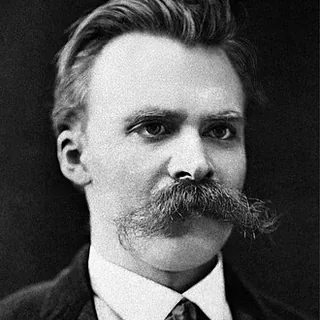 Friedrich Nietzsche — Philosopher. His challenges to inherited values illustrate intellectual independence, individual expression and resistance to accepting a framework merely because it is established.
 Kurt Cobain — Musician. His distinctive songwriting and discomfort with conventional expectations offer an artistic comparison with authenticity and resistance to imposed identities.
 John Lennon — Musician and songwriter. His experimental work and confrontational public voice illustrate the meeting of individual expression, questioning and a wish to resist convention.
 Ludwig van Beethoven — Composer. His strongly individual musical language illustrates artistic independence developed through sustained craft and a refusal to remain within inherited expectations.
 Karl Marx — Writer and political theorist. His sustained critique of economic structures offers a comparison with independent analysis joined to a forceful challenge to an existing order.
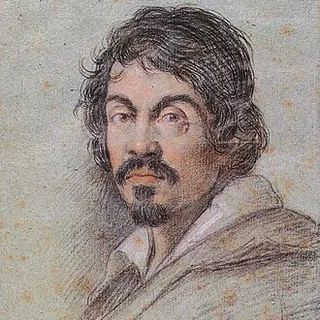 Caravaggio — Painter. His dramatic use of light and unconventional realism illustrate an individual artistic vision that resists a polished or reassuring presentation.
 David Lynch — Film director and artist. His carefully developed surreal worlds illustrate creative independence and the construction of a personal framework rather than an easily shared explanation.
 Stephen King — Writer. His imaginative work repeatedly examines individual vulnerability and social pressure, offering an artistic comparison with observation, intensity and an independent voice.
 Emily Brontë — Novelist and poet. Her distinctive fictional world offers a comparison with private imagination, emotional intensity and resistance to conventional expectations of character and setting.
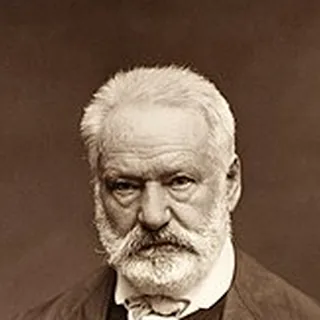 Victor Hugo — Writer. His expansive imaginative work and public convictions illustrate artistic individuality connected to a strong challenge to injustice and established power.
Fictional Characters Associated with 458
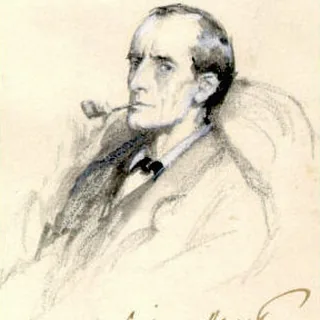 Sherlock Holmes — Arthur Conan Doyle's stories. His analytical independence and selective engagement illustrate a preference for an internally tested understanding over ordinary social expectations.
 Gregory House — House. His diagnostic investigations illustrate intellectual autonomy and direct challenge, while his relationships expose the costs of treating every boundary as an obstacle.
 Shadow the Hedgehog — Sonic games. His guarded independence and concern with his origins illustrate identity and autonomy shaped through difficult questions about purpose.
 Kat Stratford — 10 Things I Hate About You (1999). Her resistance to social expectations illustrates individuality and strong boundaries, alongside the vulnerability involved in letting someone closer.
 Jotaro Kujo — JoJo's Bizarre Adventure. His guarded presence and decisive action illustrate independence that is more involved in protecting others than his surface presentation initially suggests.
 Scar — The Lion King franchise. His resentment and strategic manipulation offer an antagonistic comparison, not an implication that independent or intense people share his moral character.
 Maleficent — Sleeping Beauty (1959). Her forceful insistence on her own position is an extreme fairy-tale illustration of pride, exclusion and retaliatory control.
 Geralt of Rivia — The Witcher television series (2019). His outsider status and independent judgement illustrate the effort to retain personal boundaries while being drawn into morally difficult attachments.
 Heathcliff — Wuthering Heights. His intense attachments and defensive autonomy offer a destructive literary comparison rather than a model of healthy independence.
 Alice — Disney's Alice in Wonderland (1951). Her questioning of an incoherent world illustrates an independent attempt to make sense of expectations that do not deserve automatic obedience.
Sources and scope
The Enneagram Tritype framework is attributed to Katherine Chernick Fauvre. This independent educational guide is not affiliated with or endorsed by Fauvre. It describes a theoretical framework for reflection; it is not a validated assessment, diagnosis or population study.

.jpg)
_(cropped).jpg)


.jpg)
.jpg)


.jpg)