The 378 label identifies the unordered Enneagram family formed by Types 3, 7 and 8, not a specific ordered result. The Mover & Shaker family combines these three types: the Achiever from the Heart centre, the Enthusiast from the Head centre and the Challenger from the Gut centre. Within the Tritype framework, these three types form a strongly action-oriented archetype associated with ambition, adaptability, confidence, independence and a pronounced desire to influence circumstances rather than simply accepting them as they are.
Type 3 contributes the wish to be effective and to turn effort into accomplishment, Type 7 contributes an attraction to possibility and a talent for imagining alternative routes forward, and Type 8 contributes personal force, decisiveness and resistance to external control. Together, the three tendencies can create a personality that instinctively looks for movement, leverage and opportunity, particularly when confronted by obstacles that other people might experience primarily as reasons to stop.
The Mover & Shaker can appear in six possible stacking orders: 378, 387, 738, 783, 837 and 873. Each contains the same three Enneagram types, but the ordering describes which strategy theoretically takes priority and which of the other two becomes more prominent in supporting it. A Three-led 378 may therefore organise its energy primarily around achievement and visible progress, while a Seven-led 783 may organise the same underlying assertiveness around freedom and possibility, and an Eight-led 837 may place personal autonomy and control over direction at the centre.
These differences can be substantial enough that two people from the same 3–7–8 family may initially appear quite different, yet the underlying architecture remains recognisable because all six stackings combine a Heart strategy concerned with accomplishment, a Head strategy concerned with options and a Gut strategy concerned with strength and agency.
Across the family, there is usually some form of forward pressure. Mover & Shakers tend to be more comfortable creating movement than waiting indefinitely for conditions to become ideal, and they may react to frustration by increasing activity rather than withdrawing from the field. If one route closes, Seven looks for another; if a goal appears important, Three wants to make measurable progress towards it; and if something or someone appears to be exerting unwanted control, Eight wants to restore autonomy. At their best, these tendencies can produce impressive resourcefulness, resilience and practical initiative.
At their least balanced, however, the same qualities can produce impatience, overextension, excessive competitiveness and a tendency to treat slowing down as failure rather than as a potentially intelligent response to changing circumstances.
The Mover & Shaker at a Glance
| Feature | Description |
|---|---|
| Archetype | The Mover & Shaker |
| Family code | 3 · 7 · 8 |
| Possible orders | 6 |
| Centres | Heart (3) · Head (7) · Gut (8) |
| All six orders | 378 · 387 · 738 · 783 · 837 · 873 |
| Theoretical Dynamics | The three types share an assertive stance (3, 7 and 8) |
| Core Tendency | Pursuing goals and opportunities through energy, adaptability and decisive action |
| Central Tension | Relentless forward movement versus the need to slow down, reflect and acknowledge limits |
| Characteristic Strength | High initiative combined with confidence, resilience and practical momentum |
| Potential Blind Spot | Impatience, overextension, excessive competitiveness or avoidance of vulnerability |
The six stackings divide naturally into three dominant-type pairs. 378 and 387 are Three-led, meaning achievement and effectiveness provide the primary orientation; 738 and 783 are Seven-led, meaning possibility, freedom and expansion come first; and 837 and 873 are Eight-led, meaning autonomy, strength and control over one's direction become the central concern. The second number then changes how that dominant strategy tends to be expressed. This distinction becomes particularly important with the Mover & Shaker because all three component types already share a relatively active stance towards the environment, so the differences between stackings concern less whether the person acts and more what the action is ultimately trying to accomplish.
How Common Is the Mover & Shaker Tritype?
There are currently no large, representative population datasets that allow the prevalence of the Mover & Shaker Tritype, or any of its six individual stacking orders, to be estimated reliably. This is an important limitation when discussing Tritype in anything resembling demographic terms. Mainstream trait frameworks such as the Big Five can be investigated through very large samples in which traits are measured continuously and compared across populations, whereas Enneagram and Tritype frequency estimates generally depend on self-selected test takers, Enneagram communities, practitioner impressions or relatively small samples. Those sources can be useful for understanding how people identify with the system, but they are not strong enough to establish how common a particular Tritype actually is in the wider population.
The Mover & Shaker is sometimes described informally as a combination that appears disproportionately among entrepreneurs, executives, salespeople, entertainers, politicians or other people operating in competitive and highly visible environments. There is an understandable theoretical reason for those associations because Types 3, 7 and 8 are all described within Enneagram theory as relatively assertive and externally engaged strategies. Nevertheless, this does not demonstrate that the Tritype is genuinely more common within those occupations. Highly active, ambitious or dominant individuals are naturally more visible in contexts that reward those characteristics, and people interested in personality framework may also be more likely to notice memorable examples that fit the stereotype than quieter examples that do not.
| Question | Current Position |
|---|---|
| Reliable population estimate? | None currently available |
| Representative prevalence dataset? | No |
| Six recognised stacking orders? | Yes |
| Confidence in exact frequency claims? | Low |
The most responsible approach is therefore to describe the theoretical structure of the Mover & Shaker without attaching false numerical precision to its prevalence. It is reasonable to say that the combination is designed to represent a particularly assertive interaction between the Heart, Head and Gut centres. It is not reasonable, on present evidence, to claim that a particular percentage of entrepreneurs are 378s or that one of the six stackings occurs in a fixed proportion of the general population.
What Does 378 Mean?
Tritype theory proposes that an individual relies upon one preferred Enneagram strategy from each of three traditional centres: Heart, Head and Gut. In the Mover & Shaker family, Type 3 represents the Heart centre, Type 7 represents the Head centre and Type 8 represents the Gut centre. Each contributes a different motivational emphasis, and the archetype emerges from their interaction rather than from simply adding three independent trait lists together.
| Component | Centre | Broad concern | Contribution to the Mover & Shaker |
|---|---|---|---|
| 3 — Achiever | Heart | Value, accomplishment and effectiveness | Ambition, adaptability, goal focus and awareness of results |
| 7 — Enthusiast | Head | Possibility, freedom and stimulation | Optimism, flexibility, opportunity-seeking and rapid reframing |
| 8 — Challenger | Gut | Autonomy, strength and boundaries | Assertiveness, decisiveness, independence and resistance to control |
Type 3 introduces a concern with effectiveness, achievement and the ability to produce results. The Three strategy tends to evaluate the environment in terms of what works, what can be improved and what kind of performance will move the person closer to a valued objective. Type 7 introduces a different kind of forward movement. Seven is interested in possibilities, alternatives and the freedom that comes from not being psychologically trapped inside one narrow course of action. When a situation becomes disappointing or restrictive, Seven tends to search for another route. Type 8 contributes a third form of agency through autonomy, directness and the willingness to push against resistance. Where Three adapts and Seven improvises, Eight is prepared to confront.
The resulting combination can therefore be understood as a personality organisation in which three separate psychological questions repeatedly reinforce one another. Three is concerned with whether a course of action is effective and capable of producing something worthwhile. Seven is concerned with whether alternatives exist and whether the person remains free to pursue them. Eight is concerned with whether the individual retains sufficient strength and independence to determine their own direction. When these questions converge, the Mover & Shaker may develop a strong instinct to approach reality as something that can be acted upon, rearranged and redirected, rather than merely endured.
This is one reason the archetype can appear unusually difficult to immobilise. A setback does not necessarily activate only one response. The Three component can increase effort or change strategy, Seven can identify another possibility and Eight can push more directly against whatever appears to be blocking progress. That combination can be extremely effective when the problem genuinely rewards persistence, creativity and decisive action. It can become less adaptive when reality requires acceptance, patience or a willingness to recognise that some constraints cannot be overcome simply by adding more energy.
The Mover & Shaker Personality
The defining quality of the Mover & Shaker is the combination of achievement, possibility and personal force. All three component types contain a movement towards action, although the reasons for acting differ. Three wants to create value through accomplishment and competent performance. Seven wants to move towards possibilities and away from constriction. Eight wants sufficient strength to preserve autonomy and resist being dominated by circumstances. When these tendencies reinforce one another, the personality can develop a pronounced bias towards intervention: if something can be improved, pursued, negotiated, built, challenged or redirected, the Mover & Shaker is likely to feel more comfortable attempting to do something than remaining indefinitely in passive observation.
The Three component contributes much of the archetype's pragmatic focus. Mover & Shakers may have a strong instinct for identifying what will produce movement and what is merely consuming time. They can become highly responsive to feedback from the environment, particularly when that feedback concerns whether a strategy is working. If one method proves ineffective, the individual may have relatively little sentimental attachment to continuing it simply because it was the original plan. This gives the archetype the potential for considerable adaptability. The danger is that effectiveness itself can become the dominant measure of value, causing slower, subtler or less measurable forms of development to receive insufficient attention.
Seven broadens the field by adding imagination, optimism and a strong attraction to alternative possibilities. The Mover & Shaker may therefore be capable of seeing opportunities in situations other people experience mainly as limitations. A failed plan can become information about what to try next; a closed door can prompt a search for another entrance; a restrictive environment can stimulate the desire to create an independent route. This quality can make the archetype remarkably resilient because discouragement does not automatically lead to paralysis. At the same time, it can create difficulty staying with disappointment long enough to understand what the disappointment is revealing. If every unpleasant experience is rapidly transformed into another opportunity, emotional processing can become subordinate to momentum.
Momentum helps a project begin; judgement helps decide what deserves to continue.
Eight adds a harder edge to the pattern. The Mover & Shaker does not merely possess alternatives and ambition; there is also the capacity to push directly against resistance. When charm, persuasion, adaptability or strategic repositioning fail, the Eight component may become more visible through stronger boundaries, greater confrontation or an increased desire to take control of the situation personally. This can make the archetype particularly effective in circumstances where uncertainty, opposition or conflict must be confronted rather than avoided. It can also produce escalation when resistance is interpreted too quickly as a challenge that must be overcome.
The interaction between these three tendencies often creates an important relationship with confidence. Three wants to appear capable, Seven assumes that possibilities remain available and Eight dislikes occupying a powerless position. The person may therefore learn to move into uncertain situations with a degree of self-assurance that is partly temperamental and partly strategic. Confidence itself becomes a method for generating momentum. Other people may respond positively to someone who appears certain that progress is possible, and that response can create real opportunities that would not have existed without the initial display of confidence.
This does not mean the Mover & Shaker is always internally certain. In fact, one of the more interesting aspects of the archetype is that outward decisiveness can coexist with private insecurity. The person may have learned that uncertainty is best handled through action: rather than waiting until confidence arrives, they act and allow confidence to develop through engagement. In many situations this is adaptive. Experience is acquired more quickly, feedback arrives sooner and the individual learns by participating directly. The difficulty arises when action becomes the only acceptable response to uncertainty and contemplation starts to feel like weakness or loss of control.
There can also be a strong appetite for leverage. Mover & Shakers are not necessarily satisfied with simply working harder within an existing system if the system itself can be changed. They may be drawn towards opportunities in which one decision, relationship, innovation or calculated risk produces disproportionate effects. This mentality can appear in business, leadership, politics, creative work, social life or personal projects. The individual may naturally ask which move will create the greatest amount of progress rather than merely completing the next prescribed step.
This can make the archetype highly entrepreneurial even when the person never starts a conventional business. Entrepreneurship in a broader psychological sense involves recognising that circumstances are not always fixed and that new structures can sometimes be created. The Mover & Shaker may repeatedly notice gaps, inefficiencies, neglected opportunities or places where existing arrangements could be reorganised. Three sees the potential result, Seven sees the possibility and Eight supplies enough independence to attempt something that has not yet received universal approval.
The same qualities can produce impatience with environments characterised by slow decision-making, excessive bureaucracy or multiple layers of permission. The Mover & Shaker may become frustrated when the relationship between effort and consequence feels too indirect. Waiting for committees, repeatedly explaining obvious problems or following procedures that appear to exist primarily because they have always existed can feel psychologically suffocating. The person may prefer environments in which judgement and initiative produce visible effects, even when those environments are more demanding.
Underneath this strong orientation towards agency lies one of the archetype's central vulnerabilities: difficulty tolerating helplessness. Type 3 dislikes ineffectiveness, Type 7 dislikes feeling trapped and Type 8 dislikes powerlessness. A situation that activates all three concerns simultaneously can therefore be especially difficult. Illness, grief, dependency, prolonged uncertainty or circumstances controlled by forces beyond the individual's influence may remove the strategies that normally restore equilibrium. There may be no achievement that fixes the problem, no alternative route around it and no amount of assertiveness capable of forcing reality to change.
When confronted by such situations, the Mover & Shaker may initially intensify familiar strategies. More work is attempted, additional possibilities are generated and greater pressure is applied. Sometimes this succeeds. Sometimes, however, the escalation merely delays recognition that the situation requires another psychological capacity: patience, acceptance, grief, dependence or the willingness to remain present with uncertainty without immediately converting it into action.
This developmental issue does not require the Mover & Shaker to become passive or unambitious. The point is almost the opposite. The archetype becomes more effective when action is chosen rather than compulsive. Someone who can move rapidly but can also stop deliberately has more behavioural options than someone who must remain in motion in order to preserve a sense of identity. Mature agency includes the ability to recognise when the most strategic move is waiting, listening, reconsidering or allowing another person to lead.
How the Dominant Type Changes the Presentation
The Mover & Shaker should not be imagined as one standard charismatic entrepreneur appearing in six slightly different forms. The dominant type changes the deeper reason why energy, ambition and assertiveness are being mobilised. In Three-led 378 and 387, accomplishment and effectiveness provide the organising principle. These individuals are likely to be especially attentive to progress, competence and whether their efforts are producing a result. Seven or Eight then changes the style through which this achievement orientation is expressed. The 378 is theoretically more inclined to pursue goals through flexibility, possibility and social mobility, whereas the 387 may add greater force, competitiveness and concern with maintaining control.
In Seven-led 738 and 783, the underlying energy is organised more strongly around freedom, expansion and the desire to keep possibilities available. Achievement and assertiveness still matter, but they serve a personality whose first movement is often towards what might be possible next. These forms may appear particularly fast-moving because Seven's natural attraction to alternatives is supported by two other types that are also comfortable acting upon the environment. The distinction again concerns the secondary influence: 738 brings Three's achievement orientation closer to the surface, while 783 brings Eight's independence and resistance to restriction into a more prominent supporting role.
In Eight-led 837 and 873, autonomy and strength become the central themes. These individuals may be less concerned with adapting themselves to an environment and more concerned with ensuring that the environment cannot easily determine their direction. Three or Seven then changes how this autonomy is pursued. The 837 is theoretically more likely to connect strength with accomplishment, strategic effectiveness and demonstrable competence, whereas the 873 may connect strength more closely with freedom, opportunity and the ability to keep moving without becoming trapped. All six variants are recognisably assertive, but the motive beneath the assertiveness can therefore differ considerably.
Inner Dynamics in Enneagram Theory
The internal structure of the Mover & Shaker becomes particularly clear when Types 3, 7 and 8 are considered through several of the broader classifications used within Enneagram theory. These groupings should be understood as features of the Enneagram's theoretical model rather than independently established psychological mechanisms. They are nevertheless useful for explaining why the 3–7–8 combination is traditionally described as unusually active, ambitious and oriented towards changing circumstances rather than adapting passively to them.
The Triple Assertive Pattern: Types 3, 7 and 8
The single most important theoretical feature of the Mover & Shaker is that all three component types belong to the Enneagram's Assertive or Hornevian grouping. This gives the archetype a degree of structural coherence that many Tritypes do not possess. Three, Seven and Eight have very different emotional concerns and defensive strategies, but all three are traditionally described as moving actively towards or against the environment rather than primarily withdrawing from it or accommodating themselves around other people's expectations.
Type 3 expresses assertiveness through achievement. When difficulty appears, the Three strategy tends to look for what needs to be done, what performance is required and how the person can remain effective. Type 7 expresses assertiveness through possibility. Rather than allowing one difficult reality to become totalising, Seven expands the field and searches for alternatives, experiences or future options. Type 8 expresses assertiveness through direct force. When autonomy appears threatened, Eight is prepared to establish boundaries, confront resistance and make its presence felt.
Within the Mover & Shaker these three strategies can reinforce one another strongly. The Heart centre contributes the impulse to achieve, the Head centre contributes the impulse to explore and the Gut centre contributes the impulse to act. This creates a personality structure with relatively little theoretical emphasis on waiting for the world to decide what happens next. The individual may instead experience themselves most naturally when moving towards something, creating something, competing for something or defending the freedom to determine their own path.
This triple assertive configuration helps explain both the archetype's exceptional momentum and one of its most important developmental problems. If every centre contains a strategy that moves forward, there may be comparatively little internal pressure to stop. Reflection can seem like unnecessary delay, accommodation can feel like surrender and withdrawal can be interpreted as defeat. The person may therefore need to cultivate these capacities more consciously, not because assertiveness is inherently unhealthy, but because a personality becomes more flexible when it can choose between engagement and restraint rather than automatically privileging one response.
The healthiest version of this assertive pattern is not someone who wins every confrontation or remains constantly productive. It is someone who possesses enough confidence to act when action is required while remaining sufficiently secure to recognise when action would merely satisfy the need to feel powerful or productive. Deliberate restraint can then become another expression of agency rather than its opposite.
Three's Competency Strategy
Type 3 belongs to the Enneagram's Competency harmonic grouping, and this brings an important pragmatic quality into the Mover & Shaker. Three tends to respond to problems by concentrating on performance, effectiveness and what the situation objectively appears to require. Emotional reactions can be temporarily placed in the background if they interfere with accomplishing the task, and methods may be adjusted rapidly when feedback suggests that another strategy would work better.
This influence helps prevent the Mover & Shaker's considerable energy from becoming purely impulsive. Seven may generate possibilities and Eight may supply willingness to act, but Three continually asks whether the chosen action is producing a meaningful result. In healthy form, this creates a powerful combination of imagination and pragmatism. The individual can explore widely without entirely losing sight of the objective, and they may be capable of abandoning an ineffective method without experiencing the change of strategy as a personal defeat.
The difficulty appears when effectiveness becomes too closely connected to identity. A person who repeatedly receives validation through accomplishment can begin experiencing inactivity, failure or uncertainty as evidence that something is wrong with the self rather than simply as normal features of life. Within the 3–7–8 combination this pressure can become particularly intense because Seven offers immediate alternatives and Eight supplies the force needed to keep pushing. The person may therefore remain productive long after the underlying motivation has become defensive.
Seven's Positive-Outlook Strategy
Type 7 belongs to the Enneagram's Positive Outlook harmonic grouping, introducing a strong tendency to direct attention towards possibilities, alternatives and potentially rewarding futures. This can give the Mover & Shaker considerable psychological resilience. Setbacks do not necessarily become permanent verdicts because Seven is capable of imagining another path, and disappointment can often be transformed into curiosity about what might now become possible.
Combined with Three and Eight, this quality can produce a remarkable ability to recover momentum. Three continues to care about the objective, Eight refuses to surrender agency and Seven generates another route towards movement. In uncertain or rapidly changing environments this can be a major strength because the individual is less dependent on one rigid plan remaining intact. They may be able to improvise while other people are still emotionally attached to the fact that the original plan has failed.
The same flexibility can become avoidance when difficult experiences are reframed too quickly. If every loss is immediately translated into a new opportunity, the person may never fully acknowledge that something genuinely mattered and is now gone. Mover & Shakers can therefore appear impressively resilient while carrying unresolved disappointments beneath the visible momentum. Growth involves preserving Seven's optimism without requiring every painful experience to become positive before it has been properly understood.
Eight's Reactive Strategy
Type 8 belongs to the Enneagram's Reactive harmonic grouping, and this adds intensity, immediacy and a willingness to confront what appears wrong. Eight is less interested than Three in adapting presentation for maximum effectiveness and less interested than Seven in moving psychologically towards a more pleasant possibility. Its characteristic contribution is the readiness to meet resistance directly.
This makes the Mover & Shaker potentially harder-edged than a Three–Seven combination might otherwise be. The individual can be socially agile, persuasive and highly adaptive, but there is often a point beyond which flexibility ends. When something is experienced as manipulation, disrespect, coercion or unjustified obstruction, the Eight component may produce a sharp increase in directness. The person may stop negotiating around the problem and instead challenge it openly.
In healthy form, this gives the archetype substantial courage. The Mover & Shaker can protect a project, defend another person, make an unpopular decision or remain functional when the atmosphere becomes confrontational. The risk lies in assuming that intensity is always evidence of strength. Some conflicts become easier to resolve when the person reduces pressure rather than increasing it, and mature Eight energy includes the confidence to recognise that compromise does not automatically equal submission.
Strengths and Potential Blind Spots
Likely Strengths
One of the clearest strengths associated with the Mover & Shaker is initiative. The combination of Three, Seven and Eight contains relatively little theoretical incentive to remain indefinitely passive when some kind of action appears possible. Three wants to create progress, Seven searches for alternatives and Eight is willing to take responsibility for moving events forward. This can make the archetype especially effective at turning vague intentions into concrete beginnings. Where other people may wait for complete certainty, official permission or an ideal plan, the Mover & Shaker may begin with the information already available and refine the approach through experience.
- A second strength is adaptability under pressure. Three can modify strategy according to feedback, Seven can generate multiple possibilities and Eight can remain relatively comfortable taking decisive action in uncertain circumstances. The combination may therefore perform well when conditions change quickly and rigid adherence to the original plan would become a liability. A Mover & Shaker who discovers that an approach is not working may be capable of changing direction without losing the underlying sense of purpose.
- The archetype can also possess considerable persuasive energy. Three brings an understanding of presentation and what audiences respond to, Seven contributes enthusiasm and the ability to communicate possibility, and Eight adds conviction. This mixture can make the person effective in negotiation, sales, leadership, campaigning or any situation in which other people must be persuaded that movement is possible and worthwhile. Healthy Mover & Shakers can generate confidence around an objective because their own belief in action becomes socially contagious.
- Resilience is another potential strength, particularly when adversity leaves room for intervention. The individual may recover rapidly from setbacks because each component type contains a method for restoring agency. Three changes the performance, Seven changes the route and Eight changes the balance of power. The result can be a person who remains highly functional under pressure and who repeatedly discovers practical alternatives after initial plans collapse.
At their best, Mover & Shakers may therefore become unusually effective builders of momentum. They are capable not merely of having ideas but of creating the psychological and practical conditions required to move those ideas into the world. Their greatest contribution can be the willingness to take something that exists only as possibility and give it enough structure, confidence and force to become real.
Potential Blind Spots
The most obvious difficulty associated with the Mover & Shaker is overextension. When achievement, possibility and assertiveness are all strongly valued, there can be a persistent temptation to add one more goal, pursue one more opportunity or solve one more problem before stopping. The person may become accustomed to living close to maximum capacity because functioning under pressure produces a strong sense of aliveness and competence. For a considerable period this can look like exceptional productivity rather than a problem.
The difficulty is that human energy remains finite even when motivation is high. Mover & Shakers can therefore enter cycles in which momentum conceals exhaustion. Because they continue producing results, they conclude that the pace must still be sustainable; because they believe it is sustainable, they continue adding commitments. When the accumulated strain finally becomes impossible to ignore, the resulting loss of energy can feel surprisingly abrupt.
Impatience is another common theoretical risk. A person who naturally sees routes forward can struggle to understand why other people require more time. Slow decision-making can look like needless hesitation, cautious analysis can be interpreted as pessimism and emotional processing can appear frustratingly inefficient. This can make the Mover & Shaker highly effective in emergencies but less naturally suited to situations in which another person's pace cannot ethically or practically be accelerated.
There is also a risk of instrumentalising experience. Three tends to notice outcomes, Seven notices opportunities and Eight notices power. When these perspectives become excessive, the person can begin evaluating relationships, projects and even personal interests primarily through what they produce. People can become contacts, projects can become status markers and leisure can become another arena for optimisation. Something valuable is then lost because not every worthwhile experience needs to justify itself through measurable progress.
Vulnerability can be especially complicated. Three may resist appearing unsuccessful, Seven may resist remaining with painful limitation and Eight may resist occupying a position that feels weak or dependent. The combined personality can therefore become very skilled at functioning around vulnerable states rather than through them. The person may genuinely feel better after taking action, but the action can also prevent them from discovering what the original emotion was trying to communicate.
The deeper developmental problem is therefore not ambition itself. The risk is allowing ambition, optimism and strength to become defensive necessities rather than flexible capacities. A mature Mover & Shaker remains capable of intense action but does not require constant action in order to feel psychologically intact.
Relationships and Communication
Mover & Shakers are likely to bring considerable energy into relationships. They may be attracted to people who possess their own direction, interests and confidence rather than those who require constant management or reassurance. Shared projects, lively conversation, travel, humour, mutual ambition and the sense that life is continuing to develop can all be important sources of connection. Relationships may feel most satisfying when both people retain substantial individuality while also creating something together.
The Three component can make the person attentive to whether a relationship is functioning effectively. There may be a genuine desire to contribute, solve practical problems and be someone upon whom others can rely. Seven adds playfulness and appetite for shared experience, while Eight can contribute loyalty, protectiveness and a strong willingness to defend people the individual considers part of their inner circle. In healthy form, this combination can make the Mover & Shaker an energising presence who encourages others to take risks, pursue ambitions and avoid becoming trapped by unnecessary limitations.
The difficulty appears when another person does not need action. Mover & Shakers may instinctively respond to distress by searching for a solution, and they can become frustrated when someone appears to reject every proposed route forward. From the Mover & Shaker's perspective, practical intervention may feel caring: if something hurts, why not change the situation? Yet many emotional experiences cannot be solved immediately, and a person who is grieving, frightened or confused may need understanding before strategy.
Some experiences need presence before they need intervention.
This can create a recurring relational mismatch in which the Mover & Shaker believes they are being constructive while the other person experiences them as impatient or insufficiently receptive. Learning to distinguish between a problem that requires intervention and an experience that requires presence can therefore be particularly valuable. Listening does not become passive simply because it does not produce an immediate solution.
Autonomy is also likely to matter strongly. Seven dislikes constriction and Eight resists control, while Three may resent relationships that obstruct major goals. The archetype may therefore struggle in partnerships characterised by excessive monitoring, dependency or attempts to restrict independent activity. At the same time, the Mover & Shaker must recognise that mutual commitment inevitably creates obligations. Freedom within a relationship cannot mean that only one person's spontaneity or ambition determines the terms.
Communication style varies substantially across the six stackings, but directness and speed are likely to be recurring themes. Three-led forms may be especially skilled at adjusting communication according to the audience and the desired result. Seven-led forms may think aloud, move quickly between ideas and use humour or enthusiasm to maintain momentum. Eight-led forms may communicate more forcefully and may prefer addressing the central conflict directly rather than allowing tension to remain implicit.
Across the family, the developmental issue is often not learning how to speak but learning when to leave space. A powerful communicator can still dominate a conversation unintentionally if they formulate the solution faster, speak with greater certainty and move the discussion towards action before the other person has fully articulated their position. Mature Mover & Shaker communication preserves energy and directness while becoming more genuinely reciprocal.
Work and Career Preferences
The Mover & Shaker archetype is likely to appreciate work that offers some combination of autonomy, challenge, advancement, variety and visible impact. Highly controlled environments can become frustrating when initiative is discouraged or when organisational hierarchy matters more than whether an idea is effective. The person may tolerate considerable pressure when they believe that their actions make a meaningful difference, yet become demoralised in a comparatively easy role where they possess little control over outcomes.
Entrepreneurship is one of the clearest theoretical fits because it rewards several capacities associated with the 3–7–8 combination. Three contributes goal orientation and attention to measurable performance, Seven contributes opportunity recognition and adaptability, and Eight contributes independence and willingness to make decisions under uncertainty. A Mover & Shaker may find the possibility of creating something directly from personal initiative deeply appealing, particularly when success depends on identifying opportunities before they become obvious to everyone else.
The archetype is by no means limited to business ownership. Similar motivations can find expression in management, consulting, sales, finance, politics, law, media, entertainment, technology, property, campaigning, operations, sport or any other environment in which progress depends upon initiative and the ability to influence people or systems. The important variable is often less the occupational label than the degree of agency available within the role.
- Three-led Mover & Shakers may be particularly responsive to clear indicators of accomplishment. Promotion, revenue, audience growth, competitive ranking, successful launches or other visible markers can provide a satisfying sense that effort is producing consequences.
- Seven-led forms may care somewhat less about conventional advancement and more about whether the work continues to generate novelty, possibility and freedom. They may thrive in roles that change quickly, involve extensive networking or allow them to move between projects rather than remaining confined to one narrow routine.
- Eight-led forms may place the greatest emphasis on decision-making authority. They may be willing to work extremely hard when the effort contributes to independence or ownership, while resenting comparatively minor restrictions that make them feel unnecessarily controlled. Leadership can therefore be attractive, particularly when it allows the person to define strategy rather than merely execute instructions developed by others.
One recurring strength across the family is an instinct for leverage. Mover & Shakers may be interested not only in completing tasks but in changing systems so that future tasks become easier, faster or more profitable. Automation, delegation, capital investment, partnerships, marketing, negotiation and organisational redesign can all appeal because they multiply the effects of individual effort. This tendency can make the archetype especially good at scaling projects once an initial opportunity has been identified.
The corresponding risk is moving faster than knowledge permits. Confidence and adaptability can sometimes compensate for incomplete preparation, which makes it tempting to assume they can always do so. Yet some fields impose consequences that charisma or improvisation cannot repair. Sustainable success therefore requires respecting expertise, due diligence and the occasions when careful analysis is more valuable than rapid movement.
Stress and Growth
Under prolonged stress, the Mover & Shaker's characteristic strengths can become exaggerated rather than disappearing. Healthy ambition can turn into compulsive achievement, optimism can become avoidance of unpleasant realities and assertiveness can become an escalating attempt to control circumstances that are increasingly resistant to control. Because these strategies often produce short-term results, the person may not immediately recognise that they are becoming less adaptive.
A common theoretical stress pattern begins when pressure increases and the individual responds by increasing activity. More work is done, more opportunities are explored and greater effort is invested in controlling variables. Initially, this can improve the situation, reinforcing the belief that additional effort is the correct response. If the underlying problem remains unresolved, however, the person may become progressively more overextended and frustrated, which then stimulates still more action. The result is a self-reinforcing cycle in which the Mover & Shaker attempts to recover control by relying increasingly heavily on the very strategies that are exhausting them.
The exact form of this cycle differs according to stacking. A Three-led Mover & Shaker may become increasingly identified with performance and begin treating any reduction in productivity as evidence of failure. A Seven-led form may proliferate options, projects and stimulation, continually moving towards the next possibility because remaining with limitation feels intolerable. An Eight-led form may increase control, confrontation or pressure, assuming that the problem will yield if enough force is applied. Despite these differences, all three routes can end in the same place: exhaustion accompanied by difficulty admitting that exhaustion has occurred.
Growth involves developing capacities that the assertive pattern does not automatically prioritise. One is the ability to tolerate uncertainty without immediately converting uncertainty into action. Another is the ability to recognise limits before those limits become crises. A third is allowing other people to contribute without interpreting collaboration as interference or dependence as weakness.
The Mover & Shaker may also benefit from separating identity from momentum. A day without measurable progress is not necessarily a wasted day, and a period of uncertainty does not erase previous competence. Learning this can reduce the psychological pressure to continually demonstrate agency. The person then gains the freedom to choose rest, reflection and patience because those states no longer threaten the underlying sense of self.
Slowing down can reveal limits that continual action keeps out of view.
The strongest Mover & Shaker is therefore not someone who never stops moving. It is someone whose confidence is secure enough that movement becomes one instrument among several. Such a person can act decisively when circumstances demand it, but can also wait, listen, reconsider, accept help or acknowledge defeat without experiencing those responses as a collapse of identity. Paradoxically, this makes the archetype more powerful because energy is no longer wasted on maintaining the appearance of constant strength.
The Six Mover & Shaker Stackings
The six Mover & Shaker stackings contain the same three Enneagram types, but their ordering theoretically describes which psychological strategy takes priority. The first number represents the dominant or core type, the second represents the more prominent of the remaining centre strategies and the third occupies the tertiary position. These differences should be treated as variations in emphasis rather than six entirely separate personalities, but the change in ordering can nevertheless alter the outward presentation substantially.
| Stacking | Lead Type | Secondary Emphasis | Typical Presentation |
|---|---|---|---|
| 378 | Three | Seven | Achievement-led, energetic, adaptable and opportunity-focused |
| 387 | Three | Eight | Achievement-led, forceful, competitive and control-oriented |
| 738 | Seven | Three | Possibility-led, ambitious, socially agile and fast-moving |
| 783 | Seven | Eight | Possibility-led, independent, bold and highly assertive |
| 837 | Eight | Three | Autonomy-led, strategic, achievement-conscious and commanding |
| 873 | Eight | Seven | Autonomy-led, expansive, entrepreneurial and freedom-seeking |
The Three-Led Mover & Shakers: 378 and 387
Both 378 and 387 begin with Type 3, which means achievement, effectiveness and the desire to become capable provide the central organising orientation. These individuals may be especially attentive to whether effort is producing visible progress and whether they possess the skills, relationships or resources necessary to succeed. The Seven and Eight components make the Three core more expansive and forceful than it might otherwise be, adding a willingness to pursue opportunities quickly and resist being immobilised by obstacles. Both forms can therefore appear ambitious, socially confident and action-oriented, although the secondary type changes the way those qualities are expressed.
The central difference is whether Seven or Eight comes forward immediately after Three. In 378, achievement is closely connected to possibility, flexibility and exploration. In 387, achievement is connected more strongly to autonomy, control and the willingness to push directly against resistance. Neither stacking lacks the third type, so the difference should not be exaggerated into a contrast between a light personality and a forceful one. Both contain substantial ambition, adaptability and assertiveness. The distinction concerns which supporting strategy is expected to become available first when the Three core is attempting to reach an objective.
378 — Three → Seven → Eight
In 378, the dominant Three strategy is followed by Type 7, creating a particularly opportunity-oriented form of the Mover & Shaker. The individual is theoretically motivated first by effectiveness and accomplishment, but the preferred supporting strategy involves opening possibilities rather than immediately increasing pressure. This can make the 378 highly adaptable. When a method fails, the person may pivot rapidly, alter presentation, identify another market, approach a different group of people or reformulate the original goal in a way that preserves momentum.
The combination can create considerable social agility because both Three and Seven possess reasons to remain responsive to the environment. Three notices what produces results, while Seven notices what generates interest, possibility and movement. The person may therefore become skilled at reading situations quickly and locating the point at which opportunity is emerging. Eight remains important beneath this flexibility, contributing enough toughness that the 378 is unlikely to remain accommodating indefinitely when something important is threatened.
Compared with 387, the 378 may therefore appear somewhat more optimistic, exploratory and willing to change direction. Its broad psychological sequence can be understood as achievement supported first by possibility and then by autonomy. The growth challenge is ensuring that adaptability does not become chronic dispersion. The ability to pivot is valuable, but some goals only become possible after the novelty has disappeared and sustained concentration becomes more important than discovering another attractive route.
387 — Three → Eight → Seven
In 387, the dominant Three strategy is followed by Type 8, giving the achievement orientation a more forceful and competitive quality. The person still wants to be effective and successful, but the secondary strategy for accomplishing this is more closely connected to autonomy, strength and the capacity to confront obstacles directly. The 387 may therefore be less inclined than the 378 to keep generating alternatives before taking a firm position and more willing to decide that a particular objective matters enough to justify pressure.
This can create a highly strategic and determined personality. Three contributes awareness of performance, image and measurable results, while Eight contributes confidence in asserting a position and resisting interference. Seven remains present, providing flexibility and optimism, but these qualities operate after a Three–Eight combination that may already have established a strong sense of direction.
Compared with 378, the 387 may therefore appear more controlled, competitive or commanding. Its broad sequence is achievement supported first by autonomy and then by possibility. The developmental challenge is recognising when determination has turned into unnecessary contest. Because success and strength can become psychologically intertwined, disagreement may sometimes be experienced as opposition and compromise as a threat to status. Mature 387 energy retains ambition without needing every difficult situation to produce a winner and a loser.
The Seven-Led Mover & Shakers: 738 and 783
Both 738 and 783 begin with Type 7, making possibility, freedom and expansion the primary orientation. These variants may be among the most visibly fast-moving members of the Mover & Shaker family because Seven's appetite for alternatives is reinforced by two additional types that are also comfortable engaging actively with the environment. The individual may naturally scan for what could happen next, which people might be worth knowing, which opportunities are emerging and which restrictions can be bypassed.
Three and Eight ensure that this possibility-seeking contains substantial ambition and force. The Seven-led Mover & Shaker is not merely curious or adventurous; there is usually a pronounced desire to translate opportunities into tangible movement. The difference between the two variants concerns whether achievement or autonomy provides the stronger secondary influence. The 738 may be more attentive to recognition, accomplishment and strategic presentation, while the 783 may place greater emphasis on remaining independent and unrestrained.
738 — Seven → Three → Eight
In 738, the Seven core is followed by Type 3, connecting possibility-seeking closely with achievement. The individual may be drawn towards new experiences and opportunities, but there is usually an additional question of what those possibilities can become. Novelty is not necessarily pursued only for stimulation; it can be converted into accomplishment, influence or visible progress.
This combination may produce considerable social intelligence. Seven provides enthusiasm and rapid association, while Three contributes sensitivity to audience response and the ability to adapt presentation according to what the environment rewards. The 738 may therefore become skilled at entering unfamiliar situations, establishing rapport quickly and identifying where possibilities exist before more cautious people have fully understood the landscape.
Eight remains important in the tertiary position, contributing independence and a willingness to become much firmer when charm or adaptation no longer produces the desired result. Compared with 783, however, the 738 may initially be more inclined to work with the existing environment and find a successful position within it. Its broad sequence is possibility supported first by achievement and then by autonomy. The growth challenge is ensuring that continual opportunity-seeking does not prevent depth. A person can become extremely good at opening doors while failing to remain in the room long enough to build something substantial.
783 — Seven → Eight → Three
In 783, Seven is followed by Type 8, creating a more independence-oriented version of the Seven-led Mover & Shaker. Possibility and freedom remain primary, but the secondary Eight influence makes restrictions especially salient. The individual may experience confinement not simply as boredom but as an unacceptable limitation on personal agency, producing a strong desire to create routes around systems that appear unnecessarily controlling.
Compared with 738, the 783 may therefore appear somewhat more rebellious, forceful or unwilling to tailor itself to conventional expectations. The person may prefer to create a new game rather than win according to rules established by someone else. Three remains present, adding ambition and awareness of effectiveness, but accomplishment can serve the broader Seven–Eight desire for mobility and independence rather than functioning as the central identity issue.
This can produce a particularly entrepreneurial form of the archetype because the person combines an instinct for possibility with a strong reluctance to wait for permission. The broad sequence is possibility supported first by autonomy and then by achievement. The developmental risk is impulsive escalation. Seven can generate movement before consequences have been fully considered, while Eight can make retreat feel psychologically unattractive once the person has publicly committed to a direction. Mature 783 energy preserves boldness while becoming more willing to distinguish courage from avoidable recklessness.
The Eight-Led Mover & Shakers: 837 and 873
Both 837 and 873 begin with Type 8, making autonomy, strength and control over personal direction the primary organising concerns. These may be the most visibly commanding forms of the Mover & Shaker family because the individual is likely to approach circumstances first through the question of whether they remain capable of influencing what happens. Three and Seven add substantial adaptability, preventing the Eight-led forms from being understood simply as blunt or inflexible personalities.
The difference between the two variants concerns what the Eight core uses most readily in support of autonomy. The 837 turns first towards Three's effectiveness, ambition and strategic concern with accomplishment, while the 873 turns first towards Seven's possibilities, expansion and desire to remain psychologically unconfined. One may therefore appear more organised around building power through achievement, while the other appears more organised around maintaining power through freedom and optionality.
837 — Eight → Three → Seven
In 837, Type 8 is followed by Type 3, closely connecting autonomy with effectiveness and accomplishment. The person may not merely want to remain independent; they may want to build the competence, status, resources or organisational authority that makes independence durable. Strength becomes something that can be demonstrated through results.
This can produce a highly strategic leadership style. Eight contributes decisiveness and willingness to take responsibility, while Three adds attention to measurable performance and the image of competence. The 837 may therefore be particularly interested in building organisations, leading projects, winning competitive environments or establishing positions from which decisions can be made without excessive interference.
Seven remains important, supplying flexibility and the ability to recognise new possibilities when circumstances change. This prevents the Eight–Three combination from becoming entirely fixed around one route to success. Compared with 873, however, the 837 may be more willing to sacrifice short-term freedom in order to achieve a substantial long-term objective. Its broad sequence is autonomy supported first by achievement and then by possibility. The growth challenge lies in recognising that authority and accomplishment do not have to carry the entire burden of self-worth.
873 — Eight → Seven → Three
In 873, Type 8 is followed by Type 7, creating an Eight-led personality in which autonomy is closely connected to freedom, possibility and expansion. The individual may place exceptional value on retaining room to manoeuvre and can become frustrated by circumstances that impose rigid limits on movement. Whereas the 837 may build strength partly through organised achievement, the 873 may build strength by ensuring that multiple options remain available.
This can create a highly expansive and entrepreneurial style. Eight provides the willingness to act independently, Seven continually identifies new routes and Three contributes enough goal orientation to convert at least some of those possibilities into tangible accomplishments. The person may enjoy environments characterised by movement, negotiation, changing opportunities and high personal discretion.
Compared with 837, the 873 may appear somewhat more spontaneous and less interested in formal status for its own sake. Achievement still matters, but it can function primarily as a means of preserving independence and opening additional possibilities. Its broad sequence is autonomy supported first by possibility and then by achievement. The developmental challenge is learning that commitment does not necessarily equal confinement. Some forms of freedom can only be created by remaining with one direction long enough to build something that eventually increases genuine independence.
Wings and Other Secondary Influences
The dominant type of each Mover & Shaker stacking can be modified further by wings and other secondary elements within Enneagram theory. Because the family contains three possible dominant types, there is no single wing distinction that applies to every 3–7–8 individual. A Three-led Mover & Shaker may show stronger influence from Type 2 or Type 4, a Seven-led individual may show stronger Six- or Eight-wing characteristics, and an Eight-led individual may show stronger Seven- or Nine-wing qualities.
These modifiers can alter the tone considerably without changing the underlying 3–7–8 architecture. A Three-led Mover & Shaker with stronger Two influence may appear more relationship-oriented, socially persuasive and attentive to being useful to others, while stronger Four influence may add somewhat more emphasis on identity and personal distinctiveness. A Seven-led individual with stronger Six influence may be more cautious, systematic or loyal than the stereotype of the highly spontaneous Mover & Shaker would suggest, whereas stronger Eight influence may intensify independence and appetite for risk.
Likewise, an Eight-led Mover & Shaker with a stronger Seven wing may appear especially expansive, energetic and entrepreneurial, while stronger Nine influence could produce a calmer outward style and somewhat greater tolerance for waiting before direct confrontation becomes necessary. These differences demonstrate why the archetype should not be reduced to one behavioural stereotype. Wings can change presentation significantly while the deeper interaction between achievement, possibility and autonomy remains intact.
Related Tritype Archetypes
Comparing the Mover & Shaker with neighbouring Tritype families can help clarify what each component contributes. The 368 Justice Fighter retains Types 3 and 8 but replaces Seven with Type 6. Achievement and force remain, but the Head centre becomes more concerned with security, loyalty, verification and the possibility of threat. Compared with the 378 family, the 368 may therefore appear more vigilant, duty-conscious or focused on defending a position that has been carefully tested. The comparison is useful because it isolates what Seven contributes to the Mover & Shaker: greater expansiveness, more willingness to reframe and a stronger instinct to search for new possibilities rather than continually verifying the safety of the existing structure.
The 358 Solution Master also retains Types 3 and 8 but replaces Seven with Type 5. Here, achievement and autonomy remain, but the Head centre shifts towards analytical distance, specialisation and the accumulation of knowledge. Compared with the Mover & Shaker, the 358 may therefore appear more concentrated, technically oriented and strategically reserved. Where Seven often discovers possibilities through movement, Five is more inclined to step back and understand the system before committing resources.
The 278 Free Spirit retains Types 7 and 8 while replacing Three with Type 2. Possibility, independence and energy remain, but the Heart centre becomes more explicitly relationship-oriented. Compared with the Mover & Shaker, the 278 may place greater emphasis on interpersonal connection, generosity and creating experiences for others, while the 378 family introduces a stronger concern with effectiveness and accomplishment through the presence of Type 3.
These comparisons help show that the Mover & Shaker is not simply a generic extroverted or energetic personality. Its distinctive quality comes from the interaction between Three's concern with effectiveness, Seven's concern with possibility and Eight's concern with autonomy. Altering any one of those centres changes the psychological balance of the archetype substantially.
The Mover & Shaker and the Big Five
The Enneagram and Big Five describe personality through fundamentally different models, so there is no direct conversion between the 378 Mover & Shaker Tritype and any particular Big Five profile. Nevertheless, some broad descriptive similarities can be discussed cautiously, provided they are not mistaken for validated statistical relationships.
The assertive and externally engaged qualities associated with Types 3, 7 and 8 may resemble aspects of higher Extraversion, particularly facets involving social assertiveness, activity and approach motivation. Many Mover & Shakers may enjoy stimulation, social engagement or taking initiative, but this should not be treated as inevitable. An individual can be relatively selective socially while still possessing a strong drive to influence situations that matter to them.
Seven's curiosity and attraction to novelty may resemble aspects of Openness to Experience, particularly experiential curiosity and willingness to explore alternatives. However, Big Five Openness also encompasses intellectual and aesthetic tendencies that cannot be inferred from the Tritype code alone. A practical entrepreneur and an abstract intellectual could both belong to the 378 family while differing substantially in measured Openness.
Eight's resistance to control and willingness to confront disagreement may sometimes resemble aspects of lower Agreeableness, especially where Agreeableness involves compliance, conflict avoidance or willingness to subordinate personal preferences to the group. This does not imply lack of warmth or loyalty. A person can be generous, protective and deeply committed to others while remaining highly unwilling to defer when an issue of autonomy appears important.
Conscientiousness is especially difficult to generalise because the archetype contains tendencies that could pull in different directions. Three can contribute discipline, persistence and goal orientation, while Seven may introduce spontaneity and rapid shifts of attention. One Mover & Shaker could therefore be extremely structured, while another produces large amounts of output through energy and improvisation rather than routine.
The Mover & Shaker and 16-Type Systems
The Mover & Shaker can also resemble several profiles found within Jungian and MBTI-style systems, particularly those associated with outward engagement, strategic thinking, improvisation and confidence. Some Three-led or Eight-led forms may identify with ENTJ descriptions because of the emphasis on goal-directed action, organisation and willingness to reshape the environment around objectives. Seven-led forms may sometimes recognise aspects of ENTP, especially where possibility-seeking, improvisation and resistance to restriction are prominent.
Other expressions could resemble ESTP, particularly where the individual is highly action-oriented, opportunistic and comfortable responding to rapidly changing circumstances. More imaginative or relationship-oriented versions might identify with other extraverted intuitive profiles. None of these comparisons should be treated as a conversion, because the two systems are attempting to describe different things.
Enneagram theory is primarily concerned with motivational patterns, defensive strategies and recurring psychological concerns. Jungian and MBTI-style frameworks use a different conceptual language centred on preferences in perception and judgement. Someone identifying as 378 is therefore not automatically ENTJ, just as an ENTJ should not automatically be expected to belong to the Mover & Shaker family.
The comparison is most useful when it remains modest. A 378 who also identifies as ENTJ may recognise a common emphasis on action and effectiveness, while a 783 who identifies as ENTP may recognise a common emphasis on possibilities and independence. Those similarities can enrich self-description without implying that one system mathematically predicts the other.
The Mover & Shaker in One Sentence
The 378 Mover & Shaker Tritype combines the achievement orientation of Type 3, the possibility-seeking energy of Type 7 and the autonomy of Type 8 into a highly active personality pattern that seeks to create opportunities, overcome obstacles and maintain enough personal agency to keep moving towards a chosen direction.
Famous People and Fictional Characters Associated with 378
These examples offer illustrative comparisons with the 378 family, not confirmed personality assessments. The family includes all six orders of its three types; an example need not use the ascending 378 order. A public career or fictional story cannot establish someone's private motivations. Fictional examples refer to the works or versions named below, and are illustrations rather than role models.
Famous People Associated with 378
 Cristiano Ronaldo — Footballer. His visible competitive drive illustrates ambitious performance joined to forceful self-belief and a sustained investment in physical preparation.
 Nicki Minaj — Rapper. Her distinctive performance identities and assertive delivery illustrate expressive impact, competitive ambition and the pursuit of a recognisable public presence.
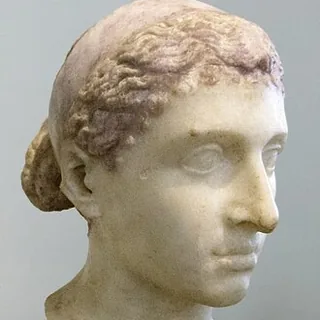 Cleopatra — Egyptian ruler. Her historical political role offers a comparison with influence, strategic presentation and maintaining room to act under intense external pressure.
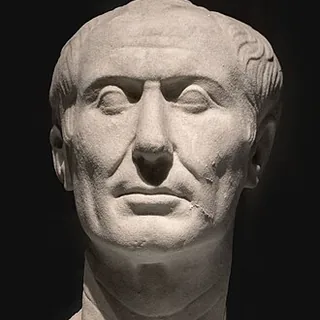 Julius Caesar — Roman political and military leader. His public career offers a historical comparison with ambition, initiative and the determination to reshape an established order.
 Arnold Schwarzenegger — Athlete, actor and politician. His movement across demanding public fields illustrates expansive ambition translated into visible, practical undertakings.
 Quentin Tarantino — Film director and writer. His energetic storytelling illustrates confident creative expression and a willingness to pursue a highly recognisable personal style.
 Dwayne Johnson — Actor and former wrestler. His public career illustrates performance, physical confidence and the development of an expansive, audience-facing professional identity.
 Madonna — Singer and performer. Her repeated creative reinvention illustrates ambition, experimentation and resistance to limits on how a public identity may develop.
 Jennifer Lawrence — Actor. Her direct, humorous public presentation offers a limited comparison with spontaneity and confidence, distinct from the characters she plays.
 Diego Maradona — Footballer. His inventive play and commanding sporting presence illustrate improvisation, competitive intensity and the impact of an individual performer on a wider group.
Fictional Characters Associated with 378
 Tony Stark / Iron Man — Marvel Cinematic Universe. His invention, showmanship and appetite for action illustrate how capability and ambition can become more constructive through responsibility.
 Satoru Gojo — Jujutsu Kaisen. His confident irreverence and investment in his students illustrate expansive ability joined to a wish to change an established system.
 BoJack Horseman — BoJack Horseman. His hunger for recognition and escape offers a cautionary exploration of why charisma and success cannot substitute for accountable relationships.
 Eric Cartman — South Park. His schemes offer an extreme satirical contrast, showing how influence and appetite can become exploitative when other people's autonomy is ignored.
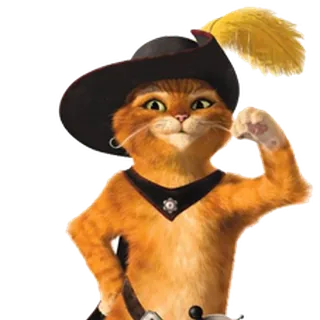 Puss in Boots — Shrek film series. His adventurous self-presentation illustrates confidence, improvisation and the need to develop a life beyond maintaining an impressive legend.
 Gumball Watterson — The Amazing World of Gumball. His energetic schemes illustrate imaginative ambition and the recurring need to face the consequences of acting before thinking things through.
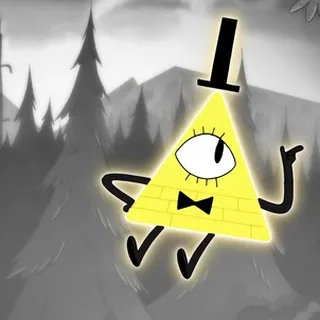 Bill Cipher — Gravity Falls. His playful manipulation is an antagonistic illustration of possibility and power detached from any respect for the people drawn into his plans.
 Power — Chainsaw Man. Her bravado and immediate appetites illustrate an expansive surface that becomes more complex as attachments begin to matter.
 Rainbow Dash — My Little Pony: Friendship Is Magic (2010). Her competitive dreams and loyalty illustrate the need to balance personal distinction with being a dependable teammate.
 Alexander Hamilton — Hamilton: An American Musical. This dramatic portrayal connects restless ambition with invention and conflict; it is distinct from an assessment of the historical person.
Sources and scope
The Enneagram Tritype framework is attributed to Katherine Chernick Fauvre. This independent educational guide is not affiliated with or endorsed by Fauvre. It describes a theoretical framework for reflection; it is not a validated assessment, diagnosis or population study.
.jpg)
.jpg)

_(cropped).jpg)


.jpg)
_(53269593787)_(cropped).jpg)
.png)
.jpg)


.png)
