The 368 label identifies the unordered Enneagram family formed by Types 3, 6 and 8, not a specific ordered result. The Justice Fighter family combines these three types: the Achiever from the Heart centre, the Loyalist from the Head centre and the Challenger from the Gut centre. Within the Tritype framework, these three types form a broader personality archetype characterised by determination, alertness to problems, practical effectiveness and a strong willingness to confront situations that appear threatening, unfair, incompetent or out of control.
The Justice Fighter can appear in six possible stacking orders: 368, 386, 638, 683, 836 and 863. Each contains the same underlying three types, but the ordering indicates which type leads the personality pattern and which of the remaining two is given greater secondary emphasis. This distinction can make a considerable difference to how the archetype appears in everyday life. A Three-led 368 may initially come across as ambitious, capable and highly results-oriented, while an Eight-led 863 may appear much more overtly forceful, protective and resistant to control. A Six-led 638 may lead instead with questioning, vigilance and concern about whether people, systems or claims can actually be trusted.
What connects these different presentations is the interaction between Three's concern with effectiveness and accomplishment, Six's concern with security and reliability, and Eight's concern with autonomy, strength and boundaries. The combination can produce someone who does not merely notice that something is wrong but feels a strong impulse to determine what should be done about it. In healthier forms, this can create an energetic, courageous and practically minded personality capable of standing up for people, principles or organisations under pressure. In less balanced forms, the same pattern can become combative, suspicious or excessively invested in proving that one's own interpretation of the conflict is correct.
The name Justice Fighter should therefore not be interpreted as a claim that people with this Tritype are objectively more moral or more just than other people. The archetype describes a theoretical pattern of motivation rather than a guarantee of ethical behaviour. A person can fight intensely for a cause and still misunderstand the situation, defend the wrong side or become so certain of their own position that they lose perspective. The psychologically interesting feature is the combination of action, vigilance and resistance, not automatic moral superiority.
Looking for a particular stacking order?
368 — Three-led · 386 — Three-led · 638 — Six-led · 683 — Six-led · 836 — Eight-led · 863 — Eight-led
The Justice Fighter at a Glance
| Feature | Description |
|---|---|
| Archetype | The Justice Fighter |
| Family code | 3 · 6 · 8 |
| Possible orders | 6 |
| Centres | Heart (3) · Head (6) · Gut (8) |
| All six orders | 368 · 386 · 638 · 683 · 836 · 863 |
| Theoretical Dynamics | Attachment overlap (3,6) · Assertive overlap (3,8) · Reactive overlap (6,8) |
| Core Tendency | Practical achievement combined with vigilance, courage and resistance to perceived threats or injustice |
| Central Tension | Adaptation to external demands and responsibilities versus resistance to control and distrust of authority |
| Characteristic Strength | Mobilising quickly and effectively when a problem requires decisive action |
| Potential Blind Spot | Escalation, adversarial thinking or becoming too certain that conflict is the only effective response |
How Common Is the Justice Fighter Tritype?
There are currently no large, representative population datasets that allow the prevalence of the Justice Fighter Tritype or any of its six stacking orders to be estimated reliably. This limitation applies broadly to Tritype frequency claims. Unlike major trait frameworks such as the Big Five, which can be examined through large psychometric datasets containing thousands or sometimes hundreds of thousands of participants, Tritype does not currently have the kind of representative population-level evidence required to calculate dependable prevalence estimates.
Claims about the rarity or commonness of particular Tritypes generally emerge from online personality communities, self-selected test takers, practitioner observations or comparatively small specialist Enneagram samples. These sources may reveal interesting patterns within particular groups, but they cannot establish how frequently a Tritype occurs across the population as a whole. People who spend time in Enneagram communities are unlikely to form a representative sample of the wider public, and different tests may also classify the same individual differently.
The Justice Fighter may sometimes be described as a particularly forceful, action-oriented or confrontational combination because it brings together the achievement orientation of Three with the vigilance of Six and the assertiveness of Eight. That theoretical description does not tell us how numerically common the pattern is. There is therefore no sound basis for claiming that 368 represents a particular percentage of people or that one stacking such as 683 or 836 is objectively rarer than another.
| Question | Current Position |
|---|---|
| Reliable population estimate? | None currently available |
| Representative prevalence dataset? | No |
| Six recognised stacking orders? | Yes |
| Confidence in exact frequency claims? | Low |
The most responsible approach is therefore to examine the Justice Fighter as a theoretical personality pattern while avoiding false demographic precision. Descriptions can still be useful for understanding the internal logic of the archetype, but statements such as “only one person in several thousand is a 368” should be treated sceptically unless genuinely representative evidence becomes available.
What Does 368 Mean?
Tritype theory proposes that an individual uses one preferred Enneagram strategy from each of three traditional centres: Heart, Head and Gut. For the Justice Fighter, these are Type 3 from the Heart centre, Type 6 from the Head centre and Type 8 from the Gut centre. Each type therefore contributes a different psychological emphasis to the broader pattern.
| Component | Centre | Broad concern | Contribution to the Justice Fighter |
|---|---|---|---|
| 3 — Achiever | Heart | Achievement, value, effectiveness and recognition | Drive, adaptability, productivity and concern with producing tangible results |
| 6 — Loyalist | Head | Security, trust, reliability and threat | Vigilance, questioning, preparedness and sensitivity to danger or inconsistency |
| 8 — Challenger | Gut | Autonomy, strength and boundaries | Assertiveness, courage, directness and resistance to coercion |
The Justice Fighter is therefore not simply a person who possesses three independent bundles of traits. The theoretical interest lies in the way the three strategies can reinforce and restrain one another. Type 3 contributes the impulse to perform effectively, achieve visible results and adapt strategically to the demands of a situation. Type 6 contributes the need to test assumptions, assess risk and determine who or what can be relied upon. Type 8 introduces a stronger readiness to confront opposition, defend boundaries and resist being dominated.
Together, these tendencies can create a personality that is unusually sensitive to the difference between what is supposed to happen and what is actually happening. Three notices ineffective performance, failed objectives or loss of credibility. Six notices uncertainty, inconsistency and potential danger. Eight notices violations of autonomy, abuses of power and situations in which somebody appears unwilling or unable to stand their ground. When all three are activated around the same problem, the result can be a powerful urge to intervene rather than remain a passive observer.
One way of expressing the interaction is through three recurring questions. Three is concerned with whether something is working and whether action is producing a meaningful result. Six is concerned with whether the situation is safe, credible and trustworthy. Eight is concerned with whether somebody is strong enough and free enough to act. The six Justice Fighter stackings differ in which of these questions comes first, but all three remain part of the wider archetype.
The Justice Fighter Personality
The defining feature of the Justice Fighter is the combination of practical drive with threat awareness and personal force. This is not usually an archetype content merely to recognise that something has gone wrong. There is often an additional impulse to organise a response, identify responsibility and push towards a concrete outcome. This can make the Justice Fighter highly effective in circumstances where other people recognise a problem but hesitate over what should actually be done.
The Three component contributes considerable forward momentum. Three tends to orient attention towards performance, effectiveness and the possibility of improving one's position through purposeful action. Within the Justice Fighter, this can produce a strong dislike of helplessness. Problems may feel more tolerable when there is a plan, a target and some visible indication that progress is being made. Even when the person is worried or angry, there may therefore be a surprisingly pragmatic element underneath the emotion: what matters is not merely expressing dissatisfaction but changing the situation.
Six complicates this straightforward drive towards action by introducing a powerful questioning function. Before committing fully, the Justice Fighter may want to understand where the danger lies, whether other people can be trusted, what could go wrong and whether the official explanation actually makes sense. This does not necessarily create passivity. In many cases, vigilance simply makes the action more deliberate. A Justice Fighter may gather information, test loyalties or challenge inconsistencies precisely because they are preparing to act rather than because they intend to remain permanently undecided.
Conviction becomes more reliable when it remains open to evidence.
Eight adds the archetype's unmistakable resistance to domination. Once the person concludes that something important is being mishandled, concealed, manipulated or imposed unfairly, reluctance to confront the issue can decrease rapidly. The Eight influence can make the Justice Fighter more comfortable with conflict than many other personality patterns, particularly when conflict is interpreted as necessary for protecting people, restoring control or preventing somebody else from abusing their position.
The interaction between Three and Eight can create considerable confidence and momentum. Both types are associated within Enneagram theory with an outwardly assertive stance towards the environment. They are generally more inclined to shape circumstances than merely accommodate themselves to them. Six, however, prevents the combination from becoming purely expansive or self-confident. It introduces doubt, scrutiny and sensitivity to what could undermine the plan. This means that the Justice Fighter may alternate between impressive certainty and intense questioning. The person can appear extremely decisive once committed while having gone through a substantial internal process of testing and verification beforehand.
There can also be a strong concern with credibility. Three wants to appear effective, Six wants claims to withstand scrutiny and Eight dislikes weakness or empty authority. As a result, the Justice Fighter may be particularly irritated by people who possess status without competence, make promises without delivering, hide behind procedures or demand deference without demonstrating that they deserve it. Authority itself is not necessarily rejected. Competent, courageous and accountable authority may actually be respected. What tends to provoke resistance is authority perceived as hypocritical, evasive or incapable.
This creates an important distinction between the Justice Fighter and a personality that simply dislikes rules. A 368 combination may be perfectly capable of supporting institutions, hierarchies or demanding standards when those structures appear legitimate and functional. Six can value dependable systems, Three can value organised achievement and Eight can respect strength and clarity. The conflict tends to emerge when the structure is experienced as failing its own stated purpose. At that point, obedience can rapidly give way to challenge.
At their best, Justice Fighters can therefore become powerful agents of practical accountability. They may be willing to say what others avoid saying, take responsibility during a crisis and convert frustration into organised action. They can combine Three's ability to mobilise resources, Six's capacity to anticipate problems and Eight's willingness to withstand confrontation. This can make them especially formidable when defending a team, exposing a failure or dealing with a situation in which politeness has ceased to produce results.
The risks arise when those same tendencies become exaggerated. Vigilance can become suspicion, decisiveness can become domination and the desire for effectiveness can become an unwillingness to slow down long enough to reconsider whether the chosen fight is actually the right one. A Justice Fighter who repeatedly encounters genuine incompetence or betrayal may gradually begin to assume that adversarial behaviour is always necessary. Once that expectation becomes habitual, ambiguous situations can be interpreted as deliberate threats and ordinary disagreement can start to feel like evidence of disloyalty or weakness.
A particularly important developmental issue is therefore the difference between strength and escalation. The Justice Fighter may be very good at increasing pressure, identifying leverage and forcing a problem into the open. Mature judgement requires knowing when those abilities are needed and when they would simply produce a larger conflict than the original problem justified. The healthiest version of the archetype retains its courage without becoming psychologically dependent on having an opponent.
How the Dominant Type Changes the Presentation
The Justice Fighter should not be imagined as one uniformly aggressive or confrontational personality. The three possible dominant types produce noticeably different outward styles even though the same underlying components remain present.
Three-led Justice Fighters — 368 and 386 — are likely to place relatively greater emphasis on effectiveness, achievement and the ability to produce results. Their Six and Eight components shape how they manage risk and confrontation, but the personality tends to organise itself around accomplishing something successfully. They may therefore appear somewhat more polished, strategic or performance-conscious than the other variants, particularly when their goals can be pursued through established institutions.
Six-led Justice Fighters — 638 and 683 — are more likely to lead with questions of trust, danger, responsibility and reliability. They may initially focus on determining what is actually happening and whether the people involved can be relied upon. Once they conclude that action is required, however, the Three and Eight components can make them unusually forceful for a Six-based personality. Their vigilance may therefore translate into organised intervention rather than simple caution.
Eight-led Justice Fighters — 836 and 863 — generally place autonomy, strength and boundary protection closer to the foreground. They may respond more quickly to attempts at control or intimidation and may have less hesitation about entering conflict directly. Three and Six still contribute effectiveness and situational awareness, but they operate inside a personality structure whose first priority is more likely to be maintaining agency and refusing to be overpowered.
An Eight-led Justice Fighter can therefore look very different from a Three-led 368 while still belonging to the same archetype family. The Eight-led person may appear more commanding and less concerned with presentation, while the Three-led person may achieve similar goals through strategic positioning, competence or institutional influence. The Six-led individual may seem more questioning and cautious at first, yet prove equally determined once the threat has been evaluated.
Inner Dynamics in Enneagram Theory
The internal structure of the Justice Fighter becomes clearer when Types 3, 6 and 8 are examined through several of the broader groupings used within Enneagram theory. These classifications belong to the Enneagram's theoretical framework rather than representing independently established psychological mechanisms, but they provide a useful way of understanding why the combination is described as simultaneously adaptive, assertive and reactive.
The Attachment Overlap: Types 3 and 6
Within Enneagram object-relations theory, Types 3 and 6 are commonly placed within the Attachment grouping. Although they pursue different goals, both are theoretically concerned with orienting themselves towards an external environment in order to determine what is required, valued or dependable.
Type 3 adapts partly through performance. It pays attention to what produces success, recognition and effectiveness and can modify presentation or behaviour accordingly. Type 6 adapts through orientation towards systems of trust, responsibility and authority. It asks what can be relied upon, which expectations are legitimate and where potential danger may emerge.
Their combination gives the Justice Fighter an important social dimension that can sometimes be missed if the archetype is imagined merely as rebellious. The person may actually care strongly about institutions, teams, standards and shared responsibilities. The difficulty arises when those structures are perceived to have broken their side of the bargain. A Justice Fighter can be deeply loyal to a system while it appears trustworthy and then become one of its strongest critics once that trust is violated.
This can also create sensitivity to reputation and credibility. Three wants to demonstrate competence, while Six wants to know that commitments are real. The Justice Fighter may therefore judge both themselves and other people heavily by whether words translate into action. Repeated promises without delivery can become especially provocative because they offend both the Three concern with effectiveness and the Six concern with reliability.
Eight complicates this Attachment tendency by making the individual less willing to preserve connection at any cost. Where Three and Six may sometimes adapt to the surrounding environment, Eight introduces the possibility of refusing the environment altogether if adaptation begins to feel like submission. This can create one of the archetype's central tensions: the desire to succeed within a structure versus the refusal to cooperate with a structure that appears corrupt, weak or coercive.
The Assertive Overlap: Types 3 and 8
Types 3 and 8 are usually placed within the Enneagram's Assertive Hornevian grouping. Both tend theoretically to move outward against the environment rather than withdrawing from it or accommodating themselves primarily through dutiful compliance.
Three asserts itself through activity, ambition and achievement. Obstacles are often approached as things that can be overcome by working harder, adapting faster or becoming more effective. Eight asserts itself more directly through strength, confrontation and the protection of autonomy. Obstacles may be challenged because allowing them to remain would mean accepting unwanted limitation or control.
Together, these tendencies provide much of the Justice Fighter's action orientation. Once a problem has been identified, there can be considerable impatience with endless discussion that produces no practical change. The person may instinctively begin thinking about leverage, responsibility, escalation routes, measurable outcomes or who actually has the power to resolve the situation.
The assertive overlap can also produce substantial resilience. Failure may be experienced as frustrating, but the immediate response is often to search for another route rather than accept defeat. A blocked pathway can therefore increase determination rather than eliminate it. The danger is that persistence can become overextension. There are situations in which continuing to push is admirable and others in which it simply consumes resources without improving the outcome.
Six plays an important moderating role by reminding the assertive pair that confidence is not the same thing as certainty. At its best, Six introduces verification and contingency planning. At its worst, it can combine with the assertiveness of Three and Eight to produce defensive overpreparation: the person may become convinced that they must anticipate every threat, control every weakness and remain permanently ready for the next confrontation.
The Reactive Overlap: Types 6 and 8
Types 6 and 8 are commonly placed within the Enneagram's Reactive harmonic grouping. Within this framework, both are associated with a stronger tendency to engage with threats, conflicts or emotional pressure rather than automatically minimising the issue or reframing it into something more comfortable.
The strategies of Six and Eight are nevertheless different. Six tends to react through questioning, doubt, testing and heightened awareness of uncertainty. It wants to know whether the danger is real, who can be trusted and what might happen next. Eight reacts more immediately through strength and resistance. It wants to establish that the threat will not be permitted to dominate the situation.
When these two patterns coexist, the Justice Fighter can become exceptionally sensitive to signs of manipulation, intimidation or concealed risk. The person may quickly notice inconsistencies in what they are being told and may be reluctant to accept reassurance without evidence. Once distrust develops, Eight can then turn Six's suspicion into direct challenge.
This combination can be highly useful in genuinely dangerous or adversarial circumstances. Someone who both notices potential problems and possesses the courage to confront them can be extremely effective. The same combination becomes less useful when the threat assessment is inaccurate. If uncertainty is interpreted automatically as deception, or disagreement as hostility, the Justice Fighter can begin creating the very adversarial environment they believe they are defending themselves against.
Three adds another layer by making the individual concerned with whether the response actually succeeds. This can pull the combination away from purely emotional confrontation and towards strategy. Rather than merely expressing anger, the person may want to produce documentation, organise support, identify decision-makers, build a case or demonstrate competence more convincingly than the opposition.
The strongest expression of the Justice Fighter therefore combines the three tendencies without allowing any one of them to dominate completely: Three asks what will work, Six asks what could go wrong, and Eight asks whether the person is prepared to stand their ground.
Strengths and Potential Blind Spots
Likely Strengths
One of the strongest qualities associated with the Justice Fighter is practical courage. Many people can recognise that a problem exists, but recognition and intervention are different abilities. The interaction of Three, Six and Eight can make the Justice Fighter more willing than average to move from concern into organised action. Six notices what is wrong, Three looks for an effective response and Eight supplies the willingness to tolerate opposition.
- Another potential strength is accountability orientation. The Justice Fighter may pay close attention to whether people fulfil responsibilities, whether organisations behave according to their stated standards and whether explanations are supported by actual behaviour. This can make the archetype particularly useful in environments where complacency or diffusion of responsibility has allowed problems to continue.
- There can also be considerable resilience under pressure. Three is oriented towards continued functioning, Six towards preparing for difficulty and Eight towards resisting defeat or intimidation. In demanding situations, this combination may be capable of remaining active after other people have become discouraged. The person may not necessarily feel calm internally, but they can still continue organising, questioning and acting.
- The archetype can also show strong protective leadership. An individual may become especially motivated when other people are unable to defend themselves or when a group requires someone willing to accept responsibility during conflict. In healthier forms, this does not mean controlling everybody else. It means using strength in the service of maintaining boundaries, coordinating action and preventing more vulnerable people from carrying burdens they cannot reasonably manage alone.
Another strength can be the ability to combine idealism with pragmatism. The word “justice” can suggest abstract moral principle, but the Three component often pushes this archetype towards concrete outcomes. The person may care less about appearing morally pure than about whether the unfair situation has actually changed. This can make the Justice Fighter effective in environments where noble intentions are plentiful but implementation is weak.
Potential Blind Spots
The most obvious difficulty is adversarial escalation. The Justice Fighter possesses several psychological tools for conflict: vigilance, assertiveness, persistence and strategic action. When those tools become habitual, the person may begin reaching for them even when a less confrontational response would work better. A disagreement can become a battle over principle, a bureaucratic error can be interpreted as deliberate obstruction and temporary uncertainty can begin to look like evidence of bad faith.
Another risk is self-righteous certainty. Because the person may invest substantial effort in investigating a problem and building a response, changing position later can become psychologically difficult. Three may have publicly committed to the course of action, Six may have accumulated evidence supporting the threat interpretation and Eight may experience retreat as surrender. The combination can therefore create powerful momentum in both good and bad directions.
There can also be a tendency towards overwork and constant mobilisation. Three wants progress, Six wants preparedness and Eight dislikes vulnerability. Rest may therefore feel less safe than continued action. A person can begin treating every unresolved problem as something that must remain actively monitored until it has been defeated, solved or controlled. Over time, this can produce exhaustion and make genuinely important conflicts harder to distinguish from ordinary frustrations.
Distrust presents another possible blind spot. Six and Eight can both be sensitive to questions of loyalty and power, while Three may become concerned about being undermined or publicly discredited. Under stress, this can create an atmosphere in which other people's motives are scrutinised more aggressively than the evidence warrants.
The precise vulnerabilities differ by dominant type. A Three-led Justice Fighter may become excessively invested in winning, appearing competent or proving that the campaign has succeeded. A Six-led Justice Fighter may become consumed by threat detection, doubt or the need to determine who is trustworthy. An Eight-led Justice Fighter may become overly controlling, confrontational or unwilling to acknowledge vulnerability.
The shared developmental challenge is therefore not to become passive. It is to preserve the archetype's strength while becoming more discriminating about which situations genuinely require a fight and which require patience, negotiation or revision of one's own assumptions.
Relationships and Communication
Justice Fighters are likely to value loyalty, directness, reliability and mutual respect in close relationships. They may have relatively little patience for chronic evasiveness or for relationships in which important issues are repeatedly avoided in order to maintain superficial harmony. When something matters, there is often a preference for dealing with it explicitly rather than allowing resentment to accumulate beneath the surface.
The Six component can make trust especially important. A Justice Fighter may pay close attention to whether another person's words remain consistent over time, whether commitments are honoured and whether that individual can be relied upon under pressure. Trust may therefore become deeper through demonstrated behaviour rather than reassurance alone. Somebody who repeatedly proves dependable can receive considerable loyalty in return.
Three contributes another relational dimension. The Justice Fighter may want to be useful, competent and respected within the relationship. They can take pride in solving problems, supporting practical goals and helping the partnership function successfully. The difficulty is that love and effectiveness are not identical. There are moments when another person wants empathy rather than a solution, and a strongly action-oriented Justice Fighter can sometimes move too quickly towards fixing the situation.
Loyalty can include disagreement without turning it into betrayal.
Eight introduces the need for autonomy and respect. Attempts to control, patronise or manipulate the Justice Fighter can produce a strong reaction, particularly once trust has already been damaged. The person may tolerate disagreement considerably better than perceived dishonesty. Open opposition can sometimes be easier to handle than indirect pressure because at least the conflict is visible.
This produces an interesting relational paradox. The Justice Fighter may strongly value loyalty while also insisting on independence. They may want people who will stand beside them but not people who require unquestioning submission. Healthy relationships therefore tend to involve partners and friends who are capable of being dependable without becoming deferential.
Communication varies by stacking. Three-led Justice Fighters may communicate more strategically and may pay greater attention to how a message will be received or whether it will accomplish the desired outcome. Six-led variants may ask more questions, raise possible problems and seek clarification before committing themselves. Eight-led variants may be more direct and less inclined to soften disagreement merely to preserve the atmosphere.
Across all six stackings, one useful developmental principle is that strength does not require maximum intensity. People are not necessarily more likely to understand an argument because it is expressed more forcefully. The strongest communication may sometimes involve reducing the temperature while preserving the substance of the position.
Work and Career Preferences
The Justice Fighter archetype is likely to appreciate work that combines some degree of responsibility, challenge, measurable effectiveness and freedom to intervene when problems arise. Roles in which people are expected to notice problems but have no authority to address them can be particularly frustrating. The individual may prefer an environment where competence leads to meaningful responsibility rather than one in which initiative is repeatedly blocked by bureaucracy or status games.
- Three-led Justice Fighters may be particularly comfortable in performance-oriented settings where progress can be measured and responsibility increases with demonstrated competence. Management, entrepreneurship, organisational leadership, project delivery, consulting, sales leadership, operational roles and other achievement-focused environments can provide an outlet for the Three component while Six and Eight contribute vigilance and assertiveness.
- Six-led Justice Fighters may gravitate somewhat more towards fields where reliability, investigation, accountability or risk assessment matter. Regulatory work, compliance, auditing, public administration, safety management, security analysis, investigative journalism, legal work, quality assurance and similar roles can reward the ability to question whether systems are functioning as claimed.
- Eight-led Justice Fighters may be more strongly attracted to environments where substantial autonomy and decision-making authority are available. Entrepreneurship, litigation, negotiation, crisis leadership, organisational reform, campaigning, operational command and other roles involving difficult decisions or conflicting interests may allow the Eight component to operate more openly.
Law and advocacy can be particularly interesting examples because they can engage all three elements of the archetype. Three contributes strategic effectiveness, Six contributes scrutiny of evidence and procedure, and Eight contributes willingness to confront opposition. Similar dynamics can appear in investigative work, whistleblowing, public-interest campaigning, organisational reform or leadership during institutional failure.
The word “justice” should not, however, lead to an overly narrow career interpretation. A Justice Fighter does not need to become a lawyer, activist or police officer. The same underlying pattern can appear in a business owner defending employees, an engineer refusing to ignore unsafe practices, a manager confronting organisational dysfunction or a researcher challenging claims that do not withstand scrutiny.
The quality of the working environment may matter as much as the profession itself. Justice Fighters may tolerate demanding expectations surprisingly well when the system appears competent and fair. What becomes more difficult is being held responsible for outcomes while denied the authority or resources necessary to achieve them. Accountability without agency can feel particularly frustrating to a personality that combines Three's results orientation with Eight's need for control over one's own actions.
These are personality preferences rather than occupational prescriptions. Ability, education, opportunity, financial circumstances, personal interests and values remain more important than a Tritype classification.
Stress and Growth
Under prolonged stress, the Justice Fighter's characteristic strengths can become exaggerated. Determination becomes relentless pressure, vigilance becomes suspicion, assertiveness becomes aggression and the desire for effective action becomes an inability to stop intervening.
A common pattern may begin when the individual perceives that something important is failing. Six increases monitoring and searches for evidence of risk. Three responds by trying to improve performance or gain control over the outcome. Eight becomes increasingly forceful when those efforts meet resistance. If the problem remains unresolved, each unsuccessful attempt can then reinforce the belief that still greater vigilance and pressure are required.
The cycle can therefore become threat detection → mobilisation → resistance → escalation → heightened threat detection. What began as an appropriate response to a real problem can gradually become a self-reinforcing state in which the person is permanently prepared for the next obstruction.
Three-led Justice Fighters may cope with stress by increasing activity, working harder and attempting to demonstrate that they remain capable of controlling the outcome. Failure can feel threatening not only because the situation remains unresolved but because competence and self-worth have become entangled with defeating the problem.
Six-led Justice Fighters may spend more time analysing possibilities, testing people's motives or revisiting whether enough evidence has been gathered. When anxiety and determination combine, the person may alternate between doubt and forceful action rather than settling easily into either one.
Eight-led Justice Fighters may react initially by increasing control, setting harder boundaries or confronting the perceived source of the problem more directly. If those efforts fail, vulnerability can become especially difficult to acknowledge because the individual's primary strategy has already been based upon strength.
Growth does not require the Justice Fighter to become less courageous or less willing to oppose genuine wrongdoing. The healthier direction is to become sufficiently secure that not every unresolved problem has to be converted immediately into a contest of strength. Pausing, checking alternative explanations and allowing other people to contribute are not necessarily signs of weakness.
Another developmental task involves separating identity from conflict. Someone who has repeatedly succeeded by fighting difficult battles can begin to derive a sense of purpose from being the person who fights. The danger is that peace then creates an uncomfortable vacuum. Growth involves retaining the capacity for confrontation without needing confrontation in order to feel useful, strong or significant.
Unresolved difficulty does not always call for a contest of strength.
The strongest Justice Fighter is therefore not the person who wins every battle. It is the person who can recognise which battles are necessary, choose an effective level of response, tolerate uncertainty where certainty is impossible and remain capable of revising their position when new evidence genuinely changes the situation.
The Six Justice Fighter Stackings
The six Justice Fighter codes contain the same three Enneagram types, but their order is intended to describe which strategy receives priority. The first number represents the dominant or core type. The second represents the more prominent of the two remaining centre strategies, while the third occupies the tertiary position.
| Stacking | Lead Type | Secondary Emphasis | Typical Presentation |
|---|---|---|---|
| 368 | Three | Six | Achievement-led, vigilant, organised and determined |
| 386 | Three | Eight | Achievement-led, forceful, competitive and strategically assertive |
| 638 | Six | Three | Vigilance-led, responsible, performance-conscious and practical |
| 683 | Six | Eight | Vigilance-led, confrontational, protective and strongly security-focused |
| 836 | Eight | Three | Autonomy-led, ambitious, decisive and action-oriented |
| 863 | Eight | Six | Autonomy-led, vigilant, protective and distrustful of weak authority |
These descriptions are best understood as differences in emphasis rather than six completely separate personalities. Every variant still contains Three's drive towards effectiveness, Six's concern with reliability and Eight's emphasis on strength and autonomy.
The Three-Led Justice Fighters: 368 and 386
Both 368 and 386 begin with Type 3. Achievement, effectiveness and the ability to produce results therefore provide the central organising orientation. These individuals may be particularly uncomfortable with situations in which they feel ineffective or powerless because their instinct is often to improve performance, establish competence and move towards a measurable outcome.
The difference lies in which strategy comes forward next. In 368, Six supports the Three core before Eight does, creating a more visibly vigilant and verification-oriented form of the archetype. In 386, Eight supports Three more directly, producing a more overtly assertive and autonomy-focused presentation.
368 — Three → Six → Eight
In 368, Type 6 follows the dominant Three. The person's drive towards achievement is therefore closely connected with concerns about reliability, preparedness and whether the surrounding environment can be trusted. Success may not simply mean obtaining status or completing a task; it may also involve proving that the system is secure, the team is dependable and potential weaknesses have been addressed.
This can produce a comparatively structured and conscientious-looking Justice Fighter. The individual may work hard, monitor progress closely and become particularly irritated when other people jeopardise an important outcome through carelessness or unreliability. Six can make the Three more sceptical of appearances, so polished claims may carry relatively little weight unless there is evidence that they correspond to reality.
Eight remains important but may emerge more strongly once the person concludes that ordinary methods are no longer sufficient. The 368 may initially try to solve a problem through performance, procedure, evidence or competent organisation. Direct confrontation becomes more likely when those routes have failed or when somebody appears deliberately obstructive.
A useful summary is effectiveness first, verification second and boundary enforcement third. Compared with 386, the 368 may therefore appear somewhat more cautious, systematic or institutionally minded, even though considerable assertiveness remains underneath.
386 — Three → Eight → Six
In 386, Type 8 follows the dominant Three. Achievement and effectiveness remain primary, but they are connected more directly with force, autonomy and the desire to retain control over important outcomes. The person may be less inclined than the 368 to spend prolonged periods determining whether confrontation is warranted before beginning to exert pressure.
This can produce a particularly competitive and action-oriented version of the Justice Fighter. Obstacles may be interpreted quickly as challenges to overcome, and there can be substantial confidence in the ability to shape events directly. The combination of Three's strategic adaptability and Eight's willingness to push can make the 386 effective in competitive environments where hesitation carries a real cost.
Six remains present and contributes vigilance, but it occupies the tertiary position. Threat awareness can therefore operate in support of a personality that has already begun moving towards its objective. Rather than uncertainty preventing action, the individual may act first while simultaneously scanning for weaknesses, opposition or betrayal.
The broad pattern is effectiveness first, autonomy second and verification third. Compared with 368, the 386 may appear somewhat more forceful, faster to challenge obstacles and less inclined to seek reassurance from existing structures before taking control.
The Six-Led Justice Fighters: 638 and 683
Both 638 and 683 begin with Type 6. Questions of security, reliability, responsibility and trust therefore sit at the centre of the personality pattern. These individuals may be especially sensitive to whether systems are functioning properly, whether people are keeping their commitments and whether potential threats have been adequately recognised.
The stereotype of Type 6 as simply hesitant or cautious can be misleading here. Both 638 and 683 contain Three and Eight, giving the Six core unusually strong resources for organised action and confrontation. The person may experience uncertainty intensely while still behaving very decisively once enough evidence has accumulated.
638 — Six → Three → Eight
In 638, Type 3 follows the dominant Six. Vigilance is therefore channelled relatively quickly into productivity, organisation and practical problem-solving. The individual may respond to uncertainty by becoming more competent, gathering resources and demonstrating that the situation can be managed effectively.
This can produce a highly responsible version of the Justice Fighter. The person may care strongly about fulfilling obligations and can become frustrated when others treat serious responsibilities casually. Reliability becomes not merely an abstract value but something demonstrated through performance.
Three may also give the Six core greater awareness of reputation and external credibility. The 638 may want concerns to be taken seriously and may therefore work hard to present evidence, demonstrate competence and avoid appearing irrational or unprepared. This can make the variant surprisingly polished even when substantial anxiety or distrust exists underneath.
Eight provides a final layer of firmness. Once evidence has been gathered and practical attempts at resolution have failed, the 638 may become far more confrontational than people initially expected.
The broad tendency is security first, effectiveness second and boundary enforcement third. Compared with 683, the 638 may be somewhat more inclined to work through systems, performance and demonstrable competence before escalating into direct confrontation.
683 — Six → Eight → Three
In 683, Type 8 follows the dominant Six. Questions of trust and threat therefore connect more immediately with autonomy, strength and boundary protection. This can produce one of the more openly reactive versions of the Justice Fighter.
Where 638 may respond to uncertainty by becoming more organised and demonstrably competent, 683 may move more rapidly towards testing strength, challenging evasiveness or confronting the source of perceived danger. The person can be highly sensitive to power dynamics and may dislike situations in which somebody appears to be using uncertainty as a way of gaining leverage.
This combination can produce fierce loyalty. If someone or something has genuinely earned the person's trust, the Eight influence may make the 683 especially willing to defend it. Betrayal, however, can be experienced very strongly because it activates both Six's concern with trust and Eight's resistance to vulnerability.
Three remains important in the tertiary position and helps convert confrontation into goal-directed behaviour. The person may not merely want to express anger; they want the conflict to produce a result.
A useful shorthand is security first, boundary protection second and effectiveness third. Compared with 638, the 683 may therefore seem less polished, more openly suspicious and more immediately willing to challenge perceived threats.
The Eight-Led Justice Fighters: 836 and 863
Both 836 and 863 begin with Type 8. Autonomy, strength and control over personal boundaries therefore provide the primary orientation. These may be the Justice Fighter variants most immediately recognisable as forceful personalities because they are less likely to conceal the Eight component behind achievement-oriented or security-oriented behaviour.
Their difference lies in whether Three or Six comes second. In 836, Eight is supported relatively directly by Three's ambition and effectiveness. In 863, Eight is followed instead by Six's vigilance and threat assessment.
836 — Eight → Three → Six
In 836, Type 3 follows the dominant Eight. The person's concern with autonomy is therefore closely connected with achievement, effectiveness and the desire to produce tangible results. This can create a highly ambitious, commanding and action-oriented version of the Justice Fighter.
The individual may be comfortable taking responsibility, competing for influence or making decisions other people hesitate to make. Eight supplies the willingness to hold ground, while Three adds adaptability and strategic awareness of what is required to succeed. The combination can therefore be particularly formidable in leadership or entrepreneurial settings.
Six remains present in the tertiary position, contributing awareness of danger and loyalty but operating behind an already powerful Eight–Three structure. The person may not advertise uncertainty readily, yet there can still be substantial monitoring of whether others are trustworthy and whether potential threats have been underestimated.
The broad tendency becomes autonomy first, effectiveness second and verification third. Compared with 863, the 836 may therefore appear more ambitious, polished, competitive or concerned with visible accomplishment.
863 — Eight → Six → Three
In 863, Type 6 follows the dominant Eight. Autonomy remains primary, but the person's directness and boundary awareness are linked more closely with vigilance, loyalty and concern about hidden threats.
This can produce a more suspicious or security-conscious Eight-led Justice Fighter. The person may be especially sensitive to whether power is being used honestly, whether people will remain loyal under pressure and whether official explanations conceal vulnerabilities that others have failed to recognise.
Six can also make the Eight more attentive to consequences. The individual may still act decisively, but behind the forcefulness there can be extensive scenario-testing and concern about what could go wrong. Compared with 836, external success may matter somewhat less than ensuring that the person cannot be trapped, betrayed or rendered dependent upon unreliable people.
Three contributes effectiveness in the tertiary position, ensuring that the combination remains strongly results-oriented. Once the 863 decides that something requires action, there may be considerable determination to organise the response successfully rather than merely remain angry.
The broad tendency becomes autonomy first, vigilance second and effectiveness third. Compared with 836, the 863 may therefore appear somewhat more guarded, protective and distrustful, even though both are fundamentally Eight-led.
Wings and Other Secondary Influences
The dominant type of each Justice Fighter stacking can be modified further by wings and other elements of Enneagram theory. Because the family contains three possible dominant types, there is no single wing pattern that applies to every Justice Fighter.
A Three-led Justice Fighter may show stronger influence from Type 2 or Type 4. A Two-wing influence could produce somewhat greater interpersonal warmth, helpfulness or awareness of relationships, while a Four-wing influence could contribute more individuality, introspection or concern with personal authenticity.
A Six-led Justice Fighter may show stronger influence from Type 5 or Type 7. Five-wing influence may make the person more analytical, private or methodical in evaluating threats, whereas Seven-wing influence could contribute greater outward energy, improvisation or willingness to move rapidly between possible solutions.
An Eight-led Justice Fighter may display stronger Seven- or Nine-wing qualities. Seven influence can make the person more expansive, entrepreneurial and energetic, while Nine influence may produce a calmer outward style and somewhat greater ability to hold strength in reserve rather than expressing it immediately.
These modifiers can substantially affect presentation without changing the underlying 3–6–8 structure. Two people may therefore identify with the same stacking while differing considerably in sociability, emotional expression, planning style or interpersonal tone.
Wings are best treated as secondary modifiers rather than separate Justice Fighter archetypes. The primary distinction remains the broader 3–6–8 family and the six possible ordering patterns.
Related Tritype Archetypes
Comparing the Justice Fighter with neighbouring Tritype families helps clarify which characteristics arise from each of its three components. The most useful comparisons are those in which two types remain constant while the third changes.
The 358 Solution Master retains Types 3 and 8 but replaces Six with Type 5. Achievement, effectiveness and assertiveness therefore remain, but Six's concern with security, loyalty and threat assessment is replaced by Five's emphasis on knowledge, detachment and intellectual autonomy. Compared with the Justice Fighter, the Solution Master may therefore appear more analytical and strategically detached, while the Justice Fighter is theoretically more sensitive to trust, responsibility and the reliability of people or systems.
The 268 Rescuer retains Types 6 and 8 but replaces Three with Type 2. Vigilance, loyalty and boundary strength remain, but the Heart strategy becomes more relational and helping-oriented. Compared with the Justice Fighter's emphasis on effectiveness and accomplishment, the Rescuer may place greater weight on protecting, assisting or personally supporting other people.
The 468 Truth Teller retains Types 6 and 8 while replacing Three with Type 4. Vigilance and intensity remain, but the Heart component shifts away from achievement and adaptation towards identity, authenticity and emotional meaning. The Truth Teller may therefore emphasise expressing what feels genuine or exposing what feels false, while the Justice Fighter is more likely to ask what action will actually change the outcome.
These comparisons illustrate why it is useful to understand Tritypes structurally rather than treating each archetype name as a completely isolated personality category. Changing a single component can alter the motivational tone of the combination even when much of the outward behaviour remains similar.
The Justice Fighter and the Big Five
The Enneagram and Big Five describe personality using fundamentally different models, so there is no direct conversion between the Justice Fighter Tritype and a particular Big Five profile. Any comparison should therefore be understood as descriptive rather than psychometrically established.
The assertiveness associated with Types 3 and 8 may resemble aspects of higher Extraversion, particularly the assertiveness or social-dominance facets, but this should not be treated as inevitable. A Justice Fighter can be highly assertive when necessary while remaining relatively private or low in social enthusiasm.
The organised, performance-oriented side of Type 3 and the responsibility concerns often associated with Type 6 could resemble aspects of higher Conscientiousness in some individuals. A highly disciplined 368 or 638 may indeed appear strongly organised. Other members of the same Tritype could be substantially more impulsive or situational, especially if their individual trait structure differs.
Agreeableness is also difficult to generalise. Eight's resistance to compliance and the Justice Fighter's willingness to confront people can resemble aspects of lower Agreeableness, particularly on compliance-related facets. Six, however, can be strongly loyal and cooperative towards trusted groups, while Three can be socially adaptive. A confrontational style in one context therefore does not necessarily imply globally low Agreeableness.
The emotional reactivity associated theoretically with Type 6 could resemble aspects of higher Neuroticism in some individuals, particularly where anxiety and threat monitoring are prominent. Yet many Sixes can appear outwardly controlled, and Eight- or Three-led variants may present considerable emotional stability under pressure. Neuroticism should therefore not be inferred directly from the Tritype code.
Openness to Experience is even less predictable. Nothing in the 3–6–8 combination necessarily determines whether somebody prefers abstract ideas, artistic exploration, tradition or practical realism.
The Justice Fighter and 16-Type Systems
The Justice Fighter can also resemble several profiles within Jungian and MBTI-style personality systems, particularly descriptions emphasising decisiveness, organisation, leadership or practical engagement with external problems. These similarities should again be treated cautiously because the systems attempt to describe personality using different conceptual structures.
Three- and Eight-led Justice Fighters may sometimes recognise themselves in descriptions associated with ENTJ or ESTJ, particularly where ambition, organisation, directness and decisive leadership are prominent. More spontaneous or action-oriented Eight-led versions could also identify with profiles such as ESTP, especially where immediate engagement and willingness to confront obstacles are stronger than long-range organisation.
Six-led Justice Fighters could identify across a broader range of 16-type profiles because vigilance and loyalty do not translate cleanly into any single Jungian preference. A 638 might appear highly organised and externally responsible, while a 683 might appear more sceptical, forceful and reactive.
These are loose descriptive parallels rather than conversions. Enneagram theory is primarily concerned with motivations, defensive strategies and recurring psychological priorities, whereas MBTI-style systems organise personality around a different theoretical framework.
Someone identifying as 368 is therefore not automatically ENTJ, just as an ENTJ should not automatically be expected to belong to the Justice Fighter Tritype. Treating the systems as complementary but distinct avoids converting broad resemblance into unsupported equivalence.
The Justice Fighter in One Sentence
The 368 Justice Fighter Tritype combines achievement-driven effectiveness, vigilant questioning and forceful autonomy into a personality inclined to confront problems directly, defend what it considers important and push determinedly towards practical change.
Famous People and Fictional Characters Associated with 368
These examples offer illustrative comparisons with the 368 family, not confirmed personality assessments. The family includes all six orders of its three types; an example need not use the ascending 368 order. A public career or fictional story cannot establish someone's private motivations. Fictional examples refer to the works or versions named below, and are illustrations rather than role models.
Famous People Associated with 368
 Kylian Mbappé — Footballer. His performance under intense scrutiny offers a comparison with competitive determination and taking responsibility for a visible role.
 Demi Lovato — Singer and actor. Their candid public communication and advocacy illustrate the willingness to make personal conviction visible rather than keep a difficult experience private.
 Tom Cruise — Actor and producer. His technically demanding productions illustrate determination, preparation and a strong investment in delivering an ambitious result.
 Adele — Singer-songwriter. Her emotionally direct performances illustrate a forceful personal voice that can connect with an audience without disguising vulnerability.
 Naomi Campbell — Model. Her long professional career and public advocacy offer a comparison with assertive presence and sustaining a position within a demanding industry.
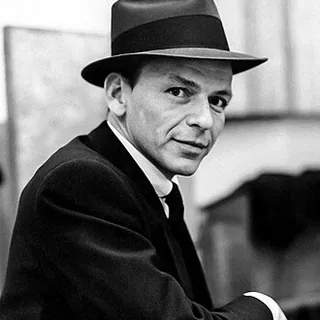 Frank Sinatra — Singer and actor. His commanding performance style offers an illustration of confident expression and a strong concern with shaping how a song reaches its audience.
 Michael Jordan — Basketball player. His competitive intensity illustrates focused achievement and the demand to answer pressure through visible performance.
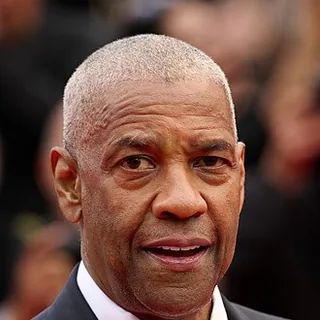 Denzel Washington — Actor and director. His emphasis on craft and preparation offers a comparison with purposeful effort and taking the demands of a role seriously.
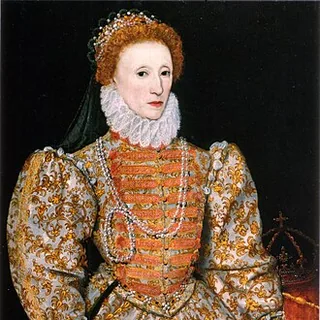 Elizabeth I — Queen of England. Her historical leadership offers a comparison with maintaining authority amid competing loyalties and perceived threats to an established position.
 Jeff Bezos — Business founder. His large-scale commercial projects offer a comparison with competitive execution and the determination to establish a durable position.
Fictional Characters Associated with 368
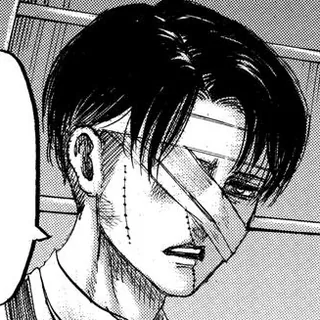 Levi Ackerman — Attack on Titan. His demanding competence and loyalty to his comrades illustrate protection expressed through disciplined action under severe pressure.
 Roronoa Zoro — One Piece. His training and commitment to his crew illustrate a combination of personal ambition, toughness and dependable loyalty.
 Kratos — God of War games. His changing relationship with power and fatherhood illustrates the difficult movement from reactive force towards accountable protection.
 Draco Malfoy — Harry Potter films. His concern with status and belonging illustrates how a confident surface can conceal fear, dependence and pressure from a powerful group.
 Blair Waldorf — Gossip Girl. Her social strategies illustrate ambition and loyalty entangled with the need to secure a position and defend against humiliation.
 Rock Lee — Naruto Shippuden. His determined training illustrates the effort to answer limitation through discipline, persistence and proving what he can accomplish.
 Azula — Avatar: The Last Airbender (2005). Her pursuit of control and flawless performance illustrates a destructive response to insecurity, not a model of healthy confidence.
 Tony Soprano — The Sopranos. His conflicting demands of status, loyalty and control offer a morally compromised fictional exploration rather than an endorsement of his behaviour.
 Lip Gallagher — Shameless (US). His intellectual ability and defensive reactions illustrate the tension between proving capability, protecting family and accepting the support needed to move forward.
 Diego Hargreeves — The Umbrella Academy. His forceful wish to protect others illustrates loyalty and action, alongside the challenge of separating useful intervention from needing to prove himself.
Sources and scope
The Enneagram Tritype framework is attributed to Katherine Chernick Fauvre. This independent educational guide is not affiliated with or endorsed by Fauvre. It describes a theoretical framework for reflection; it is not a validated assessment, diagnosis or population study.
.jpg)


.jpg)
_(cropped).jpg)


.jpg)


_cropped.jpg)