The 469 label identifies the unordered Enneagram family formed by Types 4, 6 and 9, not a specific ordered result. The Seeker family combines these three types: the Individualist from the Heart centre, the Loyalist from the Head centre and the Peacemaker from the Gut centre. Within the Tritype framework, these three types form an archetype associated with introspection, uncertainty, emotional depth and a persistent desire to discover a secure and authentic sense of direction. The Seeker is often less interested in imposing a ready-made identity upon the world than in discovering what feels true, trustworthy and internally settled.
There can be a strong sense that the correct answer exists somewhere, whether that answer concerns identity, relationships, beliefs, vocation or the meaning of a particular experience, but reaching it may require considerable reflection because each component of the combination introduces its own form of hesitation.
The Seeker can appear in six possible stacking orders: 469, 496, 649, 694, 946 and 964. Every version contains the same underlying combination of Types 4, 6 and 9, but the ordering changes which concern becomes most psychologically prominent. A Four-led 469 may approach life primarily through questions of identity, emotional meaning and authenticity, while a Six-led 649 is more likely to begin with uncertainty, reliability and the need to determine what can genuinely be trusted. A Nine-led 946 may place greater emphasis on inner stability, receptivity and avoiding unnecessary disturbance before gradually confronting the questions raised by Four and Six. What links all six forms is the interaction between Four's search for authenticity, Six's search for certainty and Nine's search for inner peace.
This combination can create a personality that is unusually reflective because all three components contain reasons to pause before acting. Four may want to understand the emotional meaning of a situation before committing to it. Six may hesitate because the available information feels incomplete or potentially unreliable. Nine may hesitate because decisive action can disturb equilibrium, create conflict or prematurely close off alternatives. The result is often not simple indecisiveness but a more complex process in which the Seeker repeatedly examines what feels right, what appears safe and what allows the internal world to remain coherent.
At its healthiest, this can produce a thoughtful, empathic and psychologically nuanced person who is capable of seeing multiple perspectives without losing sight of personal meaning. The Seeker may be comfortable acknowledging ambiguity, sensitive to emotional complexity and reluctant to reduce people or situations to simplistic categories. At its least balanced, however, the same openness can become chronic uncertainty. Reflection turns into rumination, caution becomes self-doubt and receptivity to multiple perspectives makes it increasingly difficult to determine which perspective should actually guide behaviour.
The central developmental challenge of the Seeker is therefore not simply to find the perfect answer. It is to become sufficiently secure in one's own judgement to move forward without requiring every emotional, intellectual and interpersonal uncertainty to disappear first.
If you are looking for a particular stacking order, the six variants are 469 and 496 as Four-led Seekers, 649 and 694 as Six-led Seekers, and 946 and 964 as Nine-led Seekers.
The Seeker at a Glance
| Feature | Description |
|---|---|
| Archetype | The Seeker |
| Family code | 4 · 6 · 9 |
| Possible orders | 6 |
| Centres | Heart (4) · Head (6) · Gut (9) |
| All six orders | 469 · 496 · 649 · 694 · 946 · 964 |
| Theoretical Dynamics | Withdrawn overlap (4,9) · Attachment overlap (6,9) · Reactive overlap (4,6) |
| Core Tendency | Searching for authentic identity, trustworthy direction and inner stability |
| Central Tension | Wanting certainty and self-definition while remaining open, doubtful and reluctant to force conclusions |
| Characteristic Strength | Psychological sensitivity combined with nuanced, reflective judgement |
| Potential Blind Spot | Rumination, indecision, self-doubt or waiting for certainty that may never arrive |
How Common Is the Seeker Tritype?
There are currently no large, representative population datasets that allow the prevalence of the 469 Seeker Tritype or its six individual stacking orders to be estimated reliably. This is an important limitation when discussing any Tritype family. Unlike major psychometric trait models such as the Big Five, where large datasets can be used to estimate distributions across populations, Enneagram and Tritype frequency claims tend to emerge from self-selected test takers, practitioner experience, online personality communities or relatively small convenience samples.
The Seeker is sometimes described in Enneagram communities as a recognisable combination because the psychological themes of Four, Six and Nine can reinforce one another in noticeable ways. Four contributes introspection and identity questioning, Six adds uncertainty and verification, while Nine can make decisive self-assertion more difficult by preserving openness and avoiding premature conflict. These theoretical interactions may help explain why people identifying with 469 often describe prolonged processes of self-examination, but they do not establish how common the pattern actually is in the wider population.
| Question | Current Position |
|---|---|
| Reliable population estimate? | None currently available |
| Representative prevalence dataset? | No |
| Six recognised stacking orders? | Yes |
| Confidence in exact frequency claims? | Low |
Claims that the Seeker is especially common, especially rare or statistically concentrated within particular demographic groups should therefore be treated cautiously unless supported by evidence that is currently unavailable. The most responsible approach is to examine the internal logic of the 4–6–9 combination without attaching false numerical precision to its prevalence.
What Does 469 Mean?
Tritype theory proposes that an individual uses one preferred Enneagram strategy from each of three traditional centres: Heart, Head and Gut. For the Seeker, these are Type 4 from the Heart centre, Type 6 from the Head centre and Type 9 from the Gut centre. Each contributes a different psychological concern, and the distinctive quality of the archetype emerges from how these concerns interact rather than from simply placing three unrelated descriptions beside one another.
| Component | Centre | Broad concern | Contribution to the Seeker |
|---|---|---|---|
| 4 — Individualist | Heart | Identity, authenticity and meaning | Emotional depth, introspection and concern with discovering what feels genuinely personal |
| 6 — Loyalist | Head | Security, trust and uncertainty | Questioning, caution, verification and sensitivity to whether people, ideas or choices can be relied upon |
| 9 — Peacemaker | Gut | Stability, harmony and autonomy | Receptivity, patience, perspective-taking and reluctance to force conflict or premature conclusions |
Type 4 introduces the question of who the person really is. The Seeker may be highly sensitive to the possibility of adopting an identity that is merely convenient, socially rewarded or borrowed from other people. There is often a desire for something internally authentic rather than simply acceptable. This can encourage rich self-exploration, but it can also make ordinary uncertainty about identity feel unusually significant.
Type 6 adds a second layer by asking whether a conclusion can actually be trusted. A choice may feel emotionally appealing, but is it safe? A person may seem sincere, but are they reliable? A belief may provide meaning, but is it actually true? Six therefore introduces doubt into the process, and the Seeker may become reluctant to commit until the available evidence feels sufficiently convincing.
Type 9 contributes a third tendency: the desire not to force life into an artificial resolution. Nine can remain receptive to multiple perspectives and may resist narrowing possibilities too quickly. This can soften the intensity of Four and Six, allowing the individual to tolerate ambiguity with considerable patience. Yet it can also make the search more open-ended because choosing one path necessarily means leaving other possibilities behind.
The interaction can therefore be summarised as a continuing conversation between three concerns: Four wants to know what is authentic, Six wants to know what is reliable, and Nine wants to know what can be lived with peacefully. When these three concerns support one another, they can create an unusually thoughtful form of judgement. When they conflict, the individual can become trapped in a search for an option that feels completely authentic, completely safe and completely free from disturbance.
That option rarely exists.
The Seeker's development therefore depends partly on recognising that good decisions are often made under conditions of incomplete certainty. A choice does not need to resolve every doubt before it becomes reasonable, and an identity does not need to remain fixed forever before it can be inhabited sincerely.
The Seeker Personality
The defining quality of the Seeker is the combination of depth, doubt and receptivity. Rather than approaching life with a strong assumption that personal preferences are already obvious, the Seeker may spend substantial time investigating what those preferences actually are. This can apply to major questions of identity and purpose but also to ordinary decisions. There may be an instinct to step back, examine the emotional implications, consider possible risks and listen to competing perspectives before deciding what genuinely belongs to the self.
This reflective style can make the Seeker highly perceptive about ambiguity. Situations that appear simple from the outside may reveal multiple layers when examined more closely. A disagreement can involve both genuine incompatibility and misunderstanding. A career choice can offer security while undermining personal meaning. A relationship can be loving while still containing unhealthy patterns. The Seeker may find it easier than many people to recognise that contradictory truths can coexist without one automatically cancelling the other.
Four contributes a strong sensitivity to internal experience. The Seeker may notice subtle changes in mood, meaning and emotional resonance and can become interested in understanding why certain experiences feel personally significant. There may be a rich internal world containing memories, imagined possibilities, aesthetic associations and ongoing attempts to interpret the self. This does not necessarily mean the individual is outwardly dramatic. In many 469 configurations, the presence of Nine makes the emotional life considerably more private and subdued.
A provisional decision can express integrity without promising perfect certainty.
Six makes that inner exploration more questioning. The Seeker may rarely be satisfied with an answer merely because it feels compelling. There can be a tendency to test interpretations against alternative explanations: perhaps the feeling means one thing, but perhaps it means something else; perhaps this person is trustworthy, but perhaps an important warning sign has been overlooked; perhaps this decision is correct, but perhaps the confidence surrounding it is simply wishful thinking.
Nine makes the whole process more spacious but also potentially more prolonged. The Seeker may be capable of holding several incompatible interpretations in mind without forcing a rapid conclusion. This can create patience, tolerance and empathy. It can also create difficulty when action requires one interpretation to be prioritised over the others. An internal voice may continue saying, “Yes, but there is another way of looking at it.”
The result can be a personality that seeks certainty while simultaneously generating reasons not to become certain too quickly. This paradox is central to understanding the archetype. The Seeker may deeply want to know who they are and where they are going, yet their psychological structure repeatedly reminds them that identity is complex, information is incomplete and every decision excludes alternatives that might also have value.
At its healthiest, this produces humility. The Seeker can recognise that personal interpretations are partial and that other people may possess information the individual has missed. There may be an unusual capacity to revise conclusions without experiencing revision as humiliation. The person can listen, reflect and allow understanding to develop gradually.
At less healthy levels, however, humility can become self-erasure. The person may assume that other viewpoints deserve equal or greater weight even when their own position is perfectly reasonable. Because Four wants authenticity, Six fears being mistaken and Nine avoids unnecessary assertion, the Seeker can end up repeatedly questioning conclusions that were sound in the first place.
This can be especially visible when the person receives conflicting advice. One trusted person recommends one direction, another recommends something different and the individual's own emotional response points towards a third possibility. Rather than integrating the information and choosing, the Seeker may feel increasingly fragmented by the competing inputs. Each perspective seems to contain something true, and rejecting any one of them feels intellectually or emotionally premature.
The archetype can therefore experience what might be called interpretive overload. The problem is not a lack of thought but too much unresolved thought. Every answer generates another question, every certainty reveals another exception and every commitment creates awareness of the path not taken.
The Four component can intensify this by making the choice part of personal identity. If a decision turns out badly, the person may not experience it merely as a mistaken choice but as evidence that they did not understand themselves correctly. Six can then begin revisiting the evidence, while Nine may become increasingly reluctant to make another decisive move. Over time, the individual can develop a habit of waiting for a level of clarity that ordinary life rarely provides.
Yet the same internal complexity can produce considerable wisdom. Seekers may be particularly capable of understanding people whose motivations are mixed or whose behaviour cannot easily be classified as simply good or bad. They may appreciate psychological nuance, moral ambiguity and the fact that people frequently act from several competing motives at once. This can make them thoughtful friends, careful listeners and perceptive interpreters of human behaviour.
The Seeker may also possess a strong appreciation for atmosphere, symbolism and subtle emotional meaning. Four contributes sensitivity to what feels personally or aesthetically resonant, while Nine can create receptivity to mood and environment. Six adds attention to what these signals might imply. Art, literature, music, philosophy, psychology, spirituality and other interpretive domains can therefore become attractive because they provide language for experiences that are difficult to reduce to simple factual statements.
Another important aspect of the archetype is the relationship with belonging. Both Six and Nine are often associated within Enneagram theory with forms of attachment, while Four emphasises individuality and difference. The Seeker may therefore experience a recurring tension between wanting to belong and wanting belonging to be genuine. Adopting a group identity simply to reduce uncertainty may feel false, but remaining permanently outside every group can become lonely.
This can lead to a pattern of approaching communities tentatively. The person may initially feel hopeful about finding people who understand them, then become aware of differences, inconsistencies or pressures to conform. Four notices where the group does not fit the self, Six asks whether the group is trustworthy, and Nine may quietly withdraw rather than openly contest the issue. The individual can therefore move repeatedly between connection and distance.
At their best, Seekers learn that belonging does not require perfect similarity. They can participate in communities without surrendering individuality, trust people without idealising them and adopt provisional beliefs without pretending those beliefs can never change. Psychological maturity replaces the demand for perfect certainty with grounded flexibility.
How the Dominant Type Changes the Presentation
The Seeker should not be imagined as one uniformly hesitant or withdrawn personality. The dominant type substantially changes which part of the 4–6–9 pattern appears first.
Four-led Seekers — 469 and 496 — tend to organise the personality around identity, authenticity and emotional meaning. Questions such as Who am I really? What feels genuine? Why does this matter so much to me? may precede questions about security or harmony. Six and Nine then influence how confidently those answers are held. These variants may be highly introspective and can spend considerable time refining their understanding of personal identity.
Six-led Seekers — 649 and 694 — tend to organise the personality around uncertainty, reliability and trust. They may appear more obviously cautious, analytical or questioning. Rather than beginning with identity, they may begin by trying to determine what can safely be believed, which people are dependable and which course of action is least likely to overlook an important risk. Four adds personal meaning, while Nine softens certainty and increases receptivity to alternative perspectives.
Nine-led Seekers — 946 and 964 — tend to organise the personality around equilibrium, receptivity and the desire not to be unnecessarily disturbed. These variants may appear calmer or more accommodating on the surface than the Four- and Six-led forms. The search for identity and certainty still occurs, but it may unfold quietly beneath an outwardly easygoing presentation. Because Nine occupies the dominant position, the greatest challenge may be translating internal reflection into decisive self-directed action.
These differences are important because two people belonging to the same Seeker family can look remarkably different. One may appear emotionally expressive and self-questioning, another cautious and analytical, and another quiet, gentle and apparently untroubled. The common structure lies deeper: each is negotiating some version of the relationship between authenticity, uncertainty and inner stability.
Inner Dynamics in Enneagram Theory
The internal structure of the Seeker becomes especially clear when Types 4, 6 and 9 are considered through several of the broader theoretical groupings used within the Enneagram. These classifications should be treated as parts of the Enneagram model rather than independently demonstrated psychological mechanisms, but they provide a useful language for understanding why the combination is described as particularly reflective and searching.
The Withdrawn Overlap: Types 4 and 9
Types 4 and 9 are commonly placed within the Enneagram's Withdrawn grouping. Both can move away from immediate external demands and towards an internal world, although their reasons for doing so differ considerably.
Type 4 tends to withdraw in order to remain connected with identity, emotional experience and personal meaning. Distance from the surrounding environment can create room to understand what is happening internally and to preserve a sense of individuality when external expectations feel intrusive or superficial.
Type 9 tends to withdraw in a different way. Rather than intensifying identity, Nine may reduce direct engagement with conflict or pressure in order to maintain equilibrium. The person can turn towards imagination, routine, reflection or low-demand activities when the external world feels overly demanding.
Within the Seeker, these two tendencies can combine to create a substantial private interior life. The individual may spend long periods considering possibilities, replaying conversations, imagining future paths or trying to understand how experiences fit together. Solitude can feel restorative because it reduces external pressure and allows unresolved material to be processed at a slower pace.
This can support creativity, empathy and deep reflection. The risk is that internal processing becomes a substitute for action. Four continues searching for the perfectly authentic response while Nine postpones the disruption involved in choosing one. The person can therefore remain psychologically busy while externally appearing inactive.
For the Seeker, healthy withdrawal is valuable when it creates clarity. It becomes problematic when the person repeatedly returns from reflection with more possibilities but no greater willingness to choose between them.
The Attachment Overlap: Types 6 and 9
Within Enneagram object-relations theory, Types 6 and 9 are both associated with the Attachment grouping. Broadly speaking, Attachment types are described as maintaining an active relationship with external sources of orientation and adapting to the surrounding environment in ways that preserve connection.
Type 6 may look outward for reliable authorities, systems, relationships or principles that can reduce uncertainty. Even when Six is sceptical of authority, the question of which authority deserves trust remains psychologically important. Type 9 may adapt more quietly to surrounding expectations, often absorbing other people's priorities or perspectives without immediately recognising how much influence they are exerting.
Together, Six and Nine can make the Seeker unusually receptive to external viewpoints. The individual may genuinely want to understand what other people think before reaching a conclusion. This can create intellectual humility and social sensitivity, but it can also make self-definition more difficult.
Four complicates this attachment pattern because Four strongly values individuality and authenticity. The person may therefore absorb outside perspectives and then become uncomfortable with the possibility that the resulting identity is not really their own. A cycle can emerge in which the Seeker seeks guidance, finds temporary certainty, notices where the guidance feels inauthentic and then begins searching again.
This dynamic is particularly important when considering careers, relationships, belief systems or personality frameworks themselves. The Seeker may encounter a description that initially feels illuminating and then gradually become preoccupied with the exceptions. The question changes from “Does this help me understand myself?” to “But is this really me?”
The healthiest expression of the Attachment overlap involves using external perspectives as information rather than as substitutes for judgement. Other people can help the Seeker see themselves more clearly, but they cannot provide a final answer to the question of what the individual should value or become.
The Reactive Overlap: Types 4 and 6
Types 4 and 6 are commonly placed within the Enneagram's Reactive harmonic group. Within the model, Reactive types are associated with a stronger tendency to engage emotionally with problems that appear important rather than immediately reframing them in a positive way or minimising their significance.
Four tends to react around authenticity, rejection, identity and emotional invalidation. Six tends to react around uncertainty, danger, loyalty and breaches of trust. Their combination can make the Seeker more emotionally intense internally than the Nine component might suggest from the outside.
A person may therefore appear calm while privately experiencing a highly active process of emotional interpretation and threat assessment. The Nine component can delay outward confrontation, but it does not necessarily eliminate the Four–Six reaction. Instead, the person may replay the event internally, trying to determine whether the emotional response is justified and whether action is required.
This creates an interesting contrast. The Seeker contains a Reactive pair but also a Gut type associated with reducing conflict. There can therefore be a recurring internal debate between “This matters and needs to be addressed” and “Perhaps it is better not to disturb things unnecessarily.”
When balanced, this tension can produce proportionate judgement. The person notices problems without immediately escalating them. When unbalanced, the individual may suppress concerns externally while amplifying them internally, creating prolonged rumination without resolution.
Identity, Certainty and the Problem of the Perfect Answer
The Seeker's three central concerns can become particularly difficult when they converge around major life decisions. Four asks whether a choice represents the authentic self. Six asks whether the decision is safe and logically defensible. Nine asks whether making the choice will destabilise existing relationships or internal equilibrium. A major decision can therefore become burdened with expectations that no realistic option can satisfy completely.
The individual may imagine that certainty will eventually arrive if enough thought is applied. One more conversation, one more personality test, one more article, one more comparison or one more period of reflection may reveal the decisive answer. Yet additional information often generates additional complexity rather than certainty. The search can therefore become self-perpetuating.
This is one of the most important developmental insights for the archetype: clarity is often produced by action rather than achieved before action. Some aspects of identity can only be discovered by trying something, observing the result and adjusting. A career cannot be understood entirely from descriptions. A relationship cannot be evaluated entirely from hypothetical predictions. A belief cannot become personally meaningful until it is tested against experience.
The Seeker grows when exploration becomes iterative rather than endless. The question shifts from What is the perfectly correct path? to What is the most reasonable next step given what I know now? That change preserves thoughtfulness while reducing paralysis.
Strengths and Potential Blind Spots
Likely Strengths
One of the clearest strengths associated with the Seeker is psychological nuance. The combination of Four, Six and Nine offers several different routes into understanding complexity. Four notices emotional significance and individual difference, Six examines contradictions and alternative explanations, while Nine naturally recognises multiple perspectives. The result can be someone who resists simplistic interpretations and understands that human motives are often mixed.
This can produce considerable empathy. The Seeker may be able to understand why two people involved in the same conflict each experience themselves as reasonable. Rather than assuming that one perspective must be entirely correct and the other entirely wrong, the individual may recognise the emotional and situational factors shaping both positions. This does not necessarily prevent judgement, but it can make judgement less crude.
- Another potential strength is careful decision-making. Although the Seeker may sometimes overthink, the underlying caution can be useful when decisions genuinely require reflection. The individual may notice consequences that more impulsive personalities overlook and can be reluctant to commit to simplistic solutions merely because they are emotionally satisfying in the moment.
- The combination can also support creative and interpretive depth. Four brings imagination and interest in meaning, Nine contributes receptivity and an ability to enter different perspectives, and Six supplies questioning intelligence. This can be valuable in writing, art, psychology, history, philosophy, research and other fields where understanding depends upon interpreting incomplete or ambiguous material.
- There may also be a strong capacity for loyalty without domination. Six can value dependable relationships, Nine can be accepting and Four can desire genuine emotional connection. A healthy Seeker may therefore provide others with considerable psychological space while remaining deeply invested in the relationship.
- Finally, Seekers can possess a valuable form of intellectual humility. Because they are accustomed to uncertainty, they may be less threatened by the admission that an issue is complicated or that more information is needed. In environments dominated by premature confidence, this willingness to say “I am not sure yet” can be a genuine strength.
Potential Blind Spots
The most obvious difficulty is chronic indecision. The Seeker may postpone commitment because every option contains something unsatisfactory. A choice might feel authentic but risky, safe but emotionally empty, peaceful but insufficiently challenging. Because the person can see the limitations of each alternative, no option receives the psychological momentum needed to become definitive.
Another risk is rumination disguised as investigation. Reflection initially feels productive because the individual is genuinely trying to understand the problem. Eventually, however, the same questions may simply repeat in slightly different forms. The person continues thinking because thinking feels safer than acting, even though little new information is being generated.
Self-doubt can also become excessive. Six questions whether the conclusion is reliable, Nine hesitates to privilege the self over competing perspectives and Four can interpret uncertainty as evidence that authentic identity has not yet been discovered. The individual may therefore underestimate how much they already know.
A related problem is outsourcing judgement. The Seeker may repeatedly seek additional opinions in the hope that someone else will provide the certainty the individual cannot generate internally. Yet differing advice usually creates more possibilities rather than fewer. The person can become increasingly dependent on external reassurance while simultaneously distrusting it.
Conflict avoidance can create another blind spot. The Four and Six components may recognise that a situation is emotionally or practically problematic, but Nine can delay direct action. The person may wait for the issue to resolve naturally, soften the complaint until its meaning disappears or withdraw rather than clearly expressing what needs to change.
Finally, the archetype may romanticise the search itself. There can be something psychologically appealing about remaining the person who is still exploring, still questioning and still refusing premature answers. This identity preserves possibility but can make commitment feel like a loss. Growth requires recognising that choosing one path does not destroy the complexity of the self; it simply allows one part of that complexity to become lived experience.
Relationships and Communication
Seekers are likely to value emotional safety, authenticity, patience and mutual understanding in close relationships. They may be uncomfortable with relationships in which feelings are dismissed, conflict is handled through domination or certainty is demanded before trust has had time to develop. A partner or friend who allows complexity without becoming evasive can be especially reassuring.
The individual may take time to trust because Six wants evidence of reliability, Four wants emotional genuineness and Nine dislikes the disruption that can come from exposing vulnerable material too quickly. The result can be a gradual approach to intimacy. The Seeker may reveal themselves in layers, observing how the other person responds before becoming more open.
Once trust develops, relationships can become deeply meaningful. The person may remember subtle emotional details, be highly receptive to the other person's perspective and invest substantial energy in understanding what the relationship means. There can be considerable loyalty, especially when the individual feels both understood and free from excessive pressure.
Direct communication can protect harmony by addressing small problems early.
A recurring challenge, however, is indirectness around dissatisfaction. The Seeker may sense that something is wrong but hesitate to state it clearly. Four experiences the emotional significance, Six worries about the consequences of speaking and Nine prefers not to destabilise the relationship. The individual may therefore expect the other person to notice subtle signals that were never communicated explicitly.
This can generate resentment. The Seeker feels that an important emotional reality has been overlooked, while the other person may genuinely be unaware that a serious problem exists. By the time the concern is finally expressed, it may have accumulated far more emotional weight than the original issue warranted.
Healthy communication requires converting internal complexity into manageable external language. The individual does not need to explain every interpretation before saying “This bothered me,” “I need clarification,” or “I would prefer something different.” Direct communication can actually protect the harmony Nine values because small problems are addressed before they become large ones.
Another relationship challenge involves reassurance. Six may seek confirmation that the bond is secure, Four may want evidence that the connection is genuinely special and Nine may adapt to the relationship in order to preserve it. The person can therefore become overly attentive to changes in tone, contact or emotional availability. Learning to distinguish ordinary fluctuation from meaningful withdrawal can reduce unnecessary anxiety.
The healthiest relationships for the Seeker are those in which uncertainty does not automatically threaten connection. The individual benefits from people who are consistent but not controlling, emotionally honest but not volatile, and capable of allowing space without creating ambiguity intentionally.
Work and Career Preferences
The Seeker archetype may appreciate work that combines meaning, intellectual or emotional depth, relative autonomy and a psychologically manageable environment. Highly aggressive workplaces built around constant competition, self-promotion or rapid decision-making may be draining, especially when the individual is given little time to understand what they genuinely think before being expected to perform certainty.
- Four-led Seekers may be especially attracted to work involving interpretation, creativity or personal meaning. Writing, design, psychology, counselling, humanities, cultural research, photography, music, editing and other fields that allow subjective depth can provide an outlet for the Four component while Six and Nine contribute sensitivity to audience and context.
- Six-led Seekers may be somewhat more drawn towards roles involving investigation, verification, planning or support. Research, analysis, quality assurance, policy work, archives, education, technical writing, library work, compliance and certain areas of psychology or social research can make constructive use of the person's questioning style without requiring constant confrontation.
- Nine-led Seekers may value stable environments in which they can concentrate deeply without excessive interpersonal pressure. Editing, research, design, administrative analysis, writing, counselling, technical work and other roles with clear expectations but reasonable autonomy can be appealing. They may perform especially well when given enough time to absorb a problem before responding.
Across the family, the quality of the environment may matter more than occupational prestige. A psychologically safe workplace with competent colleagues and moderate autonomy can be more satisfying than a higher-status role dominated by politics, ambiguity and constant pressure to present confidence regardless of uncertainty.
One challenge is that the Seeker can remain in unsatisfying work for too long because every alternative contains uncertainty. The current role may not feel meaningful, but at least it is known. A new direction might be more authentic, but Six can emphasise the risks and Nine can resist the disruption of change.
Career development therefore often benefits from experimentation rather than dramatic all-or-nothing decisions. Small projects, courses, volunteering, freelance work or gradual transitions can provide information that abstract reflection cannot. The Seeker may discover direction more effectively by testing possibilities in reality than by attempting to solve vocation entirely inside the imagination.
These are personality preferences rather than occupational prescriptions. Skills, financial circumstances, education, opportunity and personal values remain more important than any Tritype classification.
Stress and Growth
Under prolonged stress, the Seeker's characteristic strengths can become exaggerated. Healthy introspection becomes rumination, healthy caution becomes chronic doubt and healthy receptivity becomes difficulty maintaining a stable personal position. The person may increasingly withdraw from action while simultaneously becoming more mentally preoccupied with the unresolved problem.
A common stress cycle can take the form of uncertainty leading to reflection, reflection generating more possibilities, increased possibilities producing greater uncertainty and greater uncertainty encouraging further withdrawal. Because the process feels intellectually active, the individual may not immediately recognise that they have become stuck.
Another possible pattern involves reassurance seeking. The person feels uncertain, asks others for advice, experiences temporary relief and then notices reasons the advice might be incomplete. Further reassurance is sought, but each new perspective introduces additional variables. The external search for certainty therefore increases rather than decreases internal ambiguity.
Stress can also intensify emotional identification. Four may interpret uncertainty as evidence of being fundamentally lost or misunderstood. Six may become more vigilant and pessimistic about possible outcomes. Nine may respond by disengaging from the problem entirely, producing cycles of intense rumination followed by distraction or emotional numbing.
Growth does not require the Seeker to become impulsive or artificially confident. The healthier direction is to develop provisional confidence: the capacity to make decisions that are reasonable enough for the present while remaining open to revision.
This means accepting that certainty is often a matter of degree rather than an absolute state. A person can be 70 percent confident and still act. A relationship can be broadly trustworthy without being perfectly predictable. A career can be worth pursuing without proving to be a lifelong identity. A belief can be sincerely held while remaining open to new evidence.
Another important area of growth involves distinguishing reflection from avoidance. A useful question is whether additional thought is producing genuinely new information. If the same possibilities have been reviewed repeatedly and no new evidence is appearing, the next useful step is often behavioural rather than intellectual.
Physical action can be particularly important for a personality that easily becomes absorbed in internal processing. Routine, exercise, practical tasks, deadlines and small commitments can reconnect the person with concrete experience. The point is not to suppress thought but to give thought something real to work with.
Reasonable confidence can remain open to revision.
The strongest Seeker is therefore not someone who finally eliminates every doubt. It is someone who can remain thoughtful, sensitive and open-minded while still developing a life that contains real commitments, real choices and real movement.
The Six Seeker Stackings
The six Seeker codes contain the same three Enneagram types, but the ordering is intended to describe which strategy receives priority. The first number represents the dominant or core type, the second represents the more prominent of the two remaining centre strategies, and the third occupies the tertiary position.
The distinctions are differences of emphasis rather than six completely separate personalities.
| Stacking | Lead Type | Secondary Emphasis | Typical Presentation |
|---|---|---|---|
| 469 | Four | Six | Identity-led, introspective, questioning and emotionally searching |
| 496 | Four | Nine | Identity-led, gentle, reflective and conflict-avoidant |
| 649 | Six | Four | Vigilance-led, emotionally sensitive, self-questioning and analytical |
| 694 | Six | Nine | Vigilance-led, cautious, receptive and stability-seeking |
| 946 | Nine | Four | Harmony-led, introspective, imaginative and quietly individualistic |
| 964 | Nine | Six | Harmony-led, cautious, thoughtful and reassurance-seeking |
The Four-Led Seekers: 469 and 496
Both 469 and 496 begin with Type 4, which means questions of identity, authenticity and emotional meaning provide the central organising perspective. These variants are likely to be particularly concerned with understanding who they are and whether the life they are constructing feels genuinely personal rather than merely inherited from surrounding expectations.
The secondary position determines whether questioning or harmony has greater immediate influence on the Four core.
469 — Four → Six → Nine
In 469, Type 6 follows the dominant Four. Identity exploration is therefore closely connected with doubt, verification and the need to know whether an interpretation of the self can actually be trusted. The individual may feel strongly that something is emotionally significant and then immediately begin questioning what the feeling means.
This can create one of the more overtly searching forms of the archetype. The person may repeatedly revisit questions of identity because the answer needs to satisfy both emotional authenticity and intellectual credibility. A description that feels accurate but theoretically questionable may not be enough, while an explanation that appears logically sound but emotionally empty may feel equally incomplete.
Nine remains important in the tertiary position and softens the drive towards definite conclusions. The individual may recognise multiple possibilities and resist forcing identity into a category that feels too narrow. This contributes nuance but can also prolong uncertainty.
The broad pattern is authenticity first, verification second and inner stability third. Compared with 496, the 469 may appear more questioning, vigilant and mentally preoccupied with whether personal interpretations are accurate.
496 — Four → Nine → Six
In 496, Type 9 follows the dominant Four. Identity and authenticity remain central, but the secondary Nine influence gives the pattern a softer and often more receptive presentation. The individual may explore the self through imagination, reflection, relationships and emotional atmosphere rather than through constant explicit analysis.
This can create a particularly gentle and inward form of the Seeker. The person may have a rich private sense of individuality while appearing accommodating or undemanding externally. There can be a strong awareness of personal difference without an equally strong desire to impose that difference upon the environment.
Six remains active in the tertiary position, contributing uncertainty and concern with whether conclusions can be trusted. Doubt may therefore emerge after the person has already spent substantial time exploring what feels meaningful.
The broad tendency becomes authenticity first, harmony second and verification third. Compared with 469, the 496 may therefore appear somewhat calmer, more dreamy or more conflict-avoidant, although internal uncertainty can remain considerable.
The Six-Led Seekers: 649 and 694
Both 649 and 694 begin with Type 6, placing trust, uncertainty and the need for reliable orientation at the centre of the personality. These variants may experience the search primarily as a problem of determining what can be believed and which direction is secure enough to follow.
They may appear more analytical or cautious than the Four-led forms, although the emotional and receptive influences of Four and Nine remain substantial.
649 — Six → Four → Nine
In 649, Type 4 follows the dominant Six. Questions of trust and certainty therefore become closely connected with emotional meaning and identity. The person may not only ask whether a decision is safe but whether it represents who they truly are.
This can make uncertainty highly personal. A mistaken choice may feel like evidence that the individual has misunderstood themselves, while conflicting advice can produce both intellectual doubt and emotional disorientation. The person may therefore investigate options carefully and become highly sensitive to whether other people's guidance feels genuinely attuned to their experience.
Nine remains in the tertiary position, contributing receptivity and reluctance to force conclusions too quickly. This can moderate the intensity of Six and Four but can also extend the decision-making process.
The broad tendency is certainty first, personal meaning second and equilibrium third. Compared with 694, the 649 may appear more emotionally expressive, introspective or concerned with questions of identity.
694 — Six → Nine → Four
In 694, Type 9 follows the dominant Six. The individual's concern with uncertainty and security is therefore supported by a strong desire for stability, continuity and reduction of unnecessary disturbance.
Compared with 649, the 694 may be more likely to seek reassurance through familiar structures, dependable routines or harmonious relationships. The person can be cautious about decisions that threaten existing stability even when those decisions might eventually produce greater personal fulfilment.
Nine can soften Six's anxiety by broadening perspective, but it can also encourage postponement. The person may reassure themselves that more time will make the correct path clearer, only to discover that the underlying uncertainty remains.
Four occupies the tertiary position and contributes individuality and emotional depth. Personal meaning still matters, but it may become more visible once the individual feels sufficiently secure.
The broad tendency becomes certainty first, stability second and personal meaning third. Compared with 649, the 694 may appear more accommodating, cautious and outwardly settled.
The Nine-Led Seekers: 946 and 964
The Nine-led variants demonstrate why the Seeker should not automatically be imagined as visibly anxious or emotionally intense. Both 946 and 964 begin with Type 9, meaning harmony, receptivity and internal equilibrium provide the primary orientation.
These individuals may appear calm, agreeable or easygoing while conducting substantial identity and security-related processing internally. The challenge is often less about reducing visible conflict and more about discovering what the self actually wants strongly enough to act upon it.
946 — Nine → Four → Six
In 946, Type 4 follows the dominant Nine. The desire for peace and stability is therefore closely connected with imagination, emotional depth and a private sense of individuality.
This can create a highly introspective, gentle and aesthetically sensitive form of the Seeker. The individual may spend considerable time in imagination, reflection or creative interests, developing a rich internal identity that is not always obvious to other people.
Four gives the Nine core greater awareness of emotional difference and personal significance. The person may therefore feel more distinct internally than their outwardly accommodating behaviour suggests.
Six contributes questioning and caution in the tertiary position. Once the individual begins moving towards a particular identity or direction, doubts can emerge about whether the choice is secure or realistic.
The broad tendency becomes inner stability first, authenticity second and verification third. Compared with 964, the 946 may appear more imaginative, emotionally nuanced and focused on personal meaning.
964 — Nine → Six → Four
In 964, Type 6 follows the dominant Nine. The desire for equilibrium is therefore connected relatively closely with caution, reliability and the need to avoid unnecessary risk.
This can produce one of the more restrained and careful forms of the Seeker. The individual may prefer familiar environments, dependable people and gradual transitions rather than abrupt changes. Uncertainty can be experienced as disruptive, encouraging the person to preserve existing stability until a safer path becomes visible.
Six also adds greater attention to other people's expectations and to the possibility of making mistakes. The person may seek reassurance before acting and can underestimate their own judgement when trusted people disagree.
Four remains present in the tertiary position and contributes an underlying desire for authenticity and individuality. Over time, dissatisfaction can emerge if safety and harmony have been purchased at the expense of personal meaning.
The broad tendency becomes inner stability first, security second and authenticity third. Compared with 946, the 964 may appear more cautious, conventional or practically oriented, although a strong private individuality may still exist underneath.
Wings and Other Secondary Influences
The dominant type of each Seeker stacking can be modified further by wings and other secondary elements of Enneagram theory. Because the Seeker family contains three possible dominant types, there is no single wing distinction that applies to all members.
A Four-led Seeker may show stronger influence from Type 3 or Type 5. Stronger Five influence could make the person more analytical, private or intellectually self-contained, while stronger Three influence might contribute greater outward ambition, adaptability or concern with translating identity into visible accomplishment.
A Six-led Seeker may show stronger Five- or Seven-wing qualities. Stronger Five influence may deepen caution, intellectual analysis and preference for preparation, whereas stronger Seven influence could add greater experimentation, humour, activity and willingness to explore alternatives.
A Nine-led Seeker may show stronger Eight- or One-wing influence. Stronger One influence may contribute structure, conscientiousness and a clearer sense of how things ought to be done, while stronger Eight influence may give the otherwise receptive Nine core greater assertiveness and willingness to defend personal boundaries.
These modifiers can meaningfully change the presentation, but they should be treated as secondary influences rather than separate Tritype archetypes. The defining structure remains the interaction between Types 4, 6 and 9.
Related Tritype Archetypes
Comparing the Seeker with neighbouring Tritype families can clarify which parts of the personality pattern arise from each component.
The 468 Truth Teller retains Types 4 and 6 but replaces Nine with Type 8. This substitution changes the Gut-centre strategy substantially. Both combinations can be emotionally perceptive, questioning and highly sensitive to authenticity, but Eight introduces stronger boundary defence and greater willingness to confront perceived problems directly. The 469 Seeker may continue examining whether conflict is necessary, whereas the 468 Truth Teller is more likely to conclude that some conflicts need to be brought into the open.
The 459 Contemplative retains Types 4 and 9 but replaces Six with Type 5. Both combinations can be withdrawn, reflective and deeply introspective. Five, however, contributes greater intellectual detachment and self-sufficiency, whereas Six adds more active questioning around trust, uncertainty and reliability. The 459 may seek understanding through distance, while the 469 is more likely to remain psychologically engaged with whether external relationships or interpretations can be trusted.
The 369 Mediator retains Types 6 and 9 but replaces Four with Type 3. Questions of security, attachment and harmony remain important, but the Heart-centre strategy becomes more oriented towards effectiveness, achievement and adaptation. Compared with the Seeker, the Mediator may therefore place somewhat greater emphasis on functioning successfully within the external world and somewhat less emphasis on discovering a highly individual emotional identity.
These comparisons are useful because they demonstrate what happens when one component changes rather than merely listing superficial similarities. The 469 Seeker becomes clearer when considered alongside nearby families that retain two of its three strategies.
The Seeker and the Big Five
The Enneagram and Big Five describe personality through fundamentally different models, so there is no direct conversion between the 469 Seeker and a particular Big Five profile. Any comparison should therefore remain descriptive rather than diagnostic.
The introspection, imagination and interest in emotional or existential meaning associated with Type 4 may sometimes resemble aspects of higher Openness to Experience. Seekers interested in art, ideas, psychology or unusual perspectives could score particularly highly in this domain, although Openness cannot be inferred from Tritype alone.
Six's sensitivity to uncertainty and possible negative outcomes could sometimes overlap descriptively with aspects of higher Neuroticism, especially anxiety or vulnerability to worry. However, the comparison should not be overstated. Big Five Neuroticism is a measured trait dimension, while Type 6 describes a theoretical motivational strategy that can appear in highly varied ways.
Nine's accommodating and conflict-reducing tendencies may sometimes resemble aspects of higher Agreeableness, particularly patience, compassion or willingness to accommodate other people's needs. Yet this too can vary. A Seeker with strong individualistic convictions may disagree intensely while still preferring a gentle interpersonal style.
Extraversion may often be relatively low in strongly withdrawn 469 configurations, particularly those dominated by Four or Nine, but this cannot be assumed. A socially confident person can still possess an introspective motivational structure. Conscientiousness is similarly variable: some Seekers may be extremely careful and methodical, while others struggle with organisation because uncertainty and inertia interfere with execution.
The Seeker and 16-Type Systems
The Seeker may also resemble several descriptions found within Jungian and MBTI-style personality systems, particularly types associated with introspection, imagination, sensitivity and sustained reflection. However, the systems are based on different theoretical assumptions and there is no reliable one-to-one mapping.
Four-led and Nine-led Seekers may sometimes recognise aspects of INFP or INFJ descriptions, particularly where personal meaning, imagination and interpersonal sensitivity are prominent. More analytical Six-led forms may identify with INTP, INTJ or other introverted intuitive profiles, depending on whether their questioning style is more conceptual, strategic or relational.
Some Seekers may also identify with sensing or extraverted types. Nothing within the 4–6–9 combination logically requires introversion or intuition in a Jungian sense. A person can be socially energetic while privately uncertain about identity, just as a practical and concrete thinker can still value authenticity, security and harmony.
These comparisons are therefore best treated as loose descriptive parallels. Enneagram theory focuses primarily on motivations, defensive strategies and emotional patterns, while 16-type models use a different conceptual architecture.
Someone identifying as 469 is not automatically INFP or INFJ, and someone identifying with one of those 16 types should not automatically be expected to belong to the Seeker Tritype. The systems remain more useful when treated as complementary perspectives rather than interchangeable labels.
The Seeker in One Sentence
The 469 Seeker Tritype combines emotional depth, questioning vigilance and receptive calm into a personality that searches for an authentic identity and trustworthy direction while learning that meaningful choices rarely arrive with complete certainty.
Famous People and Fictional Characters Associated with 469
These examples offer illustrative comparisons with the 469 family, not confirmed personality assessments. The family includes all six orders of its three types; an example need not use the ascending 469 order. A public career or fictional story cannot establish someone's private motivations. Fictional examples refer to the works or versions named below, and are illustrations rather than role models.
Famous People Associated with 469
 Johnny Depp — Actor. His distinctive creative choices offer a comparison with maintaining an individual artistic voice, rather than treating any fictional role as a complete personal assessment.
 Lana Del Rey — Singer-songwriter. Her carefully developed lyrical world illustrates reflection on identity, attachment and the distance between a romantic image and an uncertain reality.
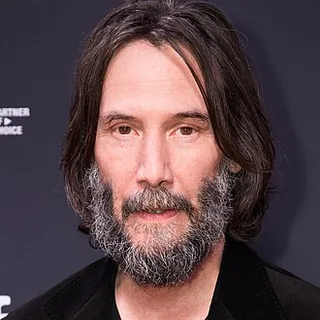 Keanu Reeves — Actor. His relatively reserved public presentation offers a limited comparison with gentleness and personal boundaries, distinct from the action characters he performs.
 Andrew Garfield — Actor. His public reflections on meaning and connection offer a comparison with emotional engagement and questioning rather than a fixed, confident self-definition.
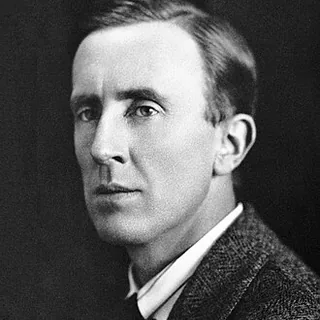 J. R. R. Tolkien — Writer and scholar. His layered imagined world illustrates the search for meaning through history, language, belonging and the small commitments that endure uncertainty.
 Dua Lipa — Singer and performer. Her public creative work offers a limited illustration of individual expression and developing an independent direction within a collaborative industry.
 Avicii — Music producer. His melodic work offers an artistic comparison with emotion and connection expressed through composition, not an explanation of his wellbeing through a personality label.
 Junji Ito — Manga creator. His distinctive horror stories illustrate an imaginative examination of uncertainty and the unsettling gap between ordinary appearances and private experience.
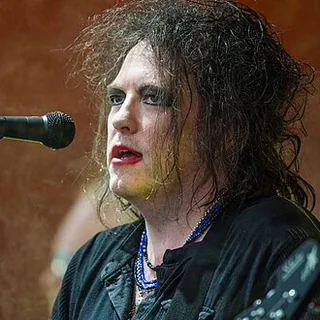 Robert Smith — Musician. His recognisable artistic language and reflective songwriting illustrate individual expression that can remain emotionally open without relying on conventional presentation.
 Fiona Apple — Singer-songwriter. Her candid, intricately constructed music offers an illustration of self-questioning and the effort to express difficult experience without smoothing away its contradictions.
Fictional Characters Associated with 469
 Harry Potter — Harry Potter films. His search for belonging and difficult loyalties illustrate an identity that develops through uncertainty rather than through an uncomplicated sense of destiny.
 Wanda Maximoff — Marvel Cinematic Universe. Her changing sense of self and powerful attachments offer a tragic fictional comparison, not a diagnosis or a justification of harmful choices.
 Eleven — Stranger Things. Her attempts to build an ordinary life illustrate the search for identity, safety and connection beyond a role imposed by other people.
 Jesse Pinkman — Breaking Bad. His need for belonging and recurring remorse illustrate how uncertainty and attachment can leave a person vulnerable to stronger personalities and destructive environments.
 Shinji Ikari — Neon Genesis Evangelion. His conflicted need for closeness and fear of rejection offer a fictional exploration of vulnerability, identity and withdrawal under overwhelming demands.
 Killua Zoldyck — Hunter × Hunter. His developing friendships illustrate the search for a personal identity beyond inherited expectations and the difficulty of trusting a safer connection.
 Bruno Madrigal — Encanto (2021). His withdrawal and continuing care for his family illustrate the painful difference between being misunderstood and no longer wanting to belong.
 Max Caulfield — Life Is Strange. Her reflective observation and consequential choices illustrate the wish to understand a situation fully before risking a response that may change a relationship.
 Bella Swan — Twilight franchise. Her guarded presentation and intense attachments illustrate a search for a place and identity that feel personally meaningful rather than socially prescribed.
 Shigeo Kageyama / Mob — Mob Psycho 100. His effort to develop an ordinary self beyond extraordinary powers illustrates sensitivity, uncertainty and the importance of relationships that permit gradual growth.
Sources and scope
The Enneagram Tritype framework is attributed to Katherine Chernick Fauvre. This independent educational guide is not affiliated with or endorsed by Fauvre. It describes a theoretical framework for reflection; it is not a validated assessment, diagnosis or population study.

_(53765476960)_(cropped).jpg)
.jpg)


.jpg)


_crop.jpg)
.jpg)


.png)


