The 459 label identifies the unordered Enneagram family formed by Types 4, 5 and 9, not a specific ordered result. The Contemplative family combines these three types: the Individualist from the Heart centre, the Investigator from the Head centre and the Peacemaker from the Gut centre. Within the Tritype framework, these three types form a deeply inward, reflective and psychologically spacious archetype characterised by introspection, imagination, observation and a strong preference for processing experience internally before acting upon it.
Type 4 contributes sensitivity to identity, meaning and emotional authenticity, Type 5 contributes analytical distance and a desire to understand, and Type 9 contributes receptivity, calm and a tendency to reduce unnecessary conflict. Together, they create one of the most naturally contemplative combinations within the 27-archetype system.
The Contemplative can appear in six possible stacking orders: 459, 495, 549, 594, 945 and 954. Each contains the same three underlying types, but the order indicates which strategy is theoretically dominant and which of the remaining two becomes the more prominent secondary influence. A Four-led 459 may organise its inner life primarily around identity, meaning and authenticity, while a Five-led 549 may approach the same world through analysis, conceptual understanding and intellectual independence. A Nine-led 954 may appear calmer and less visibly intense, with the Four and Five influences operating beneath a more accommodating and stabilising surface.
What unites all six forms is a marked tendency to step back from immediate pressure and move towards the internal world. This can happen emotionally, intellectually or behaviourally depending upon the dominant type. Four withdraws towards identity, imagination and emotional depth. Five withdraws towards knowledge, observation and mental self-sufficiency. Nine withdraws towards internal equilibrium and the reduction of disruptive tension. Because all three strategies are inward-turning, the Contemplative can have a particularly rich private life while appearing comparatively quiet or understated externally.
The archetype's greatest strengths and greatest difficulties both arise from this same internal orientation. At its best, the Contemplative can be highly perceptive, thoughtful and capable of seeing complexity that more action-oriented personalities overlook. The person may be unusually comfortable with ambiguity, subtlety and subjects that require long periods of reflection. At its least balanced, however, the same inwardness can become isolation, passivity, detachment or difficulty translating thought and feeling into decisive action. The central developmental question is therefore not whether the Contemplative should become less reflective, but whether reflection remains connected strongly enough to lived reality.
The Contemplative at a Glance
| Feature | Description |
|---|---|
| Archetype | The Contemplative |
| Family code | 4 · 5 · 9 |
| Possible orders | 6 |
| Centres | Heart (4) · Head (5) · Gut (9) |
| All six orders | 459 · 495 · 549 · 594 · 945 · 954 |
| Theoretical Dynamics | The three types share a withdrawn stance (4, 5 and 9) |
| Core Tendency | Processing identity, knowledge and experience through inward reflection and psychological distance |
| Central Tension | Rich internal life versus the need for engagement, action and clear self-assertion |
| Characteristic Strength | Depth of reflection combined with sensitivity, patience and nuanced perception |
| Potential Blind Spot | Withdrawal, inertia, overthinking or difficulty making oneself fully present in the external world |
The six stackings divide naturally into three dominant-type pairs. 459 and 495 are Four-led, meaning identity, authenticity and emotional meaning provide the central orientation. 549 and 594 are Five-led, meaning understanding, competence and intellectual autonomy take priority. 945 and 954 are Nine-led, meaning harmony, inner steadiness and resistance to unnecessary disruption become the organising centre. The second number then changes how the dominant strategy tends to be expressed, producing important differences even though all six variants retain the same underlying triple-withdrawn architecture.
How Common Is the Contemplative Tritype?
There are currently no large, representative population datasets that allow the prevalence of the Contemplative Tritype or any of its six stacking orders to be estimated reliably. This limitation applies broadly to Tritype frequency claims. Unlike major trait models such as the Big Five, which can be studied with large samples and continuous psychometric measures, Enneagram and Tritype prevalence estimates are generally drawn from self-selected test populations, online personality communities, practitioner impressions or relatively small samples.
The Contemplative is sometimes described within personality communities as relatively uncommon, particularly because the combination appears to concentrate several withdrawn tendencies within one archetype. That description may feel intuitively plausible, but it should not be confused with demographic evidence. A person who is highly private, inwardly focused or reluctant to self-promote may also be less visible in the very communities from which informal frequency impressions are derived, creating selection effects that are difficult to quantify.
There is another reason to be cautious. The outward presentation of the Contemplative can vary considerably. A Nine-led 954 may appear socially easy-going and relatively ordinary despite a very rich internal world, while a Five-led 549 may be more obviously solitary or specialised. A Four-led 495 may be expressive in selective contexts while remaining withdrawn in others. This variability makes surface identification particularly unreliable.
| Question | Current Position |
|---|---|
| Reliable population estimate? | None currently available |
| Representative prevalence dataset? | No |
| Six recognised stacking orders? | Yes |
| Confidence in exact frequency claims? | Low |
The most responsible approach is therefore to describe the theoretical structure of the Contemplative without attaching false numerical precision to its prevalence. The archetype can be analysed meaningfully as a model of personality organisation even though its actual frequency in the population remains unknown.
What Does 459 Mean?
Tritype theory proposes that an individual uses one preferred Enneagram strategy from each of three traditional centres: Heart, Head and Gut. In the Contemplative family, Type 4 represents the Heart centre, Type 5 represents the Head centre and Type 9 represents the Gut centre. Each contributes a different kind of inwardness, and the archetype emerges from how these forms of withdrawal interact rather than from simply placing three lists of traits beside one another.
| Component | Centre | Broad concern | Contribution to the Contemplative |
|---|---|---|---|
| 4 — Individualist | Heart | Identity, authenticity and meaning | Emotional depth, individuality, imagination and sensitivity to significance |
| 5 — Investigator | Head | Knowledge, competence and autonomy | Observation, analysis, conceptual understanding and mental independence |
| 9 — Peacemaker | Gut | Stability, harmony and ease | Receptivity, patience, calm and resistance to unnecessary conflict |
Type 4 contributes a concern with personal meaning and authenticity. The Four strategy is drawn towards the inner world because identity and emotional experience are treated as important sources of information. The person may spend considerable time examining what an experience means, how it fits into a wider personal narrative and whether outer circumstances feel genuinely aligned with the self. Type 5 adds a different kind of inward movement, orienting towards understanding, knowledge and conceptual clarity. The Five component prefers to step back, observe and construct an internal model before becoming heavily involved.
Type 9 contributes another form of withdrawal through the desire to preserve equilibrium. Nine tends to reduce psychological intensity and may step away from situations that feel excessively demanding, conflictual or intrusive. This differs from Four's search for meaning and Five's search for knowledge, yet the behavioural result can look similar: the person moves away from immediate external pressure and towards a quieter internal position from which experience feels easier to process.
Together, these three strategies can produce a personality that approaches life through reflection before intervention. The Contemplative may want to understand how something feels, what it means, how it works and whether engagement is even necessary before taking decisive action. This can create considerable depth because reactions are rarely left at the surface level. The difficulty is that the threshold for action can become extremely high when every centre possesses some reason to remain inward.
This is one of the key distinctions between the Contemplative and more externally assertive Tritypes. The person may see a situation clearly, understand its emotional and conceptual dimensions and recognise the likely consequences of different choices, yet still struggle to move from understanding into intervention. The challenge is not always lack of insight. In some cases, it is precisely the abundance of insight that makes action more complicated.
The Contemplative Personality
The defining quality of the Contemplative is the combination of depth, distance and receptivity. All three component types encourage some form of internal processing, but they do so for different reasons. Four turns inward to locate emotional truth and personal significance. Five turns inward to understand, conserve resources and maintain intellectual autonomy. Nine turns inward to preserve peace and reduce the pressure created by competing demands. When these tendencies reinforce one another, the individual can develop an especially rich internal life and a strong preference for environments that allow uninterrupted thought.
The Four component gives the archetype emotional and symbolic depth. A Contemplative may experience ordinary events through layers of association and meaning that remain largely invisible to other people. A conversation, memory, piece of music, landscape or personal conflict can become material for extended reflection. The individual may be less interested in what happened in purely factual terms than in what the event reveals about identity, longing, loss, connection or the broader shape of experience. This can create a pronounced sensitivity to atmosphere and nuance.
Five adds analytical structure to that sensitivity. The Contemplative may not simply feel deeply but may also want to understand those feelings conceptually. Experiences can become objects of study, compared with other experiences, organised into frameworks or placed within larger systems of meaning. This can produce an unusual mixture of emotional richness and intellectual distance. The person may be capable of examining deeply personal material with considerable detachment while simultaneously remaining strongly affected by it.
Reflection becomes richer when it stays in contact with lived experience.
Nine adds psychological spaciousness. Where Four can intensify emotional experience and Five can narrow attention around a problem, Nine introduces a broader, more diffuse perspective. The individual may be capable of holding multiple possibilities in mind without forcing an immediate conclusion. This can make the Contemplative tolerant of ambiguity and less inclined than many people to demand that every contradiction be resolved immediately.
The combination can therefore produce considerable nuance. Contemplatives may be wary of simplistic explanations because they naturally perceive several layers at once. A social conflict may contain valid points on both sides. A personal decision may involve competing values that cannot be reduced to one obvious answer. A theory may be useful while still incomplete. This ability to remain with complexity can be intellectually and emotionally sophisticated.
At the same time, complexity can become a refuge. The person may continue discovering additional interpretations long after enough information exists to make a practical decision. Four can continue asking whether the choice feels completely authentic, Five can continue searching for greater certainty and Nine can continue postponing action because none of the available options feels entirely comfortable. The result can be prolonged contemplation that gradually loses contact with the practical demands of the situation.
This tendency is especially important because the Contemplative may not experience inactivity as obviously unpleasant. Many action-oriented personalities become restless when nothing is happening, but a 4–5–9 individual can remain occupied internally for long periods. Thoughts, memories, ideas and imaginative possibilities provide substantial stimulation. The absence of external movement may therefore be less noticeable from the inside than it would be for someone whose attention is more strongly directed towards the environment.
Solitude can be particularly important. The person may require significant time alone in order to feel mentally and emotionally organised. Social interaction can generate more material than can be processed immediately, and retreat allows the individual to sort through impressions without additional demands arriving. This does not necessarily indicate social anxiety or lack of interest in people. The Contemplative may care deeply about relationships while still needing more psychological space than others expect.
There can also be a strong preference for depth over breadth. The person may be more interested in a small number of meaningful relationships, specialised interests or complex ideas than in maintaining a wide social field. Conversations that remain superficial for too long can become tiring because the individual is naturally oriented towards material that contains emotional, conceptual or existential substance.
This does not mean the Contemplative is always serious. Nine can bring gentleness and understated humour, while Five may enjoy dry intellectual wit and Four can appreciate irony or unusual forms of expression. The broader point is that the personality often wants an experience to feel substantial enough to justify sustained attention.
The archetype may also have a complicated relationship with visibility. Four can desire to be deeply recognised, Five can feel uncomfortable with intrusion and Nine can prefer not to create unnecessary attention. These tendencies can coexist in a way that produces an important contradiction: the person may strongly want to be understood while simultaneously revealing very little.
This can create frustration in relationships. The Contemplative may feel that other people do not perceive the depth of what is happening internally, yet may not communicate that depth clearly because exposure feels intrusive, difficult or somehow reductive. The individual may hope to be understood intuitively rather than through explicit explanation.
The Five component can intensify this privacy by creating a sense that internal material should be protected until it has been fully processed. Four may want the expression to feel authentic and precise, while Nine may hesitate to introduce material that could disturb the atmosphere. By the time the person is ready to speak, the original moment may have passed.
At their best, Contemplatives develop a powerful ability to turn private reflection into something communicable. Writing, art, teaching, research, design, conversation or other forms of expression can become bridges between the internal and external worlds. The person does not have to abandon depth in order to become more engaged; instead, depth can become the basis for meaningful contribution.
The central developmental question is therefore whether the inner world functions as a source of insight or a substitute for participation. Reflection enriches life when it eventually returns to action, relationship or expression. It becomes limiting when the person repeatedly retreats into thought because the external world feels too demanding, disappointing or intrusive.
How the Dominant Type Changes the Presentation
The Contemplative should not be imagined as one uniformly quiet personality. The dominant type changes the psychological purpose of withdrawal and therefore alters the outward style substantially. In Four-led 459 and 495, identity, emotional truth and personal meaning come first. These individuals are likely to experience the internal world primarily through questions of authenticity, significance and self-definition, with Five and Nine modifying how that sensitivity is processed.
In Five-led 549 and 594, understanding and intellectual autonomy become the central concerns. These versions may appear more conventionally cerebral, private or self-contained. Four adds depth and individuality, while Nine contributes calm, receptivity and a lower-conflict style. The Five-led forms may be especially interested in subjects that allow both conceptual mastery and prolonged independent exploration.
In Nine-led 945 and 954, stability, harmony and psychological ease become the primary orientation. These variants can appear noticeably softer or less intense than Four- and Five-led versions because the outward presentation is filtered through Nine's preference for low-friction engagement. Nevertheless, Four and Five continue to create substantial emotional and intellectual depth beneath the surface.
The six stackings therefore differ less in whether they withdraw than in why they withdraw and what they are trying to protect or understand through that withdrawal. Four-led forms protect authenticity, Five-led forms protect autonomy and understanding, and Nine-led forms protect equilibrium.
Inner Dynamics in Enneagram Theory
The internal structure of the Contemplative becomes particularly clear when Types 4, 5 and 9 are examined through the broader classifications used within Enneagram theory. These categories are part of the Enneagram's conceptual framework rather than independently verified psychological mechanisms, but they help explain why the 4–5–9 combination is generally described as unusually inward, reflective and non-confrontational.
The Triple Withdrawn Pattern: Types 4, 5 and 9
The most important theoretical feature of the Contemplative is that all three component types belong to the Enneagram's Withdrawn Hornevian group. This gives the archetype a strong structural coherence. Four, Five and Nine differ substantially in motivation, emotional tone and focus, but all three respond to difficulty by moving some portion of attention away from immediate external demands and towards an internal or psychologically distanced position.
Type 4 withdraws towards identity, imagination and emotional meaning. When the external world feels disappointing, inauthentic or insufficiently resonant, Four can move more deeply into the internal world where experience can be interpreted according to personal significance. Type 5 withdraws towards observation, knowledge and self-sufficiency, reducing direct involvement in order to understand before acting. Type 9 withdraws towards psychological ease, reducing contact with disruptive priorities or conflict when they threaten internal equilibrium.
Within the Contemplative, these three forms of withdrawal can reinforce one another strongly. The Heart centre turns inward to ask what something means, the Head centre turns inward to ask how it works and the Gut centre turns inward to preserve enough calm to continue processing it. The person can therefore possess considerable internal activity even when very little is happening externally.
This triple-withdrawn structure helps explain why the archetype may feel unusually self-contained. The person can spend significant amounts of time alone without immediately experiencing the absence of stimulation that a more externally oriented personality might feel. Emotional reflection, conceptual exploration, imagination and subtle observation can provide a substantial field of experience.
The risk is that there is comparatively little within the 4–5–9 combination itself that naturally insists upon immediate external action. Each centre contains a reason to delay engagement. Four may wait until the action feels authentic, Five may wait until understanding feels sufficient and Nine may wait until the disruption created by action feels tolerable. The result can be a person who knows a great deal about what should happen while remaining reluctant to initiate it.
Growth therefore involves developing a stronger relationship with intentional engagement. This does not require becoming highly extraverted or abandoning solitude. It means recognising that some forms of clarity emerge only after action has begun. The external world can provide information that reflection alone cannot generate.
Four's Reactive Strategy
Type 4 belongs to the Enneagram's Reactive harmonic grouping, and this introduces emotional intensity into an archetype that can otherwise appear calm or detached. Four is concerned with authentic emotional response and may resist smoothing over an experience simply because it would be more comfortable to do so.
Within the Contemplative, this reactive quality is often turned inward rather than displayed publicly. A person may experience powerful emotional reactions privately while remaining outwardly restrained. Five can encourage observation of the emotion rather than immediate expression, while Nine can reduce the likelihood of open confrontation.
This can produce a rich but largely invisible emotional life. The person may replay conversations, examine disappointments in detail or spend considerable time understanding why a particular event felt significant. Others may see little evidence of this process and assume the person was unaffected.
In healthy form, this creates impressive emotional insight. The Contemplative may become highly sensitive to the complexity of human experience because emotions are neither dismissed nor expressed without reflection. The difficulty arises when analysis and withdrawal keep the emotion circulating internally long after direct communication would have been more useful.
Five's Competency Strategy
Type 5 belongs to the Enneagram's Competency harmonic grouping and contributes a desire to understand problems through observation, knowledge and conceptual accuracy. Five tends to reduce emotional and social demands long enough to gain an intellectual grip on the situation.
Within the 4–5–9 combination, this analytical strategy can become especially powerful because both Four and Nine also support inward attention. A Contemplative may therefore develop deep expertise in subjects that reward sustained concentration. The person may be less interested in rapidly collecting information than in constructing a coherent internal understanding.
This can create considerable intellectual independence. The individual may be relatively resistant to accepting conventional explanations simply because they are popular, particularly when the explanation feels emotionally shallow or conceptually incomplete. Four wants the interpretation to feel meaningful, Five wants it to be accurate and Nine wants enough psychological space to consider it without pressure.
The problem emerges when understanding becomes a prerequisite for all action. Some situations are too complex to be fully understood in advance, and waiting for conceptual certainty can become another form of avoidance. Growth involves recognising when the existing model is sufficiently good to justify experimentation.
Nine's Positive-Outlook Strategy
Type 9 belongs to the Enneagram's Positive Outlook harmonic grouping, although its positivity is often quieter than the more obvious optimism associated with Type 7. Nine tends to preserve internal stability by broadening perspective, reducing urgency and resisting the idea that one difficult experience must dominate everything.
Within the Contemplative, this can soften the emotional intensity of Four and the mental concentration of Five. Nine allows the person to step back far enough that contradictions can coexist without immediate resolution. This contributes to the archetype's patience and tolerance for ambiguity.
The difficulty is that the same capacity can reduce motivation. A problem that initially feels urgent may become psychologically distant after enough reflection. The person can understand why action is necessary and still feel little impulse to initiate it because Nine has reduced the internal tension that would otherwise force movement.
This creates a subtle developmental issue. Many people act because discomfort becomes intolerable. The Contemplative may be unusually good at making discomfort tolerable internally, which means external change can be postponed far longer than circumstances justify.
Strengths and Potential Blind Spots
Likely Strengths
One of the clearest strengths associated with the Contemplative is depth of reflection. The combination of Four, Five and Nine creates a strong capacity for sustained inward attention. The person may remain with ideas, emotions or experiences long enough to notice patterns that are invisible during more rapid forms of thinking. This can be particularly valuable in philosophy, psychology, art, research, writing and other fields where the first obvious interpretation is rarely the most interesting one.
- Another potential strength is nuanced perception. Four notices subjective meaning, Five notices structure and Nine notices the wider field in which competing perspectives coexist. Together, these tendencies can produce a person who is unusually reluctant to oversimplify. The individual may recognise that several explanations can contain partial truth and that human motivations are often contradictory.
- The archetype can also possess substantial empathy without excessive intrusion. Four brings sensitivity to emotional experience, while Nine contributes receptivity and Five reduces the impulse to immediately impose advice. A healthy Contemplative may therefore be capable of listening carefully without rushing to take control of another person's experience.
- Patience is another potential strength. The person may be comfortable allowing ideas and relationships to develop gradually rather than demanding immediate resolution. In environments dominated by speed and constant reaction, this can be a major advantage. Some problems reveal their structure only when enough time has passed for surface noise to settle.
The Contemplative may also be capable of original synthesis. Four contributes imagination, Five contributes conceptual organisation and Nine allows apparently conflicting material to coexist long enough for connections to emerge. The person may therefore excel at bringing together information from different domains and discovering relationships between ideas that initially appear unrelated.
At their best, Contemplatives can become powerful interpreters of complexity. They may not always be the loudest or fastest contributors, but their value can lie precisely in noticing what more externally driven people move past too quickly.
Potential Blind Spots
The most obvious difficulty is excessive withdrawal. Solitude and internal processing are genuinely important to the archetype, but they can gradually become default responses to almost every form of difficulty. The person may withdraw when overwhelmed, withdraw when uncertain, withdraw when emotionally hurt and withdraw when conflict appears likely. Because the internal world remains stimulating, the costs of this pattern may accumulate slowly.
A second risk is inertia. Nine reduces urgency, Five prefers observation before action and Four may wait for the action to feel fully aligned with an internal sense of authenticity. Together, these tendencies can make initiation unusually difficult. The individual may spend considerable time preparing psychologically for something that would become clearer within minutes of actually beginning it.
Overthinking can also become a problem. The Contemplative may generate increasingly subtle interpretations without establishing a point at which reflection should stop. More information or more internal clarity always appears potentially available. The person can therefore remain in preparation indefinitely while the external situation changes without them.
There is also a risk of idealisation. Four can imagine a more meaningful or authentic alternative to ordinary reality, Five can conceptualise highly coherent systems and Nine can remain psychologically attached to possibilities that have never been tested through confrontation with the real world. The individual may therefore become more attached to an imagined life than to the imperfect process of building one.
Conflict avoidance can create another difficulty. The Contemplative may understand disagreements extremely well while remaining reluctant to state a position strongly enough to alter the situation. The person may see both sides, recognise why everyone behaves as they do and ultimately use that understanding as a reason not to advocate clearly for their own needs.
The deeper developmental challenge is therefore not simply "becoming more assertive." It is learning that presence in the external world does not require sacrificing depth. Action can become another source of information rather than a threat to reflection.
Relationships and Communication
Contemplatives are likely to value relationships characterised by depth, psychological space and low levels of unnecessary pressure. Superficial social contact can be tolerated and sometimes enjoyed, but the most meaningful relationships are likely to be those in which complex ideas, emotions and unusual perspectives can be discussed without constant demands for performance or rapid response.
The Four component contributes a desire to feel genuinely known. The person may care deeply about whether another individual understands the subtleties of their inner experience rather than merely knowing factual information about them. Five contributes a strong need for privacy and autonomy, while Nine contributes a preference for relationships that do not generate continual conflict.
This creates an important contradiction. The Contemplative may want unusually deep intimacy while simultaneously protecting the private material required to create it. The person can therefore wait for another individual to demonstrate exceptional understanding before becoming fully open, while the other person has insufficient information to demonstrate that understanding in the first place.
Empathy and boundaries can coexist.
Communication may be carefully considered. The Contemplative can spend substantial time deciding how to express something accurately because Four wants emotional authenticity, Five wants conceptual precision and Nine wants to minimise unnecessary disruption. This can produce beautiful, nuanced communication when enough time is available, particularly in writing.
In spontaneous conflict, however, the same process can become a disadvantage. The person may not know what they truly think until hours or days after the conversation has ended. By then, the opportunity to respond directly may have passed. Resentment can accumulate not because others refuse to listen, but because the Contemplative repeatedly fails to introduce important information at the moment when it could influence the relationship.
Nine also creates a tendency to see the other person's position clearly, which can make self-advocacy more complicated. Once the Contemplative understands why someone behaved badly, anger may soften before the underlying boundary has been addressed. Understanding then becomes confused with permission.
Healthy relationship development therefore involves learning that empathy and boundaries can coexist. The person can understand another individual's motives without accepting the consequences of their behaviour. Likewise, disagreement does not necessarily destroy intimacy. In some cases, clear disagreement is what makes genuine intimacy possible because both people become more fully present.
Work and Career Preferences
The Contemplative archetype is likely to appreciate work offering some combination of autonomy, intellectual depth, meaningful subject matter and freedom from constant interpersonal interruption. Environments that reward sustained concentration may be more satisfying than those built around continual networking, rapid switching between tasks or aggressive self-promotion.
Five contributes a natural fit with research, analysis and specialised expertise. Four adds attraction to work involving interpretation, creativity, meaning or psychological depth. Nine contributes patience and a preference for stable environments where attention can be sustained without continual conflict.
This can make fields such as research, writing, psychology, philosophy, design, software development, data analysis, history, archival work, academia, technical specialisation, art, music, editing and many forms of independent knowledge work theoretically appealing. The specific occupation matters less than whether the person can think deeply and retain enough control over the pace and method of work.
- Four-led Contemplatives may be particularly drawn towards work where individual interpretation matters. Writing, art, cultural analysis, psychotherapy, design and other fields that allow personal meaning to shape the output can be attractive.
- Five-led forms may prefer roles that reward conceptual mastery, technical knowledge or independent problem-solving.
- Nine-led forms may value stability and humane working environments more strongly and may be especially effective in roles that require patience, listening or low-conflict coordination.
One potential occupational strength is the ability to work with complexity for long periods without needing immediate external reward. The person may be willing to investigate obscure subjects, develop specialised skills or pursue projects whose value becomes visible only gradually. This can be a major advantage in fields where depth matters more than speed.
The risk is underexposure. A Contemplative may develop substantial expertise without making enough effort to communicate or promote it. Four may dislike self-marketing if it feels artificial, Five may prefer the work itself to public presentation and Nine may avoid the competitive discomfort required to claim opportunities.
The individual can therefore become less successful externally than their actual ability would predict. The problem is not lack of competence but failure to create sufficient visibility. Learning to communicate expertise does not require becoming performative or inauthentic. It simply ensures that private competence becomes available to the external world.
Another risk is waiting for the perfect occupational fit. The Contemplative may imagine an environment that offers complete autonomy, meaningful work, minimal bureaucracy and enough solitude to function optimally. Such roles exist in degrees, but rarely perfectly. Development may require tolerating ordinary imperfections rather than remaining indefinitely outside the field.
Stress and Growth
Under prolonged stress, the Contemplative's characteristic strengths can become exaggerated into increasingly defensive forms of withdrawal. Healthy solitude can become isolation, thoughtful analysis can become rumination, emotional depth can become fixation and peacefulness can become passivity. Because these changes occur within strategies that already feel natural, the person may not immediately recognise that the pattern has become maladaptive.
A common stress pattern may begin when external demands feel excessive. The Contemplative retreats in order to think, which initially provides genuine relief. Four processes the emotional meaning of what happened, Five analyses the problem and Nine reduces internal tension. If the withdrawal produces enough relief, returning to the difficult situation becomes less urgent.
The problem is that unresolved external demands often remain. The person may then retreat again whenever pressure returns, creating a cycle in which the internal world becomes progressively safer and the external world progressively more difficult to re-enter. Over time, ordinary demands can begin to feel intrusive simply because exposure to them has decreased.
Four-led Contemplatives may become increasingly absorbed in emotional interpretation, identity or the sense of being fundamentally different from the surrounding world. Five-led forms may retreat further into knowledge, private interests or self-sufficiency, reducing contact with people and situations that create unpredictable demands. Nine-led forms may become especially passive, numbing themselves through routine or distraction while important priorities remain unresolved.
Growth therefore involves becoming more willing to act before total inner certainty has arrived. The Contemplative may benefit from recognising that some clarity emerges only after engagement. A conversation cannot be perfectly rehearsed in advance, a creative project cannot be understood completely before it exists and a life decision cannot always be resolved through additional thinking.
Another developmental task is strengthening contact with personal priorities. Nine can diffuse desire, Five can detach from it and Four can idealise it. The person may therefore know a great deal about what feels meaningful without translating that knowledge into concrete commitments. Choosing one imperfect path can sometimes be more developmentally valuable than continuing to contemplate several beautiful possibilities.
Embodiment can also become important. The Contemplative may spend so much time in thought, feeling and imagination that bodily cues and practical routines receive insufficient attention. Regular movement, structured habits and simple engagement with the physical environment can help reconnect the person with immediacy.
Action can begin before total inner certainty has arrived.
The strongest Contemplative is therefore not someone who abandons solitude or depth. It is someone who becomes capable of moving between reflection and participation without treating them as opposites. Solitude can prepare engagement, and engagement can provide the material for richer reflection.
The Six Contemplative Stackings
The six Contemplative stackings contain the same three Enneagram types, but the ordering theoretically indicates which strategy takes priority and which of the remaining two provides the stronger secondary influence. The first number represents the dominant type, the second represents the more prominent supporting strategy and the third occupies the tertiary position. These differences should be treated as variations in emphasis rather than six entirely separate personalities, but the order can significantly change the outward presentation.
| Stacking | Lead Type | Secondary Emphasis | Typical Presentation |
|---|---|---|---|
| 459 | Four | Five | Identity-led, introspective, analytical and emotionally nuanced |
| 495 | Four | Nine | Identity-led, receptive, gentle and quietly imaginative |
| 549 | Five | Four | Analysis-led, individualistic, reflective and conceptually deep |
| 594 | Five | Nine | Analysis-led, calm, detached and quietly observant |
| 945 | Nine | Four | Harmony-led, sensitive, imaginative and emotionally receptive |
| 954 | Nine | Five | Harmony-led, thoughtful, reserved and intellectually contemplative |
The Four-Led Contemplatives: 459 and 495
Both 459 and 495 begin with Type 4, meaning questions of identity, authenticity and personal meaning provide the central psychological orientation. These individuals may experience the world through a strong awareness of whether something resonates internally and whether outer circumstances reflect the complexity of their private experience. Five and Nine then change how that emotional sensitivity is processed.
The 459 turns first towards Five's analytical distance, creating a more conceptually organised and self-contained Four. The person may examine emotions almost as if they were intellectual objects, developing detailed explanations for why experiences feel significant. The 495, by contrast, turns first towards Nine's receptivity and calming influence, producing a softer and often less visibly intense expression of the Four core.
Both remain deeply introspective, but the balance differs. The 459 is likely to appear more analytical and specialised, while the 495 may appear more gentle, diffuse or emotionally atmospheric. In both cases, the tertiary type remains important and contributes to the broader withdrawn structure.
459 — Four → Five → Nine
In 459, Type 4 is followed by Type 5, closely connecting identity with analysis and conceptual understanding. The individual may not be satisfied simply to experience an emotion; there is often a desire to understand its structure, origin and meaning. Personal experience can therefore become material for sustained intellectual reflection.
This can create an especially introspective version of the Contemplative. The person may spend considerable time organising experiences into conceptual frameworks, exploring psychology, philosophy, art or other fields that provide language for complex internal states. Five gives the Four core greater distance, making it possible to examine emotionally significant material without immediately expressing it.
Nine remains important in the tertiary position, reducing the impulse towards overt confrontation and contributing a softer external presentation. The person may therefore possess strong internal convictions while appearing calm or understated in everyday interactions.
Compared with 495, the 459 may appear more intellectually defined and less willing to leave emotional experience in an unstructured form. Its broad sequence can be understood as identity supported first by understanding and then by harmony. The developmental challenge is ensuring that self-understanding does not become a substitute for direct participation in life.
495 — Four → Nine → Five
In 495, Type 4 is followed by Type 9, connecting identity more immediately with receptivity, imagination and the desire to preserve inner equilibrium. The person may be highly sensitive to atmosphere and meaning while expressing that sensitivity in a gentle or diffuse manner rather than through obvious emotional intensity.
Nine can soften the Four core considerably. Emotional experiences may be deep but not always sharply expressed, and the individual may hesitate to impose personal feelings upon others. There can be a dreamy or impressionistic quality to the internal world, with meaning emerging gradually rather than through deliberate analysis.
Five remains present and adds intellectual depth, but it appears after the Four–Nine combination. Compared with 459, the 495 may therefore be less inclined to systematise every emotional experience and more willing to let feelings remain ambiguous or symbolic.
The broad sequence is identity supported first by harmony and then by understanding. The developmental challenge is preventing sensitivity from becoming passivity. The person may understand deeply what matters but hesitate to disturb the surrounding environment strongly enough to pursue it.
The Five-Led Contemplatives: 549 and 594
Both 549 and 594 begin with Type 5, making knowledge, competence and intellectual autonomy the central organising themes. These are likely to be the versions most closely associated with the conventional image of the solitary thinker, although Four and Nine ensure that the Five core is unusually sensitive to meaning, atmosphere and emotional nuance.
The 549 turns first towards Four, connecting analysis with individuality and personal significance. The 594 turns first towards Nine, connecting analysis with calm, detachment and a broader tolerance for ambiguity. Both can be deeply private, but their private worlds may have different textures.
The 549 is likely to feel more personally invested in the ideas being explored, while the 594 may adopt a more neutral and observational stance. Neither distinction is absolute, but the secondary type changes whether analysis is coloured more strongly by emotional meaning or psychological spaciousness.
549 — Five → Four → Nine
In 549, Type 5 is followed by Type 4, creating a highly introspective and individualistic form of the Contemplative. Understanding is the primary orientation, but the subjects that attract attention may be selected partly because they contain personal, psychological or aesthetic significance.
The person may be especially interested in complex systems that illuminate human experience, identity or meaning. Purely functional knowledge can feel insufficient if it lacks depth or connection to a larger interpretive framework. Four therefore gives the Five core a more imaginative and personal quality.
Nine contributes calm and reduces the pressure for immediate external expression. The 549 may therefore develop highly elaborate ideas privately before allowing other people access to them. This can support impressive originality, but it can also create substantial distance between internal competence and external visibility.
Compared with 594, the 549 may appear more intense, individualistic or aesthetically sensitive. Its broad sequence is understanding supported first by meaning and then by harmony. The developmental challenge is allowing ideas to become imperfectly public before they feel completely refined.
594 — Five → Nine → Four
In 594, Type 5 is followed by Type 9, giving the analytical orientation a calmer and more detached quality. The person may be particularly comfortable observing complex systems without feeling compelled to intervene immediately. Nine broadens Five's attention and can make the individual unusually patient with ambiguity.
This combination may create a quiet, almost meditative intellectual style. The person can spend long periods considering a problem without needing external validation or rapid resolution. There may be less visible emotional intensity than in 549, although Four remains present and contributes individuality, imagination and sensitivity beneath the surface.
Compared with 549, the 594 may therefore appear more neutral, understated or detached. Its broad sequence is understanding supported first by harmony and then by meaning. The developmental risk is excessive disengagement. Because both Five and Nine reduce immediate involvement, the person may remain an observer long after direct participation would be beneficial.
The Nine-Led Contemplatives: 945 and 954
Both 945 and 954 begin with Type 9, making stability, harmony and psychological ease the primary organising concerns. These may be the least visibly intense forms of the Contemplative because the Four and Five influences operate beneath Nine's calming and accommodating presentation.
The 945 turns first towards Four's emotional depth and identity concerns, while the 954 turns first towards Five's analytical distance and desire for understanding. Both can be highly reflective, but the 945 is likely to appear somewhat more sensitive and imaginative, while the 954 may appear more cerebral and reserved.
Nine's dominance also means that both variants can struggle with inertia more than their internal richness would suggest. The person may possess strong interests, ideas and emotional awareness while having difficulty prioritising them strongly enough to create external change.
945 — Nine → Four → Five
In 945, Type 9 is followed by Type 4, connecting the desire for harmony with emotional sensitivity and imagination. The individual may experience the surrounding world deeply while remaining reluctant to impose that experience upon others. There can be a strong attraction to beauty, atmosphere, memory and personally meaningful forms of expression.
Four gives the Nine core more awareness of identity and emotional nuance, potentially making the person less merged with the surrounding environment than some other Nine variants. Nevertheless, Nine still governs the overall style, so the individual may hesitate to turn personal preferences into firm demands.
Five remains present in the tertiary position, contributing analysis and a need for privacy. The person may therefore process emotional experiences privately and articulate them only after substantial reflection.
Compared with 954, the 945 may appear more emotionally receptive and imaginative. Its broad sequence is harmony supported first by meaning and then by understanding. The developmental challenge is allowing personal significance to become strong enough to interrupt habitual accommodation.
954 — Nine → Five → Four
In 954, Type 9 is followed by Type 5, producing a particularly quiet and observational form of the Contemplative. Harmony and internal steadiness remain primary, but the secondary Five influence creates a strong preference for intellectual distance, privacy and understanding.
The person may be comfortable occupying the background while observing how situations unfold. There can be substantial curiosity without a corresponding need to display knowledge publicly. Five allows the Nine core to maintain autonomy through mental independence rather than through overt assertion.
Four remains important and contributes emotional depth and individuality in the tertiary position. This prevents the 954 from becoming purely detached; beneath the calm exterior there may be a highly personal and imaginative inner world.
Compared with 945, the 954 may appear somewhat more cerebral, reserved and neutral in presentation. Its broad sequence is harmony supported first by understanding and then by meaning. The developmental challenge is ensuring that observation does not become disappearance. The person may need to practise making preferences visible before circumstances settle around them by default.
Wings and Other Secondary Influences
The dominant type of each Contemplative stacking can be modified further by wings and other secondary elements within Enneagram theory. Because the family contains three possible dominant types, there is no single wing distinction that applies to every Contemplative. A Four-led individual may show stronger Type 3 or Type 5 influence, a Five-led individual may show stronger Four- or Six-wing qualities, and a Nine-led individual may show stronger Eight- or One-wing characteristics.
These modifiers can alter the tone substantially without changing the underlying 4–5–9 structure. A Four-led Contemplative with stronger Three influence may display more ambition, visibility or willingness to externalise creative work, while stronger Five influence can intensify privacy and intellectualisation. A Five-led Contemplative with stronger Four influence may appear more imaginative and individualistic, while stronger Six influence may contribute caution, verification and systematic thinking.
A Nine-led Contemplative with stronger Eight influence may possess more obvious boundaries and greater willingness to act decisively when necessary, while stronger One influence can add conscientiousness, structure and a stronger concern with standards. These modifiers can be particularly important in the Contemplative family because relatively small increases in assertiveness or structure can significantly change the outward presentation of an otherwise highly withdrawn combination.
Wings should therefore be treated as secondary modifiers rather than separate archetypes. They add texture after the primary 4–5–9 structure and stacking order have already been established.
Related Tritype Archetypes
Comparing the Contemplative with neighbouring Tritype families helps clarify what each component contributes. The 458 Scholar retains Types 4 and 5 but replaces Nine with Type 8. Emotional depth and analytical independence remain, but the Gut centre becomes far more forceful and boundary-conscious. Compared with the Contemplative, the Scholar is therefore theoretically more willing to confront, resist and impose itself upon the environment when something important is at stake.
This comparison makes Nine's contribution especially clear. Both 458 and 459 can be private, introspective and intellectually independent, but Nine introduces accommodation, psychological spaciousness and reluctance to escalate conflict. The Contemplative may understand a problem just as deeply as the Scholar while feeling much less urgency to fight over it.
The 359 Thinker retains Types 5 and 9 while replacing Four with Type 3. Analysis and calm remain, but the Heart centre shifts from authenticity and individual meaning towards achievement and effectiveness. Compared with the Contemplative, the 359 may therefore appear more pragmatic, externally adaptive and willing to translate knowledge into measurable accomplishment.
The 469 Seeker retains Types 4 and 9 while replacing Five with Type 6. Emotional depth and receptivity remain, but the Head centre becomes more concerned with uncertainty, security and verification. Compared with the Contemplative, the 469 may therefore appear more questioning, relationally vigilant or concerned with finding dependable guidance, whereas Five gives the 459 family greater intellectual detachment and self-sufficiency.
These comparisons demonstrate that the Contemplative's distinctive quality does not come merely from introversion or sensitivity. It emerges specifically from the interaction between Four's search for meaning, Five's search for understanding and Nine's search for inner equilibrium.
The Contemplative and the Big Five
The Enneagram and Big Five describe personality through fundamentally different models, so there is no direct conversion between the 459 Contemplative Tritype and a particular Big Five profile. Some broad descriptive similarities can nevertheless be discussed cautiously.
The triple-withdrawn structure may resemble aspects of lower Extraversion, particularly reduced social assertiveness, lower preference for high levels of stimulation and greater comfort with solitary activity. This is probably one of the more intuitively plausible cross-system comparisons, but it should still not be treated as automatic. A socially confident person can remain psychologically reflective and withdrawn in the Enneagram sense.
The combination of Four's imagination and Five's curiosity may resemble aspects of higher Openness to Experience, particularly intellectual curiosity, aesthetic sensitivity and interest in complex or unconventional material. Nine can also contribute receptivity to multiple perspectives. However, Openness is a broad psychometric trait and cannot be inferred reliably from a Tritype code alone.
Agreeableness may vary. Nine can contribute cooperation and conflict avoidance, while Five may reduce interpersonal involvement and Four may prioritise authenticity over accommodation. A Nine-led Contemplative could therefore appear quite agreeable, while a Five-led version might be polite but highly independent.
Conscientiousness is similarly difficult to generalise. Some Contemplatives may be highly structured in specialised areas, particularly where Five supports disciplined expertise. Others may struggle with initiation or consistency because the withdrawn structure reduces external urgency. Emotional stability can also vary considerably, since Four can introduce substantial affective sensitivity while Five and Nine can moderate outward expression.
The Contemplative and 16-Type Systems
The Contemplative can resemble several descriptions found within Jungian and MBTI-style systems, particularly profiles associated with introspection, imagination, abstract thought and independence. Five-led forms may sometimes identify with INTP or INTJ descriptions because of the emphasis on private analysis and conceptual understanding, while Four-led forms may recognise aspects of INFJ or INFP descriptions where meaning, identity and imagination are especially prominent.
Nine-led forms may also identify with introverted intuitive or feeling profiles because of their quiet, receptive style, although more sensing-oriented presentations are entirely possible. The Tritype itself does not contain enough information to determine a Jungian type because the two frameworks are organised around different theoretical dimensions.
These comparisons should therefore remain loose. Enneagram theory focuses primarily on motivations, defensive strategies and recurring psychological concerns, while Jungian and MBTI-style systems attempt to describe different patterns of perception and judgement. A person identifying as 549 is not automatically INTP, just as an INTP should not automatically be expected to belong to the Contemplative Tritype.
The comparison is most useful when it adds descriptive nuance without collapsing one system into the other. A 459 who identifies as INFP may recognise a strong overlap in themes of inward meaning and individuality, while a 954 who identifies as INTJ may express the same 4–5–9 structure in a more analytical and strategically organised manner. The systems can complement one another while remaining conceptually distinct.
The Contemplative in One Sentence
The 459 Contemplative Tritype combines the emotional depth of Type 4, the analytical independence of Type 5 and the harmonising receptivity of Type 9 into a deeply reflective personality that seeks to understand both inner and outer reality through sustained observation, imagination and psychological distance.
Famous People and Fictional Characters Associated with 459
These examples offer illustrative comparisons with the 459 family, not confirmed personality assessments. The family includes all six orders of its three types; an example need not use the ascending 459 order. A public career or fictional story cannot establish someone's private motivations. Fictional examples refer to the works or versions named below, and are illustrations rather than role models.
Famous People Associated with 459
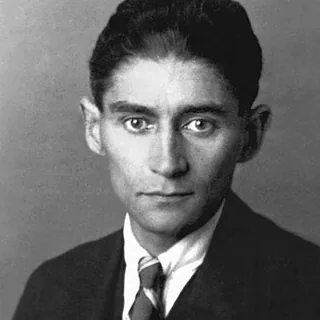 Franz Kafka — Writer. His intensely observed fictional worlds illustrate a reflective examination of alienation, uncertainty and the difficulty of finding a secure place within an opaque system.
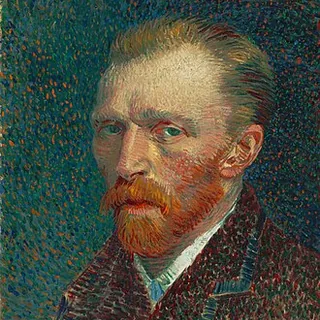 Vincent van Gogh — Painter. His distinctive handling of ordinary scenes offers an artistic comparison with inward intensity and an individual way of seeing, not a clinical explanation of his life.
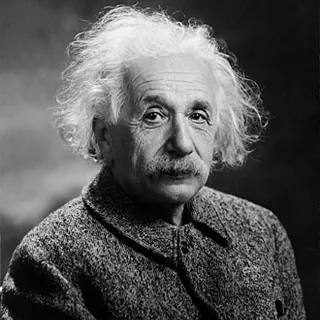 Albert Einstein — Physicist. His sustained thought experiments illustrate imaginative reflection and the willingness to question a familiar explanatory framework.
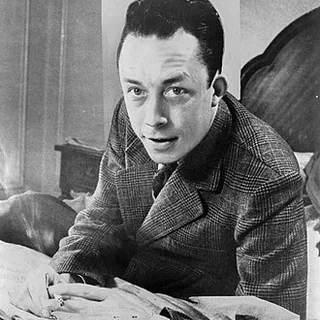 Albert Camus — Writer and philosopher. His work on meaning and the human condition illustrates reflective independence without assuming that uncertainty must have a final, comfortable solution.
 Sylvia Plath — Poet and novelist. Her precise, personal imagery offers a comparison with inward observation and distinctive expression, not an attempt to explain her mental health through a type.
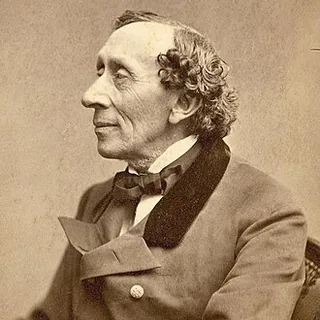 Hans Christian Andersen — Writer. His fairy tales connect imaginative worlds with vulnerability and belonging, illustrating reflection expressed through stories rather than direct argument.
 George R. R. Martin — Novelist. His layered fictional histories illustrate patient world-building and an interest in how individual perspectives complicate a simple account of events.
 Guillermo del Toro — Film director. His imaginative creatures and outsider stories illustrate empathy and meaning explored through a carefully constructed personal visual world.
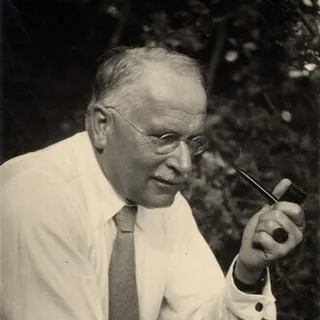 Carl Jung — Psychiatrist and writer. His investigations of symbolism offer a historical comparison with inward inquiry and the search for patterns of personal meaning.
 Cillian Murphy — Actor. His restrained public presentation and detailed character work offer a limited comparison with selective engagement and an inwardly developed craft.
Fictional Characters Associated with 459
 L — Death Note. His detached investigation and unconventional habits illustrate concentrated analysis that remains somewhat separate from ordinary social expectations.
 Belle — Disney's Beauty and the Beast franchise. Her reading and refusal to accept a narrow social role illustrate imagination joined to a more individual understanding of others.
 Luna Lovegood — Harry Potter films. Her independent perceptions and gentle presence illustrate a way of remaining individually distinctive without needing continual social agreement.
 Newt Scamander — Fantastic Beasts films. His close observation of magical creatures illustrates patient understanding, empathy and a preference for working outside the centre of institutional attention.
 Shikamaru Nara — Naruto Shippuden. His thoughtful strategy and preference for a quiet life illustrate the tension between conserving energy and accepting meaningful responsibility.
 Rei Ayanami — Neon Genesis Evangelion. Her sparse presentation and developing sense of individuality offer a complex fictional comparison with identity, distance and the possibility of connection.
 Stan Marsh — South Park. His comparatively reflective responses illustrate a wish for something genuine within a setting that often makes shared expectations seem incoherent.
 Will Graham — Hannibal (2013). His imaginative identification and guardedness offer a deliberately unsettling fictional comparison, not a model of psychological wellbeing or professional assessment.
 Haruhi Fujioka — Ouran High School Host Club. Their practical calm and indifference to status conventions illustrate individuality that does not depend on a dramatic public declaration.
 Ennui — Inside Out 2 (2024). This personified emotion offers a comic metaphor for distance and disengagement, not a literal example of a complete human personality.
Sources and scope
The Enneagram Tritype framework is attributed to Katherine Chernick Fauvre. This independent educational guide is not affiliated with or endorsed by Fauvre. It describes a theoretical framework for reflection; it is not a validated assessment, diagnosis or population study.

.jpg)


_(cropped).jpg)
.jpg)
.jpg)


.png)