The 147 label identifies the unordered Enneagram family formed by Types 1, 4 and 7, not a specific ordered result. The Visionary family combines these three types: the Reformer from the Gut centre, the Individualist from the Heart centre and the Enthusiast from the Head centre. Within the Tritype framework, these three types form a broader personality archetype characterised by idealism, imagination, personal authenticity and a persistent sense that reality could be improved upon.
The Visionary can appear in six possible stacking orders: 147, 174, 417, 471, 714 and 741. Each contains the same underlying three types, but the ordering indicates which type leads the overall personality pattern and which of the remaining two is given greater secondary emphasis.
That distinction matters considerably. A One-led 147 and a Seven-led 741 may share the same three component types while presenting very differently in ordinary life. The 147 is more likely to begin from principles, standards and a desire to correct what appears wrong, whereas the 741 may begin from possibility, imagination and the search for a more interesting or fulfilling alternative. What connects them is the deeper combination of One's concern with improvement, Four's concern with authenticity and Seven's concern with possibility.
Across its different forms, the Visionary tends to notice the distance between what exists and what could exist instead. There is often a strong imaginative relationship with the future: situations are evaluated not merely according to whether they function, but according to whether they live up to an internal sense of quality, meaning, beauty, freedom or potential. This can make the Visionary inventive and reform-minded, although it can also produce chronic dissatisfaction when ordinary reality repeatedly fails to match the imagined ideal.
Looking for a particular stacking order?
147 — One-led · 174 — One-led · 417 — Four-led · 471 — Four-led · 714 — Seven-led · 741 — Seven-led
The Visionary at a Glance
| Feature | Description |
|---|---|
| Archetype | The Visionary |
| Family code | 1 · 4 · 7 |
| Possible orders | 6 |
| Centres | Gut (1) · Heart (4) · Head (7) |
| All six orders | 147 · 174 · 417 · 471 · 714 · 741 |
| Theoretical Dynamics | Frustration / Idealist object-relations group shared by Types 1, 4 and 7 |
| Core Tendency | Imagining better possibilities and wanting reality to move closer to an internal ideal |
| Central Tension | Appreciation of possibility versus dissatisfaction with present limitations |
| Characteristic Strength | Combining ideals, originality and imagination into a compelling vision of improvement |
| Potential Blind Spot | Perfectionism, restlessness or difficulty accepting an imperfect but workable reality |
How Common Is the Visionary Tritype?
There are currently no large, representative population datasets that allow the prevalence of the Visionary Tritype or its six individual stacking orders to be estimated reliably. This limitation applies broadly to Tritype frequency claims and should be kept in mind whenever precise percentages or assertions of exceptional rarity are encountered.
Personality frameworks such as the Big Five can be investigated through large psychometric datasets in which thousands of participants respond to validated trait measures. Enneagram and Tritype classifications generally do not possess an equivalent representative empirical foundation. Most apparent frequency estimates arise from online tests, personality communities, practitioner observations or samples in which participants have already selected themselves into an interest in personality framework.
The Visionary may sometimes be described within Enneagram communities as distinctive or relatively uncommon, particularly because all three component types belong to the same frustration-oriented object-relations grouping. That theoretical symmetry is interesting, but it should not be confused with evidence about demographic rarity. There is currently no sound basis for claiming that 147 represents a particular percentage of the population or that one stacking is objectively rarer than another.
| Question | Current Position |
|---|---|
| Reliable population estimate? | None currently available |
| Representative prevalence dataset? | No |
| Six recognised stacking orders? | Yes |
| Confidence in exact frequency claims? | Low |
The most responsible approach is therefore to treat the Visionary primarily as a theoretical personality configuration and examine whether its proposed dynamics are useful descriptively, rather than attaching false numerical precision to how frequently it supposedly occurs.
What Does 147 Mean?
Tritype theory proposes that an individual uses one preferred Enneagram strategy from each of three traditional centres: Gut, Heart and Head. In the Visionary combination, these strategies are Type 1 from the Gut centre, Type 4 from the Heart centre and Type 7 from the Head centre.
| Component | Centre | Broad concern | Contribution to the Visionary |
|---|---|---|---|
| 1 — Reformer | Gut | Standards, integrity and improvement | Principles, discernment, self-discipline and the desire to make things better |
| 4 — Individualist | Heart | Identity, authenticity and meaning | Originality, emotional depth, individuality and sensitivity to what feels personally significant |
| 7 — Enthusiast | Head | Possibility, freedom and stimulation | Imagination, optimism, exploration and attraction to unrealised alternatives |
The Visionary is not simply a list of traits belonging separately to Ones, Fours and Sevens. The more interesting question is what happens when the three strategies continually interact. Type 1 evaluates reality against an internal standard and notices what ought to be improved. Type 4 compares lived experience with a deeper sense of identity, meaning or emotional significance. Type 7 looks beyond current limitations towards alternative possibilities and unexplored futures.
Together, these tendencies can produce a personality strongly oriented towards the possible rather than merely the actual. Reality is not necessarily accepted simply because it exists. The Visionary may instinctively ask whether something could be more coherent, more meaningful, more beautiful, more ethical, more interesting or more fully realised.
A useful way of understanding the interaction is that One asks whether something is right, Four asks whether it is authentic, and Seven asks what else might be possible. The relative importance of those questions changes according to stacking, but all three are theoretically present throughout the Visionary family.
The Visionary Personality
The defining feature of the Visionary is the combination of idealism with imaginative possibility. Where some personality patterns are primarily concerned with adapting effectively to existing reality, the Visionary tends to maintain a vivid internal comparison between present conditions and an alternative version of how things might be.
Type 1 contributes an evaluative quality. The Visionary may quickly notice inefficiency, inconsistency, poor design, weak reasoning, unfairness or behaviour that fails to meet an internal standard. This does not always produce conventional perfectionism. In a creative or unconventional Visionary, the standard itself may be highly individual. What matters is the recurring perception that something is not yet as good as it could be.
Type 4 adds a more personal and interpretive dimension. Improvement is rarely purely mechanical. A technically efficient solution can still feel unsatisfactory if it appears soulless, derivative or disconnected from deeper meaning. The Four component can therefore push the Visionary towards originality, aesthetic sensitivity and the search for something that feels genuinely expressive rather than merely correct.
An imperfect creation can offer more than a flawless idea that never leaves the imagination.
Seven expands the horizon further. Instead of remaining focused exclusively on what is wrong, Seven generates alternatives. It introduces curiosity, experimentation and the ability to imagine multiple directions in which a situation might develop. This can prevent the 1–4 combination from becoming completely absorbed in criticism or melancholy because attention can repeatedly shift towards what could be created next.
The result can be an unusually future-oriented style of thinking. A Visionary may encounter an imperfect system and almost immediately begin redesigning it mentally. An uninspiring environment may prompt ideas about how it could be transformed. A restrictive convention can trigger speculation about entirely different ways of organising life, work, relationships or society.
This does not necessarily make the Visionary unrealistic. At their best, people fitting this pattern may be highly capable of seeing possibilities that other people overlook precisely because they are unwilling to assume that the existing arrangement is inevitable. Innovations often begin with the capacity to look at something familiar and ask why it has to remain that way.
The difficulty is that the same psychological structure can make ordinary satisfaction surprisingly elusive. If One continually notices what should be improved, Four notices what is missing and Seven imagines something more interesting elsewhere, the present moment can struggle to compete with the imagined alternative.
The Visionary may therefore experience a strange relationship with fulfilment. There can be considerable excitement during the stage when an idea is forming because the imagined version remains unconstrained by practical reality. Once implementation begins, compromises become necessary, flaws become visible and the once-perfect possibility becomes another imperfect thing in the real world.
This can lead to repeated cycles of inspiration, effort, disappointment and renewed imagination. In healthy form, the cycle is creative: each attempt produces learning and the next vision becomes more realistic. In less healthy form, the person continually abandons workable realities in pursuit of an ideal that remains most attractive precisely because it has not yet been tested.
At their best, Visionaries can combine imagination with moral seriousness and personal originality. They may not merely identify problems but generate alternatives, articulate why those alternatives matter and inspire other people to see possibilities that previously seemed invisible.
Their challenge is not to stop imagining better futures. It is to develop enough tolerance for imperfection that those futures can be translated into durable reality.
How the Dominant Type Changes the Presentation
The Visionary should not be imagined as one uniformly artistic, optimistic or perfectionistic personality. The dominant type substantially changes which part of the underlying pattern appears first.
One-led Visionaries — 147 and 174 — are more likely to lead with principles, standards and improvement. Their imagination tends to operate within a broader desire to make something better, more coherent or more correct. They may appear more disciplined, purposeful or reform-oriented than the other versions.
Four-led Visionaries — 417 and 471 — place greater emphasis on identity, authenticity and personal meaning. Their vision is likely to feel more closely connected with self-expression, aesthetics or the desire to create something that reflects an internally meaningful ideal.
Seven-led Visionaries — 714 and 741 — begin more readily from possibility. They can appear more energetic, exploratory and outwardly optimistic, with One and Four providing ethical seriousness and individuality beneath the enthusiasm for alternatives.
A Seven-led Visionary may therefore look considerably more spontaneous than a One-led Visionary even though both are responding to a similar underlying discrepancy between reality and ideal possibility. The difference lies primarily in where attention goes first.
Inner Dynamics in Enneagram Theory
The internal structure of the Visionary becomes particularly interesting when Types 1, 4 and 7 are considered through the broader theoretical groupings used within the Enneagram. As with the Enneagram generally, these classifications should be understood as parts of a personality model rather than independently demonstrated psychological mechanisms.
The unusually important feature of 147 is that all three component types belong to the same object-relations grouping, commonly called the Frustration or Idealist group. This gives the Visionary one of the clearest shared theoretical themes among the Tritype combinations.
The Frustration / Idealist Pattern: Types 1, 4 and 7
Within Enneagram object-relations theory, Types 1, 4 and 7 are grouped together because each is described as maintaining some form of internal ideal while experiencing reality as falling short of it.
The form of that ideal differs significantly between the three types. Type 1 tends to focus on how things should be, comparing behaviour and circumstances with an internal standard of correctness or integrity. Type 4 is more concerned with what would feel deeply authentic or emotionally complete, often sensing the absence of something personally meaningful. Type 7 looks towards better possibilities, maintaining an imaginative relationship with alternatives that seem freer, richer or more exciting than present limitation.
These three orientations converge naturally in the Visionary. The world as it exists may be experienced not as fixed reality but as an unfinished version of something better. There is often a strong sense of potential combined with an equally strong sensitivity to what is preventing that potential from being realised.
This can produce remarkable creativity because dissatisfaction becomes generative. Instead of merely complaining that something is inadequate, the Visionary may immediately begin imagining the improved version. The weakness appears when the internal comparison becomes so persistent that nothing real can compete successfully with the idealised alternative.
The challenge is especially subtle because the ideal can constantly move. Once an improvement has been achieved, One can notice the remaining defects, Four can sense what still feels incomplete and Seven can imagine the next possibility. The destination therefore risks receding whenever the person approaches it.
Growth involves learning that an ideal does not have to be abandoned simply because reality can only approximate it. A functioning system, meaningful relationship or completed creative project will inevitably contain compromises. Accepting those compromises does not necessarily mean surrendering standards; it can mean recognising that an imperfect reality is often more valuable than a perfect possibility that exists only in imagination.
One and Four: Principles Meet Personal Meaning
The interaction between Types 1 and 4 can give the Visionary a particularly strong concern with integrity. One wants actions and systems to conform to a standard, while Four wants the individual life to feel authentic and meaningful. Together, they can create resistance to anything experienced as false, careless, superficial or aesthetically empty.
This combination can produce considerable refinement. The person may have strong opinions not only about whether something works but whether it has been done properly and whether it possesses genuine character. In creative work, this can lead to exacting standards. In moral or political questions, it can create a desire for principles that feel both intellectually defensible and personally sincere.
The danger is a form of intensified dissatisfaction. One notices error while Four notices deficiency. A situation can therefore be judged simultaneously as not correct enough and not meaningful enough. The person may then struggle to appreciate what is already good because attention is repeatedly drawn towards the gap between actuality and ideal.
When developed constructively, however, the combination can support a powerful form of principled creativity. The Visionary may refuse to accept the false choice between imagination and discipline, insisting instead that original work should also possess coherence, quality and integrity.
Four and Seven: Depth Meets Possibility
Four and Seven can initially appear almost contradictory. Four is often associated with introspection, emotional depth and willingness to remain with difficult states, while Seven is associated with movement, possibility and the tendency to seek alternatives when experience becomes limiting.
Within the Visionary, the two can create a rich imaginative life. Four provides emotional and symbolic depth while Seven expands the range of possibilities under consideration. The person may be able to envision not merely technically different futures but futures that feel aesthetically, psychologically or personally transformed.
This interaction can be particularly visible in artistic imagination, speculative thinking and unconventional life design. The person may continuously generate alternate versions of themselves, their environment or their future, using imagination as a way of exploring what might feel more alive or meaningful.
The tension appears when emotional dissatisfaction triggers excessive movement towards the next possibility. Instead of remaining with the difficult work of developing something imperfect, the Visionary may become captivated by a fresh idea whose shortcomings have not yet become visible.
Healthy integration involves allowing Seven's imagination to broaden experience without using possibility primarily as an escape from disappointment. Four can then give the imagination depth, while Seven prevents emotional depth from becoming stagnation.
One and Seven: Discipline Meets Possibility
The One–Seven interaction creates another important internal contrast. One values restraint, standards and responsible improvement, whereas Seven values freedom, experimentation and open possibility. These tendencies can pull the Visionary in opposite directions, particularly when enthusiasm conflicts with obligation.
One side may say that something must be completed properly before attention moves elsewhere. The Seven side can already see several newer, more interesting directions. This can create oscillation between periods of disciplined productivity and periods of restless expansion.
At its best, however, this tension is highly productive. Seven generates possibilities that One might never have considered, while One subjects those possibilities to standards and turns the strongest ideas into something coherent. Imagination gains structure without becoming conventional, and discipline gains flexibility without becoming rigid.
The healthiest Visionary is therefore not simply a dreamer and not simply a perfectionist. The more distinctive capacity lies in creating imaginative possibilities and then giving them enough structure to survive contact with reality.
Strengths and Potential Blind Spots
Likely Strengths
One of the clearest strengths associated with the Visionary is the ability to recognise unrealised potential. The person may be unusually sensitive to the fact that existing systems, environments or assumptions are contingent rather than inevitable. Where others see the way things are, the Visionary often sees one possible arrangement among several.
This can make the archetype particularly effective in situations requiring conceptual redesign, creative reform or the articulation of a future direction. One contributes the desire to improve, Four contributes originality and sensitivity to meaning, while Seven contributes breadth of imagination. Together, these qualities can create ideas that are not merely novel but connected to a larger sense of what would make something genuinely better.
- Another strength is idealistic persistence. Although Seven is capable of moving rapidly between possibilities, the One component can provide substantial determination when an idea becomes connected to principle. Four can make the goal personally significant enough that abandoning it feels like abandoning part of oneself.
- Visionaries may also possess considerable aesthetic or conceptual sensitivity. They can notice subtleties that other people dismiss: awkward design, incoherent wording, a mismatch between stated values and actual behaviour, or the absence of a deeper organising idea. In creative fields, this sensitivity can support distinctive work rather than mere technical competence.
- The combination may additionally encourage independent thinking. Four resists becoming generic, Seven explores alternatives and One possesses an internal standard that need not depend entirely on social approval. A mature Visionary can therefore challenge established practices without rejecting structure merely for the sake of rebellion.
- There can also be a strong capacity for inspiration. Visionaries may communicate possibilities in a way that helps other people imagine a future they had not previously considered. This does not necessarily mean charismatic public leadership. A writer, designer, researcher, teacher or technically oriented creator can be visionary by changing the conceptual frame through which others understand a problem.
Potential Blind Spots
The most obvious difficulty is chronic dissatisfaction. When all three components are theoretically associated with some form of frustration between reality and ideal, the person may become exceptionally skilled at noticing the gap while becoming less skilled at recognising what has already been achieved.
This can create a moving-target problem. A project may initially appear exciting because it represents improvement over the status quo. Once it approaches completion, its flaws become obvious and attention shifts towards the superior version that might be built next. Satisfaction is continually deferred.
Perfectionism can therefore become a significant risk, particularly in One-led forms. The Visionary may postpone completion because the finished product does not yet match the image held internally. Ironically, the high standard intended to improve the work can eventually prevent the work from existing at all.
Four-led Visionaries may encounter a somewhat different version of the problem. The ideal can become connected to identity, making ordinary compromise feel like personal falsification. If every imperfect outcome is interpreted as evidence that the original vision has been betrayed, collaboration becomes unnecessarily difficult.
Seven-led Visionaries may be more vulnerable to idea proliferation. The person can generate possibilities faster than any individual could realistically implement them. New directions then compete for attention, and the excitement of conception can repeatedly displace the less stimulating work of execution.
Another blind spot is the tendency to undervalue maintenance. Visionary personalities are often naturally attracted to transformation: redesigning, reinventing, reforming and imagining the next stage. Yet much of real achievement depends upon repetitive maintenance after the exciting redesign has already occurred.
The shared developmental task is therefore not to abandon idealism but to distinguish between productive dissatisfaction and compulsive dissatisfaction. The first recognises a meaningful gap and works steadily to reduce it. The second continually generates a new gap whenever the previous one begins to close.
Relationships and Communication
Visionaries are likely to value relationships in which there is room for authenticity, imagination and growth. A purely conventional relationship that operates smoothly but never develops greater depth may eventually feel limiting, particularly to Four-led forms.
There can be a strong desire to feel that relationships possess unrealised potential. The Visionary may imagine not merely what the relationship currently is but what it could become if both people communicated more openly, developed together or created a more intentional way of living.
This can be deeply constructive. A mature Visionary may encourage partners and friends to develop capacities they had underestimated, introduce new experiences and resist allowing an important relationship to become purely habitual.
A shared future needs space for the person who exists in the present.
The same tendency can become problematic when the imagined relationship begins competing with the actual person. Real human beings are inconsistent, repetitive and imperfect. If a partner is continually measured against an internal model of what the relationship ought to feel like, dissatisfaction can accumulate even when the relationship is fundamentally healthy.
One may focus on behavioural standards, Four on emotional authenticity and Seven on novelty or possibility. A conflict can therefore become complicated because the Visionary may simultaneously feel that something is wrong, emotionally unsatisfying and unnecessarily limiting.
Communication style differs substantially by stacking. One-led Visionaries may focus more on what should change and can become corrective when frustrated. Four-led Visionaries may emphasise whether communication accurately reflects the underlying emotional reality. Seven-led Visionaries may approach conflict by generating solutions, reframing the problem or proposing a different direction.
A particularly useful developmental principle is to avoid turning every discomfort into a redesign project. Some problems genuinely require change, but others require tolerance, patience or acceptance. A relationship does not necessarily need reinvention every time it passes through a less stimulating phase.
At their best, Visionaries can bring considerable vitality to relationships. Their combination of standards, depth and imagination can make them highly invested in creating a life that feels intentional rather than accidental. The healthiest expression preserves that aspiration while allowing other people to be real rather than idealised.
Work and Career Preferences
The Visionary is likely to appreciate work that permits some combination of creativity, autonomy, improvement and future-oriented thinking. Environments in which everything must be done exactly as it has always been done can become frustrating, particularly when the rationale for those procedures appears weak.
The person may be naturally drawn towards roles where there is a visible gap between the current situation and a better possible version. Design, innovation, entrepreneurship, research, writing, architecture, strategy, education, product development, creative technology, social reform, consulting and various forms of systems improvement can all provide such opportunities.
- One-led Visionaries may be particularly attracted to work involving standards, reform or disciplined creation. They may enjoy taking a poorly organised process and making it coherent, developing quality systems, improving policy or producing creative work in which precision matters.
- Four-led Visionaries may prefer environments in which their individuality and interpretive judgement remain important. Writing, visual design, filmmaking, psychology, cultural analysis, architecture, branding, artistic work and other fields combining structure with personal vision may be particularly appealing.
- Seven-led Visionaries may gravitate towards innovation, entrepreneurship, emerging technologies, strategy, travel-oriented work, product ideation or other environments in which possibilities remain relatively open. They may be strongest during exploratory phases where conventional boundaries have not yet hardened.
These distinctions should not be treated as rigid occupational predictions. A 147 can become an artist, a 417 can become an engineer and a 714 can become an academic. The more useful question is what working style allows the underlying pattern to function constructively.
A Visionary may struggle in a role where there is no meaningful discretion, no possibility of improvement and no connection between effort and a broader idea of quality. Conversely, complete absence of structure can also be problematic because imagination may proliferate without enough pressure to produce finished outcomes.
The ideal environment often combines freedom with meaningful constraints. There needs to be enough room to rethink the problem but enough external reality to force ideas towards completion.
For the Visionary, execution is particularly important. Having ten promising ideas does not necessarily create more value than completing one strong idea. The ability to select, commit and tolerate the imperfections that emerge during implementation may therefore make the difference between someone who merely appears imaginative and someone who produces genuinely original work.
Career choices should nevertheless remain grounded in actual ability, training, opportunity, financial requirements and personal circumstances. Tritype descriptions can suggest motivational tendencies, but they cannot determine what occupation an individual should pursue.
Stress and Growth
Under prolonged stress, the Visionary's characteristic strengths can become exaggerated. High standards can become perfectionism, originality can become alienation and imagination can become restless avoidance of present difficulties.
One possible stress cycle begins when reality fails to match expectation. The person becomes increasingly focused on defects, begins imagining a superior alternative and then feels even more dissatisfied because the contrast between reality and imagination has widened.
This can produce a recurring pattern in which the individual attempts to escape frustration by constructing an even better vision. Initially this restores hope, but the new vision eventually encounters the same limitations of implementation, compromise and human imperfection.
One-led Visionaries may become increasingly critical, rigid or self-correcting under stress. Four-led forms may become more absorbed in disappointment, identity or the sense that circumstances lack the meaning they should possess. Seven-led forms may respond by accelerating into new ideas, experiences or plans in an attempt to keep ahead of frustration.
The common issue is a difficulty remaining peacefully in contact with imperfect present reality. Because all three component strategies provide different ways of comparing the present against something better, the person may rarely experience the present without simultaneously editing it.
Growth therefore involves learning that acceptance and aspiration are not opposites. It is possible to acknowledge that something is imperfect without immediately rejecting it, redesigning it or interpreting the imperfection as personal failure.
The Visionary benefits from developing the capacity to finish. Completion requires a psychologically important shift from infinite possibility to one realised form. Every finished project excludes hundreds of alternatives, and that can feel uncomfortable to a personality strongly oriented towards possibility.
Yet a realised imperfect creation has one advantage over an immaculate internal vision: it exists.
Acceptance of present limits can give aspiration a place to begin.
The mature Visionary can therefore preserve ambitious ideals while becoming increasingly capable of incremental progress, compromise, maintenance and gratitude for partial success. Instead of demanding that reality perfectly embody the ideal, the person learns to use the ideal as a direction of travel.
The Six Visionary Stackings
The six Visionary codes contain the same three Enneagram types, but their order is intended to describe which strategy takes psychological priority. The first number represents the dominant or core type. The second represents the more prominent of the remaining centre strategies, while the third occupies the tertiary position.
| Stacking | Lead Type | Secondary Emphasis | Typical Presentation |
|---|---|---|---|
| 147 | One | Four | Principled, idealistic, refined and personally expressive |
| 174 | One | Seven | Reform-oriented, inventive, optimistic and future-focused |
| 417 | Four | One | Identity-led, exacting, idealistic and creatively disciplined |
| 471 | Four | Seven | Identity-led, imaginative, exploratory and possibility-oriented |
| 714 | Seven | One | Possibility-led, reforming, energetic and structured |
| 741 | Seven | Four | Possibility-led, expressive, unconventional and imaginative |
These descriptions are best treated as differences in emphasis rather than six entirely separate personalities. Every member of the family theoretically contains the same three component strategies.
The One-Led Visionaries: 147 and 174
Both 147 and 174 begin with Type 1. The central orientation therefore concerns standards, integrity and improvement. The person is likely to evaluate situations relatively quickly according to whether they are functioning as they should and may feel an internal pressure to correct deficiencies rather than simply tolerate them.
The difference between the two forms lies in what happens immediately after that judgement. In 147, Four's concern with authenticity and meaning receives the secondary position. In 174, Seven's attraction towards possibility becomes the more prominent secondary strategy.
147 — One → Four → Seven
In 147, Type 4 follows the dominant One. Improvement is therefore connected closely with individuality, meaning and personal ideals. The person may possess exacting standards while also resisting solutions that feel generic or emotionally empty.
This can produce a particularly refined expression of the Visionary. The individual may care deeply about whether something is not only technically correct but aesthetically, ethically or personally coherent. A conventional solution can be rejected even when it works if it fails to capture the deeper quality the person believes should be present.
Seven remains important by supplying alternatives and imaginative breadth. Once the person has identified what feels wrong or inadequate, the Seven component can begin generating different possibilities for how the situation could be transformed.
The broad sequence can therefore be described as standards first, authenticity second and possibilities third. Compared with 174, the 147 may appear somewhat more introspective, exacting or personally invested in the character of the finished result.
174 — One → Seven → Four
In 174, Seven follows the dominant One. Standards and improvement remain central, but the secondary response is more immediately oriented towards alternatives and experimentation. Rather than remaining for as long with what feels emotionally or aesthetically inadequate, the 174 may move relatively quickly towards the question of what could be done differently. This can produce a more visibly inventive and energetic One-led Visionary.
Four remains important in the tertiary position, ensuring that originality and personal meaning continue to influence the overall pattern. The individual may still want the eventual solution to feel distinctive, but the process of generating possibilities is likely to emerge earlier.
The broad sequence becomes standards first, possibilities second and authenticity third. Compared with 147, the 174 may appear somewhat lighter, more exploratory or more willing to experiment with several solutions before deciding which one best embodies the underlying ideal.
The Four-Led Visionaries: 417 and 471
Both 417 and 471 begin with Type 4. Questions of identity, meaning and authenticity therefore provide the primary orientation. These forms of the Visionary may experience the ideal not merely as an objective standard but as something closely connected with who they believe themselves to be and what kind of life or work feels genuinely meaningful.
The distinction lies in whether One or Seven receives secondary emphasis. The 417 connects identity more directly with standards and disciplined improvement, while the 471 connects identity more directly with exploration and possibility.
417 — Four → One → Seven
In 417, Type 1 follows the dominant Four. Personal meaning is therefore accompanied relatively closely by a concern with correctness, quality and refinement. This can create a particularly exacting creative personality. The person may have a strong internal vision and equally strong expectations regarding how faithfully that vision should be realised. Creative dissatisfaction can therefore become a powerful engine for improvement.
There may also be a pronounced ethical dimension to identity. The individual may want not only to be distinctive but to live according to principles that feel internally coherent. Hypocrisy, superficiality or careless execution can therefore provoke unusually strong disappointment.
Seven adds imagination and alternative possibilities in the tertiary position, preventing the Four–One structure from becoming entirely fixed. New directions remain available, but they may be filtered through stronger standards before being pursued.
The broad sequence is authenticity first, standards second and possibilities third.
471 — Four → Seven → One
In 471, Seven follows the dominant Four. Identity and personal meaning remain central, but they are supported more immediately by imagination, experimentation and alternative possibilities.
This may be one of the more visibly creative or exploratory forms of the Visionary. The person can be drawn towards unusual ideas, unconventional lifestyles, new artistic directions or speculative possibilities because exploration itself becomes part of discovering what feels authentic.
One remains present as a tertiary influence and provides standards beneath the imaginative surface. The person may therefore appear spontaneous without being entirely casual about quality. Eventually, the possibilities still need to feel coherent with an internal sense of how things ought to be.
The broad sequence becomes authenticity first, possibilities second and standards third. Compared with 417, the 471 may be somewhat more willing to experiment before determining exactly what the finished form should become.
The Seven-Led Visionaries: 714 and 741
The Seven-led variants demonstrate most clearly why the Visionary should not automatically be imagined as solemn or perfectionistic. Both 714 and 741 begin with possibility, exploration and the desire to avoid unnecessary restriction.
These individuals may appear energetic, inventive and forward-looking. Their idealism can be expressed through enthusiasm for what might be created rather than through visible dissatisfaction with what currently exists.
The difference between them lies in whether One or Four becomes the secondary influence.
714 — Seven → One → Four
In 714, Type 1 follows the dominant Seven. Imagination is therefore connected relatively quickly with standards, improvement and practical reform. The person may generate many possibilities but also possess a stronger internal mechanism for asking which possibilities are actually worth pursuing. This can give the 714 a more structured or purposeful quality than might be expected from a Seven-led pattern.
There may be enthusiasm for innovation, but innovation is not necessarily valued merely because it is new. The One influence encourages the person to ask whether the new approach is genuinely better.
Four remains present in the tertiary position, contributing individuality and the desire for a result that feels personally meaningful rather than purely functional. The broad sequence is therefore possibilities first, standards second and authenticity third. Compared with 741, the 714 may appear somewhat more reform-minded, systematic or concerned with translating ideas into improved structures.
741 — Seven → Four → One
In 741, Type 4 follows the dominant Seven. Possibility is therefore connected more directly with individuality, imagination and personal expression. This can produce an especially unconventional form of the Visionary. The person may be attracted to unusual ideas not only because they are interesting but because they offer opportunities to create a life or project that feels distinctively their own.
Four gives the Seven imagination additional depth and emotional colour. Possibilities can become richly elaborated rather than merely numerous, and there may be a strong attraction towards experiences, aesthetics or ideas that carry symbolic or personal significance.
One remains important in the tertiary position and contributes an underlying concern with quality and improvement. Although the person may initially appear more spontaneous than a One-led Visionary, there can still be substantial internal judgement regarding whether the eventual result lives up to expectations.
The broad sequence becomes possibilities first, authenticity second and standards third. Compared with 714, the 741 may appear more expressive, idiosyncratic or creatively exploratory.
Wings and Other Secondary Influences
The dominant type of each Visionary stacking can be modified further by wings and other elements of Enneagram theory. Because the Visionary family contains three possible dominant types, there is no single wing distinction that applies to every member of the archetype.
A One-led Visionary may show stronger influence from Type 9 or Type 2. A stronger Nine wing might soften the presentation, producing a more restrained or contemplative reformer, while stronger Two influence could add interpersonal engagement and a greater tendency to express ideals through helping or guidance.
A Four-led Visionary may show stronger Type 3 or Type 5 wing characteristics. Greater Three influence may make the person more outwardly productive, image-aware or achievement-oriented, while stronger Five influence may deepen introspection and conceptual independence.
A Seven-led Visionary may display stronger Type 6 or Type 8 wing tendencies. Greater Six influence may add caution, verification and concern with practical consequences, while stronger Eight influence may make the exploratory qualities more forceful, decisive or entrepreneurial.
These modifiers can substantially change the tone of the individual without changing the underlying 1–4–7 Visionary combination. Wings are therefore best treated as secondary refinements rather than competing archetypes.
Related Tritype Archetypes
Comparing the Visionary with neighbouring Tritype families can help clarify which aspects of the overall personality pattern come from each component. The 145 Researcher retains Types 1 and 4 but replaces Seven with Type 5. It therefore preserves the Visionary's combination of standards, individuality and idealism while shifting the Head strategy away from exploration and possibility towards observation, knowledge and conceptual mastery. Compared with the Visionary, the Researcher is therefore likely to appear more concentrated, analytical and intellectually self-contained.
The 146 Philosopher also retains Types 1 and 4 but replaces Seven with Type 6. Standards and personal meaning remain important, but the Head strategy becomes more focused on questioning, verification, uncertainty and security. The Visionary's tendency to expand towards possibilities may therefore be replaced by a stronger tendency to examine whether an idea can be trusted or defended.
The 137 Systems Builder retains Types 1 and 7 but replaces Four with Type 3. Improvement and future possibilities remain, but the Heart component becomes more oriented towards achievement, effectiveness and demonstrable accomplishment. Compared with the Visionary, the Systems Builder may therefore place less emphasis on authenticity or personal meaning and more emphasis on turning ideas into successful external results.
These comparisons are useful because they identify what theoretically changes when one component changes, rather than simply describing neighbouring Tritypes as vaguely similar or different.
The Visionary and the Big Five
The Enneagram and Big Five describe personality using fundamentally different theoretical structures, so there is no direct conversion between the Visionary Tritype and a particular Big Five profile. Any comparison should therefore be treated as descriptive rather than statistical.
The most plausible broad overlap is with Openness to Experience. Four's individuality and sensitivity to meaning, combined with Seven's curiosity and attraction towards alternatives, could resemble higher Openness in many Visionary presentations. Intellectual imagination, aesthetic interests, unconventional ideas and willingness to reconsider established assumptions can all contribute to that resemblance.
Conscientiousness is more difficult to generalise. Type 1 can contribute order, standards and persistence, particularly in One-led Visionaries, but Seven can introduce spontaneity and shifting attention. A Visionary could therefore be highly conscientious in selected domains while simultaneously generating more projects and possibilities than can realistically be completed.
Extraversion may vary substantially. Seven-led Visionaries can be energetic, socially exploratory and assertively engaged with the environment, while some Four-led forms may be considerably more introspective. Assertive enthusiasm should not automatically be equated with globally high Extraversion.
Agreeableness could also vary widely. The idealistic quality of the archetype may produce strong concern with fairness or constructive improvement, but strong standards can also make the person critical or unwilling to accommodate views regarded as fundamentally misguided.
Emotional reactivity cannot be inferred reliably from the Tritype combination either. Four may contribute emotional intensity, while Seven can bring positive reframing and One may attempt greater self-control. Actual Big Five scores would need to be measured independently rather than inferred from Enneagram labels.
The Visionary and 16-Type Systems
The Visionary may also resemble several descriptions found within Jungian and MBTI-style systems, particularly intuitive profiles associated with future possibilities, ideals and conceptual imagination.
Four-led Visionaries may recognise aspects of INFJ, INFP or ENFP descriptions where individuality, interpretation and personal meaning are emphasised. Seven-led Visionaries may identify with ENFP or ENTP descriptions when exploration and possibility are particularly visible. More structured One-led forms may sometimes recognise aspects of INFJ, INTJ or ENFJ descriptions where vision is combined with stronger direction or organisation.
These similarities should not be interpreted as conversions. Enneagram theory attempts primarily to describe motivations, defensive strategies and recurring psychological concerns, whereas Jungian and MBTI-style systems organise personality according to a different conceptual model.
A person identifying as 147 is therefore not automatically an INFJ, just as an ENFP should not automatically be assumed to possess the Visionary Tritype. People with the same Tritype can differ considerably in cognitive style, sociability, emotional regulation and behavioural organisation.
The systems are therefore most useful when treated as separate perspectives that sometimes describe overlapping surface characteristics, rather than as interchangeable labels.
The Visionary in One Sentence
The 147 Visionary Tritype combines principled improvement, individualistic depth and imaginative possibility into a personality that continually sees how reality might be transformed into something more meaningful, coherent or fully realised.
Famous People and Fictional Characters Associated with 147
These examples offer illustrative comparisons with the 147 family, not confirmed personality assessments. The family includes all six orders of its three types; an example need not use the ascending 147 order. A public career or fictional story cannot establish someone's private motivations. Fictional examples refer to the works or versions named below, and are illustrations rather than role models.
Famous People Associated with 147
 Lady Gaga — Singer and actor. Her changing artistic forms and public advocacy illustrate imaginative self-expression joined to a wish to make a meaningful difference.
 Annie Lennox — Singer and activist. Her distinctive creative voice and humanitarian work connect individual expression with a constructive public purpose.
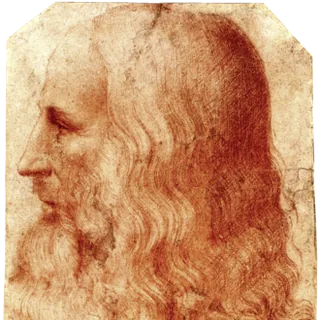 Leonardo da Vinci — Artist and investigator. His notebooks illustrate wide-ranging possibility explored through close observation, invention and a continuing search for a more complete understanding.
 Ricky Gervais — Comedian and writer. His questioning of social conventions offers a comparison with independent judgement expressed through irreverence and imaginative performance.
 Hank Green — Writer and science communicator. His varied educational projects illustrate curiosity and creative communication directed towards useful explanations.
 Yoko Ono — Artist and musician. Her conceptual work offers an illustration of unconventional expression linked to questions about participation, possibility and social change.
 Amy Poehler — Comedian, actor and producer. Her collaborative creative work offers a comparison with purposeful encouragement, energetic experimentation and the development of new opportunities.
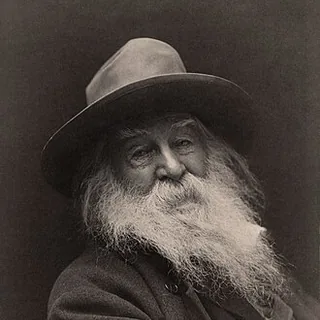 Walt Whitman — Poet. His expansive writing illustrates an individual artistic vision that seeks possibility, connection and a larger account of human experience.
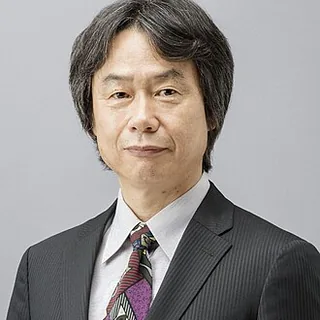 Shigeru Miyamoto — Game designer. His playful inventions illustrate imaginative possibilities shaped into carefully designed experiences that other people can explore.
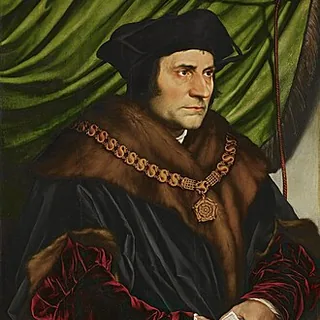 Thomas More — Writer and statesman. His Utopia offers a historical comparison with imagining an alternative social order while remaining concerned with how people ought to live.
Fictional Characters Associated with 147
 Moana — Disney's Moana franchise. Her journey joins an individual calling with responsibility to her community and the willingness to imagine a different path forward.
 Remy — Ratatouille (2007). His unusual culinary ambition connects self-expression with exacting standards and a refusal to accept the limits others assume for him.
 Jack Skellington — The Nightmare Before Christmas (1993). His search for renewed meaning illustrates creative possibility, dissatisfaction and the risks of imposing a personal vision too quickly.
 Elizabeth Bennet — Pride and Prejudice (1813). Her independent judgement and wit illustrate the value of a personal viewpoint alongside the need to revise mistaken assumptions.
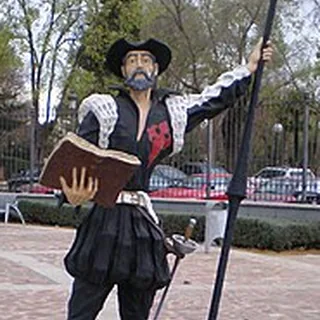 Don Quixote — Cervantes's Don Quixote. His idealistic adventures offer an exaggerated exploration of imagination, conviction and the distance between an inspiring vision and reality.
 Kiara Carrera — Outer Banks. Her wish for authenticity and loyalty to her friends illustrate an individual path shaped by ideals and the attraction of new possibilities.
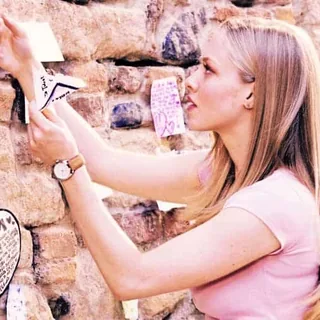 Sophie Hall — Letters to Juliet (2010). Her curiosity and involvement in another person's story connect romantic possibility with the wish to help something meaningful happen.
 Death — Good Omens (2019). This stylised supernatural figure offers a symbolic comparison rather than a realistic psychological portrait or a claim about the original novel's portrayal.
 Lucifer Morningstar — Hazbin Hotel (2024). His imaginative showmanship and complicated response to his daughter's hopes illustrate vision shaped by disappointment and the possibility of renewed engagement.
 Kaveh — Genshin Impact. His architectural ideals connect beauty, individual expression and concern for others, while exposing the difficulty of making an ideal sustainable.
Sources and scope
The Enneagram Tritype framework is attributed to Katherine Chernick Fauvre. This independent educational guide is not affiliated with or endorsed by Fauvre. It describes a theoretical framework for reflection; it is not a validated assessment, diagnosis or population study.
.jpg)

.png)
_(51527411486)_(cropped_2).jpg)
.jpg)
.jpg)
_cropped.jpg)

.jpg)

.png)
.jpg)
