The 137 label identifies the unordered Enneagram family formed by Types 1, 3 and 7, not a specific ordered result. The Systems Builder family combines these three types: the Reformer from the Gut centre, the Achiever from the Heart centre and the Enthusiast from the Head centre. Within the Tritype framework, these three types form a personality archetype centred on improvement, effectiveness and possibility. The Systems Builder tends to notice not only how things currently work, but how they could be made better, more efficient, more attractive, more useful or more successful.
The Systems Builder can appear in six possible stacking orders: 137, 173, 317, 371, 713 and 731. Each contains the same three component types, but the order changes the emphasis. A One-led 137 may appear disciplined, controlled and improvement-oriented; a Three-led 317 may appear more ambitious, efficient and performance-focused; while a Seven-led 731 may initially seem more entrepreneurial, expansive and experimental. What connects all six versions is the same underlying combination of One's drive to improve, Three's drive to achieve and Seven's drive to explore possibilities.
This combination gives the Systems Builder a strongly constructive quality. It is rarely enough simply to recognise that something is inefficient or underdeveloped. There is often an instinct to redesign it, organise it, improve its presentation, streamline its processes or build an entirely better alternative. Ideas tend naturally to become projects, and projects tend to become systems. The archetype is therefore often most energised when it can move from possibility to implementation and then continue refining what has been built.
The Systems Builder at a Glance
| Feature | Description |
|---|---|
| Archetype | The Systems Builder |
| Family code | 1 · 3 · 7 |
| Possible orders | 6 |
| Centres | Gut (1) · Heart (3) · Head (7) |
| All six orders | 137 · 173 · 317 · 371 · 713 · 731 |
| Theoretical Dynamics | Competency overlap (1,3) · Frustration overlap (1,7) · Assertive overlap (3,7) |
| Core Tendency | Improving systems and turning possibilities into effective results |
| Central Tension | Standards and discipline versus speed, novelty and continual expansion |
| Characteristic Strength | Turning ambitious ideas into workable, organised systems |
| Potential Blind Spot | Over-optimisation, impatience and difficulty accepting “good enough” |
How Common Is the Systems Builder Tritype?
There are currently no large, representative population datasets that allow the prevalence of the Systems Builder Tritype or its six individual stacking orders to be estimated reliably. This matters because Enneagram and Tritype frequency claims often circulate with far more numerical confidence than the available evidence justifies.
Unlike the Big Five, which has been studied across very large psychological datasets using continuously measured traits, Tritype frequencies are generally inferred from self-selected online test takers, Enneagram communities, practitioner observations and smaller specialist samples. These sources may reveal patterns within particular groups, but they cannot establish how common a given Tritype is across the wider population.
The Systems Builder is sometimes described within Enneagram communities as a relatively energetic or achievement-oriented combination because Types 1, 3 and 7 all encourage forward movement in different ways. Even so, there is no reliable basis for claiming that the archetype represents a particular percentage of the population or that one of its stacking orders is especially rare. The responsible approach is therefore to examine the structure and theoretical dynamics of the type without attaching false numerical precision to its frequency.
What Does 137 Mean?
Tritype theory proposes that a person relies on one preferred Enneagram strategy from each of three traditional centres: Gut, Heart and Head. For the Systems Builder, these are Type 1 from the Gut centre, Type 3 from the Heart centre and Type 7 from the Head centre.
| Component | Centre | Broad concern | Typical contribution |
|---|---|---|---|
| 1 — Reformer | Gut | Standards, integrity and improvement | Conscience, discernment and a focus on making things better |
| 3 — Achiever | Heart | Value, accomplishment and effectiveness | Adaptability, purposeful effort and attention to results |
| 7 — Enthusiast | Head | Freedom, possibility and engaging experience | Curiosity, optimism and openness to alternatives |
Type 1 contributes the drive to improve. It notices errors, inefficiencies, inconsistencies and places where reality falls short of an internal standard. In the Systems Builder, this can appear as a strong desire to organise, refine and optimise. Processes should make sense, systems should work properly and avoidable flaws should be corrected rather than tolerated indefinitely.
Type 3 contributes the drive to make those improvements effective in the real world. It adds ambition, adaptability, productivity and an interest in measurable progress. The Systems Builder may therefore be less satisfied with an elegant idea that remains theoretical than with a workable one that produces visible results. Three pushes the combination towards implementation, performance and completion.
Type 7 adds imagination and possibility. It notices alternatives, new directions and opportunities that might not be obvious to more conventional thinkers. This prevents the combination from becoming merely rigid or procedural. The Systems Builder may care deeply about systems, but it does not necessarily feel loyal to existing systems. If a better approach becomes available, the instinct may be to redesign the structure rather than simply obey it.
Together, the three types form a distinctive sequence. One asks how something could be improved, Three asks how the improvement can be made effective and Seven asks what further possibilities might open once the improvement succeeds. Different stacking orders alter which of those questions tends to arise first, but all three remain part of the underlying personality pattern.
The Systems Builder Personality
The defining characteristic of the Systems Builder is the combination of constructive dissatisfaction with practical momentum. The archetype often notices gaps between what exists and what could exist, but rather than remaining purely critical, it tends to want to do something about them. A poorly organised process may trigger ideas for a cleaner workflow. An underdeveloped project may immediately suggest opportunities for expansion. A weak product may prompt thoughts about redesign, positioning or improvement.
This can create a personality that naturally thinks in systems. The Systems Builder may enjoy seeing how different components interact and how one alteration affects the whole. What begins as a small improvement can quickly become a broader architecture in the person's mind. A simple project may suggest a sequence of future stages, each dependent on the previous one. The individual may therefore be unusually good at seeing development pathways: not only what something is now, but what it could become after several rounds of improvement.
The One component gives this process discipline. Possibilities are not valuable simply because they are exciting. They eventually have to meet some internal standard of quality, coherence or usefulness. This can make the Systems Builder more selective than the stereotypical enthusiast. They may enjoy experimentation, but they often want experimentation to lead somewhere.
Improvement becomes less useful when every discomfort calls for another project.
Three adds a results orientation that makes the archetype especially likely to ask whether a system actually works. A theoretically correct process that repeatedly fails may eventually lose its appeal. The person can therefore be pragmatic about changing direction, particularly when strong evidence suggests that a different approach would be more effective. This ability to combine standards with adaptation can become one of the type's greatest strengths.
Seven widens the field by ensuring that the individual rarely sees only one possible route. The Systems Builder may be relatively comfortable generating alternatives, trying new approaches and imagining completely different structures. This makes the type potentially innovative, because it can combine the orderliness of One with the experimental energy of Seven.
The tension between these tendencies is important. One wants structure, Seven wants freedom and Three wants progress. When they cooperate well, the result can be a person who generates ideas, chooses the strongest ones and then builds them systematically. When they are poorly balanced, the same combination can create constant restlessness. The person may begin one improvement, discover another possibility halfway through, then redesign the original project before it has had enough time to prove itself.
For this reason, one of the central developmental challenges for the Systems Builder is learning the difference between improvement and unnecessary intervention. Not everything that can be optimised needs to be optimised. Sometimes the more sophisticated decision is to allow a functioning system to remain unchanged long enough for its benefits to accumulate.
How the Dominant Type Changes the Presentation
The Systems Builder should not be imagined as a single uniform personality. The six stacking orders can differ significantly in tone because the dominant type determines what the individual is primarily trying to accomplish.
The One-led Systems Builders, 137 and 173, tend to organise the whole combination around improvement, standards and the desire to do things properly. Their ambition and experimentation operate inside a broader reforming orientation. They may be strongly productive, but productivity usually feels most meaningful when it produces something they regard as genuinely better.
The Three-led Systems Builders, 317 and 371, tend to organise the combination around achievement and effectiveness. These individuals may appear more overtly ambitious, competitive or results-oriented. One gives them standards and Seven gives them options, but the central question is often whether progress is being made and whether the effort is producing a successful outcome.
The Seven-led Systems Builders, 713 and 731, tend to begin with possibility. These individuals may seem more exploratory, entrepreneurial or future-focused. They are often energised by what could be created, expanded or reinvented. One and Three then help give those possibilities structure and practical direction.
These differences mean that one Systems Builder may look like a meticulous reformer while another resembles a fast-moving entrepreneur. The common thread lies deeper: each is trying, in their own way, to move reality towards a more effective future state.
Inner Dynamics in Enneagram Theory
The interaction between Types 1, 3 and 7 becomes clearer when the Systems Builder is examined through several of the broader theoretical groupings used in Enneagram literature. These classifications belong to the Enneagram's internal model and should not be treated as independently demonstrated psychological mechanisms, but they are useful for explaining why the combination is described as it is.
The Competency Connection Between One and Three
Types 1 and 3 are both commonly placed within the Enneagram's Competency harmonic group. Both are theoretically inclined to respond to difficulty by becoming more capable, organised or effective, although their definition of competence differs.
For Type 1, competence is closely tied to correctness and standards. There is an interest in doing things properly, avoiding preventable mistakes and building procedures that can withstand scrutiny. For Type 3, competence is more closely tied to effectiveness. The important question is whether the approach actually produces the intended result.
Within the Systems Builder, these two tendencies can reinforce one another powerfully. One improves the method while Three measures the outcome. If the system is elegant but ineffective, Three pushes for change. If it produces results but is careless or poorly structured, One pushes for refinement.
At their best, these two motivations create a productive balance between quality and performance. The individual can care about doing something well without becoming so attached to the method that the final outcome is forgotten. At their worst, however, One and Three can generate relentless internal pressure. The project is never entirely finished because it could always be both better executed and more successful.
This is one reason the Systems Builder can become vulnerable to chronic optimisation. Improvements produce real benefits, so the individual may receive constant reinforcement for pushing a little harder, refining a little further or setting a slightly higher standard. The difficulty emerges when improvement ceases to have a natural stopping point.
The Frustration Connection Between One and Seven
Types 1 and 7 are commonly associated with the Enneagram's Frustration or idealist object-relations pattern. On the surface they can look almost opposite. One is associated with restraint, responsibility and standards, whereas Seven is associated with freedom, novelty and possibility.
The deeper similarity is that both compare existing reality with an imagined alternative. Type 1 sees how things could be more correct, while Type 7 sees how they could be more stimulating, expansive or rewarding. Both therefore contain a tendency to look beyond what currently exists.
This overlap contributes strongly to the Systems Builder's reforming imagination. When confronted with an inadequate system, the individual may not merely criticise its weaknesses. The mind quickly begins generating a superior version. One provides the dissatisfaction with current standards, while Seven provides the mental flexibility required to imagine alternatives.
This can produce genuine innovation, but it can also make satisfaction difficult. The current version of a project may always seem slightly disappointing when compared with the improved version already taking shape in the person's imagination. The future therefore exerts a strong pull.
The developmental challenge is not to abandon this idealism, but to prevent the imagined future from permanently devaluing the present. A functioning system can be appreciated even while its limitations are recognised.
The Assertive Connection Between Three and Seven
Types 3 and 7 are both placed within the Enneagram's Assertive Hornevian grouping. Both tend theoretically to move towards goals rather than withdrawing for long periods. Three does this through achievement and adaptation, while Seven does it through opportunity-seeking and expansion.
In the Systems Builder, this can create substantial momentum. Seven sees a possibility and Three immediately begins considering how it might be turned into a result. Ideas can move quickly towards implementation because the combination contains both imaginative energy and an instinct for execution.
This is especially useful in environments where experimentation matters. The person may be willing to launch a prototype, observe the response and improve it rather than waiting for perfect certainty. One can then refine the result, creating an iterative pattern of idea, execution, evaluation and improvement.
The risk is excessive speed. Because both Three and Seven reward movement, slowing down can feel psychologically uncomfortable. A project that requires patience, consolidation or routine maintenance may become less attractive than a new opportunity that promises visible progress.
The Systems Builder therefore benefits from recognising that momentum is not identical to progress. Sometimes continuing to build requires knowing when not to accelerate.
Strengths and Potential Blind Spots
Likely Strengths
One of the clearest strengths associated with the Systems Builder is the ability to translate possibility into structure. Many people are naturally better at either generating ideas or executing plans. The 1–3–7 combination theoretically contains resources for both. Seven produces alternatives, Three organises activity around goals and One develops standards that make the resulting system more coherent.
This can give the individual a talent for starting with chaos and gradually imposing useful structure upon it. A complex problem may initially contain too many moving parts, but the Systems Builder often begins separating those parts into processes, stages and priorities. Instead of seeing only a confusing whole, they start to see a system that can be redesigned.
- Another likely strength is iterative thinking. The Systems Builder may be relatively comfortable releasing a first version, observing the outcome and then refining it. The individual can recognise that systems evolve. There is often less need to treat the original structure as sacred simply because substantial effort has already gone into it.
- The combination may also create considerable resilience around projects. If one approach fails, Seven can generate another route, Three can adapt to changing circumstances and One can examine what went wrong. Failure may therefore become information rather than a final judgement, provided the individual does not interpret every setback as evidence that they simply need to work harder.
Potential Blind Spots
The main blind spot emerges from the same machinery. The Systems Builder can become unable to stop improving. A healthy desire for progress may gradually become a belief that everything should be optimised. Workflows, finances, productivity, relationships, exercise, hobbies and even leisure can all become systems requiring refinement.
This can produce a strangely exhausting form of success. The person becomes progressively more competent and productive while simultaneously finding it harder to experience satisfaction. Every achievement immediately creates the next benchmark.
Impatience can also become a problem. One is frustrated by inefficiency, Three dislikes stalled progress and Seven becomes restless when possibilities are restricted. Slow organisations, repetitive bureaucracy and people who refuse to make obvious improvements may therefore become particularly irritating.
The Systems Builder may sometimes assume that others are resisting progress when they are simply operating at a different pace. What feels like straightforward optimisation to one person can feel like constant pressure to another.
There can also be a tendency to treat emotional difficulties as engineering problems. If something feels wrong, the instinct may be to devise a plan, change the environment or increase effort. Sometimes that response is exactly what is needed. At other times, the issue cannot be solved immediately and must instead be tolerated, understood or emotionally processed.
The developmental task is therefore not to become less capable, but to recognise when capability itself has become the default defence against uncertainty.
Relationships and Communication
In relationships, Systems Builders may be energetic, encouraging and highly willing to help. When someone they care about encounters a difficulty, their mind may immediately begin searching for solutions. They can be excellent at spotting options that another person has overlooked, especially when that person feels trapped or discouraged.
The problem is that support can easily become optimisation. A partner or friend may want to feel heard while the Systems Builder is already constructing a five-stage plan. Because the advice is usually intended constructively, the individual may not immediately understand why it is unwelcome.
This is especially important because the Systems Builder can value competence quite strongly. One respects responsibility, Three respects effectiveness and Seven respects initiative. Chronic passivity can therefore become difficult to tolerate. The person may have considerable sympathy for somebody struggling with a difficult problem but much less patience for somebody who repeatedly refuses to act on available solutions.
People need room to be understood without becoming a system to optimise.
At their best, however, Systems Builders can bring enormous vitality into relationships. They may encourage growth, suggest possibilities and help people transform vague aspirations into concrete plans. Seven introduces curiosity and playfulness, Three can contribute social adaptability and One can provide loyalty and consistency.
Communication style changes considerably according to stacking. One-led Systems Builders may be more measured and principled, while Three-led versions may communicate more strategically and goal-consciously. Seven-led versions can be more spontaneous, energetic and idea-driven.
Across all six variants, one of the most useful lessons is that people cannot be optimised in the same way as systems. Emotional connection often requires patience with ambiguity, contradiction and imperfection. A relationship may become stronger not because every difficulty has been solved, but because both people feel understood while facing it.
Work and Career Preferences
The Systems Builder is likely to be attracted to work offering some combination of autonomy, improvement, innovation, problem-solving and measurable progress. The exact profession matters less than the underlying structure of the job. The person tends to function best when there is something that can be built, improved or developed over time.
Entrepreneurship is an obvious theoretical fit because it combines opportunity, execution and system-building. The entrepreneur identifies a gap, creates a structure around it and then repeatedly adjusts that structure according to results. This closely resembles the interaction between Seven's possibility-seeking, Three's achievement orientation and One's improvement drive.
The same pattern can appear within established organisations. Product development, software, engineering, operations, project management, consulting, organisational design, marketing strategy and process improvement can all reward the ability to move between ideas and implementation.
- One-led Systems Builders may especially appreciate work in which quality, standards and improvement are central. They can be motivated by the opportunity to make a system more reliable or professionally rigorous.
- Three-led variants may respond strongly to environments where progress is visible and performance can be measured.
- Seven-led variants may prefer fields with greater experimentation, novelty and room to pursue emerging opportunities.
The working environment can matter more than prestige. A highly paid role may become frustrating if every improvement is blocked by bureaucracy, while a smaller project may become deeply satisfying if the person has genuine ownership over how it develops.
Micromanagement can be particularly difficult because the Systems Builder often wants freedom not merely for personal independence but because they can see alternative methods they believe would work better. Being required to follow an inefficient procedure simply because it is established can become disproportionately irritating.
The broader career challenge is prioritisation. The Systems Builder may not suffer from a shortage of ideas. The harder problem is choosing which ideas deserve years of effort and which should remain interesting possibilities.
The ability to say no can therefore become one of the archetype's most important professional skills. Building a successful system often requires resisting the temptation to build five others at the same time.
Stress and Growth
Under prolonged stress, the Systems Builder's strengths can become exaggerated. Healthy standards become perfectionism, healthy ambition becomes compulsive productivity and healthy curiosity becomes restless escape into new projects.
A common pattern can begin with dissatisfaction. Something is not working well enough, so the individual increases effort. Increased effort creates more projects or more complexity, which produces greater pressure. The person then responds to the pressure by attempting to reorganise or optimise the system again.
The result can become a self-reinforcing loop in which the solution to overload is always another improvement project.
One-led Systems Builders may respond by tightening standards. They introduce more discipline, more structure and more rules in an attempt to regain control. Three-led Systems Builders may respond by increasing output and trying to overpower the difficulty through performance. Seven-led Systems Builders may begin scanning for alternatives, imagining that a different project, opportunity or environment will solve the problem.
In each case, the underlying challenge is similar. The person must learn that some forms of discomfort cannot be removed through optimisation.
Growth therefore involves becoming more comfortable with unfinishedness. A project can be worthwhile without being maximised. A period of rest does not require a productivity justification. An uncertain future does not always require immediate action.
This does not mean abandoning the defining strengths of the Systems Builder. On the contrary, those strengths become more effective when they are used selectively. Someone who feels compelled to improve everything eventually wastes enormous energy. Someone who can recognise which systems truly deserve improvement can concentrate their resources where they matter most.
Finishing, maintaining and resting can matter as much as building.
The healthiest Systems Builder is therefore not the person who never stops building. It is the person who develops enough judgement to know what is worth building, when it is worth improving and when something is already good enough.
The Six Systems Builder Stackings
The six Systems Builder stackings contain the same three Enneagram types, but their order indicates which motivational strategy takes theoretical priority. The first number represents the dominant type, while the second and third indicate the relative emphasis of the two remaining centres.
| Stacking | Lead Type | General Emphasis |
|---|---|---|
| 137 | One | Improvement → achievement → possibility |
| 173 | One | Improvement → possibility → achievement |
| 317 | Three | Achievement → improvement → possibility |
| 371 | Three | Achievement → possibility → improvement |
| 713 | Seven | Possibility → improvement → achievement |
| 731 | Seven | Possibility → achievement → improvement |
137 — One → Three → Seven
The 137 begins with the reforming orientation of Type 1. Improvement, standards and the desire to do things properly therefore form the centre of the personality. Type 3 follows closely behind, connecting those standards to effectiveness and visible achievement.
This may produce one of the more disciplined versions of the Systems Builder. The 137 is not merely interested in imagining a better system; there is a strong desire to make that system operational. Plans can become highly structured, and progress may be evaluated carefully against both quality standards and practical outcomes.
The Seven component brings experimentation and future orientation, but it generally works in support of the stronger One–Three structure. This can prevent the personality from becoming overly conventional. Even when the person values order, they may be quite willing to redesign the entire structure if a genuinely better alternative becomes apparent.
Compared with 173, the 137 may be somewhat more focused, restrained and completion-oriented. The emphasis is broadly improvement first, effectiveness second and possibility third.
173 — One → Seven → Three
The 173 also begins with Type 1, but Seven occupies the secondary position. The desire to improve therefore combines more immediately with imagination and exploration.
This can produce a more visionary version of the One-led Systems Builder. The 173 may notice a flaw and quickly begin considering several completely different ways the system could be redesigned. There is often more willingness to experiment before settling upon the final structure.
Three remains important and helps turn those possibilities into results, but achievement may emerge after a period of exploration rather than immediately. Compared with 137, the 173 may therefore appear somewhat more flexible, inventive or future-oriented.
The broad emphasis is improvement first, possibility second and effectiveness third. The individual still wants things done well, but the route towards improvement may be more experimental.
317 — Three → One → Seven
The 317 begins with Type 3, making accomplishment and effectiveness the central organising concerns. Type 1 follows, meaning that achievement is closely linked with quality, standards and disciplined execution.
This combination can produce a highly organised achiever who wants not merely to succeed but to build a repeatable system for succeeding. The 317 may be especially interested in optimisation, because measurable performance and procedural improvement reinforce one another.
Seven adds innovation and future possibilities in the tertiary position. This can give the 317 more imagination than might be expected from a purely efficiency-focused personality, while still keeping experimentation tied relatively closely to practical goals.
Compared with 371, the 317 may appear more methodical, controlled and quality-conscious. The broad pattern is achievement first, improvement second and possibility third.
371 — Three → Seven → One
The 371 also begins with Type 3, but Seven comes second. Achievement is therefore connected more immediately with opportunity, experimentation and expansion. This may produce one of the more entrepreneurial versions of the Systems Builder. The 371 can be highly responsive to new possibilities and may be willing to change direction quickly when a better route towards success becomes visible.
Rather than perfecting one approach indefinitely, the person may test multiple strategies and judge them according to the results they produce. One remains important because it introduces standards and eventually pushes the individual to refine what works.
Compared with 317, the 371 may therefore appear faster-moving, more improvisational and more willing to pursue emerging opportunities. The broad emphasis is achievement first, possibility second and improvement third.
713 — Seven → One → Three
The 713 begins with Type 7, so possibility, exploration and future orientation provide the starting point. Type 1 follows, giving those possibilities a more idealistic or reforming quality.
This may produce a person who is especially interested in innovative solutions to existing problems. The attraction is not merely to novelty, but to the possibility that something genuinely better could be created.
One helps narrow Seven's numerous possibilities by asking which ideas are worth developing. Three then contributes execution and helps transform selected ideas into practical outcomes.
Compared with 731, the 713 may be somewhat more principled, selective or reform-oriented. The broad emphasis is possibility first, improvement second and achievement third.
731 — Seven → Three → One
The 731 also begins with Type 7, but Type 3 follows. Possibilities are therefore connected very quickly with action, achievement and the question of whether an idea can become successful.
This may produce the most overtly entrepreneurial or opportunity-driven Systems Builder. The person can move rapidly from concept to project because Seven generates possibilities while Three supplies momentum and adaptability.
One appears in the tertiary position and helps improve the structures that emerge. The 731 may therefore be especially comfortable launching first and refining later.
Compared with 713, the 731 may appear more pragmatic, fast-moving or commercially oriented. The principal challenge is preventing expansion from outpacing consolidation. The broad emphasis is possibility first, achievement second and refinement third.
Wings and Other Secondary Influences
The dominant type of each Systems Builder stacking can be modified further by wings and other secondary elements of Enneagram theory. Because the family contains three possible dominant types, there is no single wing pattern that applies across all six variants.
A One-led Systems Builder may show stronger Nine- or Two-wing characteristics. Greater Nine influence could make the personality more measured and patient, whereas stronger Two influence could make the reforming impulse more interpersonal or service-oriented.
A Three-led Systems Builder may show stronger Two- or Four-wing characteristics. A stronger Two wing can add warmth, social adaptability and attention to relationships, while stronger Four influence may make the person's ambitions more individualistic or creatively distinctive.
A Seven-led Systems Builder may show stronger Six- or Eight-wing qualities. Greater Six influence can add caution, planning and attention to contingency, while stronger Eight influence may make the person more assertive, risk-tolerant and entrepreneurial.
These modifiers can noticeably change the tone of the personality, but they do not replace the underlying 1–3–7 combination. They are best understood as secondary influences layered upon the broader Systems Builder pattern.
Related Tritype Archetypes
Comparing the Systems Builder with neighbouring Tritype families can help clarify what each component contributes. The 135 Technical Specialist retains Types 1 and 3 but replaces Seven with Type 5. This preserves the concern with competence, standards and achievement, but shifts the Head component from expansive possibility towards analysis, specialisation and technical depth. Compared with the Systems Builder, the Technical Specialist may therefore be more interested in mastering an existing system than continually imagining how it could be expanded.
This comparison helps reveal what Seven contributes to 137. Five tends to deepen attention, while Seven tends to broaden it. The 135 may ask how a system can be understood with greater precision; the 137 is more likely to ask what new possibilities emerge once the system is understood.
The 136 Taskmaster also retains Types 1 and 3 but replaces Seven with Type 6. Standards and achievement remain prominent, but the Head strategy shifts towards verification, reliability, responsibility and anticipation of risk. Compared with the Systems Builder, the Taskmaster may therefore appear more cautious, duty-oriented and concerned with ensuring that structures remain dependable.
The 127 Teacher retains Types 1 and 7 but replaces Three with Type 2. Improvement and possibility remain central, but the Heart component becomes more relational. Rather than focusing primarily upon effectiveness and measurable achievement, the 127 may place greater emphasis upon helping, guiding or contributing to other people.
These comparisons demonstrate that the Systems Builder's particular character depends heavily upon the presence of all three components. One creates the pressure to improve, Three converts improvement into accomplishment and Seven keeps expanding the horizon of what might be possible.
The Systems Builder and the Big Five
The Enneagram and Big Five describe personality through fundamentally different frameworks, so there is no direct conversion between the Systems Builder Tritype and any particular Big Five profile.
Some broad descriptive parallels can nevertheless be discussed cautiously. Type 1's emphasis on standards, order and self-discipline may sometimes resemble aspects of higher Conscientiousness, while Type 3 can reinforce industriousness and goal orientation. As a result, relatively organised Systems Builders may show a profile that looks highly conscientious in Big Five terms.
The curiosity and novelty-seeking associated with Seven may sometimes resemble aspects of higher Openness to Experience, particularly where the individual enjoys experimentation, abstract possibilities or unconventional solutions. The combination can therefore sometimes resemble someone who is simultaneously structured and exploratory.
Extraversion is harder to generalise. Types 3 and 7 both belong to assertive groupings within Enneagram theory and can produce outwardly energetic behaviour, but this does not mean every Systems Builder will be socially extraverted. An introverted person can still be highly ambitious, innovative and system-oriented.
Agreeableness may also vary considerably. The Systems Builder may be cooperative and socially skilled while simultaneously being willing to challenge inefficient practices. Emotional stability cannot be inferred reliably from the Tritype either.
The Systems Builder and 16-Type Systems
The Systems Builder may also resemble several profiles found in Jungian and MBTI-style systems, particularly types associated with strategy, organisation, innovation and purposeful action. Some One- or Three-led Systems Builders may recognise aspects of ENTJ or ESTJ descriptions because of the emphasis on implementation, structure and measurable progress. More conceptually exploratory Systems Builders may identify with ENTP, particularly when Seven is prominent and the person enjoys redesigning systems, generating alternatives and experimenting with unconventional approaches.
Some Seven-led Systems Builders may also recognise aspects of ENFP, especially where enthusiasm and possibility are more visible than formal organisation. More introverted combinations remain entirely possible. An INTJ, for example, could express the Systems Builder pattern through long-term planning, strategic optimisation and independent project development.
These are loose descriptive comparisons rather than conversions. Enneagram theory focuses primarily on motivations and recurring psychological strategies, while Jungian and MBTI-style systems use a different conceptual structure.
Someone identifying as 137 is therefore not automatically ENTJ, just as an ENTJ should not automatically be expected to belong to the Systems Builder Tritype.
The Systems Builder in One Sentence
The 137 Systems Builder Tritype combines principled improvement, achievement-oriented execution and future-focused possibility into a personality driven to turn promising ideas into increasingly effective systems.
Famous People and Fictional Characters Associated with 137
These examples offer illustrative comparisons with the 137 family, not confirmed personality assessments. The family includes all six orders of its three types; an example need not use the ascending 137 order. A public career or fictional story cannot establish someone's private motivations. Fictional examples refer to the works or versions named below, and are illustrations rather than role models.
Famous People Associated with 137
 Gordon Ramsay — Chef and television presenter. His demanding kitchen standards illustrate improvement, visible results and the forceful communication of an intended method.
 Richard Feynman — Physicist. His playful investigations and vivid explanations illustrate curiosity joined to the desire to understand how something actually works.
 Neil deGrasse Tyson — Astrophysicist and communicator. His public explanations offer an example of technical ideas presented with energy, confidence and a sense of possibility.
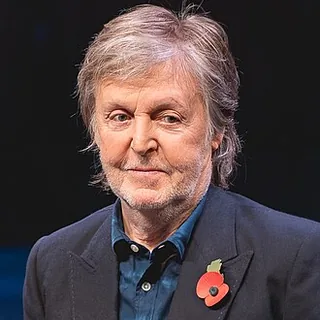 Paul McCartney — Musician and songwriter. His prolific, collaborative work illustrates creative possibility developed into enduring, carefully shaped results.
 Shakira — Singer-songwriter. Her combination of performance, creative development and education advocacy offers an illustration of energetic ambition with a constructive public aim.
 Fernando Alonso — Racing driver. His tactical adaptation and long career illustrate competitive effectiveness supported by technical judgement and a readiness to find another route.
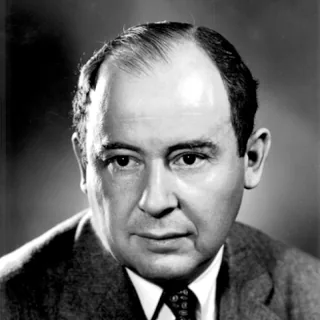 John von Neumann — Mathematician. His contributions across several fields illustrate the ability to connect abstract possibilities with powerful practical systems.
 Tom Brady — American football quarterback. His sustained training and team leadership illustrate ambitious performance built through preparation and continual refinement.
 Lin-Manuel Miranda — Composer and performer. His development of large collaborative productions illustrates imaginative synthesis organised into a clear, energetic public presentation.
 Bill Nye — Science educator. His lively demonstrations illustrate the Systems Builder theme of making explanatory structures engaging and useful to a broad audience.
Fictional Characters Associated with 137
 Tyrion Lannister — Game of Thrones. His improvisation and political reasoning illustrate the effort to find workable solutions within institutions shaped by competing ambitions.
 Jayce Talis — Arcane. His invention and political ascent connect idealistic improvement with achievement, while revealing the consequences of ambitious systems built too quickly.
 Princess Carolyn — BoJack Horseman. Her relentless coordination illustrates practical ingenuity, high expectations and the difficulty of allowing her own needs space within a busy system.
 Tahani Al-Jamil — The Good Place. Her charitable achievements and concern with recognition explore the difference between appearing accomplished and developing a more generous purpose.
 Mushu — Disney's Mulan franchise. His energetic schemes illustrate inventive problem-solving alongside the temptation to let recognition outrun responsibility.
 Diane Foxington — The Bad Guys (2022). Her confidence, planning and willingness to encourage change illustrate effectiveness directed towards a constructive new possibility.
 Mei Lee — Turning Red (2022). Her achievement-oriented habits meet new desires for independence and enjoyment, illustrating a tension between improvement and possibility.
 Arataka Reigen — Mob Psycho 100. His improvised solutions and mentoring role illustrate resourceful presentation, while the story continually tests the honesty behind that effectiveness.
 Dick Grayson / Nightwing — Young Justice (2010). His strategic team leadership illustrates planning combined with flexibility, ambition and the responsibility to coordinate other people's strengths.
 Papyrus — Undertale (2015). His enthusiastic schemes connect a wish for recognition with persistence, invention and an ultimately generous approach to others.
Sources and scope
The Enneagram Tritype framework is attributed to Katherine Chernick Fauvre. This independent educational guide is not affiliated with or endorsed by Fauvre. It describes a theoretical framework for reflection; it is not a validated assessment, diagnosis or population study.
.jpg)

.jpg)
_(updated)_(cropped).jpg)
02.jpg)
.jpg)

_(cropped).jpg)


