The 146 label identifies the unordered Enneagram family formed by Types 1, 4 and 6, not a specific ordered result. The Philosopher family combines these three types: the Reformer from the Gut centre, the Individualist from the Heart centre and the Loyalist from the Head centre. Within the Tritype framework, these three types form a personality archetype centred on truth, integrity, meaning and the desire to understand how one ought to live in a world that is often ambiguous, imperfect and difficult to trust completely.
The Philosopher can appear in six possible stacking orders: 146, 164, 416, 461, 614 and 641. Each contains the same three component types, but the order changes which motivation tends to lead and which of the remaining tendencies exerts the stronger secondary influence. A One-led 146 may appear particularly principled, conscientious and concerned with correctness. A Four-led 416 may be more visibly concerned with identity, authenticity and emotional truth. A Six-led 614 may present as more questioning, analytical and attentive to uncertainty, reliability and potential contradictions.
What connects all six variants is the same broad combination of One's concern with standards, Four's concern with authenticity and Six's concern with certainty and trust. The Philosopher is therefore unlikely to be satisfied by an explanation simply because it is conventional, socially accepted or delivered with confidence. There is often an instinct to question whether the explanation is morally sound, psychologically honest and sufficiently supported to deserve trust.
This can create a personality style that is strongly reflective and often deeply concerned with the relationship between truth and responsibility. The Philosopher may not merely want to know what is true in an abstract sense, but what follows from that truth. If a belief is correct, how should a person act? If an institution claims authority, when is that authority justified? If a moral rule is accepted, does it remain coherent when applied consistently? Questions of this kind can become naturally compelling because the three components continually push the individual towards greater clarification.
The Philosopher at a Glance
| Feature | Description |
|---|---|
| Archetype | The Philosopher |
| Family code | 1 · 4 · 6 |
| Possible orders | 6 |
| Centres | Gut (1) · Heart (4) · Head (6) |
| All six orders | 146 · 164 · 416 · 461 · 614 · 641 |
| Theoretical Dynamics | Frustration overlap (1,4) · Reactive overlap (4,6) · Compliant overlap (1,6) |
| Core Tendency | Searching for principled, authentic and trustworthy understanding |
| Central Tension | Strong internal standards versus uncertainty, doubt and emotional complexity |
| Characteristic Strength | Ethical seriousness combined with critical reflection |
| Potential Blind Spot | Over-questioning, self-doubt and difficulty accepting ambiguity |
How Common Is the Philosopher Tritype?
There are currently no large, representative population datasets that allow the prevalence of the Philosopher Tritype or its six individual stacking orders to be estimated reliably. As with other Tritype combinations, claims that 146 is especially rare or particularly common should therefore be treated cautiously.
The methodological limitations are significant. Personality frameworks such as the Big Five can be studied across very large samples using continuously measured traits and established psychometric methods. Enneagram and Tritype frequency claims generally depend on self-selected online test takers, Enneagram communities, practitioner observations and comparatively small specialist samples.
These sources can reveal patterns within particular communities, but they cannot establish reliable population prevalence. A type that appears rare in everyday social life may be disproportionately represented among people interested in psychology, philosophy or personality systems, while another type may be common in the wider population but relatively uninterested in personality framework.
The Philosopher may sometimes be described as an introspective or unusual combination because it brings together idealism, individuality and doubt. That impression may be understandable at a descriptive level, but it should not be converted into unsupported demographic claims.
The more useful question is therefore not how many people belong to the Philosopher family, but how Types 1, 4 and 6 interact when they are all present within the same motivational structure.
What Does 146 Mean?
Tritype theory proposes that an individual relies on one preferred Enneagram strategy from each of three traditional centres: Gut, Heart and Head. For the Philosopher, these are Type 1 from the Gut centre, Type 4 from the Heart centre and Type 6 from the Head centre.
| Component | Centre | Broad concern | Typical contribution |
|---|---|---|---|
| 1 — Reformer | Gut | Standards, integrity and improvement | Conscience, discernment and a focus on making things better |
| 4 — Individualist | Heart | Identity, authenticity and meaning | Emotional depth, individuality and resistance to superficiality |
| 6 — Loyalist | Head | Security, trust and preparedness | Vigilance, loyalty and attention to reliability |
Type 1 contributes the concern with correctness, standards and responsibility. It tends to notice where something is inconsistent, poorly justified or morally questionable. In the Philosopher, this can create a strong internal pressure to think carefully about what should be believed and how a person ought to behave.
Type 4 contributes identity, authenticity and emotional depth. It introduces the question of whether a belief or value feels genuinely one's own rather than merely inherited from convention. The Philosopher may therefore be reluctant to accept a principle that appears externally respectable but internally hollow.
Type 6 contributes questioning, vigilance and the search for dependable foundations. Six is sensitive to uncertainty and to the possibility that appearances may be misleading. In the Philosopher, this can become a strong tendency to test assumptions, examine authority and consider what evidence would justify trust.
The three concerns can therefore be expressed through three interlocking questions. One asks, “Is this right?” Four asks, “Is this genuine?” and Six asks, “Can this be trusted?” The Philosopher often seeks an answer capable of satisfying all three.
This is one reason the archetype can become deeply interested in ethics, belief systems, ideology, psychology, politics, spirituality or social institutions. Such subjects combine questions of meaning with questions of authority and responsibility. They are rarely reducible to simple factual disputes, and they often require the person to decide not merely what is true, but what is worthy of commitment.
The Philosopher Personality
The defining characteristic of the Philosopher is the combination of principled reflection with persistent questioning. The individual may be strongly motivated to understand the standards by which beliefs, actions and institutions should be judged, but may be equally reluctant to accept those standards uncritically.
This produces a potentially rich inner life. The Philosopher may spend considerable time examining their own values, motivations and assumptions. It is not enough to believe something simply because it is familiar. The belief may need to survive repeated internal testing before it feels trustworthy.
The One component gives this process structure. There is often a desire for internal coherence and moral seriousness. Contradictions matter. If two principles cannot both be true, the Philosopher may feel pressure to understand which one should take priority.
Uncertainty does not automatically invalidate a considered commitment.
Four adds a strongly personal dimension. Beliefs are not merely intellectual propositions; they can become connected with identity and authenticity. The Philosopher may be particularly sensitive to hypocrisy, especially where someone publicly endorses values that seem inconsistent with their actual behaviour.
Six then introduces doubt. Even when the person has reached a carefully considered position, there may remain a tendency to test it again. What if an important exception has been overlooked? What if the evidence has been misunderstood? What if the authority being relied upon is less reliable than it appears?
This questioning can be intellectually valuable because it prevents premature certainty. The Philosopher may become skilled at identifying assumptions that others treat as self-evident and at recognising how much a conclusion depends upon the reliability of its foundations.
At its best, this creates a thoughtful form of scepticism rather than automatic cynicism. The individual may be willing to trust evidence, institutions or people when trust appears justified, but reluctant to surrender judgement simply because something carries status or authority.
The difficulty is that doubt can become recursive. A conclusion is questioned, then the reasoning behind the conclusion is questioned, then the standards used to evaluate the reasoning are questioned. Eventually, the person can begin doubting the process by which they decide what deserves confidence at all.
The Four component can intensify this by making uncertainty feel personally significant. If a belief is tied closely to identity, discovering that the belief may be wrong can create more than an intellectual correction. It can feel like a disruption to the person's sense of self.
This makes the Philosopher unusually capable of deep reconsideration but also potentially vulnerable to prolonged internal conflict. The person may revisit the same issue repeatedly because no answer feels both completely certain and fully authentic.
The One component can further raise the stakes. If the question concerns what is morally right, uncertainty may feel dangerous. Choosing incorrectly can seem worse than merely making an ordinary mistake.
The result can be a personality that takes questions of truth, loyalty, morality and identity with considerable seriousness. The developmental challenge is learning that uncertainty does not automatically invalidate commitment. Many important decisions must be made without complete certainty. A belief can be held provisionally without being held dishonestly.
How the Dominant Type Changes the Presentation
The six Philosopher stackings can look noticeably different because Types 1, 4 and 6 each organise the shared concerns in a different way. The One-led Philosopher variants, 146 and 164, tend to place principles, standards and responsibility at the centre. These individuals may appear especially conscientious and concerned with whether ideas, institutions or behaviours can be justified according to coherent standards.
The Four-led variants, 416 and 461, place authenticity and personal meaning first. Their questioning may be more closely tied to identity, emotional truth and the desire to understand experience from the inside rather than merely according to external rules.
The Six-led variants, 614 and 641, organise the pattern around uncertainty, reliability and trust. These individuals may appear especially sceptical, careful or analytical, continually examining whether a belief, authority or system deserves confidence.
All six can be thoughtful and questioning. The distinction lies less in who thinks most deeply than in what motivates the thinking and which concern ultimately drives the inquiry.
Inner Dynamics in Enneagram Theory
The structure of the Philosopher becomes clearer when Types 1, 4 and 6 are examined through several of the broader groupings traditionally used in Enneagram theory. These groupings belong to the internal logic of the Enneagram rather than representing independently demonstrated psychological mechanisms, but they are useful for understanding why the combination can feel internally intense.
The Frustration Connection Between One and Four
Types 1 and 4 are commonly placed within the Enneagram's Frustration or idealist object-relations grouping. Both compare reality with an internal sense of how things should be, although their ideals differ.
Type 1 tends to imagine how reality could be more correct, disciplined or morally coherent. Type 4 tends to imagine how life could be more authentic, meaningful or emotionally true.
Together, these tendencies can create a strong sensitivity to disappointment. The Philosopher may not only notice that something is flawed, but experience the flaw as evidence that reality has failed to meet an important standard.
A political institution may function adequately but still appear morally compromised. A relationship may be stable but feel emotionally inauthentic. A philosophical system may be logically elegant while failing to capture something essential about lived experience.
This sensitivity can be valuable because it encourages the person to look beyond superficial adequacy. The Philosopher may detect where apparently respectable systems conceal unresolved contradictions.
The problem appears when ideal comparison becomes chronic dissatisfaction. If every existing system is measured against an internal ideal, almost everything can eventually appear inadequate.
The healthier expression of the One–Four connection involves retaining ideals while recognising that imperfection does not automatically imply failure or corruption.
The Reactive Connection Between Four and Six
Types 4 and 6 are both commonly associated with the Enneagram's Reactive harmonic grouping. Within the theory, reactive types tend to engage strongly with problems rather than automatically minimising or positively reframing them.
Four reacts to questions of authenticity, emotional truth and identity. Six reacts to uncertainty, danger, inconsistency and questions of trust. Together, they can give the Philosopher considerable sensitivity to what feels unresolved. The person may find it difficult to ignore a contradiction simply because acknowledging it would make the social atmosphere uncomfortable. If something appears dishonest, unreliable or emotionally false, there may be a strong impulse to name the problem.
This can make the Philosopher unusually perceptive in situations where others are engaged in collective avoidance. The individual may notice tensions in relationships, organisations or belief systems that everyone else has quietly agreed not to discuss.
At the same time, this sensitivity can create emotional amplification. A small inconsistency can begin to feel like evidence of a larger problem. A moment of uncertainty can trigger repeated analysis of what else might be unreliable.
The challenge is therefore not to suppress legitimate concerns but to distinguish signal from escalation. Not every contradiction indicates deception, and not every uneasy feeling requires a complete reinterpretation of the situation.
The Compliant Connection Between One and Six
Types 1 and 6 are commonly placed within the Enneagram's Compliant Hornevian grouping. The term does not mean simple obedience. Rather, both types are theoretically concerned with locating themselves in relation to standards, obligations and expectations.
Type 1 looks towards internalised principles regarding what is right or responsible. Type 6 looks towards systems of trust, authority and reliable guidance. Within the Philosopher, this can create a serious relationship with duty. The individual may feel strongly that actions should be justified and that commitments should mean something.
This does not necessarily produce conventionality. In fact, because both One and Six can become highly critical of authority, the Philosopher may be more likely to challenge institutions that appear to violate their own stated principles.
The person may therefore move between respect for legitimate structure and strong resistance to illegitimate authority. The tension becomes especially pronounced when external rules conflict with internal standards. Six may ask whether disobedience is safe or justified, while One asks whether obedience itself would be morally wrong.
The Philosopher may spend substantial time resolving such conflicts because neither blind conformity nor careless rebellion feels satisfactory. At its best, this produces principled independence. The person can respect rules when they are defensible while remaining capable of questioning them when they are not.
Strengths and Potential Blind Spots
Likely Strengths
One of the Philosopher's clearest strengths is ethical and conceptual seriousness. The person may be unwilling to treat important questions casually. Beliefs, commitments and arguments are examined carefully because their implications matter.
- This can produce a strong capacity for critical thinking. Six notices uncertainty, One notices inconsistency and Four notices where something feels psychologically false or superficial. The combination may therefore be particularly good at recognising when a persuasive argument rests on weak foundations. The Philosopher can ask not only whether the conclusion sounds reasonable, but whether the evidence is reliable, whether the standards are consistent and whether the interpretation fits lived reality.
- Another likely strength is intellectual independence. Although One and Six can both take rules and authority seriously, neither necessarily encourages unquestioning obedience. When combined with Four's individualism, there can be a strong desire to arrive at beliefs honestly rather than simply inherit them. The person may therefore be capable of changing their mind even on deeply held issues if they become convinced that their previous position was inadequate. This flexibility can be difficult, because convictions may be closely connected to identity. Nevertheless, the willingness to reconsider a cherished belief can represent one of the archetype's most mature qualities.
Potential Blind Spots
The major blind spot is over-questioning. Healthy scepticism can gradually become recursive doubt. The person may repeatedly seek reassurance that an interpretation is correct, then question whether the reassurance itself is trustworthy. This can create decision paralysis. If every possible choice contains uncertainty, the Philosopher may delay action while searching for a morally or intellectually perfect option that does not exist.
Self-criticism can also become strong. One notices mistakes, Four can personalise them and Six may worry about their consequences. A relatively ordinary error can therefore acquire disproportionate significance. Instead of thinking, “I made a mistake,” the person may begin wondering whether the mistake reveals a deeper flaw in their judgement or character.
Another potential blind spot is pessimistic interpretation. Because the Philosopher is often skilled at identifying contradictions and risks, there can be a tendency to focus disproportionately on what is wrong.
This is especially likely when the person feels disappointed by an institution, relationship or belief system they previously trusted. The resulting analysis may become increasingly critical because every additional inconsistency seems to confirm the broader conclusion.
Growth involves preserving discernment without allowing discernment to become chronic suspicion.
Relationships and Communication
In relationships, the Philosopher is likely to value honesty, loyalty, depth and consistency. Superficial reassurance may be less meaningful than evidence that another person can be relied upon over time.
Trust can therefore develop slowly. Six wants reliability, Four wants authenticity and One wants integrity. A relationship may need to satisfy all three before the person feels fully secure.
Once trust is established, however, the Philosopher may take relationships very seriously. Commitments are unlikely to feel disposable, and the person may be highly attentive to whether both people are behaving in ways that match the values they claim to hold.
Trust can allow questions without requiring perfect certainty.
The difficulty is that this seriousness can sometimes create excessive scrutiny. A contradiction in another person's behaviour may trigger considerable analysis. The Philosopher may wonder whether the inconsistency represents ordinary human messiness or evidence of a more fundamental problem. Communication can therefore become highly nuanced. The person may spend substantial time clarifying exactly what was meant and whether words align with actions.
Four adds emotional depth to the communication style, while Six may create a strong need for reassurance when trust feels uncertain. One can make the person reluctant to ask repeatedly for reassurance because doing so may feel irrational or undignified.
This can create an internal tension in which the individual wants certainty but also judges themselves for wanting it. At their best, Philosophers can be unusually thoughtful conversational partners. They often take other people's beliefs seriously enough to examine them rather than merely dismiss them.
The most useful relational development is learning that trust does not require perfect certainty. A reliable relationship is not one in which no ambiguity ever appears. It is one in which ambiguity can be discussed without immediately becoming evidence of betrayal.
Work and Career Preferences
The Philosopher archetype is likely to appreciate work involving some combination of analysis, values, interpretation, responsibility and independent judgement. Highly superficial or purely transactional environments may feel unsatisfying because the person often wants to understand why something matters and whether the surrounding system is defensible.
Obvious theoretical fits include philosophy, ethics, psychology, law, academia, policy analysis, writing, history, journalism, research and education. However, the underlying pattern can appear in many other fields wherever difficult questions require careful reasoning.
- One-led Philosopher variants may be particularly drawn towards professions involving standards, responsibility or reform. Law, regulation, quality assurance, education, public policy or ethical oversight can provide opportunities to apply principles to real systems.
- Four-led variants may prefer fields that allow greater attention to interpretation, identity and human complexity. Psychology, literature, cultural analysis, writing, art criticism or qualitative research can provide outlets for both emotional and intellectual depth.
- Six-led variants may be particularly suited to work involving verification, risk, reliability or institutional analysis. Investigative journalism, legal research, policy, security analysis, auditing or research roles may satisfy the desire to determine whether claims can actually be trusted.
The work environment is likely to matter considerably. The Philosopher may struggle in organisations where stated values are obviously contradicted by actual behaviour. Corporate language about integrity or teamwork can become especially irritating when the underlying culture rewards the opposite.
Micromanagement may also be difficult when instructions appear poorly reasoned. The person may respect competent authority but become resistant when authority seems arbitrary, inconsistent or dishonest.
One potential challenge is that the Philosopher can spend too much time determining the correct position before acting. In many professional settings, however, decisions must be made under uncertainty.
Learning to distinguish between responsible caution and unnecessary hesitation can therefore become an important career skill.
Stress and Growth
Under sustained stress, the Philosopher's strengths can become increasingly rigid. Healthy standards become harsh judgement, healthy questioning becomes chronic doubt and healthy introspection becomes emotional rumination.
One possible cycle begins with uncertainty. Six identifies a risk or inconsistency and begins analysing it. Four experiences the uncertainty personally and searches for its deeper meaning. One then evaluates the entire situation according to increasingly strict standards.
The person may eventually reach a point where no available interpretation feels sufficiently trustworthy. This can create a form of intellectual and emotional paralysis. Every answer contains exceptions, every institution has flaws and every person is inconsistent.
One-led Philosopher variants may respond by becoming more critical and rigid, attempting to restore certainty through stronger principles.
Four-led variants may become more absorbed in disappointment, alienation or the feeling that nobody fully understands the complexity of the situation.
Six-led variants may intensify their checking, questioning and search for reassurance, only to discover that additional information generates further uncertainties.
Growth involves recognising that certainty and integrity are not the same thing. A person can act responsibly without knowing everything. It also involves tolerating the possibility of revision. Choosing a position today does not require pretending that the position can never change. For the Philosopher, this can be liberating because it removes some of the pressure to find an eternally correct answer before acting.
Another important form of growth involves allowing lived experience to participate in the reasoning process. Some questions cannot be resolved entirely through thought. Relationships, commitments and values often become clearer through participation.
Integrity can include the willingness to revise a conclusion.
The strongest Philosopher is therefore not someone who has eliminated doubt. It is someone who can use doubt intelligently without allowing it to prevent conviction, action or trust.
The Six Philosopher Stackings
The six Philosopher stackings contain the same three types, but their order changes the emphasis given to each motivational strategy. The first number represents the dominant type, while the second and third represent the relative strength of the remaining two centres.
| Stacking | Lead Type | General Emphasis |
|---|---|---|
| 146 | One | Principle → authenticity → certainty |
| 164 | One | Principle → certainty → authenticity |
| 416 | Four | Authenticity → principle → certainty |
| 461 | Four | Authenticity → certainty → principle |
| 614 | Six | Certainty → principle → authenticity |
| 641 | Six | Certainty → authenticity → principle |
These descriptions are best understood as differences in emphasis rather than six entirely separate personalities.
146 — One → Four → Six
The 146 begins with Type 1, making principles, correctness and responsibility the dominant orientation. Four follows, connecting those principles with authenticity and personal meaning. This may produce a particularly idealistic version of the Philosopher. The individual wants to live according to standards that feel both ethically defensible and genuinely their own.
Six adds questioning in the tertiary position. Even when the person has established a strong moral position, there may still be concern about whether the interpretation is sufficiently reliable.
Compared with 164, the 146 may place somewhat greater emphasis on the emotional and personal significance of principles. The broad sequence is principle first, authenticity second and certainty third.
164 — One → Six → Four
The 164 also begins with Type 1, but Six occupies the secondary position. Standards are therefore reinforced more immediately by verification, scepticism and concern with reliability.
This can produce a somewhat more systematic or cautious version of the One-led Philosopher. The individual may want not only to know what is right but to establish that the reasoning behind the conclusion is trustworthy.
Four remains important and contributes individuality, emotional depth and sensitivity to authenticity, but it appears after the stronger One–Six concern with principle and reliability. Compared with 146, the 164 may therefore appear somewhat more analytical, rule-conscious or cautious. The broad sequence becomes principle first, certainty second and authenticity third.
416 — Four → One → Six
The 416 begins with Type 4, making identity, authenticity and personal meaning the central organising concerns. One follows, giving those concerns a strong moral or evaluative structure.
This can produce a Philosopher who is especially interested in whether values are not merely socially accepted but genuinely lived. The 416 may be highly sensitive to hypocrisy because it combines Four's concern with authenticity and One's concern with integrity. Six contributes questioning and concern with trust in the tertiary position. The person may therefore scrutinise both themselves and others when behaviour appears inconsistent with stated beliefs.
Compared with 461, the 416 may move somewhat sooner towards judgement and principle. The broad sequence is authenticity first, principle second and certainty third.
461 — Four → Six → One
The 461 also begins with Type 4, but Six follows. Identity and emotional truth are therefore connected more immediately with questioning, uncertainty and the search for trustworthy interpretation.
This can produce a particularly introspective and psychologically searching version of the Philosopher. The person may repeatedly examine their own beliefs, emotions and relationships in an attempt to determine what is genuinely true beneath conflicting impressions. One eventually introduces standards and the desire to arrive at a coherent conclusion.
Compared with 416, the 461 may appear somewhat more questioning, hesitant or exploratory before committing to a final judgement. The broad sequence becomes authenticity first, certainty second and principle third.
614 — Six → One → Four
The 614 begins with Type 6, making reliability, uncertainty and trust the primary concerns. One follows, providing strong standards by which information, institutions or authorities can be evaluated.
This may produce one of the most systematic Philosopher variants. The person may be highly attentive to whether rules are internally consistent and whether institutions actually deserve the authority they claim.
The combination can create a sceptic who is not sceptical merely for the sake of opposition. There is usually a desire to identify a structure that is sufficiently coherent to deserve confidence.
Four contributes individuality and emotional depth in the tertiary position. Compared with 641, the 614 may appear somewhat more principled, structured or concerned with formal consistency. The broad sequence is certainty first, principle second and authenticity third.
641 — Six → Four → One
The 641 also begins with Type 6, but Four occupies the secondary position. Questions of trust and certainty are therefore connected more immediately with personal meaning and authenticity.
This can produce a Philosopher who is highly sensitive to whether relationships, institutions or beliefs feel emotionally genuine. The person may not be satisfied merely because something is technically reliable. If it feels artificial, manipulative or psychologically dishonest, trust may remain difficult. One eventually contributes standards and helps organise the resulting judgement.
Compared with 614, the 641 may therefore appear somewhat more personal, interpretive or emotionally reactive in the way uncertainty is processed. The broad sequence is certainty first, authenticity second and principle third.
Wings and Other Secondary Influences
The dominant type of each Philosopher stacking can be modified further by wings and other elements of Enneagram theory. Because the family contains three possible dominant types, there is no single wing pattern that applies to every Philosopher.
A One-led Philosopher may show stronger Nine- or Two-wing influence. Greater Nine influence may make the personality quieter, more contemplative and somewhat less overtly critical, while stronger Two influence can make principles more directly connected to helping or improving life for other people.
A Four-led Philosopher may show stronger Three- or Five-wing characteristics. A stronger Three wing can contribute greater outward productivity and concern with communicating ideas effectively, while stronger Five influence may intensify introspection, intellectual depth and privacy.
A Six-led Philosopher may show stronger Five- or Seven-wing characteristics. Stronger Five influence may produce a more analytical, restrained and research-oriented presentation, while stronger Seven influence can make the same underlying questioning style more energetic, exploratory and outwardly optimistic.
These modifiers can significantly affect presentation without changing the underlying 1–4–6 structure. They are best understood as secondary influences layered upon the broader Philosopher pattern.
Related Tritype Archetypes
Comparing the Philosopher with neighbouring archetypes helps clarify what each of its three components contributes. The 145 Researcher retains Types 1 and 4 but replaces Six with Type 5. Both combinations can be introspective, principled and highly concerned with truth, but their Head strategies differ substantially. Five seeks understanding through observation and conceptual mastery, whereas Six seeks confidence through verification, questioning and evaluation of trust.
The Researcher may therefore remain with a problem because the explanation is intellectually incomplete, while the Philosopher may remain with it because the explanation still feels uncertain or insufficiently justified.
The 136 Taskmaster retains Types 1 and 6 but replaces Four with Type 3. Standards, responsibility and concern with reliability remain, but the Heart strategy becomes more achievement-oriented. Compared with the Philosopher, the Taskmaster is likely to place greater emphasis on effectiveness, productivity and practical execution.
The Philosopher may spend more time asking whether a course of action is authentic or ethically coherent, while the Taskmaster may move more quickly towards determining how it can be carried out successfully.
The 469 Seeker retains Types 4 and 6 but replaces One with Type 9. Emotional depth, questioning and uncertainty remain, but the Gut strategy becomes more oriented towards accommodation and internal stability than towards standards and correction.
The Philosopher may therefore be somewhat more willing to reach firm judgements or criticise inconsistency, whereas the 469 combination may spend longer seeking emotional or relational equilibrium.
These comparisons show that the Philosopher's distinctive quality arises from the simultaneous presence of principle, authenticity and doubt.
The Philosopher and the Big Five
The Enneagram and Big Five describe personality through fundamentally different models, so there is no direct conversion between the Philosopher Tritype and a particular Big Five profile.
Some broad descriptive similarities can nevertheless be discussed cautiously. The introspection, individuality and interest in meaning associated with Type 4 may sometimes resemble aspects of higher Openness to Experience, particularly imagination, aesthetics and psychological complexity.
Type 1 may sometimes resemble aspects of higher Conscientiousness, especially where responsibility, standards and self-discipline are prominent.
Type 6 does not map neatly onto any single Big Five dimension. Its concern with uncertainty can sometimes resemble aspects of higher negative emotionality, but this should not be assumed. A highly experienced Six can be cautious and vigilant without being globally emotionally unstable.
Likewise, scepticism should not automatically be interpreted as low Agreeableness. A person may be warm and cooperative while remaining highly questioning about claims or institutions.
Extraversion can vary widely. Four often contributes introspective tendencies, but neither the Tritype nor the component types determine how socially outgoing a person must be.
Any apparent mapping should therefore remain descriptive rather than treated as an established conversion.
The Philosopher and 16-Type Systems
The Philosopher may resemble several descriptions found within Jungian and MBTI-style personality systems, particularly profiles associated with reflection, abstract thought and moral or conceptual analysis.
Some Philosopher variants may identify with INFJ or INFP descriptions, especially where questions of values, identity and meaning are especially prominent. More analytically structured versions may recognise aspects of INTJ, particularly where strong internal standards combine with scepticism and a preference for coherent conceptual systems.
Six-led variants could also identify with several different types depending upon how their questioning is expressed. A more theoretical 614 might resemble some common descriptions of INTP, while a more organised and principle-oriented version might recognise greater similarity with INTJ.
These comparisons should remain loose. Enneagram theory is primarily concerned with motivations, anxieties and recurring psychological strategies, whereas Jungian and MBTI-style systems use a different conceptual architecture.
Someone identifying as 146 is therefore not automatically INFJ, just as an INFJ should not automatically be expected to belong to the Philosopher Tritype.
The Philosopher in One Sentence
The 146 Philosopher Tritype combines principled standards, individualistic depth and persistent questioning into a personality driven to discover beliefs that are not only coherent, but authentic and genuinely worthy of trust.
Famous People and Fictional Characters Associated with 146
These examples offer illustrative comparisons with the 146 family, not confirmed personality assessments. The family includes all six orders of its three types; an example need not use the ascending 146 order. A public career or fictional story cannot establish someone's private motivations. Fictional examples refer to the works or versions named below, and are illustrations rather than role models.
Famous People Associated with 146
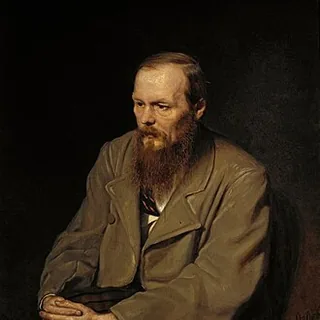 Fyodor Dostoevsky — Novelist. His explorations of conscience, doubt and responsibility illustrate the Philosopher theme through emotionally complex questions rather than easy moral certainty.
 Hayao Miyazaki — Film director. His imaginative worlds repeatedly connect personal conviction with concern about conflict, responsibility and the human effects of wider systems.
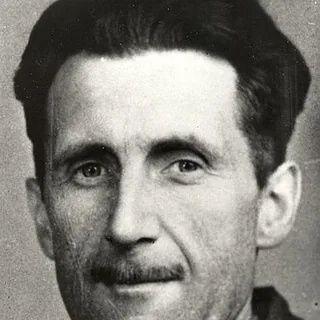 George Orwell — Writer. His scrutiny of political language and power illustrates a persistent concern with intellectual honesty, moral responsibility and the threat of collective deception.
 Leo Tolstoy — Novelist and essayist. His sustained examination of how to live illustrates the connection between personal meaning, conscience and difficult self-questioning.
 Cate Blanchett — Actor. Her varied, carefully developed character work offers a comparison with attention to complexity rather than a claim that any role reveals her private personality.
 Kendrick Lamar — Rapper and songwriter. His work frequently examines identity, loyalty and moral contradiction, offering an artistic illustration of searching self-examination.
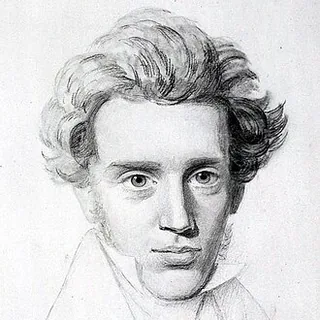 Søren Kierkegaard — Philosopher. His writing on choice, faith and individual responsibility illustrates the tension between an inward conviction and the uncertainty of living it.
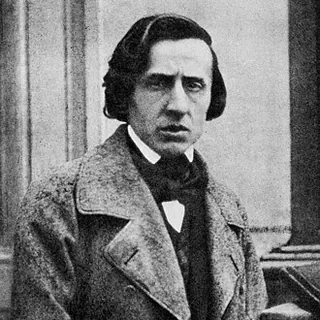 Frédéric Chopin — Composer. His finely shaped, emotionally distinctive music offers a comparison with personal expression developed through an exacting artistic discipline.
 Joaquin Phoenix — Actor. His public advocacy and demanding character work offer a limited illustration of conviction and emotional engagement, distinct from the roles themselves.
 Joan Baez — Singer and activist. Her sustained public commitment connects artistic expression with conscience and the willingness to take a principled position.
Fictional Characters Associated with 146
 Daenerys Targaryen — Game of Thrones. Her sense of identity and moral mission illustrates how personal conviction can become dangerous when it resists scrutiny and restraint.
 Elsa — Frozen franchise. Her struggle with responsibility, fear and self-acceptance illustrates the challenge of integrating an individual identity with concern for others.
 Squidward Tentacles — SpongeBob SquarePants. His artistic aspirations and frustrated standards offer a comic illustration of feeling misunderstood while longing for a more meaningful life.
 Zuko — Avatar: The Last Airbender (2005). His changing relationship with honour and loyalty illustrates the difficult work of replacing an inherited standard with an examined conscience.
 Severus Snape — Harry Potter films. His guardedness, lasting attachments and conflicting obligations illustrate a morally complicated relationship between loyalty, regret and responsibility.
 Bruce Wayne / Batman — DC Comics. His mission links personal loss with an exacting moral code, while repeatedly testing the boundary between protection, suspicion and control.
 Matt Murdock / Daredevil — Daredevil (2015). His legal work, faith and vigilantism create recurring conflicts between personal conviction, guilt and competing ideas of justice.
 Sam Winchester — Supernatural. His concern with moral choice and personal identity repeatedly meets difficult family loyalties and uncertainty about the consequences of acting.
 Nina Sayers — Black Swan (2010). Her pursuit of an artistic ideal offers a disturbing fictional exploration of perfection, identity and the loss of a workable inner balance.
 Kenzo Tenma — Monster. His medical conscience and response to its unforeseen consequences illustrate the family’s conflict between doing what seems right and confronting uncertainty.
Sources and scope
The Enneagram Tritype framework is attributed to Katherine Chernick Fauvre. This independent educational guide is not affiliated with or endorsed by Fauvre. It describes a theoretical framework for reflection; it is not a validated assessment, diagnosis or population study.


.jpg)
.jpg)
_desaturated.jpg)
_-_(cropped).jpg)

.jpg)
%2C_March_2016_(cropped).jpg)


