The 145 label identifies the unordered Enneagram family formed by Types 1, 4 and 5, not a specific ordered result. The Researcher family combines these three types: the Reformer from the Gut centre, the Individualist from the Heart centre and the Investigator from the Head centre. Within the Tritype framework, these three types form a personality archetype centred on understanding, accuracy, authenticity and the desire to develop an independent interpretation of reality.
The Researcher can appear in six possible stacking orders: 145, 154, 415, 451, 514 and 541. Each contains the same three component types, but the ordering changes which motivation tends to lead and which of the remaining tendencies exerts the strongest secondary influence. A One-led 145 may appear particularly systematic, exacting and improvement-oriented; a Four-led 415 may be more visibly concerned with identity, interpretation and personal meaning; while a Five-led 514 may present as especially analytical, private and intellectually self-sufficient.
What connects all six versions is a powerful combination of One's concern with correctness, Four's concern with authenticity and Five's concern with understanding. The Researcher is therefore unlikely to be satisfied simply because an explanation is conventional, convenient or widely accepted. There is often a desire to examine the issue more closely, identify inconsistencies and arrive at an interpretation that feels both intellectually defensible and personally genuine.
This creates a personality style that can be unusually depth-oriented. Where some people are comfortable with a useful approximation, the Researcher may want to know what is really happening beneath the surface. Details matter because they can reveal whether a larger explanation is actually sound. At the same time, knowledge is rarely entirely impersonal. The Four component can give ideas emotional, aesthetic or existential significance, while One adds a strong concern with whether conclusions are coherent, responsible or properly formed.
The Researcher at a Glance
| Feature | Description |
|---|---|
| Archetype | The Researcher |
| Family code | 1 · 4 · 5 |
| Possible orders | 6 |
| Centres | Gut (1) · Heart (4) · Head (5) |
| All six orders | 145 · 154 · 415 · 451 · 514 · 541 |
| Theoretical Dynamics | Frustration overlap (1,4) · Withdrawn overlap (4,5) · Competency overlap (1,5) |
| Core Tendency | Developing accurate, independent and personally meaningful understanding |
| Central Tension | High standards and intellectual depth versus action, flexibility and acceptance of imperfection |
| Characteristic Strength | Careful investigation combined with original interpretation |
| Potential Blind Spot | Over-analysis, excessive self-criticism and difficulty accepting incomplete answers |
How Common Is the Researcher Tritype?
There are currently no large, representative population datasets that allow the prevalence of the Researcher Tritype or its six individual stacking orders to be estimated reliably. As with other Tritype combinations, claims that 145 or one of its variants is especially common or unusually rare should therefore be treated cautiously.
The methodological problem is straightforward. Personality models such as the Big Five can draw upon large psychometric datasets collected across diverse populations. Tritype estimates usually come from much narrower sources, including self-selected online tests, personality communities, practitioner experience and relatively small specialist samples. These may be useful for generating impressions, but they cannot establish reliable prevalence across the general population.
The Researcher may sometimes be perceived as relatively uncommon because its theoretical description combines strong introspection, intellectual specialisation and high internal standards. That impression may also be influenced by the kinds of people who participate in Enneagram communities. A combination that appears unusual within everyday social settings might be disproportionately represented among people interested in personality theory, philosophy or psychologically complex subjects.
It is therefore better to discuss the Researcher in terms of its theoretical structure than to claim that it represents a particular percentage of people. The useful question is not whether 145 is statistically rare, but what happens when the reforming tendencies of One, the individualistic tendencies of Four and the investigative tendencies of Five operate within the same personality pattern.
What Does 145 Mean?
Tritype theory proposes that an individual relies on one preferred Enneagram strategy from each of the three traditional centres: Gut, Heart and Head. For the Researcher, those strategies are represented by Type 1, Type 4 and Type 5.
| Component | Centre | Broad concern | Typical contribution |
|---|---|---|---|
| 1 — Reformer | Gut | Standards, integrity and improvement | Conscience, discernment and a focus on making things better |
| 4 — Individualist | Heart | Identity, authenticity and meaning | Emotional depth, individuality and resistance to superficiality |
| 5 — Investigator | Head | Knowledge, competence and autonomy | Observation, analysis and understanding before acting |
Type 1 contributes the desire for correctness, improvement and internal consistency. It tends to notice errors and discrepancies, particularly where something falls short of an internal standard. In the Researcher, this can appear as intellectual conscientiousness: definitions should be precise, arguments should be logically defensible and conclusions should not be stated more confidently than the evidence allows.
Type 4 introduces questions of identity, authenticity and meaning. Information is not necessarily interesting merely because it is accurate. The Researcher may also want to understand what something means, how it fits into a larger human context or whether an interpretation captures the underlying reality rather than merely describing the surface.
Type 5 contributes observation, analysis and the desire for independent understanding. Five is naturally associated within Enneagram theory with stepping back from immediate involvement in order to study how something works. In the Researcher, this can become a particularly strong drive towards conceptual depth, specialist knowledge and intellectual autonomy.
The three components therefore approach the same problem from different directions. One asks whether the explanation is correct. Four asks whether it is authentic or meaningful. Five asks whether it is actually understood. The Researcher often wants an answer capable of surviving all three questions.
This is why the archetype can be difficult to satisfy with simplistic explanations. An answer may be technically accurate yet feel conceptually shallow. It may be emotionally compelling yet poorly supported. It may be sophisticated but internally inconsistent. The Researcher is often drawn towards interpretations that integrate precision, depth and coherence rather than maximising only one of those qualities.
The Researcher Personality
The defining characteristic of the Researcher is the combination of intellectual depth with strong internal standards. There is often a natural inclination to investigate beneath appearances rather than simply accepting the first available explanation. The person may become absorbed in questions that other people consider unnecessarily complicated because unresolved contradictions remain psychologically difficult to ignore.
This does not necessarily mean formal academic research. The same underlying style can appear in many settings. Someone may research history, psychology, technology, literature, politics, health, philosophy or an obscure personal interest with the same determination to understand the subject properly. The Researcher may enjoy tracing ideas backwards, examining competing explanations and gradually constructing a model that feels more complete than the one they started with.
The Type 5 component contributes much of this investigative depth. Five tends to create distance from immediate experience so that the situation can be examined conceptually. Instead of responding quickly, the Researcher may prefer to gather information, clarify definitions and determine what is actually known.
Depth of understanding benefits from both private investigation and outside correction.
One then introduces intellectual discipline. The person is not necessarily satisfied by an interesting theory simply because it is clever. There is often an impulse to test it against evidence, notice inconsistencies and remove weak assumptions. This can produce considerable precision, especially in fields where small errors in reasoning can distort an entire conclusion.
Four adds another layer. The Researcher may become particularly interested in subjects that contain psychological, cultural, aesthetic or existential depth. Purely mechanical knowledge can certainly be appealing, but many Researcher presentations are attracted to questions where understanding requires interpretation as well as factual analysis.
This gives the archetype an unusual relationship with objectivity. There may be a strong desire to be accurate and evidence-based, yet also a recognition that human reality cannot always be reduced neatly to impersonal measurement. The Researcher may therefore move repeatedly between analytical distance and subjective interpretation.
At its best, this creates sophisticated thinking. Facts are taken seriously without assuming that facts automatically explain themselves. Personal meaning is taken seriously without assuming that subjective conviction is automatically true.
The Researcher can consequently become skilled at identifying hidden assumptions. When an argument is presented as obvious, the instinct may be to ask what must already be believed for the argument to appear obvious. When a system claims to measure something precisely, the Researcher may ask whether the construct itself has been defined properly. When a cultural explanation becomes popular, the individual may wonder which complexities have been discarded to make the explanation easily communicable.
This orientation can produce originality because the person does not automatically begin from the same assumptions as everyone else. However, it can also create distance from ordinary consensus. The Researcher may occasionally find that explanations other people regard as perfectly adequate feel almost intolerably incomplete.
There is also a pronounced private quality to many Researcher presentations. Both Four and Five belong to the Enneagram's withdrawn grouping, and even One can be highly internally governed. The individual may therefore spend substantial time developing ideas privately before presenting them to others.
This can create an interesting contrast between apparent quietness and substantial internal activity. From the outside, the Researcher may appear inactive, reserved or merely contemplative. Internally, however, concepts may be undergoing continuous comparison, revision and refinement.
The challenge is that understanding can become a substitute for participation. The Researcher may feel that one more piece of information is needed before acting, publishing, deciding or committing. Since complex subjects almost always contain another layer, the point of sufficient understanding can continually recede.
A central developmental question for the Researcher is therefore not simply “Do I understand this?” but also “Do I understand enough to move forward?”
How the Dominant Type Changes the Presentation
The six Researcher stackings can look quite different because Types 1, 4 and 5 emphasise different aspects of the shared pattern. The One-led Researcher variants, 145 and 154, tend to place correctness, standards and improvement at the centre of the personality. Research is often undertaken because the individual wants to determine what is accurate, coherent or properly constructed. Four and Five add originality and depth, but the overall personality may feel relatively disciplined and methodical.
The Four-led Researcher variants, 415 and 451, organise the pattern more strongly around identity, meaning and authentic interpretation. These individuals may still be highly analytical, but intellectual exploration can become closely connected with the desire to understand subjective experience, personal identity or culturally meaningful questions.
The Five-led Researcher variants, 514 and 541, place knowledge and understanding at the centre. These may most closely resemble the conventional image of the private researcher or specialist. One contributes intellectual rigour and Four adds individuality and interpretive depth, but Five's desire to understand remains the primary organising force.
The difference is therefore not simply a matter of which variant is “most intellectual.” All six contain Type 5 and can be highly analytical. The distinction lies in why analysis is taking place and which psychological concern ultimately determines its direction.
Inner Dynamics in Enneagram Theory
The structure of the Researcher becomes especially clear when Types 1, 4 and 5 are examined through several of the broader theoretical groupings used within Enneagram theory. These classifications belong to the internal logic of the Enneagram rather than representing independently established psychological mechanisms, but they help explain why the three types form such a recognisable pattern.
The Frustration Connection Between One and Four
Types 1 and 4 are commonly associated with the Enneagram's Frustration or idealist object-relations grouping. Both can experience a pronounced gap between existing reality and an internal conception of how reality should be, although the nature of the ideal differs.
Type 1 tends to imagine how things could be more correct, ethical, disciplined or properly organised. Type 4 tends to imagine how experience could be more authentic, meaningful, beautiful or emotionally complete.
When these tendencies appear together in the Researcher, dissatisfaction can become highly refined. An argument may not merely be factually wrong; it may feel intellectually crude. A cultural product may not merely be mediocre; it may feel artificial or emotionally dishonest. A system may technically function while still seeming conceptually inelegant or fundamentally misguided.
This sensitivity can be enormously useful because it allows the Researcher to notice flaws other people ignore. The person may recognise that a conventional explanation technically works but does not adequately capture the phenomenon being described.
The difficulty is that reality rarely matches an internal ideal perfectly. If the gap between the real and ideal becomes too psychologically important, the Researcher can live in a state of persistent disappointment. Books are interesting but incomplete. Theories are useful but flawed. Institutions are necessary but badly designed. People are intelligent but inconsistent.
The healthier expression of the One–Four connection does not eliminate standards. Instead, it allows the person to recognise that something can be imperfect and still possess genuine value.
The Withdrawn Connection Between Four and Five
Types 4 and 5 are both commonly placed within the Enneagram's Withdrawn Hornevian grouping. Their reasons for withdrawing differ, but both tend to orient attention towards the internal world rather than automatically moving outward into action.
Type 4 moves inward towards emotional experience, imagination, identity and meaning. Type 5 moves inward towards observation, conceptual understanding and mental self-sufficiency. Together they contribute much of the Researcher's characteristic depth. The person may be comfortable spending long periods alone with an idea. Solitude can provide the psychological space necessary to examine something without social pressure, interruption or the need to reach an immediate conclusion.
The Four–Five combination can also produce highly specialised interests. Because external popularity is not necessarily the primary measure of value, the Researcher may spend substantial time studying a subject that has little obvious social reward simply because it seems intrinsically fascinating.
This independence can be intellectually productive. Many genuinely original ideas require someone to remain with a question after everyone else has lost interest. The danger appears when withdrawal becomes self-reinforcing. The more the Researcher develops ideas privately, the more outside discussion can feel simplistic or intrusive. The person may then withdraw further, reducing opportunities for their conclusions to be challenged.
A theory that is continually refined internally but never exposed to serious external criticism can begin to feel more robust than it actually is. The developmental task is therefore not to eliminate solitude but to combine private depth with periodic external correction.
The Competency Connection Between One and Five
Types 1 and 5 are both included within the Enneagram's Competency harmonic grouping. Both theoretically respond to problems by attempting to become more accurate, capable or objective.
Type 1 approaches competency through standards and correctness. The task should be performed properly and avoidable mistakes should be reduced. Type 5 approaches competency through knowledge and understanding. The person wants sufficient information to avoid being unprepared, overwhelmed or intellectually dependent upon others.
Within the Researcher, this can create a particularly strong relationship with expertise. Knowledge may not be treated casually. If the individual intends to speak confidently about something, there may be a desire to understand it properly first. This can produce careful language, qualified claims and considerable resistance to overstating what the evidence actually supports.
At its best, this combination encourages intellectual honesty. The person may be willing to say that the available evidence is insufficient even when a stronger conclusion would be more rhetorically satisfying.
At its worst, the same pattern can produce excessive caution. The threshold for feeling genuinely qualified may become unrealistically high. The Researcher can know considerably more than the average person about a subject while continuing to focus primarily on everything they still do not know.
Perfectionism and intellectual insecurity can therefore reinforce one another. One notices every flaw in the current understanding, while Five responds by gathering more information. The result can become an endless preparation phase.
Strengths and Potential Blind Spots
Likely Strengths
One of the Researcher's clearest strengths is depth of investigation. The individual may be unusually willing to stay with a complicated problem rather than accepting the first plausible explanation. Contradictions can be examined rather than ignored, and apparent exceptions may be treated as clues that the underlying model needs refinement.
This persistence can produce genuine expertise. Over time, the Researcher may accumulate not simply facts but an organised understanding of how those facts relate. The person may notice patterns that become visible only after sustained engagement with a subject.
- Another potential strength is intellectual independence. The combination of One, Four and Five provides relatively little theoretical incentive to accept an idea merely because it is popular. One questions whether it is correct, Four questions whether it is authentic and Five questions whether it is adequately understood. This does not necessarily make the Researcher contrarian. The person may agree completely with the consensus when they believe the consensus is well supported. The important distinction is that social agreement alone is unlikely to provide sufficient evidence.
- The archetype may also show considerable conceptual precision. Words matter because poorly defined terms can conceal sloppy reasoning. A Researcher may therefore spend more time than most people distinguishing between superficially similar concepts. This ability can be especially valuable in fields where confusion arises because several different phenomena are casually given the same name.
- Another strength lies in synthesis. Five collects information, Four notices qualitative meaning and One searches for coherence. The Researcher may therefore be able to bring together evidence from different sources and construct a more integrated explanation.
Potential Blind Spots
The central blind spot is that depth can become over-analysis. There is almost always another source to consult, another distinction to make or another possibility to consider. The Researcher can therefore postpone action while pursuing a level of certainty that the real world cannot provide.
This may manifest as difficulty publishing work, committing to decisions or presenting conclusions until they feel sufficiently complete. Unfortunately, genuinely complex subjects rarely feel complete.
Perfectionism can also affect the Researcher's relationship with their own work. Because the person can see flaws that others miss, they may consistently undervalue what they have already produced.
An article that most readers regard as thorough may still appear superficial to its author because they are aware of every qualification that had to be omitted. A project that appears sophisticated externally may feel crude compared with the more complete version existing in the Researcher's imagination.
This can create a strange mismatch between competence and confidence. The individual may become highly knowledgeable while continuing to experience themselves primarily through the gaps in their knowledge.
Another risk is excessive criticism. The Researcher may become so skilled at identifying weak reasoning that almost everything begins to look inadequate. Scepticism can gradually become a default orientation rather than a tool.
At that point, intellectual standards stop helping the person distinguish better explanations from worse ones and begin making it difficult to recognise anything as sufficiently valuable.
Growth therefore involves maintaining standards while developing greater tolerance for approximation. A model can be useful without being perfect. An explanation can be provisional without being worthless. A project can be published before every possible objection has been resolved.
Relationships and Communication
In relationships, the Researcher is likely to value depth, honesty and psychological space. Superficial social contact may be less rewarding than a smaller number of relationships in which substantial ideas or meaningful personal experiences can be discussed openly.
The combination of Four and Five can make intimacy somewhat complicated. Four may strongly desire genuine understanding, while Five remains protective of privacy and internal resources. The person can therefore simultaneously want to be deeply known and resist the exposure required for another person to know them fully.
One adds standards to this dynamic. The Researcher may have fairly strong expectations regarding honesty, reliability and intellectual consistency. Contradictory behaviour or obvious hypocrisy can become particularly irritating because it violates both One's standards and Four's concern with authenticity.
Precision becomes easier to share when it does not demand exhaustive completeness.
Communication is often thoughtful rather than impulsive. The person may prefer to formulate an idea internally before presenting it, particularly in Five-led forms. This can make their contributions precise, but it can also create delays when situations require rapid interpersonal feedback.
There may be a tendency to communicate through explanation. When something goes wrong, the Researcher may instinctively try to understand why it happened, what mechanism produced it and how the situation should be interpreted.
This can be helpful, but relationships do not always require analysis. Another person may need emotional acknowledgement before they are ready to examine mechanisms. Four can help the Researcher recognise this, particularly when the person is comfortable with their emotional life. However, under stress the analytical Five and corrective One tendencies can sometimes take over, transforming a vulnerable conversation into an investigation.
Another potential difficulty is that the Researcher may assume other people want the same degree of nuance they do. A simple question can receive a highly qualified answer because every exception seems relevant.
Learning to distinguish accuracy from exhaustive completeness can therefore improve communication considerably. The strongest Researcher communicator retains nuance while recognising the needs of the listener. Complexity is not abandoned, but it is organised in a way that other people can actually use.
Work and Career Preferences
The Researcher archetype is likely to appreciate work offering some combination of intellectual autonomy, complexity, specialist knowledge and meaningful standards. Environments that reward careful investigation can feel considerably more satisfying than roles dominated by constant social performance or rapid superficial output.
Research itself is an obvious fit, but the category is much broader than academic science. Data analysis, mathematics, software development, engineering, psychology, history, philosophy, technical writing, investigative journalism, policy analysis, archival work, design research and specialist consulting can all provide opportunities for deep engagement with complicated material.
The Researcher may be particularly attracted to work where the correct answer is not immediately obvious. Straightforward repetitive tasks can become frustrating because they provide little opportunity for interpretation or discovery.
- One-led Researcher variants may particularly appreciate fields requiring accuracy, standards and systematic improvement. Their work may combine investigation with quality control, methodology or the development of rigorous procedures.
- Four-led variants may be more attracted to areas where interpretation, identity or culture matter. Psychology, literature, art history, cultural analysis, writing and qualitative research can provide opportunities to combine intellectual precision with questions of meaning.
- Five-led variants may gravitate especially strongly towards specialist knowledge. Scientific research, mathematics, programming, technical analysis, philosophy or any field permitting long periods of focused investigation may feel natural.
The working environment can matter as much as the subject. Excessive meetings, compulsory sociability and constant interruption may drain attention that the Researcher would rather devote to substantive work.
Micromanagement can also be frustrating. Five values intellectual autonomy, Four resists being reduced to conventional expectations and One may become irritated when instructions appear poorly reasoned.
The Researcher may therefore thrive when given a difficult question, sufficient resources and enough independence to investigate it properly. The danger is disappearing indefinitely into preparation. Research can always be extended. Another source can always be read. Another analysis can always be performed.
For this reason, deadlines can sometimes be valuable even when the Researcher dislikes them. A deadline creates an external point at which the current understanding must become an actual product.
The ability to shift from investigation to synthesis and from synthesis to publication may ultimately matter as much as the research ability itself.
Stress and Growth
Under prolonged stress, the Researcher's characteristic strengths can become increasingly rigid. Intellectual care becomes over-analysis, high standards become perfectionism and healthy introspection becomes withdrawal. A common stress pattern begins when the individual feels insufficiently prepared or dissatisfied with their current understanding. Five responds by gathering more information. One notices additional flaws and raises the standard. Four becomes increasingly aware of the gap between the existing result and the richer version imagined internally.
The person may therefore respond to uncertainty by going deeper. Sometimes this works. More information genuinely resolves the problem. At other times, however, the uncertainty is not caused by insufficient research. It exists because the subject itself is ambiguous or because action necessarily involves risk.
Continuing to investigate can then become a way of postponing the uncomfortable transition from understanding to commitment.
One-led Researcher variants may respond to stress by becoming increasingly critical and exacting. The individual attempts to restore confidence by tightening standards and eliminating error.
Four-led Researcher variants may become increasingly absorbed in personal meaning, disappointment or the feeling that available explanations fail to capture the true complexity of the experience.
Five-led variants may retreat further into analysis, reducing engagement with the external world while attempting to achieve sufficient intellectual certainty. In all three cases, growth involves increasing tolerance for incompleteness and provisionality. The Researcher benefits from recognising that uncertainty does not always indicate intellectual failure. Sometimes uncertainty accurately reflects the state of the evidence.
Likewise, a provisional conclusion is not intellectually dishonest if its limitations are acknowledged. In many fields, the most rigorous answer is not a definitive statement but a carefully bounded probability.
Growth also involves allowing external experience to correct internal models. A theory can become extremely sophisticated in isolation while remaining wrong about the world. Testing ideas, publishing work, discussing conclusions and exposing reasoning to disagreement can therefore become important developmental practices.
A provisional conclusion can be honest about what remains unknown.
The strongest Researcher is not someone who eliminates every uncertainty before acting. It is someone who can distinguish what must be understood before action from what can only be understood through action.
The Six Researcher Stackings
The six Researcher stackings contain the same Types 1, 4 and 5, but their ordering changes the priority given to each motivational strategy. The first number represents the dominant type, while the second and third describe the relative emphasis of the remaining two centres.
| Stacking | Lead Type | General Emphasis |
|---|---|---|
| 145 | One | Correctness → meaning → understanding |
| 154 | One | Correctness → understanding → meaning |
| 415 | Four | Authenticity → correctness → understanding |
| 451 | Four | Authenticity → understanding → correctness |
| 514 | Five | Understanding → correctness → meaning |
| 541 | Five | Understanding → meaning → correctness |
These differences should be treated as variations in emphasis rather than six completely separate personalities.
145 — One → Four → Five
The 145 begins with Type 1, making standards, correctness and improvement the dominant orientation. Four follows, connecting those standards with questions of meaning, authenticity and personal interpretation.
This can produce a Researcher who is particularly sensitive to whether explanations are not only factually defensible but conceptually or morally adequate. The person may notice when a technically correct framework fails to capture something essential about the phenomenon it claims to describe.
Five supplies investigative depth in the tertiary position. The individual may therefore spend substantial time studying a problem before feeling comfortable reaching a conclusion, but the research ultimately operates within a stronger One–Four concern with getting the interpretation right.
Compared with 154, the 145 may place slightly more emphasis on the qualitative or interpretive implications of correctness. The broad sequence is correctness first, meaning second and understanding third.
154 — One → Five → Four
The 154 also begins with Type 1, but Five occupies the secondary position. Correctness is therefore reinforced more immediately by analysis, evidence and intellectual self-sufficiency.
This may produce one of the most methodical forms of the Researcher. When something appears wrong or incomplete, the 154 is likely to investigate the underlying structure carefully before committing to an interpretation.
Four remains important and contributes individuality and sensitivity to meaning, but it operates after the stronger One–Five competency connection. Compared with 145, the 154 may appear somewhat more detached, systematic or technically oriented. The broad sequence becomes correctness first, understanding second and meaning third.
415 — Four → One → Five
The 415 begins with Type 4, making authenticity, identity and personal meaning the central organising concerns. Type 1 follows closely behind, adding strong standards regarding how those experiences should be understood or expressed.
This can create a Researcher who is highly attentive to the difference between something that merely sounds convincing and something that feels genuinely accurate to experience.
The 415 may therefore be drawn towards subjects involving identity, psychology, art, culture or human motivation, although the stacking is certainly not limited to those areas.
Five contributes intellectual depth and allows personal questions to be investigated with considerable analytical distance. The result may be a distinctive combination of subjective sensitivity and critical examination.
Compared with 451, the 415 may move somewhat sooner from personal meaning into evaluation and judgement. The broad sequence is authenticity first, correctness second and understanding third.
451 — Four → Five → One
The 451 also begins with Type 4, but Five follows. Questions of identity and meaning are therefore connected more immediately with investigation and conceptual understanding.
This can produce an especially introspective version of the Researcher. The individual may examine emotional or existential experience almost as though it were a complex research problem, moving between direct experience and analytical observation.
The person may become interested in difficult, unusual or psychologically rich subjects because ordinary explanations seem unable to capture their full complexity. One provides standards in the tertiary position, helping organise the resulting understanding and introducing a strong concern with coherence. Compared with 415, the 451 may appear somewhat more withdrawn, exploratory or conceptually absorbed. The broad sequence becomes authenticity first, understanding second and correctness third.
514 — Five → One → Four
The 514 begins with Type 5, making knowledge, competence and independent understanding the primary orientation. Type 1 follows, reinforcing the desire for precision and disciplined reasoning.
This may produce one of the most conventionally research-oriented versions of the archetype. The person wants to understand how something works and may place considerable emphasis on evidence, methodological clarity and conceptual accuracy.
Four adds individuality and interpretive depth in the tertiary position. This can prevent the personality from becoming purely technical. Even highly specialised interests may contain a strong personal or aesthetic dimension.
Compared with 541, the 514 may place greater emphasis on systematic verification and intellectual discipline. The broad sequence is understanding first, correctness second and meaning third.
541 — Five → Four → One
The 541 also begins with Type 5, but Four occupies the secondary position. Understanding therefore becomes closely connected with individuality, interpretation and meaning. This can produce a particularly original or conceptually imaginative Researcher. The person may be drawn towards questions that sit between conventional disciplines or towards explanations that require both analytical and interpretive thinking.
There can be a strong desire to develop an independent worldview rather than simply mastering an established body of knowledge. One eventually introduces the need for coherence and intellectual responsibility. The idea may be original, but it should still withstand criticism. Compared with 514, the 541 may therefore appear somewhat more imaginative, idiosyncratic or philosophically oriented. The broad sequence is understanding first, meaning second and correctness third.
Wings and Other Secondary Influences
The dominant type of each Researcher stacking can be modified further by wings and other secondary features of Enneagram theory. Because the family contains three possible dominant types, there is no single wing pattern that characterises every Researcher.
A One-led Researcher may show stronger Nine- or Two-wing influences. Greater Nine influence may soften the presentation and create a quieter, more contemplative form of perfectionism, while stronger Two influence can make the person somewhat more interpersonal or service-oriented.
A Four-led Researcher may show stronger Three- or Five-wing characteristics. Stronger Three influence can make the individual more outwardly productive or concerned with communicating their work effectively, while stronger Five influence can intensify introspection, intellectual independence and specialisation.
A Five-led Researcher may show stronger Four- or Six-wing qualities. Stronger Four influence can increase individuality, creativity and interest in subjective meaning, while stronger Six influence may add greater emphasis on verification, caution and methodological reliability.
These modifiers influence the tone of the personality without changing the underlying 1–4–5 Researcher combination. They are best understood as additional layers rather than alternative Tritypes.
Related Tritype Archetypes
Comparing the Researcher with neighbouring archetypes helps clarify what each component contributes. The 135 Technical Specialist retains Types 1 and 5 but replaces Four with Type 3. Both combinations can be rigorous, analytical and highly competence-oriented, but their Heart strategies differ substantially. Three pushes the 135 towards achievement, productivity and externally demonstrable effectiveness, whereas Four gives the 145 family a greater concern with individuality, interpretation and personal meaning.
The distinction can be subtle in technically skilled individuals. Both may become experts, but the Technical Specialist may be more strongly motivated to produce an effective result, while the Researcher may be more inclined to remain with a question because the underlying explanation still feels incomplete.
The 458 Scholar retains Types 4 and 5 but replaces One with Type 8. Both archetypes can therefore share considerable intellectual depth, independence and willingness to investigate unconventional subjects. The major difference lies in the Gut strategy. Eight introduces autonomy, force and boundary defence, whereas One contributes standards, correction and concern with getting things properly aligned.
The Scholar may therefore be more willing to challenge externally, while the Researcher may direct considerably more criticism towards the quality or correctness of the work itself.
Another useful comparison is with 125, which retains Types 1 and 5 but uses Type 2 rather than Type 4 in the Heart centre. The analytical and principled qualities remain, but the Heart strategy becomes more relational and oriented towards usefulness to other people. The 145 Researcher is generally more centred on authenticity and independent interpretation than on interpersonal contribution.
These comparisons show why the Researcher's distinctive character depends upon the interaction of all three components. Five supplies depth, One supplies rigour and Four supplies a concern with meaning that prevents knowledge from becoming entirely impersonal.
The Researcher and the Big Five
The Enneagram and Big Five describe personality using fundamentally different models, so there is no direct conversion between the Researcher Tritype and a particular Big Five profile.
Some descriptive similarities can nevertheless be discussed cautiously. The intellectual curiosity and specialised interests associated with Type 5 may resemble aspects of higher Openness to Experience, especially where the person enjoys complex ideas, abstract reasoning and unconventional subjects.
Four may reinforce aspects of Openness related to imagination, aesthetics, psychological complexity and individuality. As a result, many stereotypical Researcher descriptions would be compatible with relatively high Openness, although this should not be treated as a rule.
Type 1 can sometimes resemble aspects of higher Conscientiousness, particularly where order, self-discipline, accuracy and standards are prominent. The strength of this association may differ considerably between individuals. A highly organised 154 might look strongly conscientious, while a more exploratory 451 could be intellectually rigorous without being conventionally organised in everyday life.
Extraversion may often be relatively low in stereotypical Researcher presentations because Four and Five both belong to withdrawn groupings in Enneagram theory. Even so, introversion should not be assumed from the Tritype code alone. Someone can require substantial solitary intellectual time while still being socially confident or assertive.
Agreeableness is similarly difficult to predict. A Researcher may be compassionate and cooperative while remaining highly critical of weak arguments. Intellectual disagreement should not automatically be equated with low interpersonal warmth.
The Researcher and 16-Type Systems
The Researcher can also resemble several descriptions found within Jungian and MBTI-style personality systems, particularly profiles associated with introspection, abstract reasoning and independent intellectual development.
Five-led Researcher variants may recognise elements of INTP or INTJ descriptions because of their emphasis on conceptual analysis and intellectual autonomy. An INTJ-like presentation may be more visible where Type 1 contributes structure and long-term organisation, while a more exploratory or theoretical Researcher may resemble common descriptions of INTP.
Four-led Researcher variants may sometimes identify more strongly with INFJ or INFP descriptions, particularly when psychological meaning, interpretation and individuality are highly prominent. This should not be taken to imply that Four automatically maps onto Feeling preferences, however. A highly analytical 451 can still identify strongly with a Thinking-oriented Jungian type.
One-led Researcher variants could also vary considerably depending upon whether their standards are expressed primarily through conceptual analysis, interpersonal values or practical organisation. These comparisons remain loose descriptive parallels rather than conversions. Enneagram theory is principally concerned with motivational strategies and recurring psychological patterns, whereas Jungian and MBTI-style systems attempt to describe different aspects of cognitive or personality preference.
Someone identifying as 514 is therefore not automatically INTJ or INTP, just as an INTJ should not automatically be expected to belong to the Researcher Tritype.
The Researcher in One Sentence
The 145 Researcher Tritype combines principled standards, individualistic depth and independent analysis into a personality driven to understand reality carefully, accurately and on its own terms.
Famous People and Fictional Characters Associated with 145
These examples offer illustrative comparisons with the 145 family, not confirmed personality assessments. The family includes all six orders of its three types; an example need not use the ascending 145 order. A public career or fictional story cannot establish someone's private motivations. Fictional examples refer to the works or versions named below, and are illustrations rather than role models.
Famous People Associated with 145
 Alan Turing — Mathematician and computing pioneer. His foundational questions about computation illustrate original inquiry developed through rigorous, sustained analytical work.
 J. Robert Oppenheimer — Physicist. His scientific work and later reflections illustrate a difficult relationship between intellectual achievement, personal responsibility and the consequences of knowledge.
 Jane Austen — Novelist. Her precise observation of social behaviour illustrates close analysis joined to an individual artistic voice and an exacting eye for inconsistency.
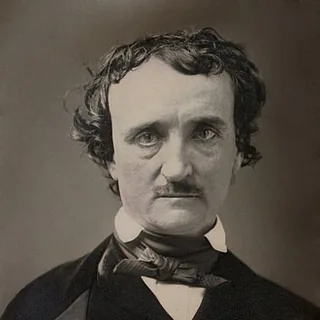 Edgar Allan Poe — Writer. His analytical detective fiction and distinctive imaginative worlds offer a comparison with the meeting of investigation and individual expression.
 George Harrison — Musician. His sustained musical and spiritual exploration illustrates a reflective search for meaning beyond conventional measures of recognition.
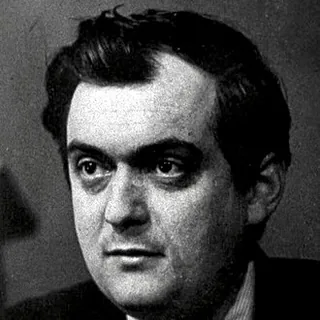 Stanley Kubrick — Film director. His detailed research and tightly constructed films illustrate creative independence supported by exacting preparation and technical scrutiny.
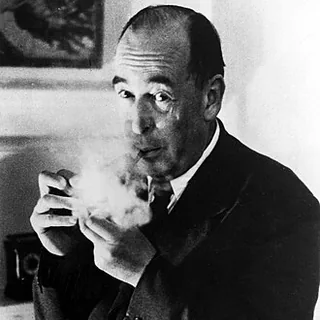 C. S. Lewis — Writer and scholar. His work across criticism, argument and imaginative fiction illustrates the connection between intellectual examination and a personal framework of meaning.
 Anthony Hopkins — Actor. His carefully developed performances offer an illustration of craft, preparation and an individual interpretation shaped through close attention.
 Plato — Philosopher. His dialogues illustrate sustained questioning of appearances and the attempt to connect knowledge with an account of how life should be lived.
 Lorde — Singer-songwriter. Her closely observed lyrics and distinctive artistic choices illustrate individual expression shaped by reflection and a selective creative standard.
Fictional Characters Associated with 145
 Viktor — Arcane. His scientific ambition is inseparable from questions about limitation, improvement and the consequences of pursuing an ideal beyond ordinary constraints.
 Elliot Alderson — Mr. Robot. His technical scrutiny and conflicted ideals illustrate the tension between analysing a system and feeling personally alienated from it.
 Galadriel — The Lord of the Rings film trilogy. Her insight and refusal of the Ring illustrate knowledge held alongside awareness of personal temptation and responsibility.
 Bruce Wayne / Batman — The Batman (2022). His solitary investigation connects personal pain with a demanding mission, while his story questions what constructive responsibility requires.
 Hamlet — Shakespeare's Hamlet. His searching reflection and difficulty acting illustrate an extreme tension between scrutiny, personal meaning and the demand for a justified response.
 Rodion Raskolnikov — Crime and Punishment. His self-examining intellectual drama illustrates the danger of allowing a private theory to detach judgement from human responsibility.
 Itachi Uchiha — Naruto Shippuden. His secrecy and conflicted obligations illustrate the costs of carrying an independent judgement without allowing others to understand its burden.
 Nico Robin — One Piece. Her pursuit of historical knowledge links intellectual independence with a deeply personal search for truth, belonging and the right to exist.
 Sephiroth — Final Fantasy VII. His response to revelations about his origins offers a destructive illustration of identity, knowledge and a rigidly exceptional self-conception.
 Simon Petrikov — Adventure Time. His scholarship and fractured personal history illustrate the meeting of curiosity, memory and the struggle to preserve a meaningful sense of self.
Sources and scope
The Enneagram Tritype framework is attributed to Katherine Chernick Fauvre. This independent educational guide is not affiliated with or endorsed by Fauvre. It describes a theoretical framework for reflection; it is not a validated assessment, diagnosis or population study.

.jpg)
_hires.jpg)


_Cropped.jpg)

.jpg)

.jpg)


.jpg)
