The 135 label identifies the unordered Enneagram family formed by Types 1, 3 and 5, not a specific ordered result. The Technical Specialist family combines these three types: the Reformer from the Gut centre, the Achiever from the Heart centre and the Investigator from the Head centre. Within the Tritype framework, these three types form an archetype strongly associated with competence, precision, expertise and the desire to understand how something works well enough to perform it to a high standard. The Technical Specialist tends to value accuracy, efficiency and demonstrable capability, often preferring clear reasoning and solid evidence over vague impressions or purely emotional arguments.
The Technical Specialist can appear in six possible stacking orders: 135, 153, 315, 351, 513 and 531. Each contains the same three underlying types, but their order changes the personality's emphasis. One-led Technical Specialists tend to begin with standards, correctness and the desire to improve. Three-led variants are more strongly organised around effectiveness, accomplishment and visible competence. Five-led variants place knowledge, understanding and mastery at the centre of the personality. The same 1–3–5 structure therefore can produce everything from a meticulous perfectionist to an ambitious technical professional or a highly specialised analytical expert.
What unites the family is a powerful concentration on competence. Type 1 asks whether something is correct and properly executed. Type 3 asks whether it works and produces the desired result. Type 5 asks whether it is understood accurately and thoroughly. These questions reinforce one another to create a personality that often dislikes approximation when precision is possible and may become frustrated with environments where appearance, hierarchy or convention matter more than actual expertise.
The Technical Specialist is therefore not defined simply by intelligence or technical interests. Its deeper theme is the desire to be capable in a way that can withstand scrutiny. The person may want their reasoning to be sound, their performance to be effective and their knowledge to be substantial enough that they are not merely pretending to understand. At healthy levels, this can produce exceptional craftsmanship, rigorous thinking and an ability to handle difficult systems or concepts that other people find overwhelming.
The Technical Specialist at a Glance
| Feature | Description |
|---|---|
| Archetype | The Technical Specialist |
| Family code | 1 · 3 · 5 |
| Possible orders | 6 |
| Centres | Gut (1) · Heart (3) · Head (5) |
| All six orders | 135 · 153 · 315 · 351 · 513 · 531 |
| Theoretical Dynamics | A shared competency orientation across Types 1, 3 and 5 |
| Core Tendency | Developing expertise and applying it to effective, carefully judged work |
| Central Tension | Standards and understanding versus pressure to achieve and perform |
| Characteristic Strength | Precise analysis supported by discipline and practical execution |
| Potential Blind Spot | Perfectionism, overwork and treating emotional concerns as technical problems |
The central quality of the Technical Specialist is disciplined competence. Type 1 contributes standards and a critical awareness of errors or imperfections. Type 3 contributes efficiency, productivity and the desire to translate ability into accomplishment. Type 5 contributes analysis, intellectual independence and the need to understand the underlying structure of a problem. Together, these tendencies create a personality that often wants not merely to participate but to know what they are doing and to do it well.
There is an unusually strong internal consistency to this combination because Types 1, 3 and 5 all belong to the Enneagram's competency harmonic group. Within Enneagram theory, competency types are described as managing difficulty by becoming more objective, capable or effective. They differ in what competence means to them, but all three tend to place considerable faith in reason, skill and appropriate action. This makes the 1–3–5 family one of the clearest examples of a personality organised around the belief that problems should be understood and solved rather than merely endured.
This does not mean that Technical Specialists lack emotion. Rather, they may be inclined to put emotion temporarily to one side when a problem requires analysis. When something goes wrong, their first instinct may be to determine what happened, why it happened and what needs to change. Emotional processing may occur later, privately or in a much less visible form.
The archetype's characteristic strength is the ability to combine precision, knowledge and execution. Its corresponding blind spot is the risk of judging both oneself and other people excessively through competence. Mistakes can feel more significant than they objectively are, inefficiency can become unusually irritating and vulnerability may be difficult to tolerate when the individual is accustomed to deriving security or self-respect from being capable.
How Common Is the Technical Specialist Tritype?
There are currently no large, representative population datasets that allow the prevalence of the 135 Technical Specialist or its six stacking orders to be estimated reliably. This is the same methodological problem encountered with the other Tritype archetypes. Although personality communities sometimes describe certain combinations as common, rare or especially unusual, these impressions are generally not based upon representative samples of the wider population.
Most available frequency impressions come from self-selected online tests, Enneagram communities, practitioner observations or small convenience samples. Such sources may be useful for understanding who identifies with a particular combination, but they cannot establish population prevalence. Technical or analytical personalities may also be overrepresented in some online personality communities, further complicating attempts to infer how common the pattern is outside those environments.
It would therefore be inappropriate to attach a precise percentage to the Technical Specialist or claim confidently that one stacking such as 513 is objectively rarer than 135 without suitable evidence. The more responsible approach is to treat the archetype as a theoretical structure and examine whether its proposed dynamics provide a useful description of personality.
The 135 combination may sometimes seem especially recognisable because its themes are relatively coherent. Standards, achievement and knowledge can all converge around expertise. That conceptual coherence, however, should not be mistaken for evidence concerning how frequently the combination occurs.
What Does 135 Mean?
Tritype theory proposes that an individual uses one preferred Enneagram strategy from each of three traditional centres: Gut, Heart and Head. The Technical Specialist combines Type 1 from the Gut centre, Type 3 from the Heart centre and Type 5 from the Head centre. Each contributes a distinct form of competence.
| Component | Centre | Broad concern | Typical contribution |
|---|---|---|---|
| 1 — Reformer | Gut | Standards, integrity and improvement | Conscience, discernment and a focus on making things better |
| 3 — Achiever | Heart | Value, accomplishment and effectiveness | Adaptability, purposeful effort and attention to results |
| 5 — Investigator | Head | Knowledge, competence and autonomy | Observation, analysis and understanding before acting |
Type 1 brings the concern with correctness. There is often an internal standard against which work, ideas and behaviour are evaluated. A One-influenced Technical Specialist tends to notice errors, inconsistencies and places where a process could be improved. It is rarely enough for something merely to function if it functions badly, inaccurately or in a way that violates an important standard.
Type 3 contributes effectiveness. Whereas One may be concerned with the proper method, Three asks whether effort is actually producing results. This introduces ambition, adaptability and a willingness to optimise performance. Knowledge should not simply remain theoretical; it should become useful enough to achieve something in the external world.
Type 5 contributes understanding. Five wants to know how the system works beneath its surface appearance. It brings intellectual curiosity, analytical distance and the desire to build sufficient expertise before making claims or committing resources. This can give the Technical Specialist considerable respect for evidence, conceptual structure and specialist knowledge.
The interaction can be expressed through three questions. One asks, “Is this correct?” Three asks, “Does this work?” and Five asks, “Do I actually understand it?” A mature Technical Specialist attempts to satisfy all three at once.
This explains why the archetype can become exceptionally exacting. A solution that produces results but is conceptually unsound may bother the Five component. A theoretically elegant solution that is impractical may frustrate Three. An efficient method that cuts unacceptable corners may offend One. The ideal is something that is accurate, effective and intellectually defensible.
The Technical Specialist Personality
The defining feature of the Technical Specialist is the combination of analysis with standards and execution. This is not necessarily a personality that enjoys knowledge purely for its own sake. Although Five can create substantial intellectual curiosity, Three introduces pressure to make expertise productive, while One encourages the person to refine their work until it reaches an acceptable standard.
This often creates a strong orientation towards systems. Technical Specialists may naturally break complicated subjects into components, identify underlying rules and look for the most efficient relationship between those parts. They may enjoy understanding processes that initially appear opaque because complexity becomes less intimidating once its structure has been identified.
There can consequently be an attraction towards subjects in which answers can be tested. Mathematics, engineering, computing, economics, statistics, scientific research, finance, medicine, law, technical design, data analysis and other specialist fields may provide satisfying environments because expertise produces observable differences in performance. This does not mean that every Technical Specialist is mathematically inclined or professionally technical. The same pattern can appear in almost any field where specialised knowledge, standards and effective execution matter.
Expertise is strongest when it can acknowledge its own limits.
A writer with this Tritype might become obsessed with structure, clarity and editing. A historian might focus intensely upon evidence and methodological reliability. A musician might become fascinated by technique and production. A businessperson might study systems, metrics and optimisation. The underlying orientation is less about the subject itself than about the desire to become technically competent within it.
The Technical Specialist may have relatively little patience for people who attempt to substitute confidence for knowledge. The combination contains a potentially interesting tension around expertise because Three understands presentation and status while Five distrusts empty display and One dislikes inaccuracy. The person may therefore appreciate polished communication when it reflects genuine ability but become particularly irritated when presentation is being used to conceal weak substance.
There can also be an unusually strong relationship with self-improvement. If the Technical Specialist encounters a weakness, the instinct may be to study it, practise it and build a system for getting better. The personality may therefore accumulate considerable competence over time simply because ignorance or poor performance feels uncomfortable enough to motivate sustained correction.
At healthy levels, this creates genuine mastery. At less healthy levels, it can produce the feeling that there is always another deficiency to eliminate. The individual can become highly accomplished while continuing to experience themselves primarily through the gap between their present competence and an imagined ideal.
The Triple Competency Pattern
The most distinctive theoretical feature of the Technical Specialist is that Types 1, 3 and 5 constitute the entire Competency harmonic group within traditional Enneagram theory. This gives the archetype an unusually concentrated orientation towards objectivity, expertise and effective problem-solving.
The three types nevertheless approach competence differently. Type 1 tends to trust standards and correct procedure. There is an emphasis on doing something in the right way and maintaining consistency with principles. Type 3 is more pragmatic. It asks what actually succeeds and is generally more willing to adapt the method if doing so produces a better outcome. Type 5 seeks competence through understanding, information and intellectual mastery.
The Technical Specialist therefore has access to three related but potentially conflicting standards of evaluation. Something can be procedurally correct but inefficient. It can be effective while intellectually crude. It can be theoretically elegant while practically useless. Much of the archetype's distinctive strength comes from trying to reconcile these demands.
This can produce sophisticated judgement. Instead of looking for a solution that satisfies only one criterion, the Technical Specialist may naturally ask whether the solution is accurate, practical and conceptually sound. In technical or professional environments, this can make them exceptionally useful because they may see weaknesses that a more narrowly focused person would overlook.
The danger is that the individual can begin to treat life itself as a technical problem. Emotional experiences do not always have optimal solutions. Relationships cannot always be debugged. Grief cannot be made efficient. Some uncertainties cannot be removed by gathering additional information. The mature Technical Specialist learns where competency is powerful and where another mode of engagement is required.
One and Three: Standards Versus Results
Types 1 and 3 share a competency orientation, but their ideas of excellence can differ significantly. One is inclined to ask whether the process is correct, principled and consistent with an internal standard. Three is more likely to ask whether the process produces the desired outcome efficiently.
This can generate a productive internal tension. One prevents Three's pragmatism from becoming purely expedient, while Three prevents One's standards from becoming detached from results. A Technical Specialist may therefore be interested not merely in following best practice but in determining whether best practice actually works.
At healthy levels, this creates disciplined pragmatism. The person can respect standards without worshipping procedure and pursue results without abandoning quality. They may be particularly good at improving systems because they notice both deviations from the standard and opportunities to make the standard itself more effective.
At less healthy levels, the two tendencies can create relentless performance pressure. One says that the work is not yet good enough, while Three says that progress needs to be faster and more visible. The individual may accomplish a great deal while rarely feeling satisfied with what has already been achieved.
Three and Five: Performance and Expertise
The combination of Types 3 and 5 brings together achievement and specialised knowledge. Three wants to be capable in a way that produces visible success, while Five wants competence to rest upon genuine understanding. This can create someone who cares substantially about being regarded as knowledgeable but who also feels uncomfortable receiving credit they have not actually earned.
The pairing can be extremely effective professionally. Five provides depth and technical understanding, while Three helps turn that expertise into outputs, projects and accomplishments. The person may be better than a stereotypical Five at translating knowledge into practical results and better than a stereotypical Three at recognising when a polished surface lacks substance.
A potential difficulty concerns identity. Three can derive self-worth from accomplishment, while Five can derive security from knowledge. Combined, the person may begin to believe that being impressive and being knowledgeable are essential conditions of being valuable. Situations in which they are inexperienced can therefore feel more threatening than they would for someone who is comfortable openly learning through trial and error.
The healthier Technical Specialist learns that expertise includes the ability to say “I don't know.” Genuine competence is not damaged by acknowledging the limits of one's competence.
One and Five: Precision and Understanding
Types 1 and 5 can create an especially meticulous intellectual combination. One wants accuracy and consistency, while Five wants conceptual understanding. Together, they can produce a strong appetite for detail and a reluctance to accept claims before the underlying reasoning has been examined.
This pairing can be particularly good at identifying hidden errors. The Five component investigates how something works, while One notices deviations, inconsistencies or failures to meet the relevant standard. Research, diagnostics, editing, technical review and quality assurance can therefore suit this aspect of the archetype particularly well.
The danger is excessive refinement. If Five believes more information is needed and One believes the result still contains imperfections, completion can be postponed indefinitely. Three often counteracts this tendency by pushing towards delivery, but the internal argument between precision and efficiency may remain significant.
A healthy Technical Specialist eventually learns that precision has diminishing returns. There is a point at which another hour of refinement produces no meaningful improvement in the outcome.
Rationality and Emotional Distance
The Technical Specialist may strongly identify with rationality. Problems are often easier to manage when they can be converted into facts, variables, mechanisms or procedures. This style can be extremely effective when dealing with technical complexity, but it can create misunderstandings in more emotional situations.
When someone describes a problem, the Technical Specialist may begin constructing a solution before recognising that the person primarily wanted empathy. From the Specialist's perspective, solving the cause may seem more caring than repeatedly discussing the symptoms. The other person may instead experience the response as detached or dismissive.
This is not necessarily evidence of low empathy. It may simply reflect a different sequence of attention. The Technical Specialist first sees the problem structure and only later processes the emotional context.
The challenge is learning that emotional acknowledgement is sometimes part of solving the problem rather than an irrelevant interruption to it. People often become more receptive to rational analysis once they feel understood.
Similarly, the Technical Specialist may intellectualise their own emotions. Instead of simply feeling disappointed, frightened or hurt, they may analyse why the feeling exists, whether it is justified and what action should be taken. Analysis can provide valuable perspective, but excessive analysis can also become a way of avoiding direct emotional experience.
How the Dominant Type Changes the Presentation
Although all Technical Specialists combine Types 1, 3 and 5, the dominant type substantially alters the presentation. One-led Technical Specialists — 135 and 153 — tend to place the greatest emphasis on standards, correctness and improvement. Their competence is often organised around the desire to produce work that is accurate, disciplined and defensible.
Three-led Technical Specialists — 315 and 351 — tend to place greater emphasis on achievement, effectiveness and visible accomplishment. They may be more competitive, adaptive or career-focused, with One and Five ensuring that success is supported by unusually strong standards and expertise.
Five-led Technical Specialists — 513 and 531 — organise the pattern primarily around understanding and mastery. These are likely to be the most conventionally cerebral variants, although Three gives them more concern with application and performance than might be expected from a purely withdrawn Five profile.
A 135 and a 531 can therefore share the same underlying components while looking quite different. The 135 may initially appear like a meticulous reformer who becomes technically sophisticated, whereas the 531 may appear like a specialist researcher who learns to turn knowledge into highly effective results.
Strengths and Potential Blind Spots
Likely Strengths
The Technical Specialist's most obvious potential strength is mastery. This combination does not merely reward knowing something superficially. One wants accuracy, Three wants effectiveness and Five wants depth. When these tendencies cooperate, the individual can become exceptionally capable in areas that reward sustained technical development.
- Another strength is the ability to analyse complex systems. The Technical Specialist may naturally separate a complicated problem into manageable components, identify relationships between variables and search for the point at which the system is failing. This can make seemingly intimidating problems feel tractable.
- There is also considerable potential for independent judgement. Five brings intellectual autonomy, One provides internal standards and Three contributes confidence in execution. The person may therefore be willing to challenge accepted procedure when the evidence demonstrates that a different approach would work better.
- Efficiency is another recurring strength. The Technical Specialist may dislike waste, unnecessary repetition and poorly designed procedures. Once they understand a system, they often begin seeing ways to simplify or automate it. The person may spend considerable effort developing a better process precisely because they dislike repeatedly performing inefficient work.
- A further advantage is the ability to connect theory with implementation. Five can understand the model, One can evaluate whether it meets the required standard and Three can turn the model into something that actually operates. This combination can be valuable in fields where purely theoretical expertise and purely practical experience are each insufficient on their own.
- The Technical Specialist can also be exceptionally reliable in areas where accuracy matters. If the individual takes responsibility for a technical question, they may feel uncomfortable presenting an answer until they have enough evidence to defend it. This can create considerable trust over time, particularly among people who value substance over superficial confidence.
Potential Blind Spots
The archetype's most important blind spot is the possibility of equating personal worth with competence. When all three component types are oriented towards some form of excellence, weakness can become psychologically difficult to tolerate. The individual may believe that they are simply pursuing high standards while quietly depending upon competence as a major source of identity and security.
This can make failure disproportionately painful. A mistake may not feel like a single incorrect action; it can threaten the person's image of themselves as someone who should know what they are doing. The instinct may then be to work harder, research more or conceal the uncertainty rather than openly admitting vulnerability.
Perfectionism is another obvious risk. One identifies flaws, Five sees additional complexity and Three knows that performance is being evaluated. Even excellent work can therefore feel provisional. The person may finish something only to focus immediately upon what should be improved next.
There can also be impatience with people who process information differently. A Technical Specialist who understands a mechanism clearly may struggle to remember what it was like not to understand it. Questions that seem elementary to them can become frustrating, especially when the same mistake is repeated.
At unhealthy levels, competence can become superiority. The individual may begin dividing people too quickly into those who know what they are doing and those who do not. Because the Specialist can often identify genuine mistakes, this judgement may feel objectively justified. The problem arises when expertise in one domain becomes a general assumption of superior judgement.
Another blind spot is overreliance on measurable outputs. Three naturally notices achievement, while One values standards and Five values evidence. Qualities that cannot easily be measured can therefore receive less attention. Creativity, emotional atmosphere, intuition, interpersonal trust and long-term cultural effects may matter even when they cannot be reduced to a clean metric.
Relationships and Communication
Technical Specialists often value relationships characterised by clarity, competence, honesty and independence. They may prefer people who communicate directly, respect boundaries and are capable of managing a reasonable share of their own responsibilities. Constant emotional ambiguity or unnecessary interpersonal drama can be particularly draining because it creates problems that cannot easily be resolved through ordinary analysis.
This does not mean that the archetype is necessarily socially detached. Three can be highly socially capable and adaptive, while One may take relationships seriously and Five can form very deep bonds with a relatively small number of trusted people. What is less likely to appeal is connection that requires continual emotional performance without sufficient substance.
The Technical Specialist may show care through practical competence. They might research a problem, fix something, provide accurate information, devise a better system or help another person avoid an expensive mistake. From their perspective, investing time and expertise in solving somebody's problem can represent a significant form of affection.
An accurate answer still needs to meet the person receiving it.
Difficulties arise when practical support replaces emotional presence entirely. A partner who says they had a terrible day may not need a five-step plan for preventing a recurrence. Sometimes the appropriate response is simply to recognise that the experience was unpleasant.
Communication can also become overly corrective. The Technical Specialist may notice inaccurate details almost automatically and can feel an impulse to fix them even when the correction makes little practical difference. This is especially likely in One-led forms. Learning to distinguish consequential inaccuracies from harmless imprecision can substantially improve relationships.
Another issue concerns criticism. Technical Specialists may believe that because they value accurate feedback, other people should also welcome it. Yet the manner and timing of feedback matter. A technically correct criticism can still be socially ineffective.
The mature Technical Specialist recognises that communication itself is a system with human variables. If the purpose of communication is to produce understanding, then emotional context is not irrelevant noise; it is part of the mechanism.
Work and Career Preferences
The Technical Specialist is one of the Tritype combinations most naturally associated with work requiring expertise, precision, problem-solving and measurable competence. Engineering, mathematics, scientific research, software development, data science, medicine, accounting, finance, architecture, law, technical consulting, cybersecurity, analytics and specialised design are obvious examples, but the pattern can appear anywhere that deep knowledge and exact execution matter.
- The particular occupational style depends greatly upon stacking. One-led Technical Specialists may prefer environments where standards, quality and correctness are especially important. They can excel in engineering assurance, regulation, auditing, quality control, medicine, research methodology or technical fields where mistakes carry significant consequences.
- Three-led variants may be more comfortable in competitive professional environments. They may enjoy consultancy, entrepreneurship, technical leadership, finance, product development or specialist roles in which expertise can be translated into visible performance and advancement.
- Five-led variants may prefer specialist research, analysis, programming, academia or technically demanding work that provides substantial autonomy. They are likely to care deeply about having enough uninterrupted time to understand a problem before being expected to produce an answer.
Across all variants, arbitrary bureaucracy can be frustrating. A Technical Specialist may tolerate complex procedures when the procedures serve an intelligible purpose but become deeply irritated by rules that appear to consume time without improving outcomes.
Micromanagement can also be difficult, particularly once the person has developed genuine expertise. They may prefer to be given a clearly defined objective and enough autonomy to determine the best method themselves.
The ideal working environment often combines challenging problems, meaningful autonomy, clear standards and the opportunity to become genuinely good at something.
Leadership
Technical Specialists can become highly effective leaders when expertise is combined with an ability to understand people. Their natural leadership advantage is credibility. They may be reluctant to ask other people to meet standards they themselves do not understand and can often earn respect through demonstrable competence.
A One-led Technical Specialist may lead primarily through standards and process. They want the organisation to function correctly and may pay close attention to quality, accountability and consistency. A Three-led Specialist may focus more strongly on performance, measurable outcomes and strategic execution. A Five-led leader may contribute technical depth and carefully considered decision-making.
The risk is assuming that organisations function like machines. Human beings do not respond identically to identical inputs. A technically elegant organisational design can fail if motivation, trust or culture have been ignored.
Technical Specialist leaders may also struggle with delegation. When the leader can see exactly how something should be done, watching another person perform the task less efficiently can be painful. Taking over produces a better immediate result but prevents the other person from developing competence.
Healthy leadership therefore requires tolerating some degree of short-term inefficiency so that other people can learn. The strongest Technical Specialist leader eventually becomes someone who builds competent systems and competent people, rather than personally becoming the solution to every difficult problem.
Stress and Growth
Under sustained stress, the Technical Specialist's strengths can become progressively more rigid. High standards turn into perfectionism, ambition becomes compulsive productivity and analysis becomes overthinking. The person may respond to uncertainty by increasing effort, gathering more information or attempting to exert greater control over the process.
A common stress pattern involves narrowing attention around errors. The individual becomes increasingly aware of what remains unfinished or imperfect and less able to perceive how much has already been accomplished. Success brings little relief because the internal benchmark immediately moves.
The Specialist can also retreat emotionally under pressure. Five encourages withdrawal into thought, One may suppress reactions considered inappropriate and Three may continue presenting competence externally. The person can therefore appear remarkably functional while carrying significant internal strain.
Work can become an especially tempting escape because technical problems are often more manageable than emotional ones. A difficult relationship contains ambiguity, competing needs and limited control. A difficult technical project at least offers the possibility that sufficient concentration will eventually produce a correct solution.
Growth therefore requires learning that efficiency is not the only legitimate measure of time. Rest does not need to be optimised. Recreation does not need to improve performance. Relationships do not have to produce measurable outcomes.
The Technical Specialist also benefits from deliberately entering situations in which they are a beginner. Being inexperienced without immediately converting that experience into a performance test can weaken the belief that competence is required before participation is acceptable.
Time does not have to produce a measurable result to be worthwhile.
Perhaps the most important developmental movement is from proving competence to trusting competence. Someone who genuinely knows their capabilities does not have to demonstrate them constantly.
The Six Technical Specialist Stackings
The six Technical Specialist codes contain the same Types 1, 3 and 5, but their ordering changes which strategy receives priority. The distinctions should be understood as differences in emphasis rather than six unrelated personality types. Every version contains standards, achievement and analytical mastery, but each organises these qualities differently.
135 — One → Three → Five
The 135 begins with Type 1, making standards, correctness and improvement the primary orientation. The person is likely to care deeply about performing work properly and may possess a strong internal benchmark for what constitutes acceptable quality. They tend to notice errors quickly and can become frustrated when other people appear comfortable with work that they regard as obviously below standard.
Type 3 follows the dominant One, adding efficiency and a strong desire to translate standards into actual achievement. This distinguishes the 135 from a version of One that might become absorbed in correctness without sufficient concern for practical outcomes. The 135 often wants the correct method to produce a demonstrably successful result.
Five occupies the tertiary position and provides analytical depth. The person is therefore likely to respect specialist knowledge and may invest substantial effort in understanding the technical foundations of whatever they are trying to accomplish. Although Five is third, it can still make the 135 significantly more cerebral and technically oriented than many other One combinations.
The overall pattern can produce an exacting professional style. The 135 may set demanding standards, work efficiently towards them and then investigate the details necessary to ensure that the result can withstand scrutiny. The risk is relentless self-monitoring. There can always be another flaw to correct, another performance benchmark to meet or another piece of information to master.
The broad sequence is get it right, make it work, understand it thoroughly.
153 — One → Five → Three
The 153 is also One-led, but Five comes second. Standards and correctness remain the foundation of the personality, yet the immediate secondary response is analytical rather than performance-oriented. When the 153 encounters a problem, there may be a particularly strong desire to understand the underlying structure before deciding what action should be taken.
This can create one of the more meticulous Technical Specialist variants. One notices inconsistency and Five investigates it. The person may enjoy research, diagnostics, analysis and any activity requiring patient examination of complex evidence.
Three remains important but occupies the tertiary position. Once the person understands the problem and has determined the correct approach, there is still a desire to produce an effective result. Compared with the 135, however, the 153 may be somewhat less immediately oriented towards visible performance and somewhat more concerned with intellectual and technical integrity.
This stacking can become vulnerable to overanalysis. One believes the result should be correct and Five suspects that further understanding may still be possible. Three pushes towards completion, but often only after substantial refinement has already occurred.
The broad sequence becomes get it right, understand it deeply, then make it succeed.
315 — Three → One → Five
The 315 begins with Type 3, making achievement, effectiveness and competence the central organising concerns. This version of the Technical Specialist is likely to be comparatively results-oriented and may care strongly about building a reputation for genuine professional capability.
One follows Three, adding high standards and a strong concern with the quality of achievement. This may make the 315 less comfortable with shortcuts than some other Three combinations. Success matters, but the person may want that success to represent something legitimate rather than merely looking impressive.
Five then provides specialist depth. The individual may deliberately build expertise because knowledge increases both effectiveness and credibility. They can become highly professional, polished and technically formidable.
The combination may be particularly effective in demanding careers where expertise and performance are both highly visible. The person can understand what the environment rewards, maintain strong standards and accumulate the technical knowledge required to compete.
The risk is tying identity too closely to professional accomplishment. If the 315 becomes known as the person who performs at a high level, failure can feel threatening not merely because the outcome is undesirable but because it challenges the identity they have constructed.
The broad sequence is succeed, succeed properly, and support the success with real expertise.
351 — Three → Five → One
The 351 is also Three-led, but Five occupies the secondary position. The desire for achievement is therefore connected especially strongly with specialist knowledge and technical competence. This person may be less interested in generic status than in becoming recognised as someone who truly knows their field.
The 351 may strategically acquire expertise. Five's desire to understand and Three's desire to achieve can reinforce one another powerfully: knowledge becomes both intrinsically satisfying and professionally useful. This can create someone who is exceptionally effective at turning complex information into practical advantage.
One provides the tertiary concern with standards and integrity. The person may care about accuracy and correct procedure but is likely to place somewhat greater initial emphasis on whether expertise produces results.
Compared with 315, the 351 may therefore look more analytical and specialist, whereas the 315 may bring visible standards and professionalism closer to the surface.
A potential danger is becoming excessively identified with being the smartest or most capable person in the room. The individual may find situations uncomfortable when somebody else's expertise exceeds their own, particularly if competence has become central to self-esteem.
The broad sequence is succeed, master the subject, and ensure that the result meets a high standard.
513 — Five → One → Three
The 513 begins with Type 5, making understanding, knowledge and intellectual mastery the central orientation. Of the six variants, this is likely to be one of the most stereotypically technical. The individual may place considerable value on developing specialist expertise and can become deeply absorbed in subjects whose complexity discourages more casual interest.
One follows Five, adding precision and rigorous standards. It is not enough merely to understand something approximately. The person may want definitions to be exact, evidence to be strong and conclusions to follow logically from the available information.
Three occupies the tertiary position and provides an important pragmatic push. Knowledge is eventually expected to produce something. This distinguishes the 513 from a more purely contemplative intellectual pattern. The individual may enjoy applying expertise to real projects, producing high-quality outputs or becoming professionally recognised for specialist knowledge.
Compared with the 531, the 513 may place relatively more emphasis on internal standards and methodological precision before considering external success. The person may prefer being correct without recognition to being celebrated for something they regard as technically weak.
The main danger is becoming excessively critical, both intellectually and personally. Five sees gaps in understanding and One sees flaws in execution. The person may therefore underestimate the quality of work that is already more than adequate.
The broad sequence is understand it, make sure the understanding is correct, then turn it into an effective result.
531 — Five → Three → One
The 531 also begins with Type 5, so knowledge, observation and mastery remain central, but Three occupies the secondary position. This produces a somewhat more results-oriented and externally adaptive Five-led Technical Specialist.
The person may become interested in knowledge partly because expertise creates leverage. Understanding a system makes it possible to operate effectively within it. Five gathers the information and builds the model; Three then asks how that knowledge can be converted into achievement, influence or professional success.
One in the tertiary position adds standards and precision, ensuring that efficiency is moderated by a concern with correctness. The 531 may therefore be highly strategic without necessarily being careless about quality.
Compared with 513, the 531 may be more comfortable packaging or presenting expertise for an external audience. They can potentially move between the private world of analysis and the public world of accomplishment more easily.
The risk is instrumentalising knowledge too strongly. If every interest has to become useful, profitable or professionally valuable, some of the exploratory freedom associated with healthy Five curiosity can disappear.
The broad sequence is understand it, use the understanding effectively, and refine the result until it meets the necessary standard.
The One-Led Technical Specialists: 135 and 153
Both 135 and 153 begin with Type 1, so their deepest organising concern is likely to involve standards, correctness and improvement. They may feel particularly uncomfortable with sloppy work, weak reasoning or environments where nobody takes responsibility for maintaining quality.
The difference concerns what happens immediately after the One judgement. In 135, Three comes forward next, making the person more likely to move rapidly towards execution and results. The individual sees what should be improved and then asks how to achieve the improved outcome efficiently.
In 153, Five comes forward next. The person sees what is wrong and then investigates why. There may be greater hesitation to act until the relevant mechanism has been understood.
The 135 can therefore appear somewhat more managerial or performance-oriented, while the 153 may seem more analytical or methodical. Both remain exacting One-led Technical Specialists.
The Three-Led Technical Specialists: 315 and 351
Both 315 and 351 organise the combination primarily around Type 3. Achievement, effectiveness and demonstrable competence are therefore likely to play a particularly visible role.
The 315 brings One forward immediately after Three. Success is closely associated with standards, professionalism and doing things properly. This version may be especially sensitive to producing work that appears polished and credible.
The 351 brings Five forward instead. Success becomes more closely associated with knowledge, expertise and intellectual mastery. The individual may want recognition specifically for knowing something difficult or being able to solve problems other people cannot.
Both can become highly capable professionals. The distinction is that 315 theoretically leans more towards high-standard performance, while 351 leans more towards expert performance.
The Five-Led Technical Specialists: 513 and 531
Both 513 and 531 begin with Type 5, making understanding and specialist knowledge the foundation of the personality. These variants may be especially comfortable spending long periods independently mastering a difficult subject.
The 513 brings One forward second. Knowledge is evaluated against rigorous standards, producing a style that may be particularly meticulous, methodical and concerned with correctness.
The 531 brings Three forward second. Knowledge is connected more quickly with application, achievement and external effectiveness. A simplified distinction is that the 513 may ask, “Is my understanding correct enough to use?”, while the 531 may ask, “How can I use what I understand effectively?”
Both remain fundamentally Five-led and may therefore value autonomy and intellectual competence more strongly than external recognition alone.
Wings and Other Secondary Influences
Because the Technical Specialist can be led by Types 1, 3 or 5, there is no single wing configuration associated with the archetype. Wings can nevertheless substantially alter how the same underlying 1–3–5 structure appears.
A One-led Technical Specialist with stronger Nine-wing influence may appear calmer, more reserved and less openly critical, while stronger Two-wing influence could add a somewhat more interpersonal or service-oriented quality to the same demanding standards.
A Three-led Technical Specialist can show stronger Two- or Four-wing qualities. Greater Two influence may increase social awareness and willingness to use expertise in direct support of others. Stronger Four influence may create a more individualistic or identity-conscious professional style and perhaps greater interest in producing work that is not merely successful but distinctive.
A Five-led Technical Specialist can show stronger Four- or Six-wing tendencies. Greater Four influence may produce a more unconventional, creative or introspective specialist, while stronger Six influence can add systematic verification, caution and attention to technical reliability.
These modifiers can alter tone considerably, but they do not replace the central competency structure of Types 1, 3 and 5.
Related Tritype Archetypes
Comparing the Technical Specialist with neighbouring Tritype families helps clarify what each component contributes. The 125 Mentor retains Types 1 and 5 but replaces Three with Type 2. Standards and analytical depth remain, but the Heart strategy shifts from achievement towards helpfulness and interpersonal contribution. The result may therefore be more overtly instructional and service-oriented than the performance-conscious Technical Specialist.
The 136 Taskmaster retains Types 1 and 3 but replaces Five with Type 6. Standards and achievement remain important, but the Head strategy shifts from independent analytical mastery towards vigilance, duty and security. Compared with the Technical Specialist, the Taskmaster may therefore place greater emphasis on accepted responsibilities, systems of accountability and ensuring that obligations are fulfilled.
The 358 Solution Master retains Types 3 and 5 but replaces One with Type 8. Expertise and effectiveness remain, but the Gut strategy changes from One's concern with correctness to Eight's concern with autonomy and control. This can produce a more forceful, pragmatic and strategically assertive personality than the typically more standards-conscious 135 family.
These comparisons reveal the distinctive role of Type 1 within the Technical Specialist. Three and Five already create an effective expert, but One adds the internal requirement that expertise should also meet a defensible standard of quality.
The Technical Specialist and the Big Five
The Enneagram and Big Five describe personality through fundamentally different models, so there is no scientifically established conversion between the 135 Technical Specialist and a particular Big Five profile. Some broad descriptive parallels can nevertheless be explored cautiously.
The combination's emphasis on standards, achievement and sustained mastery could resemble aspects of higher Conscientiousness, particularly competence, industriousness, orderliness and achievement striving. This may be especially visible in One- and Three-led variants, although individual scores could vary widely.
Type 5's intellectual curiosity and interest in complex concepts may resemble aspects of higher Openness to Experience, particularly the intellectual or ideas-oriented components of that trait. A highly technical person can be very open intellectually while remaining comparatively conventional in aesthetic or social preferences, so global Openness should not be inferred automatically.
Agreeableness is difficult to predict. The Technical Specialist may be cooperative in professional settings but relatively willing to challenge weak reasoning or inefficient procedures. Some individuals may therefore appear less accommodating even when they are not personally hostile.
Extraversion is also likely to vary substantially. Three-led variants could be socially confident and outwardly assertive, whereas Five-led forms may prefer considerably more solitude. A 315 and a 513 could therefore produce very different Big Five profiles despite belonging to the same Tritype family.
The Technical Specialist and 16-Type Systems
There is likewise no direct conversion between the Technical Specialist and Jungian or MBTI-style personality types. The archetype could plausibly occur across several 16-type profiles depending upon which aspects of the combination are strongest.
Five-led Technical Specialists may sometimes recognise aspects of INTJ or INTP descriptions because of their emphasis on systems, independent reasoning and specialist knowledge. One- or Three-led variants with a strong organisational orientation might identify more readily with ISTJ, ENTJ or ESTJ descriptions, particularly when execution and standards are highly visible.
More outwardly strategic Three-led variants could resemble ENTJ-style descriptions, while a reserved and methodical 513 might present more like an INTJ or INTP. None of these comparisons should be treated as conversions.
The distinction is important because the systems describe personality in different ways. Enneagram theory focuses primarily upon motivations, defensive patterns and recurring concerns, whereas MBTI-style systems organise personality according to a different conceptual structure.
Someone identifying as 513 is therefore not automatically an INTJ, just as an INTJ should not automatically be expected to belong to the Technical Specialist family.
What the Technical Specialist Most Needs to Learn
The developmental task of the Technical Specialist is not to become less competent. Competence is one of the archetype's genuine strengths. The challenge is learning that competence is a tool rather than a measure of human worth.
The individual may need to become more comfortable entering situations without expertise, asking elementary questions and making visible mistakes. These experiences can feel uncomfortable precisely because the person's identity is often constructed around knowing what they are doing. Yet the willingness to be temporarily incompetent is essential to learning anything genuinely new.
The Technical Specialist may also need to recognise that some problems cannot be solved through greater precision. A disagreement between two people may require empathy rather than a superior argument. Exhaustion may require rest rather than a better productivity system. Grief may need time rather than explanation.
Another important lesson concerns completion. There is always a theoretically better version of almost anything. More analysis could be performed, another refinement could be made and another performance metric could be improved. The mature Specialist learns to distinguish excellence from endless optimisation.
Perhaps the deepest change occurs when the person no longer feels required to prove that they are intelligent, effective or technically capable. Their expertise becomes quieter because it is secure. They can admit uncertainty without humiliation, appreciate other people's strengths without feeling diminished and delegate without assuming that a different method is necessarily an inferior one.
At its healthiest, the Technical Specialist becomes someone who can bring deep knowledge, rigorous standards and practical effectiveness to difficult problems without reducing themselves or everyone around them to a performance measure.
The Technical Specialist in One Sentence
The 135 Technical Specialist Tritype combines rigorous standards, achievement-oriented efficiency and analytical mastery into a highly competency-focused personality that seeks to understand difficult systems, solve problems precisely and produce results that can withstand scrutiny.
Famous People and Fictional Characters Associated with 135
These examples offer illustrative comparisons with the 135 family, not confirmed personality assessments. The family includes all six orders of its three types; an example need not use the ascending 135 order. A public career or fictional story cannot establish someone's private motivations. Fictional examples refer to the works or versions named below, and are illustrations rather than role models.
Famous People Associated with 135
 Isaac Newton — Mathematician and physicist. His sustained investigation of underlying laws illustrates the family’s combination of intellectual rigour and the pursuit of mastery.
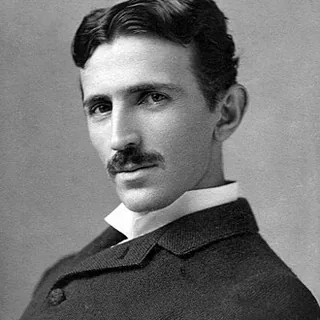 Nikola Tesla — Inventor and electrical engineer. His experimental work offers an illustration of specialised knowledge directed towards ambitious technical possibilities.
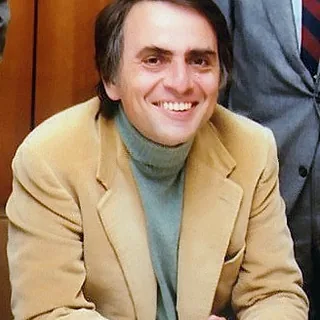 Carl Sagan — Astronomer and science communicator. His explanations connect expertise with clarity, illustrating knowledge made useful beyond a specialist audience.
 Aristotle — Philosopher. His systematic investigations offer a historical comparison with classification, comprehensive understanding and the construction of explanatory frameworks.
 Johann Sebastian Bach — Composer. The intricate organisation of his music illustrates technical mastery expressed through disciplined creative construction.
 Christopher Nolan — Film director. His elaborate narrative structures offer an example of ambitious creative work organised around rules, systems and precise execution.
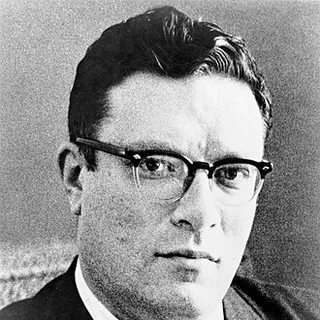 Isaac Asimov — Writer and biochemist. His science writing and speculative fiction illustrate a sustained interest in explaining systems and exploring their consequences.
 Pep Guardiola — Football manager. His detailed tactical approach offers a practical example of analysis, exacting standards and the pursuit of effective execution.
 Ayrton Senna — Racing driver. His commitment to refining performance illustrates the interaction of precision, competitive effort and a demanding personal standard.
 Jenna Ortega — Actor. Her public attention to characterisation offers a limited comparison with preparation and creative standards, not evidence drawn from the personalities she plays.
Fictional Characters Associated with 135
 Light Yagami — Death Note. His elaborate planning illustrates how intelligence, performance and rigid standards can become dangerous when joined to a self-justifying agenda.
 Lelouch vi Britannia — Code Geass. His strategic schemes connect intellectual control with ambitious aims, while exposing the personal costs of treating people as pieces in a plan.
 Beth Harmon — The Queen’s Gambit (2020). Her pursuit of chess mastery illustrates intense study, competitive standards and the need to balance expertise with a life beyond performance.
 Sheldon Cooper — The Big Bang Theory. His specialist knowledge and insistence on correct procedure offer a comic illustration of mastery becoming inflexible.
 Stephen Strange — Marvel Cinematic Universe. His demanding professional identity and study of magic illustrate expertise, ambition and the challenge of relinquishing control.
 Clarice Starling — The Silence of the Lambs (1991). Her careful observation and professional determination connect analytical work with the responsibility to act on what she learns.
 Agent Smith — The Matrix trilogy. His fixation on system control offers an antagonistic illustration of order and efficiency detached from humane limits.
 Sauron — The Lord of the Rings film trilogy. His drive to impose a single ordering will is an extreme fictional comparison, not a model of healthy development.
 Adrian Veidt / Ozymandias — Watchmen (2009). His intricate plans illustrate the danger of allowing strategic confidence to override accountability for other people's lives.
 Annabeth Chase — Camp Half-Blood books. Her architectural imagination and practical planning illustrate knowledge, high standards and the wish to build something that works.
Sources and scope
The Enneagram Tritype framework is attributed to Katherine Chernick Fauvre. This independent educational guide is not affiliated with or endorsed by Fauvre. It describes a theoretical framework for reflection; it is not a validated assessment, diagnosis or population study.
.jpg)


.jpg)

.jpg)

.jpg)


.jpg)