The 125 label identifies the unordered Enneagram family formed by Types 1, 2 and 5, not a specific ordered result. The Mentor family combines these three types: the Reformer from the Gut centre, the Helper from the Heart centre and the Investigator from the Head centre. Within the Tritype framework, these three types form a broader personality archetype centred on responsible improvement, practical usefulness and informed guidance. The Mentor tends to combine the One's concern with doing things properly, the Two's desire to be helpful and the Five's preference for understanding a situation before acting.
The Mentor can appear in six possible stacking orders: 125, 152, 215, 251, 512 and 521. Each contains the same three underlying types, but the order indicates which strategy tends to take priority. This means that two people within the Mentor family can appear quite different at first glance. A Two-led 215 may be visibly warm, involved and attentive to other people's needs, whereas a Five-led 512 may appear reserved, highly analytical and much more selective about when to become involved.
What connects all six versions is a recurring desire to make knowledge useful. The Mentor is rarely interested in understanding purely for its own sake, helping without considering whether the help is genuinely beneficial, or enforcing standards without some underlying rationale. At its most characteristic, the combination asks how something can be understood accurately, improved responsibly and then translated into something of practical value.
There is consequently an instructional quality to the archetype. This does not mean that every Mentor becomes a teacher or professional adviser. The pattern can appear informally whenever someone becomes the person others approach for careful explanations, informed advice, practical assistance or help making sense of something complicated. The Mentor may naturally accumulate knowledge and then find satisfaction in making that knowledge useful to other people.
The Mentor at a Glance
| Feature | Description |
|---|---|
| Archetype | The Mentor |
| Family code | 1 · 2 · 5 |
| Possible orders | 6 |
| Centres | Gut (1) · Heart (2) · Head (5) |
| All six orders | 125 · 152 · 215 · 251 · 512 · 521 |
| Theoretical Dynamics | Compliant overlap (1, 2) · Rejection overlap (2, 5) · Competency overlap (1, 5) |
| Core Tendency | Making knowledge useful through responsible improvement and practical help |
| Central Tension | Thoughtful contribution versus taking responsibility for too much |
| Characteristic Strength | Careful explanations and support grounded in understanding |
| Potential Blind Spot | Over-responsibility, perfectionism and unsolicited correction |
The Mentor combines one type from each of the three traditional Enneagram centres. Type 1 represents the Gut centre and contributes themes of responsibility, standards, integrity and improvement. Type 2 represents the Heart centre and contributes interpersonal awareness, helpfulness and the desire to contribute something of value. Type 5 represents the Head centre and contributes knowledge, observation, competence and intellectual self-sufficiency.
Taken together, these tendencies create a personality pattern in which understanding, responsibility and usefulness become closely linked. A Mentor may feel that if something matters, it should be understood properly; if it can be improved, the improvement should be thoughtful rather than careless; and if another person needs help, that help should ideally be competent enough to make a real difference.
The archetype's characteristic strength is therefore not simply kindness or intelligence. It is the ability to combine care with discernment. The Mentor can potentially offer support without abandoning standards, and analyse a problem without losing sight of the person affected by it.
Its corresponding blind spot is over-responsibility. The same person who notices what is wrong, understands why it is wrong and knows how it could be improved may gradually begin to assume that they are personally responsible for fixing everything they notice.
How Common Is the Mentor Tritype?
There are currently no large, representative population datasets from which the prevalence of the Mentor Tritype or its six stacking orders can be estimated reliably. This limitation applies to Tritype more generally. While frameworks such as the Big Five have been studied using very large psychometric samples, Enneagram and Tritype frequency estimates usually come from self-selected test takers, practitioner observations, online communities or relatively small specialist Enneagram samples.
For that reason, claims that 125 is especially rare, unusually common or concentrated within particular occupations should be treated cautiously. A personality community may develop an impression that certain combinations appear more frequently than others, but this is not the same as establishing population prevalence.
The Mentor can also be somewhat difficult to identify from surface behaviour because many of its characteristic behaviours are socially ordinary. Being responsible, knowledgeable, helpful or conscientious does not by itself indicate a 125 pattern. The relevant question is whether these tendencies appear together as part of a more persistent motivational structure.
A Mentor is not simply someone who likes teaching or someone who happens to be kind. The theoretical pattern is more specific: the individual repeatedly links correctness, usefulness and competence. Helping should ideally be effective, knowledge should ideally have a constructive purpose and improvement should ideally be based on a sound understanding of the problem.
The most responsible approach is therefore to avoid attaching false numerical precision to the archetype and instead examine whether its proposed internal dynamics actually describe the person.
What Does 125 Mean?
Tritype theory proposes that a person relies upon one preferred strategy from each of three traditional centres: Gut, Heart and Head. In the Mentor family, those strategies are represented by Type 1, Type 2 and Type 5.
| Component | Centre | Broad concern | Typical contribution |
|---|---|---|---|
| 1 — Reformer | Gut | Standards, integrity and improvement | Conscience, discernment and a focus on making things better |
| 2 — Helper | Heart | Connection, usefulness and interpersonal value | Awareness of other people’s needs and practical support |
| 5 — Investigator | Head | Knowledge, competence and autonomy | Observation, analysis and understanding before acting |
Type 1 introduces the concern with standards. It tends to notice what could be corrected, improved or brought into better alignment with an internal sense of what is appropriate. This does not necessarily mean rigid moralism. In many people it appears more quietly as conscientiousness, carefulness and discomfort with avoidable mistakes.
Type 2 adds the interpersonal dimension. It directs attention towards what other people need and how the individual might contribute something useful. In the Mentor, this can transform the One's desire for improvement from a purely abstract standard into something more relational. Improvement matters partly because people are affected by whether things work well or badly.
Type 5 contributes observation, knowledge and the desire to understand. This can make the Mentor less likely to rely entirely on good intentions. There is often a preference for becoming sufficiently informed before giving advice, intervening or making an important judgement.
The combination can therefore be expressed through three recurring questions.
- Type 1 asks whether something is right or responsible.
- Type 2 asks whether something is helpful.
- Type 5 asks whether it is actually understood.
The distinctive Mentor pattern emerges where those three concerns begin to reinforce one another. It is not enough merely to care; the help should work. It is not enough merely to know; knowledge should serve some worthwhile purpose. It is not enough merely to improve something; the improvement should rest on an accurate understanding of what was wrong in the first place.
The Mentor Personality
The defining feature of the Mentor is the combination of knowledge with constructive responsibility. These individuals are often drawn towards situations in which they can understand a problem, organise what they know and then use that understanding to improve something for themselves or others.
The Five component contributes intellectual seriousness. A Mentor may dislike offering confident opinions on subjects they have not properly examined. When something matters, they can feel compelled to investigate it thoroughly, distinguish reliable information from weak claims and develop enough understanding to speak with some authority.
The One component reinforces this tendency by giving competence an ethical dimension. Accuracy is not merely intellectually satisfying; it can feel like part of doing things properly. The Mentor may become irritated by advice that is carelessly given, systems that are badly designed or decisions made without sufficient thought when the consequences matter.
Good guidance combines understanding with care, while leaving room for another person’s autonomy.
Two changes the direction of all this analysis. Knowledge becomes especially meaningful when it can be turned into something useful. The Mentor may therefore be attracted not merely to acquiring expertise but to explaining, advising, guiding, teaching or applying that expertise in ways that improve somebody's situation.
This can create a personality that is unusually conscientious about the quality of its help. A Mentor may be uncomfortable simply reassuring someone if reassurance would be misleading. They may prefer to investigate the problem, identify what is actually happening and then offer an answer that has some practical substance behind it.
For this reason, competence itself can become a form of care. Some Mentors show affection and concern less through overt emotional expression than through doing something useful. They may research a problem for someone, explain an intimidating subject, anticipate a difficulty, correct an error before it causes harm or spend hours trying to find the most reliable solution.
The emotional style can therefore be somewhat understated. Types 1 and 5 both introduce restraint. One tends to regulate impulses according to standards or responsibility, while Five may create distance in order to think clearly or conserve internal resources. Two adds warmth and interpersonal concern, but that warmth often passes through these more controlled tendencies.
A Mentor may consequently care far more deeply than their surface style initially suggests. Instead of saying repeatedly that they care, they may demonstrate it by becoming reliable, informed and available when something important needs dealing with.
This can make the archetype especially effective in advisory roles. The Mentor may naturally become the person others approach when they need an answer that is both thoughtful and practical. The person may not seek formal authority, but expertise and reliability can gradually place them in a position of informal authority regardless.
The difficulty appears when usefulness becomes obligation. Once the Mentor notices that something could be improved, there can be a subtle tendency to feel responsible for improving it. If another person is struggling and the Mentor knows how to help, declining to become involved may feel selfish or irresponsible even when the problem is not actually theirs to solve.
Over time, this can create chronic over-functioning. The Mentor becomes the organiser, adviser, researcher, fixer or responsible person in situations where other people could potentially take more responsibility themselves.
The same dynamic can make the Mentor overly instructional. Because they often genuinely do understand how something could work better, the difference between helpful guidance and unsolicited correction can become blurred. From the Mentor's perspective, the advice may be obviously useful. From the other person's perspective, it may feel as though everything they do is being evaluated.
The healthier expression of the archetype therefore retains the desire to help while developing a stronger sense of limits. The central question gradually shifts from "Can I improve this?" to "Is this actually mine to improve?"
Inner Dynamics in Enneagram Theory
The Mentor becomes easier to understand when Types 1, 2 and 5 are considered through several of the broader groupings used within Enneagram theory. These groupings are theoretical rather than independently established psychological mechanisms, but they help explain some of the tensions associated with the combination.
The Compliant Overlap: Types 1 and 2
Types 1 and 2 are traditionally placed within the Enneagram's Compliant or Superego grouping. Both are associated with a sense of obligation, although they orient that obligation differently.
Type 1 tends to focus on what should be done correctly. It notices standards, duties and improvements that ought to be made. Type 2 tends to focus on what can be done for other people. It notices interpersonal needs, opportunities to contribute and situations in which assistance might be valuable.
When these tendencies combine, the Mentor can develop a powerful sense of responsibility. A problem is not simply something that exists. It can begin to feel like something that should be addressed, particularly if the individual believes they possess the ability to address it.
This produces much of the archetype's dependability. Mentors can be extraordinarily willing to take responsibility when other people avoid it. They may step into neglected situations, organise confusion and offer assistance without needing to be pushed.
The danger is that capability starts to feel like obligation. The fact that the Mentor can help gradually becomes a reason why they believe they should help.
This distinction is central to understanding the archetype. Healthy responsibility involves choosing where one's contribution is genuinely needed. Unhealthy responsibility involves experiencing almost every solvable problem as a personal demand.
The Rejection Overlap: Types 2 and 5
Types 2 and 5 are both placed within the Enneagram's Rejection object-relations grouping, despite appearing strikingly different in ordinary behaviour. Type 2 tends to move towards people, while Type 5 often preserves greater distance.
What they share theoretically is a strong relationship with what they are able to provide. Two may offer attention, encouragement, practical help or emotional support. Five may offer information, specialised knowledge, analysis or competence. Both can therefore become highly conscious of their usefulness to other people.
Within the Mentor, this can create someone who is remarkably comfortable being the person who helps or knows, but considerably less comfortable being the person who needs.
A Mentor may support other people through complicated problems while handling their own privately. They may willingly spend hours researching somebody else's difficulty yet hesitate to ask for comparatively modest assistance themselves.
This can produce an unusual imbalance. The person appears highly capable and may indeed be highly capable, but competence gradually becomes part of the identity that makes dependence uncomfortable.
The developmental issue is therefore not simply learning to accept help. It is recognising that needing something from another person does not erase one's own usefulness, intelligence or autonomy.
A healthy Mentor can remain generous without constructing relationships in which they are permanently the provider.
The Competency Overlap: Types 1 and 5
Types 1 and 5 belong to the Enneagram's Competency harmonic grouping, and this overlap contributes much of the Mentor's analytical character. Both tend to create some distance from immediate emotional reaction when confronting a problem. Type 1 looks for the correct response, while Type 5 looks for the accurate explanation.
This can make the Mentor highly effective during situations that require calm analysis. Rather than becoming overwhelmed by confusion, they may instinctively begin organising the problem. They want to know what happened, what information can be trusted, where the system failed and what would constitute a responsible response.
This quality can be extremely useful. It allows difficult situations to be converted into manageable questions. The limitation is that not every human difficulty is primarily a technical problem. A person describing emotional pain may not need the most accurate solution immediately. They may first need to feel understood. A disagreement may not require a perfectly constructed argument. Sometimes the relationship matters as much as the conclusion.
The Two component can soften the competency orientation, but the Mentor may still need to learn consciously that understanding a person's experience is not always the same thing as solving their problem.
Strengths and Potential Blind Spots
Likely Strengths
One of the Mentor's strongest potential qualities is responsible helpfulness. Many people want to help, and many people possess expertise, but the Mentor archetype theoretically combines the two with a strong concern for whether the assistance is appropriate and well considered.
This can produce unusually useful advice. The Mentor may resist telling someone merely what they want to hear if the evidence points elsewhere. At the same time, the Two influence can prevent the analysis from becoming entirely detached from human consequences.
- Another characteristic strength is the ability to translate complexity into something practical. Type 5 may accumulate extensive information, while Type 1 organises and evaluates it and Type 2 asks how it can benefit someone. This combination can produce excellent teachers, writers, advisers and explainers.
- Mentors can also be highly reliable. Once they accept responsibility for something, they may take the commitment seriously. They can dislike letting people down and may prefer to prepare thoroughly rather than improvise carelessly.
- There is often considerable discernment as well. The archetype need not equate compassion with automatic agreement. A Mentor may care about somebody while still recognising that the person's interpretation is mistaken, their plan is unrealistic or the kind of help they are requesting will not actually solve the underlying problem.
At their best, Mentors can therefore offer something more valuable than simple reassurance: support that remains intellectually honest.
Potential Blind Spots
The most important blind spot is the corresponding tendency towards over-responsibility. The Mentor possesses three different reasons for becoming involved. One notices what ought to improve, Two notices who needs help and Five notices what is missing from the explanation.
This can result in a life filled with responsibilities that nobody formally assigned. The person may eventually become resentful that everyone relies upon them, while failing to recognise how often they established themselves as the reliable fixer in the first place.
Perfectionism can also enter the helping process. A simple answer becomes a research project because the Mentor wants to make sure it is correct. A small favour expands because it could be done more thoroughly. An ordinary piece of work becomes difficult to finish because there is always another improvement that could be made.
Another potential blind spot is excessive correction. The Mentor often notices weaknesses that other people genuinely miss. The fact that the weakness exists, however, does not automatically mean it must be pointed out.
A mature Mentor gradually learns that accuracy and timing are different skills. Sometimes the best contribution is a detailed explanation. Sometimes it is one sentence. Sometimes it is saying nothing.
Relationships and Communication
In relationships, Mentors are likely to value reliability, depth, mutual respect and meaningful contribution. They may be less interested in connections based purely on social performance and more interested in relationships where people can exchange useful ideas, speak honestly and depend upon one another when something matters.
The Two component gives the archetype a genuine desire to be significant to other people, but the way this desire is expressed can be more restrained than in some other Two-containing combinations. The Mentor may demonstrate affection through practical usefulness rather than constant emotional expression.
They may remember details that matter, research something for a partner, help a friend solve a difficult problem or quietly take care of something that would otherwise create unnecessary stress.
Advice becomes more useful when it is wanted, rather than simply available.
This can make the Mentor deeply supportive. It can also create expectations that are not always consciously acknowledged. If the person repeatedly gives time, knowledge and assistance, they may begin to expect their contribution to be recognised. When it is taken for granted, the resulting disappointment can be substantial even if the Mentor never explicitly asked for appreciation.
The three components can react differently to this experience. Two may feel unappreciated, One may conclude that other people are behaving irresponsibly and Five may begin withdrawing resources and reducing involvement.
This can create a pattern in which the Mentor is extremely available for a long period and then suddenly becomes much less accessible once the accumulated imbalance becomes intolerable.
Another relational challenge is advice. Because Mentors often genuinely want other people to succeed, they may provide solutions too quickly. Yet people do not always want instruction simply because instruction is available.
Learning to ask whether advice is wanted can therefore transform the interpersonal expression of the archetype.
The healthiest Mentor does not become indifferent to other people's choices. Instead, they recognise that respecting someone's autonomy is itself part of helping them.
Work and Career Preferences
The Mentor archetype is likely to appreciate work that provides some combination of competence, usefulness, autonomy and meaningful contribution. The exact occupation matters less than whether the person can develop expertise and apply it in a way that seems worthwhile.
Teaching is an obvious example because it combines knowledge with direct developmental usefulness, but the same psychological structure can appear in many fields. Mentors may be drawn towards research, healthcare, counselling, technical work, psychology, writing, editing, engineering, science, law, data analysis, professional services, quality assurance, policy or specialist advisory roles.
- A Five-led Mentor working in software, for example, may gradually become the person who explains complex systems to colleagues.
- A One-led Mentor in administration might naturally improve inefficient procedures.
- A Two-led Mentor in healthcare may find satisfaction in combining technical competence with direct support.
The archetype can be particularly effective where expertise needs to be translated for other people. Understanding something is one skill; communicating it clearly to someone without the same background is another. The Mentor may derive considerable satisfaction from bridging that gap.
Work environments dominated by incompetence, arbitrary procedure or continual micromanagement can become especially frustrating. The One component notices poor standards, Five dislikes having its judgement unnecessarily constrained and Two may become frustrated when organisational structures obstruct genuinely useful work.
One occupational risk is remaining too long in roles where the Mentor has become indispensable. Being needed can be rewarding. It can also conceal dysfunctional systems. If one person is constantly solving everybody else's problems, the organisation may begin depending upon that person's willingness to over-function rather than correcting the underlying structure.
The Mentor's career development therefore often benefits from learning that being valuable is not the same as being endlessly available.
Stress and Growth
Under prolonged stress, the Mentor's characteristic strengths can become exaggerated versions of themselves. Responsibility becomes over-responsibility, care becomes intrusive involvement, conscientiousness becomes perfectionism and expertise becomes a defence against uncertainty.
The person may initially respond to stress by trying harder. If a situation is going wrong, they may invest more time, research more thoroughly, offer more assistance and attempt to create better systems.
This can work temporarily, which is precisely why the pattern can become entrenched. Eventually the Mentor may become depleted. At that point, they can feel simultaneously indispensable and unsupported. They may wonder why everyone expects so much from them while continuing to behave in ways that reinforce those expectations.
The form of stress differs somewhat by stacking. A One-led Mentor may become increasingly critical and focused on everything that is being done incorrectly. A Two-led Mentor may intensify efforts to help, becoming deeply involved in other people's problems. A Five-led Mentor may respond by retreating into research, solitude or intellectual control.
Despite these differences, the underlying issue is similar. The Mentor begins attempting to compensate for uncertainty by increasing competence, responsibility or usefulness.
Growth therefore involves learning that limits are not a failure of character. Not every problem needs solving. Not every inaccurate statement needs correcting. Not every person requires intervention. Not every question deserves exhaustive research. For someone strongly identified with conscientiousness and competence, this can initially feel like becoming careless. In reality, selective involvement often allows the Mentor to direct much greater energy towards the situations in which their contribution genuinely matters.
Another developmental theme is allowing other people to learn through their own experience. The Mentor may often see the likely answer before someone else does, but immediately supplying that answer can deprive the other person of the process through which competence develops.
Being able to help does not make every problem yours to solve.
The strongest Mentor therefore does not simply possess good answers. They become skilled at recognising when to explain, when to guide, when to assist and when to allow someone else to discover the answer independently.
The Six Mentor Stackings
Although all six Mentor stackings contain Types 1, 2 and 5, changing the order alters which psychological concern theoretically takes priority. The first number represents the dominant or core type, while the second and third indicate the relative prominence of the remaining centre strategies.
The important point is that these are differences in emphasis rather than six completely separate personalities.
125 — One → Two → Five
The 125 begins with Type 1, making responsibility, standards and improvement the central orientation. Type 2 follows closely, so the desire to improve tends to become directed towards people relatively quickly.
This can create one of the most recognisably mentoring versions of the archetype. The 125 may naturally notice that something is not working well and immediately begin considering what could be done to help. Their standards are not merely abstract; they often want those standards to produce better outcomes for actual people.
Five occupies the tertiary position and adds analytical depth. The person may want to understand the issue sufficiently well before offering definitive guidance, but intellectual investigation tends to remain subordinate to the broader desire to improve and contribute.
The overall movement is therefore from responsibility to helpfulness to understanding. At their best, 125s can be conscientious, generous and remarkably useful. They often want advice to be both humane and correct. At their less balanced, they can become overly responsible for other people's improvement, believing that because they recognise a better way forward they ought to persuade others to follow it.
152 — One → Five → Two
The 152 also begins with Type 1, but Five occupies the secondary position. Responsibility and standards remain primary, while knowledge and competence become the most immediate support for those standards.
Compared with 125, this can produce a more reserved, analytical and technically oriented Mentor. Before helping, the 152 may feel a stronger need to investigate.
The person may be particularly uncomfortable making recommendations without sufficient evidence. Doing something properly requires knowing what one is doing, and this can create substantial intellectual conscientiousness.
Two remains present but more quietly. The desire to help is still important, yet it may become visible primarily through the application of expertise rather than overt interpersonal involvement.
The movement becomes responsibility to understanding to helpfulness. A healthy 152 can therefore resemble the careful specialist who takes considerable responsibility for ensuring that their expertise actually benefits people.
215 — Two → One → Five
In the 215, Type 2 becomes dominant. The person's attention therefore begins more naturally with people, contribution and usefulness.
Type 1 follows, adding standards and responsibility to this interpersonal orientation. The 215 may not simply want to help; they may want to help properly.
This can produce someone who takes other people's development seriously. They may be drawn towards teaching, advising, caring or guidance because those roles allow interpersonal concern to be combined with structure.
Five adds the desire for knowledge and competence, giving the pattern more intellectual depth than might initially be obvious. The movement is therefore from helpfulness to improvement to understanding.
The risk is that helping can become paternalistic. Because the person genuinely wants others to do well and often has strong ideas about what improvement requires, they may become too invested in directing the process.
251 — Two → Five → One
The 251 also begins with Type 2 but places Five second. Helpfulness remains primary, yet the person's preferred way of helping may be through knowledge, information or specialised competence.
This can produce a quieter and more observational Two-led Mentor than 215. Rather than immediately telling someone what they should do, the 251 may begin by understanding the problem.
They can become the person who researches an obscure issue for a friend, finds the relevant information or explains something difficult without making a great performance of their helpfulness.
One remains present and contributes responsibility, standards and the desire to improve outcomes. The movement becomes helpfulness to understanding to improvement. This may create the archetype's classic knowledgeable adviser: interpersonal enough to notice what somebody needs but analytical enough to want the advice to be genuinely well founded.
512 — Five → One → Two
The 512 begins with Type 5, making understanding, competence and intellectual autonomy the central orientation.
Type 1 follows, giving that knowledge a strong concern with accuracy and improvement. The 512 may be particularly sensitive to poor reasoning, weak methodology or systems that could be made more coherent.
Compared with the Two-led variants, the mentoring quality may initially be less obvious because the person can appear primarily analytical. Two nevertheless remains important. Knowledge eventually seeks a useful outlet. The 512 may mentor by explaining, correcting, designing better systems or establishing standards rather than through conspicuous emotional support.
The movement is from understanding to improvement to helpfulness. At their best, 512s can become exceptionally rigorous advisers. Their challenge is remembering that a technically correct answer can still fail if it does not account for the human context in which it must be used.
521 — Five → Two → One
The 521 also begins with Type 5, but Two occupies the secondary position. Understanding and competence therefore remain primary while usefulness and interpersonal contribution emerge more readily than in the 512.
This can produce a somewhat warmer Five-led Mentor. The person may remain private, independent and intellectually oriented but enjoy sharing expertise when another person genuinely benefits from it.
They may particularly enjoy one-to-one explanation, specialist advice or situations where complex information can be translated into something accessible. One provides a tertiary concern with standards and responsibility, helping ensure that the contribution remains careful rather than casual. The movement becomes understanding to helpfulness to improvement.
Compared with 512, the 521 may therefore appear less overtly corrective and somewhat more relational, although both remain primarily oriented around competence and understanding.
Wings and Other Secondary Influences
Wings and other Enneagram modifiers can change the outward presentation of the Mentor considerably without altering the underlying 1–2–5 structure. A One-led Mentor can show stronger Nine or Two influence. Stronger Nine influence may soften the presentation, making the person calmer and less immediately corrective, while stronger Two influence may make interpersonal helpfulness more visible.
Two-led Mentors can show stronger One or Three characteristics. A stronger One wing can reinforce conscientiousness and service, while stronger Three influence may add more ambition, adaptability or concern with effectiveness.
Five-led Mentors may show stronger Four or Six influence. A stronger Four wing can add imagination, personal interpretation and interest in less conventional subjects, while stronger Six influence may increase systematic verification, caution and technical thoroughness.
These modifiers can be significant, but they should not be allowed to obscure the broader architecture of the archetype. The central feature remains the interaction of One's standards, Two's usefulness and Five's competence.
Related Tritype Archetypes
Comparing the Mentor with neighbouring Tritype families can help reveal what each component contributes. The 126 family retains Types 1 and 2 but replaces Five with Type 6. Responsibility and helpfulness remain, but the Head-centre strategy changes from Five's emphasis on independent understanding to Six's greater concern with security, verification and preparedness. The comparison highlights how much the Mentor depends on Five's more detached and specialist approach to knowledge.
The 135 family retains Types 1 and 5 but replaces Two with Type 3. Standards and competence therefore remain, but the Heart strategy becomes more focused on achievement, effectiveness and measurable accomplishment. Compared with the Mentor, the pattern may appear somewhat more performance-oriented and less directly concerned with being helpful.
The 259 family retains Types 2 and 5 but replaces One with Type 9. Knowledge and interpersonal helpfulness remain, while the Gut strategy shifts away from correction and standards towards accommodation, stability and conflict reduction. This helps illustrate how important Type 1 is to the Mentor's tendency to notice what ought to be improved.
These comparisons are particularly useful because they show that the Mentor is not defined by any one of its characteristics in isolation. Knowledge comes largely from Five, but the use of that knowledge is changed by Two and the standards applied to it are changed by One.
The Mentor and the Big Five
The Enneagram and Big Five are fundamentally different personality models, so there is no direct conversion between the Mentor Tritype and any particular Big Five profile.
Some broad descriptive similarities can nevertheless be discussed cautiously.
Type 1's emphasis on responsibility, discipline and standards may sometimes correspond descriptively with aspects of higher Conscientiousness. A highly organised Mentor may be methodical, dependable and careful about meeting obligations.
Type 2 can resemble aspects of Agreeableness, particularly compassion and interpersonal concern. This does not mean all Mentors will be globally agreeable, however. One can be critical when standards are violated, and Five can resist unnecessary social demands.
A Mentor might therefore care deeply about people while still being relatively independent, blunt or unwilling to accommodate ideas they consider incorrect.
Five-led Mentors may sometimes show similarities with lower Extraversion, especially where solitude and independent concentration are strongly preferred. Two-led variants could be substantially more socially engaged.
Openness to Experience could also vary widely. A Mentor interested in abstract theory, science, philosophy or complex systems might score highly in intellectual Openness, while another might be much more conventional and practically oriented.
The Mentor and 16-Type Systems
The Mentor may also resemble several profiles found within Jungian and MBTI-style systems, although again there is no direct conversion between the frameworks. Some One-led and Five-led Mentors may recognise aspects of INTJ descriptions, particularly where competence, systematic improvement and independent judgement are prominent. More exploratory Five-led versions might recognise aspects of INTP, especially when understanding takes priority over structure.
Some Two-led Mentors may identify with INFJ, ISFJ or ENFJ descriptions because of their combination of interpersonal guidance, conscientiousness and concern with helping others develop.
A more procedural and duty-oriented One-led Mentor might also recognise aspects of ISTJ descriptions. These comparisons should remain loose. Enneagram theory is primarily concerned with motivations, defensive strategies and recurring psychological concerns, while Jungian and MBTI-style systems describe personality through a different theoretical architecture. Someone who identifies as 512 is therefore not automatically INTJ, and someone who identifies as INFJ should not automatically be expected to belong to the Mentor family.
The same behaviour can have very different motivations. Teaching, for example, might emerge from sociability, ambition, love of a subject, moral responsibility, intellectual enthusiasm or a desire to be useful.
The Mentor pattern becomes distinctive when helpfulness, standards and understanding repeatedly operate together.
The Mentor in One Sentence
The 125 Mentor Tritype combines principled responsibility, interpersonal helpfulness and careful understanding into a personality that seeks to use knowledge constructively, improve what can be improved and offer guidance that is both competent and genuinely useful.
Famous People and Fictional Characters Associated with 125
These examples offer illustrative comparisons with the 125 family, not confirmed personality assessments. The family includes all six orders of its three types; an example need not use the ascending 125 order. A public career or fictional story cannot establish someone's private motivations. Fictional examples refer to the works or versions named below, and are illustrations rather than role models.
Famous People Associated with 125
 Marie Kondo — Organising consultant and author. Her carefully explained approach to tidying illustrates standards turned into practical guidance that other people can use.
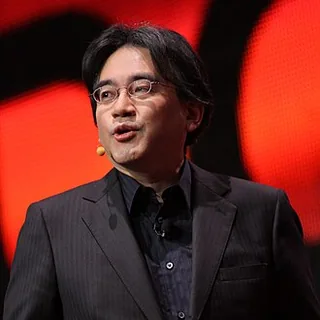 Satoru Iwata — Game developer and Nintendo president. His technical work and attention to players illustrate expertise used to support a wider community.
 Florence Nightingale — Nurse and statistician. Her work connecting evidence with improvements in care illustrates knowledge applied to a concrete responsibility for others.
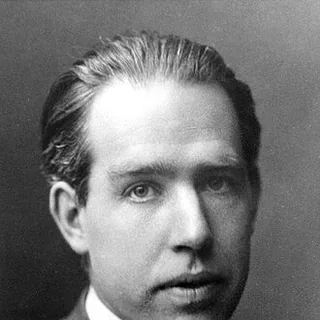 Niels Bohr — Physicist. His scientific inquiry and institute-building illustrate specialist understanding developed through discussion, teaching and collaboration.
 Nicolaus Copernicus — Astronomer. His systematic reconsideration of the heavens offers a historical comparison with careful investigation and the search for a more coherent account.
 Avicenna — Physician and philosopher. His extensive medical and philosophical writing illustrates knowledge organised into a framework intended to explain and guide.
 Baruch Spinoza — Philosopher. His systematic examination of ethics illustrates the attempt to connect rigorous understanding with an account of how a person might live.
 Dan Brown — Novelist. His research-driven puzzle stories offer an artistic comparison with making complex information accessible through an organising explanatory structure.
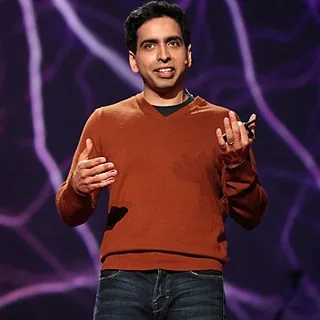 Sal Khan — Educator and Khan Academy founder. His accessible lessons illustrate specialist knowledge translated into practical guidance that learners can approach at their own pace.
 Zack de la Rocha — Musician and activist. His politically engaged work offers a contrasting example of principled concern expressed through forceful public advocacy.
Fictional Characters Associated with 125
 Haku — Spirited Away (2001). His knowledge of the spirit world and protective guidance help Chihiro find her footing in an unfamiliar setting.
 Kyle Broflovski — South Park. His frequent role as a moral challenger illustrates the tension between wanting to help and insisting that something is right.
 Albus Dumbledore — Harry Potter films. His mixture of scholarship, mentoring and consequential choices illustrates both the appeal and the limits of guiding others.
 Charles Xavier — X-Men films, Patrick Stewart's original portrayal. His school links specialised knowledge with a commitment to developing other people's abilities.
 Morpheus — The Matrix trilogy. He combines conviction with instruction, helping Neo understand a system while asking him to choose his own response.
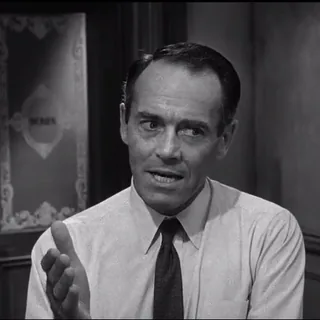 Juror 8 — 12 Angry Men (1957). His patient questioning illustrates responsible judgement grounded in examining the evidence rather than following the room.
 Atticus Finch — To Kill a Mockingbird (1962). His legal advocacy and conversations with his children connect principled action with explanation and moral education.
 Carlisle Cullen — Twilight franchise. His medical knowledge and commitment to restraint illustrate expertise placed in the service of a protective ethical code.
 Sam Simpson — Totally Spies! Her analytical contribution to the team offers a lighter illustration of preparedness, knowledge and practical support.
 Hershel Greene — The Walking Dead television series. His practical care and moral counsel illustrate the wish to remain useful without abandoning personal principles.
Sources and scope
The Enneagram Tritype framework is attributed to Katherine Chernick Fauvre. This independent educational guide is not affiliated with or endorsed by Fauvre. It describes a theoretical framework for reflection; it is not a validated assessment, diagnosis or population study.
.jpg)
.jpg)
.jpg)


.jpg)

.jpg)


.jpg)


