The 127 label identifies the unordered Enneagram family formed by Types 1, 2 and 7, not a specific ordered result. The Teacher family combines these three types: the Reformer from the Gut centre, the Helper from the Heart centre and the Enthusiast from the Head centre. Within the Tritype framework, these three types form a personality archetype associated with improvement, encouragement, positive engagement and the desire to make useful ideas accessible to other people. The Teacher tends to combine a sense that things could be better with an interpersonal desire to help and a Seven-like instinct to open possibilities rather than simply dwell upon what is wrong.
The Teacher can appear in six possible stacking orders: 127, 172, 217, 271, 712 and 721. Each contains the same three underlying types, but the ordering changes which motivation is most prominent. One-led Teachers may approach life primarily through standards, responsibility and improvement. Two-led Teachers are more likely to begin with relationships, usefulness and the desire to encourage. Seven-led Teachers tend to lead with possibility, enthusiasm and exploration, while their One and Two components give that energy greater structure and interpersonal purpose.
This means that the Teacher should not be imagined as a single stereotypical personality. A 127 may look organised, conscientious and instructive, while a 271 may seem warmer, more socially energetic and encouraging. A 712 may initially resemble an enthusiastic explorer or communicator who happens to possess stronger-than-expected principles and a genuine desire to be useful. What unites the family is the deeper interaction between One's desire to improve, Two's desire to help and Seven's desire to expand possibilities and keep life moving forward.
At its healthiest, the Teacher takes something useful, meaningful or complicated and finds a way to make other people want to engage with it. There is often an instinct not merely to know or correct, but to inspire improvement. Rather than treating growth as an unpleasant obligation, the Teacher may naturally look for ways to make learning, development and responsibility feel more hopeful, interesting or achievable.
The Teacher at a Glance
| Feature | Description |
|---|---|
| Archetype | The Teacher |
| Family code | 1 · 2 · 7 |
| Possible orders | 6 |
| Centres | Gut (1) · Heart (2) · Head (7) |
| All six orders | 127 · 172 · 217 · 271 · 712 · 721 |
| Theoretical Dynamics | Compliant overlap (1, 2) · Positive-outlook overlap (2, 7) · Frustration overlap (1, 7) |
| Core Tendency | Making worthwhile improvements encouraging, useful and engaging |
| Central Tension | Principled direction versus allowing room for imperfection and autonomy |
| Characteristic Strength | Turning constructive ideas into accessible guidance and encouragement |
| Potential Blind Spot | Over-involvement, prescriptive advice and optimism that avoids difficulty |
The Teacher's central quality is the combination of standards with encouragement. Type 1 contributes an awareness of what could be improved and an internal sense that effort should be directed towards worthwhile purposes. Type 2 brings attention towards people, relationships and the practical usefulness of what one knows. Type 7 contributes imagination, curiosity, enthusiasm and the ability to see alternatives where other people may see only restrictions. Combined well, these tendencies can produce someone who enjoys helping people become more capable without making improvement feel entirely grim or punitive.
The archetype therefore contains an interesting mixture of seriousness and lightness. One brings discipline and moral weight, while Seven brings spontaneity and a desire to enjoy life. Two sits between them as an interpersonal bridge, encouraging the individual to translate both qualities into something that benefits others. The Teacher may consequently be more playful than many One combinations, more structured than many Seven combinations and more idea-oriented than many Two combinations.
This balance is not always easy to maintain. The Teacher can feel pulled between responsibility and freedom, between doing what ought to be done and pursuing what feels interesting, and between helping other people and following their own enthusiasm. When these forces are integrated, the result can be energetic and constructive. When they are not, the individual may alternate between overcommitment, frustration and attempts to escape the pressure through distraction or new possibilities.
The characteristic strength of the Teacher is therefore not simply knowledge. It is constructive communication: seeing how something could be improved, understanding how to engage people with that improvement and finding enough optimism or creativity to make change feel possible.
How Common Is the Teacher Tritype?
There are currently no large, representative population datasets that allow the prevalence of the 127 Teacher or its six stacking orders to be estimated reliably. As with the other Tritype archetypes, this is an important limitation whenever claims are made about how common or rare a particular combination is.
Tritype descriptions are primarily part of a theoretical personality framework rather than a population-level psychometric classification supported by representative epidemiological data. Online tests, personality communities and practitioner observations may provide impressions about which combinations appear more frequently, but these sources are heavily shaped by who chooses to participate and how people identify themselves.
It would therefore be inappropriate to claim with confidence that the Teacher represents a particular percentage of the population, or that one stacking such as 127 is objectively much more common than 721, without stronger evidence. The safest approach is to examine the psychological structure proposed by the model while treating exact prevalence claims cautiously.
The Teacher may sometimes feel more socially visible than some withdrawn Tritype combinations because both Two and Seven can contribute outward engagement, enthusiasm and communication. Visibility, however, should not be confused with actual frequency. A personality that expresses itself openly may simply be easier to notice.
What Does 127 Mean?
Tritype theory proposes that an individual relies upon one preferred Enneagram strategy from each of the three traditional centres: Gut, Heart and Head. For the Teacher, these are Type 1 from the Gut centre, Type 2 from the Heart centre and Type 7 from the Head centre. Understanding the archetype therefore requires looking at how responsibility, interpersonal usefulness and possibility-seeking interact.
| Component | Centre | Broad concern | Typical contribution |
|---|---|---|---|
| 1 — Reformer | Gut | Standards, integrity and improvement | Conscience, discernment and a focus on making things better |
| 2 — Helper | Heart | Connection, usefulness and interpersonal value | Awareness of other people’s needs and practical support |
| 7 — Enthusiast | Head | Freedom, possibility and engaging experience | Curiosity, optimism and openness to alternatives |
Type 1 contributes standards. It notices what is incomplete, inconsistent or capable of improvement and tends to carry an internal sense that some approaches are better than others. In the Teacher, this can create a genuine desire to raise standards, communicate useful principles or help people develop greater competence. The One component gives the archetype a seriousness of purpose that distinguishes it from enthusiasm pursued purely for entertainment.
Type 2 adds a relational orientation. It asks how knowledge or improvement can actually benefit people. Rather than simply identifying what ought to change, the Teacher may instinctively think about how to communicate the idea in a way that another person can understand and use. This is an important reason the archetype can appear naturally instructive. Teaching is not merely the transmission of information; it is a relationship between the person who understands something and the person who is trying to understand it.
Type 7 brings curiosity, variety and a future-oriented awareness of possibilities. Where One can become preoccupied with what is wrong and Two can become preoccupied with what others need, Seven introduces movement. There may be an impulse to ask what else can be tried, how the process could become more engaging or whether a frustrating limitation can be approached from a completely different direction.
A simple shorthand for the combination is that One asks, “How can this be improved?”, Two asks, “How can this help someone?”, and Seven asks, “How can we make this interesting and move forward?” The Teacher emerges from the interaction of all three questions.
The Teacher Personality
The defining feature of the Teacher is the tendency to combine improvement with encouragement. Many people can identify faults. Many people can offer emotional support. Many people can generate exciting ideas. The distinctive potential of the 1–2–7 combination lies in bringing all three functions together. The Teacher can see what needs changing, remain attentive to the person involved and imagine ways of making the process more appealing.
This often produces a naturally educational style, even when the individual does not work in formal education. Teachers may find themselves explaining, recommending, demonstrating, coaching or introducing people to new ideas simply because doing so feels natural. If they discover a useful method, book, tool or concept, there can be an immediate desire to share it with someone who might benefit. Knowledge can feel more satisfying when it becomes transferable.
The One component means that this sharing often contains an improvement motive. The Teacher does not necessarily want people merely to feel entertained or comforted. There is frequently an underlying belief that people can become wiser, more capable or more responsible. At healthy levels, this creates encouragement rather than judgement. The person sees unrealised potential and wants to help draw it out.
Encouragement works best when it leaves room for another person’s pace.
Two makes that process personal. The Teacher may be good at adapting explanations to the individual rather than simply repeating information mechanically. There can be sensitivity to whether another person is engaged, discouraged, embarrassed or confused. This can make the archetype effective at presenting difficult material in a more approachable form because communication is adjusted in response to the audience.
Seven adds energy. The Teacher may instinctively look for examples, analogies, stories, experiments, humour or alternative explanations rather than remaining with a single rigid method. If one route does not work, another can be attempted. This flexibility can make learning feel less threatening and can help the individual maintain momentum when other people become bored or discouraged.
The combination can therefore create an unusual relationship with rules. One values standards, but Seven dislikes unnecessary restriction. The Teacher may strongly defend rules that appear meaningful while becoming surprisingly inventive about bypassing rules that seem pointless. What matters is often not convention for its own sake but whether the structure actually serves a constructive purpose.
This makes the Teacher potentially reformist rather than merely conventional. The One element says that systems should have standards, while Seven is willing to imagine that those standards could be achieved differently. Two then asks whether the revised system works better for the people involved. At healthy levels, this can make the archetype capable of improving institutions without becoming either recklessly disruptive or rigidly attached to tradition.
The One–Two Connection: Improvement Through Help
Types 1 and 2 are both placed within the compliant or dutiful stance in traditional Enneagram theory. The term does not necessarily imply passive obedience. Instead, it describes an orientation towards expectations, obligations and the sense that one should respond to what life or other people require.
For Type 1, this orientation is principally ethical or standards-based. There is concern with doing things properly and behaving according to an internal sense of responsibility. Type 2 directs the same general orientation towards relationships and usefulness. It asks what another person needs and how one can make a constructive contribution.
Their combination gives the Teacher a substantial sense of interpersonal responsibility. The person may feel that if they possess useful knowledge, they should share it, and if they see somebody struggling with a problem they understand, they should offer assistance. This can produce genuine generosity and a strong mentoring instinct.
The difficulty is that helping and correcting can become intertwined. Because the Teacher may genuinely see how something could be improved, advice can feel self-evidently benevolent from their perspective. The recipient may not always experience it that way. One of the archetype's important developmental lessons is that useful advice still requires permission, timing and sensitivity.
The Two–Seven Connection: Positive Engagement
Types 2 and 7 are commonly placed within the Enneagram's Positive Outlook harmonic group. Both can therefore contribute an inclination to emphasise what is encouraging, enjoyable or potentially hopeful rather than remaining indefinitely focused on difficulty.
In the Teacher, this overlap can create considerable social warmth and optimism. The individual may instinctively try to lift the emotional atmosphere, encourage somebody who has become discouraged or find an appealing way to approach an unpleasant task. This can be a major strength in educational, mentoring and leadership settings because people generally learn better when they do not feel humiliated or hopeless.
The same tendency can nevertheless become a blind spot. Some problems genuinely require sustained engagement with discomfort, disappointment or grief. If the Teacher moves too quickly towards solutions or encouragement, another person may feel that the difficult reality has not been fully acknowledged.
The healthiest Teacher therefore learns the difference between hope and avoidance. Optimism is most useful when it helps people face reality, not when it is used to escape reality.
The One–Seven Connection: Discipline and Possibility
Types 1 and 7 are associated within some Enneagram object-relations interpretations with the frustration pattern, although they express it very differently. Both can contain a sense that reality is not quite what it ought to be. Type 1 notices the gap between reality and a better standard. Type 7 notices the gap between present reality and the more satisfying possibilities that could exist elsewhere.
This gives the Teacher a strong improvement orientation. The person may have difficulty simply accepting a mediocre system when they can imagine a better one. One contributes the conviction that improvement matters, while Seven supplies alternative possibilities.
Their tension is equally important. One says that responsibility requires sustained effort. Seven says that life should contain freedom, novelty and enjoyment. A Teacher may therefore alternate between periods of disciplined productivity and periods in which accumulated pressure creates a strong desire to escape into something more interesting.
Integration involves allowing both needs to exist. Structure does not have to eliminate play, and enjoyment does not have to undermine responsibility. At its best, the Teacher can make these forces cooperate by finding ways to bring energy, experimentation and humour into serious work.
How the Dominant Type Changes the Presentation
Although every Teacher contains Types 1, 2 and 7, the dominant type strongly affects how the combination first appears. One-led Teachers — 127 and 172 — tend to organise themselves around standards, responsibility and improvement. They are often the clearest examples of the principled instructor: someone who wants things done well but prefers to motivate people rather than simply criticise them.
Two-led Teachers — 217 and 271 — place greater emphasis on relationships, encouragement and usefulness. Their teaching impulse may emerge through coaching, mentoring, support or personal involvement. Improvement matters because people matter, and knowledge becomes valuable partly because it can help someone else flourish.
Seven-led Teachers — 712 and 721 — usually appear more energetic, exploratory and possibility-oriented. They may teach through enthusiasm, storytelling, demonstration or discovery rather than formal authority. The One and Two components give this Seven energy a stronger ethical and interpersonal direction than might otherwise be expected.
The same basic lesson can therefore be delivered in six noticeably different ways. The 127 may organise it carefully, the 217 may personalise it, and the 712 may turn it into an adventure. What remains consistent is the desire to make something worthwhile understandable and engaging.
Strengths and Potential Blind Spots
Likely Strengths
One of the Teacher's clearest strengths is the ability to make improvement feel possible. Type 1 sees what could be better, but Seven prevents the personality from becoming entirely defined by criticism. Instead of stopping at the diagnosis of what is wrong, the Teacher is likely to move towards alternatives, experiments and constructive possibilities. Two then helps translate those possibilities into something other people can actually use.
- This can create excellent communication skills. Teachers may instinctively understand that information alone does not guarantee learning. People need examples, encouragement, context and a reason to care. The archetype may therefore be particularly good at translating complex or dry material into language that feels relevant.
- There can also be considerable motivational ability. The Teacher may see potential in someone who currently lacks confidence and find a way to make development feel achievable. Their optimism can be contagious when it is grounded in genuine understanding rather than empty reassurance.
- Another potential strength is flexibility within structure. One gives the person enough discipline to care about standards, while Seven resists becoming trapped by methods that no longer work. The Teacher can therefore maintain clear goals while remaining relatively open about how those goals are reached. This is particularly valuable in situations involving different kinds of learners or collaborators. Rather than assuming that there is only one correct way to reach an outcome, the Teacher may experiment with presentation, timing and technique while still maintaining a clear sense of what the outcome should accomplish.
- The Two component also contributes generosity. The person may derive substantial satisfaction from watching somebody else gain confidence or competence. Healthy Teachers do not need to keep their knowledge exclusive in order to feel important. Sharing it can itself be rewarding.
Potential Blind Spots
The Teacher's desire to help people improve can become unwanted instruction. Because the individual often sees advice as constructive, they may underestimate how easily encouragement can begin to feel patronising. The person on the receiving end may not have asked to be taught, corrected or developed.
This problem can be particularly subtle because the Teacher's intentions may genuinely be benevolent. Unlike someone consciously seeking dominance, the Teacher can become intrusive while sincerely believing they are being helpful. Healthy development therefore involves asking whether assistance is wanted rather than assuming that identifying a possible improvement creates an obligation to provide it.
Another risk is moralised optimism. The Teacher may believe that people should remain hopeful, proactive or solution-oriented because these attitudes seem obviously constructive. Yet some circumstances require disappointment to be acknowledged rather than rapidly transformed into a lesson. Pressure to “look on the bright side” can become invalidating when somebody first needs their difficulty to be understood.
There can also be overcommitment. One feels responsible, Two finds it difficult to ignore people who need help and Seven becomes enthusiastic about interesting opportunities. This is a combination unusually capable of saying yes for three different reasons. The result can be a calendar filled with worthwhile commitments that eventually becomes impossible to sustain.
When exhaustion appears, the Teacher may not immediately recognise it. Seven can become excited about the next idea, Two may continue meeting other people's needs and One can insist that existing obligations still have to be completed properly. The individual can therefore remain outwardly energetic while internally becoming increasingly strained.
Impatience is another potential difficulty. The Teacher may see relatively clearly how improvement could occur and become frustrated when other people lack the same enthusiasm. They may underestimate the emotional, practical or psychological reasons someone is moving slowly. Teaching then becomes pushing.
The growth challenge is to recognise that people cannot be improved on somebody else's schedule.
Relationships and Communication
Teachers are likely to place considerable value on relationships that contain warmth, mutual encouragement and some degree of shared growth. Type 2 brings an obvious interpersonal orientation, while Seven contributes sociability, humour and curiosity. One adds expectations concerning honesty, reliability and how people ought to treat one another.
The archetype may therefore enjoy relationships in which people exchange ideas, recommend experiences, learn together and actively support one another's development. Purely passive companionship may feel less satisfying than a relationship containing some sense of movement. This does not necessarily mean constant achievement; discovering a new place, discussing an interesting subject or introducing someone to a new activity can satisfy the same impulse.
The Teacher may show affection by sharing things. A useful article, an interesting book, a better method, a restaurant recommendation, a course, an idea or a new experience can all become vehicles for connection. The underlying message may be, “I found something valuable and thought you might enjoy or benefit from it too.”
Hope is most useful when it helps people face reality.
This can be charming when offered freely, but difficult when recommendations become expectations. A Teacher may become surprisingly disappointed when another person shows no interest in something they enthusiastically recommended. The emotional reaction can contain several layers: Seven's excitement has not been shared, Two's relational gesture has not been received and One may quietly believe the advice was objectively sensible.
The archetype therefore benefits from allowing other people to remain different. Support does not require identical interests, and offering an opportunity does not create an obligation for somebody else to accept it.
Conflict can also reveal the tension between the three components. One may become critical, Two may worry about relational damage and Seven may want to move away from prolonged negativity. This can make the Teacher relatively quick to seek reconciliation or a constructive solution. That instinct is valuable provided it does not result in genuine grievances being hurried towards resolution before they have been fully understood.
Work and Career Preferences
The Teacher is likely to thrive in work that combines some mixture of purpose, human engagement, creativity and visible improvement. Formal teaching is an obvious possibility, but the archetype is much broader than the occupational label suggests. Training, coaching, mentoring, consulting, communications, public engagement, management, healthcare education, community development, advocacy, design, entrepreneurship and creative instructional work can all provide outlets for the same underlying tendencies.
- One-led Teachers may especially appreciate roles where standards matter and where they can improve the quality of a process or institution. They may enjoy curriculum design, professional training, quality improvement, ethical leadership or work in which good practice needs to be translated into behaviour.
- Two-led Teachers may gravitate more naturally towards direct mentoring and developmental relationships. They may thrive when they can see the effect of their guidance on real people rather than working only with abstract systems.
- Seven-led Teachers may prefer environments allowing more experimentation, variety and communication. They can be especially effective when learning needs to feel exciting, when new ideas must be introduced to a reluctant audience or when a traditional subject needs a more inventive presentation.
Across all six variants, excessive bureaucracy can become frustrating when procedure appears disconnected from purpose. One may dislike the inefficiency, Two may dislike the human cost and Seven may find the rigidity stifling. The Teacher can accept structure surprisingly well when the structure clearly serves a worthwhile goal, but may become inventive or rebellious when rules seem to exist solely because they have always existed.
The archetype may also be suited to entrepreneurship or project-building when the work contains a strong educational or social component. A Teacher can enjoy taking an idea, improving it, explaining it and watching other people make use of it. The combination of standards, interpersonal awareness and possibility-seeking can be particularly useful when creating something intended to help people learn or change.
Leadership
Teacher-style leadership tends to work best when it is developmental rather than authoritarian. The individual may naturally think that good leadership should leave people more capable than they were before. Rather than simply issuing instructions, a healthy Teacher explains the reasoning, provides guidance and encourages people to develop enough competence to act independently.
One contributes standards and accountability, which prevents leadership from becoming purely inspirational. Two contributes awareness of morale and individual needs, while Seven contributes energy, vision and the ability to generate enthusiasm around future possibilities.
This combination can make the Teacher particularly effective during periods of constructive change. People are often more willing to adopt new methods when they understand why those methods matter and believe they can succeed. The Teacher may intuitively recognise both requirements.
At less healthy levels, however, developmental leadership can become paternalistic. The individual may assume they know what everybody else needs to learn and become frustrated with employees, students or colleagues who do not welcome continual improvement. The healthiest Teacher leader remembers that adults usually perform better when offered both guidance and autonomy.
Stress and Growth
Under stress, the Teacher's normally constructive qualities can become exaggerated. The desire to improve becomes criticism, helpfulness becomes overinvolvement and enthusiasm becomes restless avoidance. The person may attempt to manage pressure by becoming even busier, taking on new activities or continually generating solutions rather than allowing themselves to experience uncertainty or disappointment.
This can create a particularly exhausting cycle. One notices what remains unfinished and demands greater effort. Two notices who still needs something and makes withdrawal feel selfish. Seven notices alternative possibilities and keeps generating new things to pursue. Instead of reducing commitments when overloaded, the Teacher may paradoxically add stimulation in order to escape the unpleasant feeling of overload.
Another stress response involves becoming increasingly prescriptive. If the Teacher feels responsible for an outcome, they may push harder when other people do not respond. Encouragement gradually turns into instruction, instruction into correction and correction into frustration. Because the original intention was constructive, the person may not immediately recognise how controlling they have become.
Growth requires a different relationship with imperfection. The Teacher benefits from accepting that not every useful possibility must be pursued, not every person requires guidance and not every imperfect situation needs immediate intervention. Some things can remain unfinished without representing failure.
The archetype also benefits from developing the ability to remain present with unpleasant emotional states rather than immediately reframing them. Optimism becomes more credible when it has room for grief, disappointment, boredom and uncertainty. A person who can tolerate difficulty without rushing to transform it often becomes a much better teacher because they no longer need their student, colleague or friend to improve simply in order to relieve their own discomfort.
Not every worthwhile possibility needs to become a personal responsibility.
At its healthiest, the Teacher remains hopeful without becoming evasive, principled without becoming preachy and helpful without making other people's development into a personal project.
The Six Teacher Stackings
The six Teacher codes contain the same three types, but the ordering describes differences in emphasis. The first number represents the dominant or core type, while the second indicates the more prominent of the remaining strategies and the third occupies the tertiary position. These distinctions are best understood as shifts in priority rather than completely separate personalities.
127 — One → Two → Seven
The 127 begins with Type 1, making responsibility, standards and improvement the core orientation. This person is likely to take ideas seriously and may naturally think about how people, systems or processes could function better. Unlike some more severe One combinations, however, the secondary Two component brings substantial interpersonal warmth. Improvement is likely to be directed towards helping people rather than simply enforcing abstract standards.
Seven adds flexibility and optimism in the tertiary position. The 127 may therefore possess a noticeable playful side beneath an otherwise conscientious exterior. They can enjoy variety, humour, travel, discovery or experimentation while still feeling that life should contain useful goals. This can create a particularly approachable form of Type 1: someone who cares about doing things properly but does not necessarily believe that seriousness requires constant solemnity.
The 127 may be especially drawn towards explaining how something can be improved in a way that makes the listener want to participate. Rather than simply saying, “This is wrong,” the person may instinctively move towards, “Here is how we could make it better.” Two considers how the message will affect people, while Seven looks for an engaging way to deliver it.
The difficulty is the possibility of becoming overly instructional. Because the 127 genuinely wants to help and genuinely sees the value of improvement, the person may forget that other people have the right to decline advice. Their healthiest development involves learning to offer standards and guidance without turning every relationship into a classroom.
172 — One → Seven → Two
The 172 is also One-led, so principles, standards and improvement remain central, but Seven occupies the secondary position. This gives the personality a more immediately exploratory and energetic quality than 127. The person may be highly motivated by new possibilities, fresh approaches and the excitement of turning an ideal into something real.
Where the 127 moves relatively quickly from standards towards helping people, the 172 moves from standards towards alternatives. When something is not working, the person may rapidly begin experimenting with other methods. This can make them unusually inventive for a One-led personality and potentially more comfortable with change.
Two remains important and gives the resulting ideas an interpersonal dimension. The 172 does not merely innovate for novelty's sake; there is often an underlying wish for the innovation to improve people's lives or make a worthwhile activity more accessible.
The main tension is between One's desire for disciplined completion and Seven's attraction to new possibilities. The 172 may begin many worthwhile improvements and then feel frustrated by the repetitive work required to finish them. Healthy development involves recognising that innovation becomes most valuable when enough structure exists to carry good ideas through to completion.
217 — Two → One → Seven
The 217 begins with Type 2, giving relationships, helpfulness and contribution the greatest emphasis. This version of the Teacher may be particularly comfortable in direct mentoring or supportive roles because the first instinct is to understand what another person needs and provide something useful.
One follows Two, making that support conscientious and developmental. The 217 may care deeply about helping other people become healthier, wiser, more organised or more responsible. They may not be satisfied with offering comfort alone when they believe someone is capable of meaningful improvement.
Seven contributes optimism and creativity. The person may be good at finding ways of encouraging someone who has become discouraged and may naturally make difficult tasks feel lighter or more interesting. This gives the 217 a potentially appealing combination of warmth and purposeful guidance.
The danger is becoming too invested in other people's development. If the person they are helping ignores advice or repeatedly makes choices the 217 considers unwise, frustration can become surprisingly intense. The individual may feel both personally unappreciated and morally convinced that the advice was sound.
Healthy 217s learn that caring about someone's potential does not give them ownership of that potential.
271 — Two → Seven → One
The 271 is also Two-led, but Seven comes immediately after the dominant type. This produces a more spontaneous, energetic and socially expressive form of the Teacher. Helping people may be closely connected with creating enjoyable experiences, introducing them to possibilities and helping them discover things they had not previously considered.
The 271 may be especially good at encouragement because the Two–Seven combination naturally focuses upon connection and positive possibilities. They may instinctively know how to make people feel included and may possess considerable enthusiasm when introducing others to subjects or experiences they love.
One provides an underlying sense of standards and purpose. Beneath the relatively light presentation, the 271 may hold surprisingly firm beliefs about responsibility, fairness or how people should treat one another. The person can therefore be more principled than their playful or sociable exterior initially suggests.
The main blind spot is the possibility of using positivity to avoid difficult interpersonal realities. The 271 may want everybody to feel encouraged and can therefore move too quickly towards solutions when a person actually needs space to be unhappy. Growth involves recognising that support sometimes means staying present with discomfort rather than trying to brighten it immediately.
712 — Seven → One → Two
The 712 begins with Type 7, making curiosity, possibility and forward movement the dominant orientation. This version of the Teacher may initially appear more like an enthusiastic explorer than a traditional instructor. They are likely to enjoy discovering ideas, experiences and opportunities and may possess a strong desire to share those discoveries with other people.
One follows Seven, giving this exploration considerably more structure and principle than might be expected from a purely novelty-driven pattern. The 712 may want freedom, but not meaninglessness. Ideas become particularly exciting when they can improve something, solve a problem or contribute to a worthwhile goal.
Two then directs the resulting energy towards people. The individual may enjoy teaching through enthusiasm, demonstration and shared discovery rather than through formal authority. Instead of saying, “You must learn this,” the 712 may communicate, “Look how interesting this is — come and see.”
The potential difficulty is that Seven generates possibilities faster than One can perfect them. The person may repeatedly discover things that deserve further development and then become frustrated by the amount of disciplined work required. One can respond by becoming harshly self-critical, while Seven looks for another exciting project.
The healthier 712 learns to distinguish between interesting possibilities and meaningful priorities.
721 — Seven → Two → One
The 721 is also Seven-led, but Two occupies the secondary position. This makes the social and interpersonal qualities of the Teacher especially visible. The person may be enthusiastic, friendly and naturally inclined to bring other people into whatever they are discovering.
Learning can become a shared experience. The 721 may enjoy introducing people to ideas, places, skills or opportunities and can derive substantial satisfaction from watching someone become excited about something they recommended.
Type 1 provides an underlying seriousness of purpose. Although the person may appear light-hearted, they can possess firm values and may become surprisingly critical when something violates those standards. This creates a personality that can move easily between playfulness and earnest conviction.
Compared with 712, the 721 may place somewhat more immediate emphasis on engagement and relationships, while the 712 may bring standards and improvement closer to the front. Both remain exploratory Seven-led Teachers.
The 721's main developmental challenge is avoiding overextension. Seven finds opportunities, Two finds people to help and One creates obligations. The resulting schedule can become enormous. Healthy 721s learn that generosity and enthusiasm become more sustainable when they are selective.
Wings and Other Secondary Influences
The Teacher family can be further modified by wings and other elements of Enneagram theory. Because the archetype has three possible dominant types, there is no single wing distinction that applies to every Teacher.
A One-led Teacher may show stronger Nine- or Two-wing influence. A stronger Nine wing can soften the corrective element and produce a calmer, more patient presentation, while a stronger Two wing can intensify the interpersonal and instructive qualities already present in the archetype.
A Two-led Teacher may show stronger One- or Three-wing influence. Stronger One influence can create a more conscientious and principled helper, while stronger Three influence may contribute greater social adaptability, energy and concern with producing visible results.
A Seven-led Teacher may show stronger Six- or Eight-wing qualities. Greater Six influence can add caution, loyalty and greater attention to practical consequences, while stronger Eight influence may produce a more forceful, entrepreneurial or independently minded presentation.
These modifiers can change the tone of the personality substantially, but the central interaction between standards, helpfulness and possibility remains the defining structure of the 1–2–7 Teacher.
Related Tritype Archetypes
Comparing the Teacher with neighbouring archetypes helps clarify what each component contributes. The 126 Supporter retains Types 1 and 2 but replaces Seven with Type 6. Responsibility and helpfulness remain, but the Head strategy becomes more concerned with security, reliability and preparation. The Supporter may therefore appear more cautious and duty-oriented, while the Teacher is generally more possibility-oriented and inclined towards experimentation.
The 137 Systems Builder retains Types 1 and 7 but replaces Two with Type 3. Improvement and innovation remain important, but the Heart strategy becomes more strongly associated with achievement and effectiveness. Compared with the Teacher, the Systems Builder may therefore place greater emphasis on producing successful systems and measurable results and somewhat less emphasis on personal support.
The 278 Free Spirit retains Types 2 and 7 but replaces One with Type 8. Warmth, sociability and enthusiasm remain, but the Gut strategy shifts away from One's standards and self-correction towards Eight's autonomy and assertiveness. The result is likely to feel considerably freer, more forceful and less concerned with doing things according to an internal ideal.
These comparisons demonstrate the distinctive role of Type 1 within the Teacher. Two and Seven already provide interpersonal optimism and enthusiasm. One introduces purpose, standards and the conviction that positive energy should ultimately be directed towards something worthwhile.
The Teacher and the Big Five
The Enneagram and Big Five describe personality using fundamentally different models, so there is no direct psychometric conversion between the 127 Teacher and a particular Big Five profile. Nevertheless, cautious descriptive comparisons can help explain how the archetype might appear in more familiar trait language.
The Seven component's curiosity and interest in novelty may resemble aspects of higher Openness to Experience, particularly intellectual curiosity, variety-seeking and receptiveness to new ideas. Some Teachers may also appear relatively extraverted because both Two and Seven can encourage interpersonal engagement, although a quieter individual can still belong to the archetype.
The Two component may overlap descriptively with aspects of Agreeableness, especially compassion and helpfulness. However, Type 1 can introduce a critical or uncompromising side, meaning that a Teacher need not be globally agreeable. Someone can care deeply about people while remaining very willing to tell them that something should be done differently.
Conscientiousness may often be relatively visible in One-led forms because of their emphasis on standards and responsibility. Seven-led forms could vary more substantially depending upon how effectively their enthusiasm is translated into sustained follow-through.
Neuroticism is difficult to infer. One's self-criticism can create tension in some individuals, but Seven's optimism can pull in the opposite direction. These relationships are therefore best treated as possible descriptive overlaps rather than predictions of Big Five scores.
The Teacher and 16-Type Systems
There is likewise no direct conversion between the Teacher Tritype and Jungian or MBTI-style personality types. Several very different 16-type profiles could plausibly express the 1–2–7 pattern.
More outwardly interpersonal Teachers may sometimes recognise themselves in ENFJ or ESFJ descriptions because of the combination of people-orientation, organisation and encouragement. More exploratory Seven-led Teachers might identify with ENFP or ENTP descriptions, particularly when curiosity and idea generation are prominent. More structured or reserved One-led Teachers could resemble a wider range of judging-oriented profiles.
These comparisons should remain loose because the systems are intended to describe different aspects of personality. Enneagram theory focuses mainly upon motivations, recurring concerns and defensive strategies, whereas MBTI-style models describe personality through a different theoretical architecture.
A person identifying as 127 is therefore not automatically an ENFJ or ESFJ, just as an ENFJ should not automatically be expected to belong to the Teacher family.
What the Teacher Most Needs to Learn
The central developmental lesson of the Teacher is that not everything valuable has to become an improvement project. The archetype possesses a genuine gift for recognising potential, but potential exists in people who retain the right to choose their own direction.
A Teacher may therefore need to learn when advice has been invited and when the more respectful response is simply to listen. They may also need to tolerate the frustration of watching another person learn through mistakes rather than following the more efficient path the Teacher can already see.
The archetype benefits equally from learning that enjoyment does not require justification. Because One wants purpose and Two wants usefulness, even recreation can sometimes become organised around what is productive or beneficial. Seven naturally knows that exploration and pleasure can have value in themselves. A healthier integration allows that part of the personality to exist without immediately turning every experience into a lesson.
At the same time, Seven must not become an escape route whenever responsibility becomes uncomfortable. The mature Teacher learns to remain with the repetitive, difficult or emotionally unpleasant parts of worthwhile commitments instead of continually generating new possibilities.
The strongest Teacher is therefore neither the person who knows everything nor the person who tries to improve everybody. It is someone who can communicate standards without superiority, offer help without intrusion and inspire possibility without denying difficulty.
When these qualities come together, the archetype can have a particularly constructive effect on other people. It does not merely tell them what they should become. It helps them see why growth might be worth pursuing and gives them enough encouragement to believe that they can actually achieve it.
The Teacher in One Sentence
The 127 Teacher Tritype combines principled improvement, interpersonal helpfulness and optimistic possibility into an encouraging personality that wants to make worthwhile ideas understandable, useful and inspiring to other people.
Famous People and Fictional Characters Associated with 127
These examples offer illustrative comparisons with the 127 family, not confirmed personality assessments. The family includes all six orders of its three types; an example need not use the ascending 127 order. A public career or fictional story cannot establish someone's private motivations. Fictional examples refer to the works or versions named below, and are illustrations rather than role models.
Famous People Associated with 127
 Katy Perry — Singer and performer. Her exuberant presentation and encouragement-led public work offer an illustration of optimism shaped into a shared, audience-facing experience.
 Margot Robbie — Actor and producer. Her collaborative production work offers a comparison with creative possibility developed through practical organisation and support for other people's contributions.
 John Paul II — Pope and public religious teacher. His extensive travel and communication offer a comparison with conviction expressed through energetic engagement with others.
 Michelle Yeoh — Actor. Her international career and public advocacy illustrate purposeful encouragement alongside discipline and a willingness to explore new settings.
 Jon Stewart — Comedian and presenter. His public advocacy connects pointed criticism with a wish to turn attention into practical assistance for others.
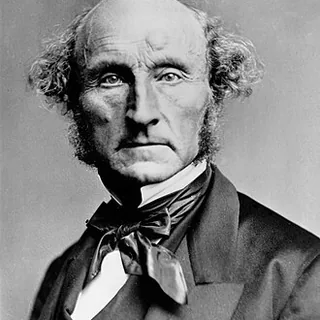 John Stuart Mill — Philosopher. His writing on freedom and social improvement offers a historical comparison with principles that make room for individual development.
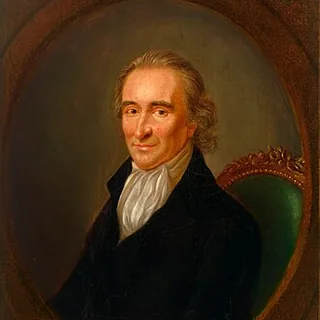 Thomas Paine — Writer and political thinker. His accessible arguments illustrate a wish to communicate a different social possibility and move an audience towards change.
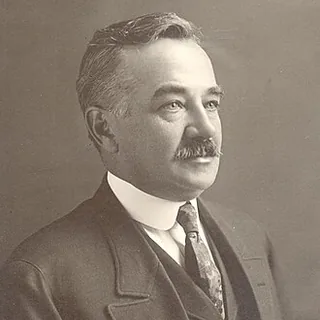 Milton Hershey — Business founder and philanthropist. His investment in education offers an illustration of constructive ambition directed towards creating opportunities for other people.
 Brian Greene — Physicist and author. His public explanations illustrate complex ideas made engaging through imaginative examples and a clear educational purpose.
 Jamie Lee Curtis — Actor and author. Her public advocacy and creative work offer a comparison with direct communication, encouragement and taking an active part in other people's concerns.
Fictional Characters Associated with 127
 Mary Poppins — Mary Poppins (1964). Her inventive lessons combine firm standards, care for the children and a sense that learning can also be an adventure.
 Lily Potter — Harry Potter films. Her protective commitment offers an illustration of warmth joined to conviction, though her limited screen time leaves considerable room for interpretation.
 Kyojuro Rengoku — Demon Slayer. His enthusiastic encouragement and commitment to protecting others illustrate the Teacher pattern through an energetic mentoring presence.
 Satsuki Kusakabe — My Neighbor Totoro (1988). She takes responsibility for Mei while remaining open to play and discovery, combining care with youthful possibility.
 SpongeBob SquarePants — SpongeBob SquarePants. His enthusiasm for doing a good job illustrates helpfulness and optimism, with stories repeatedly testing the boundaries of trying to please everyone.
 Joy — Inside Out films. Her encouraging leadership illustrates optimism directed towards helping others, alongside the need to make room for feelings she cannot simply brighten away.
 Princess Peach — The Super Mario Bros. Movie (2023). Her energetic guidance and protective leadership illustrate encouragement joined to preparation and a determination to help her kingdom.
 Joseph Cooper — Interstellar (2014). His curiosity and commitment to his children illustrate the tension between exploring a new possibility and honouring responsibilities that remain deeply personal.
 The Fairy Godmother — Shrek 2 (2004). Her apparently helpful guidance offers an antagonistic contrast, showing how encouragement becomes manipulation when another person's wishes no longer matter.
 Hannibal Lecter — Hannibal (2013). His cultivated guidance is a deliberately disturbing counterexample: interpersonal insight and apparent encouragement can be used manipulatively rather than supportively.
Sources and scope
The Enneagram Tritype framework is attributed to Katherine Chernick Fauvre. This independent educational guide is not affiliated with or endorsed by Fauvre. It describes a theoretical framework for reflection; it is not a validated assessment, diagnosis or population study.
.jpg)
.jpg)
.jpg)


.jpg)
.jpg)


