The 126 label identifies the unordered Enneagram family formed by Types 1, 2 and 6, not a specific ordered result. The Supporter family combines these three types: the Reformer from the Gut centre, the Helper from the Heart centre and the Loyalist from the Head centre. Within the Tritype framework, this creates a personality archetype strongly associated with responsibility, helpfulness, loyalty, conscientiousness and the desire to be someone other people can genuinely depend upon. The Supporter tends to take obligations seriously and may feel a particularly strong pull towards doing what is right, looking after the people around them and anticipating problems before those problems become difficult to manage.
The Supporter can occur in six possible stacking orders: 126, 162, 216, 261, 612 and 621. All six contain the same underlying types, but their order changes the emphasis of the personality. A One-led Supporter is likely to approach life primarily through standards and responsibility, a Two-led Supporter through relationships and usefulness, and a Six-led Supporter through security, trust and preparedness. This means that two people belonging to the same Supporter family can look noticeably different on the surface. A 126 might come across as principled, organised and quietly helpful, while a 261 may appear warmer and more relational, and a 612 may seem more cautious, systematic and concerned with preventing mistakes.
What connects these different presentations is the combination of One's concern with doing the right thing, Two's concern with being helpful and Six's concern with remaining loyal and prepared. Each type supplies a different reason for paying attention to responsibilities. One sees duties through the lens of standards and conscience. Two sees them through the lens of human needs and relationships. Six sees them through the lens of security, trust and potential consequences. At its healthiest, this produces someone who does more than simply express concern. The Supporter notices what needs doing, understands why it matters and is prepared to take practical responsibility for it.
The Supporter at a Glance
| Feature | Description |
|---|---|
| Archetype | The Supporter |
| Family code | 1 · 2 · 6 |
| Possible orders | 6 |
| Centres | Gut (1) · Heart (2) · Head (6) |
| All six orders | 126 · 162 · 216 · 261 · 612 · 621 |
| Theoretical Dynamics | A shared compliant or superego orientation across Types 1, 2 and 6 |
| Core Tendency | Supporting people through conscientious, prepared and dependable action |
| Central Tension | Freely chosen care versus obligation, worry and self-neglect |
| Characteristic Strength | Combining practical organisation with awareness of people and risks |
| Potential Blind Spot | Over-responsibility, anxious checking and difficulty saying no |
The underlying character of the Supporter can be summarised as responsible support. Type 1 contributes standards, self-discipline and an impulse towards improvement. Type 2 adds interpersonal awareness, generosity and the desire to make a useful contribution to other people's lives. Type 6 adds vigilance, loyalty and a concern with whether people, systems and relationships are sufficiently secure. These qualities can reinforce one another powerfully. The Supporter may be the person who remembers the detail everybody else forgot, checks that an important task has actually been completed, notices when someone is struggling and stays involved after other people have lost interest.
The same structure can also create considerable internal pressure. One can generate a persistent sense that things should be done properly. Two can create a feeling that a good person should help when help is needed. Six can add the worry that failing to anticipate a problem may allow something preventable to go wrong. The Supporter may therefore find it difficult to decide when they have done enough. The archetype's characteristic strength is conscientious dependability, but its central blind spot is over-responsibility: taking ownership of problems, emotions or obligations that do not entirely belong to them.
An especially important feature of the 1–2–6 combination is that all three types are traditionally placed within the Enneagram's compliant or dutiful Hornevian stance. In Enneagram theory, this does not simply mean being submissive or obedient. Instead, these types are said to orient themselves towards perceived obligations and expectations. They are concerned, in different ways, with what they ought to do. This makes the Supporter one of the clearest examples of a personality organised around duty, service and accountability.
How Common Is the Supporter Tritype?
There are currently no large, representative population datasets that allow the prevalence of the 126 Supporter or its six stacking orders to be estimated reliably. This is an important qualification because discussions of Enneagram and Tritype combinations often include claims that particular combinations are common, rare or exceptionally unusual without having strong population evidence behind those claims.
Unlike trait frameworks such as the Big Five, which can be examined using large psychometric datasets, Tritype frequency estimates usually come from self-selected test takers, online personality communities, practitioner observations or relatively small samples. Those sources may reveal patterns within particular communities, but they cannot establish how often a Tritype occurs in the wider population. It would therefore be misleading to claim that a particular percentage of people are Supporters, or that one stacking such as 612 is objectively more common than 216, without stronger data.
The most responsible approach is to treat the Supporter primarily as a theoretical personality pattern and examine how its three component types are proposed to interact. Descriptions of relative rarity should be understood as community impressions unless they are supported by representative evidence.
What Does 126 Mean?
Tritype theory proposes that an individual uses one preferred Enneagram strategy from each of three traditional centres: the Gut, Heart and Head centres. For the Supporter, these are Type 1 from the Gut centre, Type 2 from the Heart centre and Type 6 from the Head centre. The interest lies not simply in possessing traits associated with all three types, but in the way their motivations are believed to interact.
| Component | Centre | Broad concern | Typical contribution |
|---|---|---|---|
| 1 — Reformer | Gut | Standards, integrity and improvement | Conscience, discernment and a focus on making things better |
| 2 — Helper | Heart | Connection, usefulness and interpersonal value | Awareness of other people’s needs and practical support |
| 6 — Loyalist | Head | Security, trust and preparedness | Vigilance, loyalty and attention to reliability |
Type 1 introduces the desire to act according to standards and principles. It tends to notice what could be improved, corrected or handled more responsibly. A Supporter with a strong One influence may find it difficult to ignore a problem simply because dealing with it is inconvenient. There can be a sense that if something clearly ought to be done, somebody should take responsibility for doing it properly.
Type 2 adds a more explicitly interpersonal orientation. It directs attention towards what other people need, how relationships are functioning and whether one is making a meaningful contribution. This can soften the more impersonal or corrective side of Type 1 by giving standards a human purpose. The question becomes not merely whether something is technically right, but whether people are being supported and treated properly.
Type 6 contributes vigilance, preparation and loyalty. It encourages attention to uncertainty, possible consequences and the reliability of people or systems. Six asks whether enough has been done to prevent problems and whether those involved can genuinely be trusted to follow through. In the Supporter, this can make care highly practical. The person may demonstrate concern not by offering reassurance alone, but by checking details, preparing for contingencies and making sure that nobody has forgotten something important.
One simple way of understanding the combination is that One asks, “What is the right thing to do?”, Two asks, “How can I help?”, and Six asks, “What might go wrong if nobody takes responsibility?” Different stacking orders give different priority to those questions, but all three remain present within the broader Supporter pattern.
The Supporter Personality
The defining quality of the Supporter is the combination of conscience, interpersonal concern and practical vigilance. These individuals are likely to take the consequences of their actions seriously. They may be uncomfortable with the idea of casually walking away from a responsibility, particularly when doing so would leave somebody else struggling or expose others to a preventable problem. Whereas some personalities may instinctively ask what they personally want from a situation, the Supporter can be unusually quick to ask what needs to be done.
This can make the archetype exceptionally dependable. In a family, workplace or friendship group, the Supporter may become the person who quietly holds things together. They remember appointments, fulfil promises, check important details, notice when another person is under pressure and often compensate for gaps left by less conscientious people. Much of this work may be almost invisible because it consists not of dramatic interventions but of small acts of anticipation and follow-through.
The Supporter does not necessarily express care in an obviously emotional manner. A Two-led version may be openly warm, encouraging and attentive, but a One-led or Six-led Supporter can show concern through structure, advice, organisation or preparation. They may help someone by correcting an error before it causes trouble, researching a problem, making sure paperwork is completed correctly or insisting that an important precaution is not ignored. To an outsider, these behaviours can sometimes look fussy or controlling, while the Supporter experiences them as expressions of responsibility.
Dependability need not mean being permanently responsible for everyone.
There is often a strong moral dimension to this pattern. Carelessness may frustrate the Supporter more than it would many other people because negligence can be interpreted not merely as inefficiency but as a failure to consider the consequences for others. Someone who repeatedly makes commitments and then fails to honour them may quickly lose credibility. The Supporter may think, consciously or otherwise, that if responsibilities matter to them so deeply, they should also matter to everybody else.
This is where one of the archetype's main internal tensions appears. The Supporter's standards can be admirable, but they can also become difficult to switch off. Type 1 notices what remains imperfect, Type 2 notices who still needs help and Type 6 notices what might still go wrong. When all three are active at once, the individual may struggle to reach the psychological conclusion that a situation is sufficiently handled. There is always another task, another concern or another person who might need something.
The healthiest Supporters gradually learn that responsibility has limits. They remain conscientious, helpful and loyal, but they stop assuming that every unfinished problem represents a personal obligation. This distinction can be transformative because it allows the strengths of the archetype to remain intact without turning ordinary life into an endless series of duties.
The Triple Compliant Pattern
One of the most theoretically distinctive aspects of the Supporter is the fact that Types 1, 2 and 6 all belong to the compliant or dutiful stance within traditional Enneagram theory. These classifications are theoretical rather than scientifically established psychological mechanisms, but they offer a useful way of understanding why the 1–2–6 combination can feel so strongly organised around obligation.
For Type 1, obligation comes through principle. There is a sense that a person should behave correctly and maintain reasonable standards even when doing so requires effort. For Type 2, obligation is more relational. The person feels drawn towards being useful, responsive and supportive. For Type 6, obligation is connected with loyalty, security and mutual dependence. Commitments matter because dependable relationships and systems reduce uncertainty and create stability.
When all three tendencies reinforce one another, the Supporter may develop a particularly powerful internal language of “should” and “ought.” They should be responsible. They should help. They should prepare properly. They should not inconvenience other people. They should not forget anything important. They should remain loyal. They should make the right decision. Moderate levels of this orientation can produce impressive conscientiousness, but excessive levels can make life feel like a constant moral examination.
This is one reason guilt can become important for some Supporters. They may feel guilty not only when they have genuinely behaved badly, but when they have rested instead of helping, declined a request, failed to foresee an unpredictable event or allowed another competent adult to deal with their own problem. The developmental challenge is therefore not to become less caring. It is to distinguish healthy responsibility from compulsive responsibility.
Strengths and Potential Blind Spots
Likely Strengths
- Dependability is perhaps the Supporter's most characteristic strength. The 1–2–6 combination provides three separate reasons for taking commitments seriously, and this can produce somebody whose word genuinely means something. The Supporter may continue working on a problem after novelty has disappeared and may remain present during difficult periods when more casual participants have drifted away. Their support often has practical substance behind it.
- Another important strength is the ability to integrate task awareness with human awareness. Some people become so focused on completing the task that they forget the people affected by it. Others understand people's emotions well but struggle with organisation or follow-through. The Supporter has the potential to bridge these domains. One contributes standards and structure, Two contributes sensitivity to human needs and Six contributes anticipation of risks and complications.
- This can make the Supporter particularly effective in situations requiring careful stewardship. They may be good at noticing small failures before they become large ones because Six anticipates problems, One sees what needs correcting and Two notices who will be affected. The result can be excellent preventative judgement, particularly when anxiety remains proportionate to the actual situation.
- The archetype can also possess more moral firmness than the label “Supporter” might initially imply. Helpfulness should not be mistaken for unlimited agreeableness. Type 1 can be highly principled, while Type 6 may become forceful when loyalty has been betrayed or genuine danger is being ignored. A healthy Supporter can therefore challenge other people precisely because they care about the outcome. They may be willing to say something unpopular when remaining silent would feel irresponsible.
Potential Blind Spots
The most obvious difficulty for the Supporter is taking too much responsibility. Because the person is often genuinely capable of handling problems, other people may become accustomed to relying upon them. The Supporter may initially accept this arrangement willingly because being useful feels natural. Over time, however, competence can become a trap. The more reliably they solve problems, the more problems they are given, and the more difficult it becomes to distinguish generosity from exploitation.
Self-neglect can then appear in a morally respectable disguise. The person is not neglecting themselves because they believe they deserve suffering; rather, they are continually postponing their own needs because somebody else's problem seems more urgent. Eventually resentment may develop. The Supporter can begin wondering why nobody notices how much they do, even though they have repeatedly presented themselves as the person who can manage everything.
There may also be considerable anxiety around mistakes. Type 6 naturally pays attention to what might go wrong, while Type 1 can interpret mistakes through the language of responsibility. Together, these tendencies can create hindsight-based self-criticism. When something unfortunate happens, the Supporter may not simply accept that uncertainty is unavoidable. They may instead ask why they failed to foresee it.
The Two component can complicate this further because mistakes may feel relationally significant. The individual may worry not merely that something went wrong, but that somebody has been disappointed or let down. A relatively small error can therefore trigger a disproportionate mixture of guilt, worry and self-correction.
Another potential blind spot is the assumption that good intentions justify intervention. Supporters frequently have legitimate reasons for wanting to help, but another person may not want advice, correction, reminders or protection. Healthy development requires recognising that respecting autonomy can itself be a form of support. Sometimes helping means becoming involved; sometimes helping means allowing someone else to make their own decision.
Relationships and Communication
Relationships are likely to carry considerable weight for the Supporter because both Two and Six place strong theoretical emphasis on connection, while One adds expectations concerning fairness, reliability and proper conduct. The person may take promises seriously and expect relationships to contain some degree of mutual responsibility. Casual inconsistency can be difficult to tolerate, particularly when another person's unreliability creates practical or emotional consequences for everybody else.
The Supporter's way of showing affection is often highly concrete. They may remember details, offer practical assistance, check whether somebody arrived safely, help organise an overwhelming task or remain available during difficult periods. In many cases, love is communicated through dependability. The individual may not always be the person making grand emotional declarations, but they are often the one who actually turns up when needed.
Problems can arise because the Supporter may unconsciously expect other people to demonstrate care in similarly responsible ways. If the individual would naturally make a substantial effort for someone they care about, they may feel hurt when that effort is not reciprocated. This can lead to unspoken expectations. The Supporter may assume that another person should simply recognise what needs doing because that recognition feels obvious to them.
Clear requests can replace obligations that have never been openly agreed.
Communication improves when these expectations are made explicit. Rather than automatically helping and later resenting the lack of reciprocity, the Supporter benefits from asking directly for assistance. Rather than correcting another person because the better approach seems self-evident, they can explain the concern and allow the other person to decide how to respond. This does not require abandoning standards. It means recognising that clarity is usually healthier than silent obligation.
Trust is particularly important because Type 6 makes reliability central to psychological security. The Supporter may observe whether words and actions match over time. Someone who repeatedly says the right thing but fails to follow through may eventually be judged as fundamentally unreliable. Once trust has been earned, however, the Supporter can be exceptionally loyal and may remain committed during periods when relationships require genuine effort.
The danger is remaining loyal after loyalty has ceased to be healthy. A strong sense of duty can make it difficult to leave a relationship, institution or role even when it has become damaging. The person may confuse endurance with virtue. Mature Supporters gradually recognise that obligations are not infinite and that ending a genuinely unhealthy commitment is not necessarily equivalent to abandoning one's principles.
Work and Career Preferences
Supporters are likely to appreciate work in which responsibility has a visible purpose. They may be particularly comfortable in roles where careful attention, service and reliability genuinely matter. Healthcare, education, public administration, social services, counselling, compliance, project coordination, quality assurance, organisational support and community work can all make use of aspects of the archetype, although the underlying pattern can appear in almost any occupation.
- One-led Supporters may be particularly drawn towards environments involving standards, procedures, ethics, quality or improvement. They are likely to become frustrated when obvious problems are tolerated simply because changing them would be inconvenient.
- Two-led Supporters may prefer roles containing more direct human contact, mentoring, guidance or relationship management.
- Six-led Supporters may be attracted towards work involving security, planning, risk management, auditing, regulation, troubleshooting or other areas where anticipating problems is valuable.
The working environment may matter as much as the profession itself. Supporters are likely to struggle in organisations where responsibility is distributed unfairly and conscientious workers are repeatedly expected to compensate for unreliable colleagues. Because the Supporter is inclined to step in when something is not being handled properly, badly managed organisations can exploit precisely the quality that makes the individual valuable.
This can create a familiar pattern in which the Supporter initially becomes indispensable and later becomes exhausted. Their competence attracts additional responsibility, but because declining work feels uncomfortable, the workload continues increasing. Learning to say that something falls outside their role can therefore be an important professional skill.
Supporters may also make effective leaders, particularly when they understand leadership as stewardship rather than status. One encourages standards, Two encourages concern for people and Six encourages awareness of consequences. At healthy levels, this can produce leaders who create environments that are structured, humane and dependable. At less healthy levels, however, the same combination can become paternalistic, with the leader assuming that caring about people gives them the right to decide what is best for everyone.
Stress and Growth
Under sustained stress, the Supporter's normal strengths can become exaggerated versions of themselves. Conscientiousness becomes perfectionism, helpfulness becomes compulsive caretaking and preparedness becomes chronic vigilance. The person may respond to anxiety by doing more: checking again, preparing another contingency, reminding somebody once more or taking over a task so that they can be certain it is completed correctly.
This can produce a self-reinforcing cycle. Anxiety creates the urge to act, action temporarily reduces anxiety and the mind consequently learns that constant intervention is necessary for safety. The individual may then find it increasingly difficult to tolerate ordinary uncertainty. The problem is not simply that they are busy; it is that activity has become a way of managing internal discomfort.
Resentment is another important warning sign. The Supporter may continue accepting responsibilities while privately feeling that nobody else carries a fair share. Because helping is tied to identity, however, stepping back can feel selfish. This creates the paradox of someone who feels simultaneously indispensable and unappreciated.
Growth involves retaining the archetype's core values while loosening the sense that those values require permanent self-sacrifice. The mature Supporter learns that another person's distress does not automatically create a personal obligation, that a mistake is not necessarily evidence of irresponsibility and that uncertainty cannot be eliminated completely. They become more selective about where their energy goes.
Care remains valuable when it includes permission to say no.
The healthiest form of the archetype remains deeply dependable, but its reliability becomes freely chosen rather than compulsive. The person can help without needing to be needed, maintain standards without demanding perfection and remain loyal without becoming imprisoned by obligation. Perhaps most importantly, they learn that saying no does not invalidate all the times they have genuinely said yes.
The Six Supporter Stackings
The six stacking orders contain the same three component types but give them different priorities. The distinctions are best understood as changes in emphasis rather than six completely separate personalities.
126 — One → Two → Six
The 126 begins with Type 1, so responsibility, standards and the desire to behave correctly provide the central orientation. The person is likely to notice what ought to be improved and may feel a strong personal obligation to deal with problems properly rather than leaving them for somebody else. Because Type 2 occupies the secondary position, this sense of responsibility is directed strongly towards people. Correctness is not merely theoretical; it becomes connected with being considerate, useful and supportive.
Six adds a further concern with reliability and consequences. The 126 may therefore be highly conscientious about commitments and particularly uncomfortable with situations in which somebody could be harmed or inconvenienced because an obvious responsibility was neglected. Compared with the 162, the 126 may show a somewhat warmer or more directly interpersonal expression because Two follows the One core more immediately.
At healthy levels, the 126 can be principled without becoming cold and helpful without losing structure. At less healthy levels, the person may feel responsible for improving both situations and people. They can become overly corrective while believing that they are simply trying to help. The underlying sequence can be summarised as doing what is right, helping the people involved and ensuring that important risks have not been ignored.
162 — One → Six → Two
The 162 also begins with Type 1, meaning that conscience, standards and responsibility remain central, but Type 6 occupies the secondary position. This gives the personality a somewhat more cautious and structured quality. After deciding what ought to be done, the person may immediately consider reliability, risk and whether procedures are sufficiently robust.
Two remains important, but interpersonal support may appear after the One–Six concern with correctness and security. The 162 may therefore show care through careful preparation, responsible decision-making and the creation of stable systems. Rather than immediately asking what would make another person feel supported, they may first ask what will actually prevent the problem from recurring.
This can be a particularly effective combination in environments where mistakes have meaningful consequences. The difficulty is that One's critical awareness and Six's vigilance can amplify one another. The person may become preoccupied with making the correct choice and anxious about what will happen if they choose wrongly. Their growth lies partly in accepting that responsible action does not require perfect certainty.
216 — Two → One → Six
The 216 is organised primarily around Type 2, giving relationships, usefulness and contribution the most prominent role. This version of the Supporter may appear more immediately warm and relational than the One-led variants. The individual is likely to notice people's needs quickly and may gain substantial satisfaction from being someone others can approach for assistance.
Type 1 follows the Two core, however, which means that helpfulness is coloured by standards and improvement. The 216 may not simply want another person to feel better; they may want to help them solve the problem properly. Support can therefore contain an instructive or corrective element. Advice may be offered because the person genuinely wants the recipient to make a healthier, wiser or more responsible decision.
Six adds loyalty and concern with security. Relationships may be taken extremely seriously, and the 216 may remain devoted even when helping requires substantial effort. The potential blind spot is believing that good intentions automatically make intervention appropriate. Healthy 216s learn to offer assistance without assuming ownership of other people's choices.
261 — Two → Six → One
The 261 also begins with Type 2, but Type 6 provides the secondary strategy. This connects helpfulness particularly strongly with loyalty, reassurance and protection. The person may be highly attentive to whether people around them are safe, supported and prepared, and they may express affection through practical vigilance.
Compared with the 216, the 261 may place somewhat less immediate emphasis on correcting or improving people and somewhat more emphasis on standing beside them. The individual may become the person who checks that everybody arrived home safely, remembers an important deadline or notices when someone appears unusually anxious. Type 1 remains present in the tertiary position, giving this care a conscientious and responsible quality.
The difficulty is that concern can become excessive monitoring. Because the person's anxiety is tied closely to people they care about, they may repeatedly check, remind or seek reassurance. Growth involves allowing loved ones enough autonomy to manage their own risks while remaining available when support is genuinely required.
612 — Six → One → Two
The 612 begins with Type 6, placing security, trust, uncertainty and preparedness at the centre of the personality. This is likely to be one of the more vigilant expressions of the Supporter. The person may naturally scan for weaknesses in plans or inconsistencies in people's behaviour because identifying potential problems creates a greater sense of control.
Type 1 follows Six, adding strong standards and an emphasis on doing things properly. The 612 may therefore place considerable importance on rules, procedures, accountability and preparation. Their support can be highly practical: they may help other people by making systems more reliable, checking that precautions have been taken or identifying mistakes before those mistakes have consequences.
Two provides the interpersonal element, but it may be less immediately visible than in 621. A 612 can care deeply while expressing that care through responsibility rather than overt emotional warmth. The main risk is that One and Six together can create substantial tension. If mistakes should be prevented and danger should be anticipated, it becomes very difficult to relax. Development requires learning that reasonable preparation is enough even when absolute certainty is impossible.
621 — Six → Two → One
The 621 is also Six-led, so trust, security and preparedness remain the central concerns, but Two occupies the secondary position. This brings relationships and human needs closer to the surface. The 621 may build security partly through dependable interpersonal bonds and can be strongly motivated to protect, reassure and assist the people they consider part of their trusted circle.
Compared with the 612, this variant may be somewhat warmer and more relational. The person may respond to uncertainty by checking on people rather than checking procedures, although both tendencies can still occur. Type 1 in the tertiary position adds conscientiousness and a sense that loyalty should be expressed responsibly.
The potential difficulty lies in connecting security too closely with being useful. The 621 may worry that disappointing others could threaten a relationship and therefore take on more responsibility than is reasonable. Healthy development involves recognising that secure relationships do not require constant demonstrations of helpfulness.
Wings and Other Secondary Influences
Because the Supporter can be led by Types 1, 2 or 6, there is no single wing pattern associated with the archetype. A One-led Supporter may show stronger Nine- or Two-wing influence. Greater Nine influence can produce a calmer, softer and somewhat more conflict-averse presentation, whereas stronger Two influence can intensify the interpersonal and service-oriented side of the personality.
A Two-led Supporter can be modified by One- or Three-wing tendencies. Stronger One influence may deepen conscientiousness and the desire to help responsibly, while stronger Three influence can make the individual more energetic, socially adaptive or focused upon achieving tangible results through their assistance.
Six-led Supporters can show stronger Five- or Seven-wing influence. A stronger Five wing may create a more reserved, analytical and self-contained Supporter who researches problems carefully before acting. A stronger Seven wing may make the same underlying vigilance appear more energetic, sociable and future-oriented.
These modifiers can significantly change the surface personality, but they do not alter the underlying 1–2–6 Supporter structure. Wings are therefore best understood as secondary influences rather than separate archetypes.
Related Tritype Archetypes
Comparing the Supporter with neighbouring Tritype families can make the contribution of each component clearer. The 125 Mentor retains Types 1 and 2 but replaces Six with Type 5. Responsibility and helpfulness therefore remain, but the Head strategy shifts away from security and vigilance towards knowledge, competence and independent understanding. Compared with the Supporter, the Mentor may consequently appear more instructional, specialised or intellectually detached.
The 136 Taskmaster retains Types 1 and 6 but replaces Two with Type 3. Standards and preparedness remain strong, but the Heart centre becomes more oriented towards effectiveness, accomplishment and demonstrable results. This can produce a personality that is more strongly focused upon execution than interpersonal support.
The 269 Good Samaritan retains Types 2 and 6 while replacing One with Type 9. Helpfulness, loyalty and relational concern remain, but the Gut strategy changes substantially. Instead of One's corrective standards and sense of moral responsibility, Nine introduces greater accommodation, harmony-seeking and conflict reduction. Comparing 126 with 269 therefore highlights the particular firmness that One contributes to the Supporter.
The Supporter and the Big Five
The Enneagram and Big Five describe personality using very different models, so there is no scientifically established conversion between the Supporter Tritype and a particular Big Five profile. Nevertheless, some broad descriptive similarities can be discussed cautiously.
The emphasis on responsibility and follow-through could overlap with aspects of higher Conscientiousness, particularly dutifulness, organisation and reliability. The interpersonal concern associated with Type 2 may resemble aspects of higher Agreeableness, especially compassion and willingness to assist others. However, neither relationship should be treated as automatic. A strongly One-led Supporter may be highly conscientious while also being critical and relatively uncompromising, while a Six-led Supporter may be warm towards trusted people yet suspicious or defensive in unfamiliar situations.
Neuroticism could also vary considerably. The vigilance associated with Type 6 may resemble higher anxiety in some individuals, but a secure and psychologically healthy Supporter need not be globally high in Neuroticism. Extraversion is similarly difficult to infer. A socially active 216 could be highly outgoing, while a cautious 612 might be considerably more reserved.
The Supporter and 16-Type Systems
There is likewise no direct conversion between the Supporter and Jungian or MBTI-style personality systems. Two-led Supporters may sometimes recognise themselves in descriptions associated with types such as ESFJ, ENFJ, ISFJ or INFJ, particularly where interpersonal responsibility and concern for others are prominent. One-led versions may identify with profiles emphasising organisation, standards and conscientiousness, while Six-led Supporters could appear across a much broader range depending upon whether their vigilance is expressed socially, practically or analytically.
The important point is that the systems are attempting to describe different aspects of personality. Enneagram theory focuses primarily upon motivations, recurring concerns and defensive strategies, whereas MBTI-style systems use a different conceptual structure. Someone identifying as a 612 Supporter is therefore not automatically an ISFJ, just as an ISFJ should not automatically be expected to belong to the 126 Tritype family.
Cross-system comparisons are most useful when treated as loose descriptive bridges rather than conversions.
What the Supporter Most Needs to Learn
The central developmental task of the Supporter is not learning to care less. Its concern for other people, loyalty and sense of responsibility are genuine strengths. The challenge is learning that these strengths do not have to operate continuously and without limits.
A Supporter may gradually need to accept that a mistake can occur without anybody being morally at fault, that another adult's problem does not automatically become their responsibility and that saying no to a request does not make them selfish. They may also need to discover that uncertainty is a permanent feature of life rather than evidence that further preparation is always necessary.
Perhaps most importantly, the Supporter benefits from developing an identity that is not entirely organised around usefulness. A person can be valued even when they are resting, receiving help or allowing somebody else to take responsibility. Relationships that depend entirely upon the Supporter constantly solving problems are not necessarily as secure as they appear.
At its healthiest, the Supporter becomes someone who chooses responsibility rather than being ruled by it. They remain trustworthy without needing to control every outcome, helpful without making themselves indispensable, principled without becoming rigid and loyal without staying trapped in obligations that have ceased to be healthy.
The Supporter in One Sentence
The 126 Supporter Tritype combines principled responsibility, interpersonal helpfulness and loyal vigilance into a dependable personality that seeks to do what is right, care for the people around them and make sure important responsibilities are not neglected.
Famous People and Fictional Characters Associated with 126
These examples offer illustrative comparisons with the 126 family, not confirmed personality assessments. The family includes all six orders of its three types; an example need not use the ascending 126 order. A public career or fictional story cannot establish someone's private motivations. Fictional examples refer to the works or versions named below, and are illustrations rather than role models.
Famous People Associated with 126
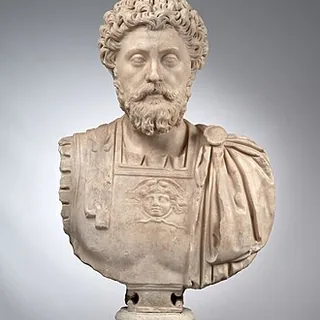 Marcus Aurelius — Roman emperor and Stoic writer. His reflections on duty offer a historical comparison with conscience, responsibility and service to a wider community.
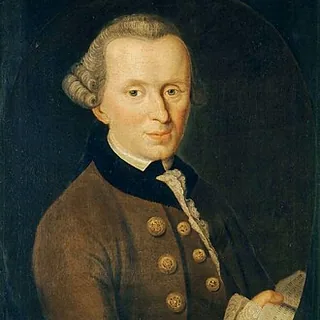 Immanuel Kant — Philosopher. His sustained work on ethics illustrates a concern with responsibility that depends on a principle rather than convenience or immediate approval.
 Roger Federer — Tennis player. His sustained professional craft and charitable work offer a comparison with disciplined commitment alongside a wish to contribute beyond competition.
 Zendaya — Actor and producer. Her public work offers a limited comparison with thoughtful collaboration and taking a visible role seriously, distinct from her characters.
 Anne Hathaway — Actor. Her public advocacy alongside her screen career offers a limited illustration of involvement, responsibility and support for others.
 Eleanor Roosevelt — Diplomat and human-rights advocate. Her sustained public service illustrates concern for people joined to institutional responsibility and practical action.
 Viola Davis — Actor and producer. Her advocacy and attention to representation illustrate the connection between personal commitment and concern for other people's opportunities.
 Sophia Loren — Actor. Her long career and public emphasis on family offer a limited comparison with continuity, commitment and interpersonal loyalty.
 Anthony Fauci — Physician and public-health official. His public role offers a comparison with expertise exercised within demanding responsibilities to a wider community.
 Saladin — Ayyubid ruler. His historical reputation for leadership and negotiated restraint provides a comparison with protection, obligation and an ethical code.
Fictional Characters Associated with 126
 Steve Rogers / Captain America — Marvel Cinematic Universe. His concern with doing the right thing repeatedly meets the demands of loyalty, protection and responsibility to a team.
 Leia Organa — Star Wars. Her commitment to the Rebellion combines principled resistance with practical leadership and lasting loyalty to the people around her.
 Katara — Avatar: The Last Airbender (2005). Her care for her companions is active and demanding, joining emotional support with a strong moral voice.
 Judy Hopps — Zootopia. Her wish to make a useful difference is tested by uncertainty, mistaken assumptions and the responsibility to repair her own errors.
 Tanjiro Kamado — Demon Slayer. His protection of Nezuko and compassion towards others illustrate care that persists alongside duty and readiness to confront danger.
 Obi-Wan Kenobi — Star Wars. His mentoring and loyalty illustrate responsibility that must balance personal attachment with a commitment to a wider purpose.
 Woody — Toy Story films. His wish to keep the group safe illustrates loyalty and duty, including the need to accept changes he cannot organise away.
 Helen Parr / Elastigirl — The Incredibles films. Her practical protection of her family illustrates care expressed through preparation, flexible action and attention to everyone's needs.
 Din Djarin — The Mandalorian. His developing relationship with Grogu illustrates loyalty and protection that gradually reshape an inherited code of duty.
 Chidi Anagonye — The Good Place. His determination to choose responsibly illustrates conscience and care, while his indecision shows the costs of demanding certainty before acting.
Sources and scope
The Enneagram Tritype framework is attributed to Katherine Chernick Fauvre. This independent educational guide is not affiliated with or endorsed by Fauvre. It describes a theoretical framework for reflection; it is not a validated assessment, diagnosis or population study.


.jpg)


.jpg)
.jpg)
_(cropped).jpg)
.jpg)
._AH_564-589_(1169-1193_CE)_%C3%86_Dirham_(30.1mm%2C_13.28_g%2C_6h)._Without_mint-name._Dated_AH_586_(AD_1190-91)._Sultan_sitting_facing%2C_cross-legged%2C_on_high-backed_throne_(obverse).jpg)


