The 548 Enneagram tritype, known as The Scholar, combines Type 5’s investigative focus, Type 4’s individuality and Type 8’s assertiveness, with Type 5 leading. Within this theoretical framework, the pattern centres on independent understanding: questioning conventional explanations, examining assumptions and reaching conclusions through personal inquiry. This is a theoretical interpretation for self-reflection, not a diagnosis or a measured personality result.
This intellectual independence is accompanied by a strong concern with authenticity. The Four component gives the profile greater sensitivity to individuality, meaning and personal identity, while the Eight component adds firmness around boundaries and resistance to coercion. The result can be someone who is highly private and introspective, yet surprisingly forceful when something important is challenged. A 548 may therefore appear quiet, detached and self-contained much of the time while possessing a considerably more confrontational side than their reserved manner initially suggests.
548 at a Glance
| Feature | Description |
|---|---|
| Archetype | The Scholar |
| Tritype code | 5 · 4 · 8 |
| Lead type | Type 5 — Investigator |
| Centres | Head (5) · Heart (4) · Gut (8) |
| Theoretical dynamics | Withdrawn overlap (5, 4) · Rejection overlap (5, 8) · Reactive overlap (4, 8) |
| Core tendency | Intellectual independence combined with strong personal autonomy |
| Central tension | Detached observation versus forceful boundary defence |
| Characteristic strength | Deep, original and independent analysis |
| Potential blind spot | Defensive isolation and reflexive scepticism |
How Common Is 548?
The reference figures supplied for this article put the wider 4–5–8 combination at approximately 2.0% overall, with estimates of 2.6% for men and 1.4% for women.
- Overall
- 2.0%
- Men
- 2.6%
- Women
- 1.4%
These are unverified reference estimates, not established population statistics. The supplied reference groups together the 4–5–8 combination across different orderings; it does not establish a separate prevalence for the specific 548 ordering. No named dataset or calculation has been provided to verify these figures.
What Does 548 Mean?
Tritype theory, developed by Katherine Fauvre, proposes that a person draws upon one preferred Enneagram strategy from each of the system's three traditional centres: Head, Heart and Gut. For 548, these are Type 5 from the Head centre, Type 4 from the Heart centre and Type 8 from the Gut centre.
| Component | Centre | Broad concern | Typical contribution to 548 |
|---|---|---|---|
| 5 — Investigator | Head | Knowledge, competence and autonomy | Observation, analysis, conceptual mastery and intellectual independence |
| 4 — Individualist | Heart | Identity, authenticity and meaning | Individuality, emotional depth and resistance to superficial conformity |
| 8 — Challenger | Gut | Autonomy, strength and boundaries | Assertiveness, directness and resistance to control |
The important point is that 548 is not simply a list of characteristics taken separately from Types 5, 4 and 8. Within the theory, the interest lies in how those tendencies interact. Type 5 encourages withdrawal, observation and understanding. Type 4 adds a stronger concern with identity, depth and personal authenticity. Type 8 introduces greater forcefulness, boundary awareness and willingness to resist intrusion. Together they can produce a personality that is both highly withdrawn and unusually resistant to being controlled.
The 548 Personality
The central feature of the 548 pattern is the combination of intellectual autonomy with strong personal independence. Type 5 generally approaches uncertainty by trying to understand it. Knowledge creates distance from confusion and provides a sense of competence. For a 548, this can translate into long periods of private research, contemplation or experimentation. They may prefer understanding something thoroughly before committing themselves to a conclusion and can be reluctant to rely on second-hand interpretations.
This independence is not necessarily driven by a desire to be contrary. A 548 may simply trust conclusions more when they have personally examined the reasoning behind them. The Type 4 component adds a more individualistic quality. Understanding is rarely purely mechanical; ideas may also need to feel meaningful, original or personally authentic. A 548 may therefore become particularly interested in subjects other people overlook, dismiss or find uncomfortable. Conventional explanations can appear unsatisfying when they seem shallow, emotionally sanitised or detached from the complexity of the subject itself.
This can produce a distinctive intellectual style, illustrated by three questions:
- The Five: “Is this actually true?”
- The Four: “Is this genuine and meaningful?”
- The Eight: “Who is trying to control the interpretation?”
The result can be a strong resistance to conformity for its own sake. Type 8 also changes the outward expression of the otherwise withdrawn Five–Four combination. Many 548s may spend substantial amounts of time keeping to themselves, avoiding unnecessary conflict and concentrating on their own interests. Yet when an important principle or personal boundary is crossed, the reaction can be much more forceful than their everyday demeanour suggests. This creates one of the most interesting tensions within the profile: withdrawal versus confrontation.
The 548 often prefers not to become involved unnecessarily. But once involved, they may have little interest in softening a conclusion simply to preserve social harmony. A person who seems detached during ordinary conversation can become extremely direct when they believe something important is being distorted, trivialised or imposed upon them. At their best, 548s can be highly original thinkers who combine intellectual depth with unusual independence of judgement. They may be especially good at examining questions that require distance from conventional assumptions, sustained concentration and a willingness to reach unpopular conclusions.
At their worst, the same independence can become excessive. Self-reliance can turn into isolation, scepticism into cynicism and strong boundaries into defensiveness. The ability to notice inconsistencies can gradually become a habit of seeing incompetence, manipulation or superficiality everywhere.
Inner Dynamics in Enneagram Theory
The internal logic of 548 becomes clearer when the three types are considered through some of the broader groupings used within Enneagram theory. These classifications should be understood as part of the Enneagram's theoretical framework rather than independently established psychological mechanisms. They are nevertheless useful for understanding why 548 is described differently from other Type 5 combinations.
The Withdrawn Overlap: Types 5 and 4
Types 5 and 4 are both commonly placed within the Enneagram's Withdrawn grouping. Both tendencies encourage movement towards the inner world, although for somewhat different reasons. Type 5 withdraws towards observation, knowledge and mental self-sufficiency. Type 4 withdraws towards identity, imagination, emotional reflection and personal meaning. Together, these tendencies help explain why many 548 descriptions emphasise privacy and introspection. The presence of Type 8 does not necessarily transform this into an outwardly dominant or socially forceful personality. Instead, Eight can provide firmness underneath an otherwise withdrawn baseline.
Private by preference, forceful when necessary.
The Rejection Overlap: Types 5 and 8
Within Enneagram object-relations theory, Types 5 and 8 are both placed in the Rejection grouping. The framework associates both with strong self-reliance and sensitivity around dependence, although their strategies are quite different. Type 5 tends to create autonomy through distance, knowledge and reduced dependence on other people. Rather than needing the environment to provide answers, the Five tries to acquire enough understanding and competence to manage independently.
Type 8 moves in almost the opposite behavioural direction. Rather than retreating from the environment, Eight tends to establish autonomy through strength, direct action and clear control over personal boundaries. This creates an interesting tension in 548. One component says: “I will protect myself by withdrawing.” Another says: “I will protect myself by pushing back.” Which response appears may depend heavily on circumstances. Minor frustrations may be ignored or analysed from a distance, while a more serious intrusion can produce a much firmer reaction.
The Reactive Overlap: Types 4 and 8
Types 4 and 8 are also placed within the Enneagram's Reactive harmonic grouping. In this framework, Reactive types tend to respond strongly when something important feels wrong and may prefer that the reality of a conflict be acknowledged rather than immediately softened, reframed or dismissed. For a core Type 5, this can introduce considerably more emotional intensity than the stereotypical image of the detached Investigator suggests.
A 548 may therefore initially step back from a problem and analyse it, but the Four and Eight components can make prolonged avoidance difficult when the situation involves personal authenticity, perceived dishonesty, disrespect or an important boundary. This helps explain why the profile can oscillate between extended periods of quiet observation and surprisingly uncompromising directness.
Strengths and Potential Blind Spots
Likely Strengths
The strengths associated with this combination centre on independent thinking and the freedom to investigate a subject thoroughly. Within the theory, five qualities stand out:
- Independent judgement. A willingness to question prevailing assumptions can reveal weaknesses that become invisible through familiarity.
- Intellectual depth. Five's orientation towards understanding and Four's interest in complex or meaningful subjects can support sustained specialist study.
- Original thinking. Synthesising ideas from different sources may lead to a distinctive conceptual framework, especially when there is freedom to choose a method.
- Firm boundaries. The Eight component can add resilience and decisiveness when circumstances require direct action.
- Tolerance for difficult subjects. Curiosity, psychological depth and a preference for confronting reality can make complex explanations more appealing than sanitised ones.
Potential Blind Spots
The most obvious risk is excessive self-reliance. A person who becomes accustomed to depending primarily on their own reasoning may gradually underestimate the value of collaboration. Outside input can begin to feel less like useful information and more like interference. This can produce intellectual isolation.
Independent thought is valuable, but it becomes less reliable when ideas are never tested against competent criticism.
A 548 can sometimes become so protective of autonomy that the very independence which originally strengthened their thinking begins to narrow it. Another potential difficulty is defensiveness around control. Advice, questions or ordinary disagreement can sometimes be interpreted as attempts to intrude upon autonomy, especially when the individual is already under pressure. The combination may also encourage cynicism. Someone highly sensitive to weak arguments, hypocrisy or superficiality can become increasingly good at identifying what is wrong while losing sight of what is functional, sincere or simply imperfect.
Finally, there is the possibility of over-analysis. The desire to understand something properly before acting can be enormously useful, but complete certainty is rarely available. A 548 may occasionally continue refining an interpretation after enough information already exists to make a reasonable decision.
Relationships and Communication
In relationships, 548s are likely to value depth, honesty and independence more than constant interaction. They may prefer a relatively small number of substantial relationships rather than maintaining large networks of casual social connections. Solitude can be restorative and may form an important part of how the individual thinks, regulates emotion and maintains a sense of independence. This does not necessarily mean that the 548 has little need for connection. The Type 4 component can create a strong desire to be genuinely understood, while the Type 5 component may make exposing that desire uncomfortable. A characteristic tension can therefore emerge between wanting meaningful intimacy and resisting dependence.
Communication may initially be restrained. A 548 may prefer thinking privately before articulating an opinion and may have little interest in speaking merely to fill silence. When discussing something important, however, the tone can become considerably more intense. The combination generally places more value on honesty and accuracy than on maintaining effortless harmony. Disagreement may therefore be approached as something to investigate rather than something inherently threatening.
Problems can arise when directness becomes sharper than necessary. What feels to the 548 like intellectual clarity may feel to somebody else like hostility or dismissal. Healthy communication often involves learning that precision and tact do not have to be opposites. The 548 does not need to abandon directness. The more useful development is recognising that information is often communicated more effectively when the emotional circumstances of the listener are taken into account.
Work and Career Preferences
548s are likely to be most comfortable in work that provides autonomy, intellectual challenge and opportunities to develop genuine expertise. Highly supervised environments can be frustrating, particularly when oversight appears unnecessary or when organisational hierarchy is valued more highly than competence. A 548 may prefer being given a difficult problem and sufficient freedom to solve it independently.
Several kinds of work may offer those conditions:
- Research and specialist study: science, mathematics, economics, philosophy, data analysis and history can reward complexity and sustained concentration.
- Technical problem-solving: software development, engineering, systems architecture, cybersecurity and quantitative analysis connect abstract understanding with practical solutions.
- Independent creative work: writing, filmmaking, music, visual art and design can combine intellectual depth with a distinctive individual perspective.
- Investigation and critique: investigative journalism, historical research, forensic analysis, specialist non-fiction and critical writing reward curiosity and questioning accepted accounts.
What matters may be less the occupational title than the working environment. A 548 may thrive in a modestly paid specialist role with substantial independence while finding a more prestigious position intolerable if it requires continual networking, organisational politics, emotional performance or deference to authority.
Work dominated by high-volume customer interaction, compulsory enthusiasm or constant interpersonal accommodation may therefore prove more tiring for some people with this pattern. These are tendencies rather than prescriptions. Personality alone cannot determine career suitability. Ability, training, interests, values, financial circumstances and opportunity remain at least as important.
Stress and Growth
Under prolonged stress, the strengths of 548 can become exaggerated into their less useful forms. Healthy independence may become isolation. Careful scepticism may become distrust. Strong boundaries may become defensive rigidity.
A possible sequence within this interpretation is withdrawal, isolation, increased distrust and stronger defensive reactions. The first response to difficulty may be to withdraw and understand what is happening. That can be constructive. Problems arise when withdrawal becomes prolonged enough that the individual loses access to corrective information or supportive relationships. The resulting isolation may make other people seem increasingly intrusive or unreliable, which then appears to justify further withdrawal.
Growth does not require abandoning independence. It may involve becoming secure enough in that independence that it does not need constant protection. Useful directions for reflection include:
- Act with sufficient information. Consider when further analysis is useful and when it is delaying a reasonable next step.
- Make room for trusted input. Allow another person's contribution without automatically treating involvement as interference.
- Distinguish disagreement from control. An ordinary difference of opinion need not threaten personal autonomy.
- Leave space for vulnerability. Feelings do not always need to be converted immediately into analysis or defensiveness.
The strongest version of the profile is therefore not someone who needs nobody, but someone capable of remaining self-directed while also making intelligent use of connection, criticism and collaboration.
How Wing Emphasis May Modify 548
Because Type 5 leads the 548 configuration, the neighbouring Four and Six wings can influence how the core Five style is expressed. In common Enneagram notation, this is often described as 5w4 or 5w6, depending on which wing appears more prominent. Some Enneagram theorists instead emphasise that both wings remain available and that individuals can make use of both to different degrees.
A Four-wing emphasis may strengthen the more introspective, imaginative and individualistic side of 548. Such a person may show particular interest in aesthetics, identity, existential questions, unusual creative work or highly personal intellectual interests. A Six-wing emphasis may give the Five component a somewhat more systematic and verification-oriented character. The person may place greater emphasis on evidence, troubleshooting, reliability, technical precision and identifying weaknesses within systems.
These distinctions should not be treated as two completely different personality types. They are better understood as variations in emphasis within the broader 548 pattern.
The Four Wing and the Four Heart Component
A 5w4 548 contains Type 4 in two theoretically different places: as the neighbouring wing of the lead Type 5 and as the Heart-centre component of the Tritype. These are not intended to describe the same mechanism. The Four wing modifies the expression and style of the core Type 5, while the Four Heart component describes the preferred Heart-centre strategy within the Tritype framework.
Within the model, having Four represented in both places may make themes such as individuality, introspection and emotional depth more prominent, but the two concepts remain theoretically distinct.
Why the Order Matters
548 contains the same three component types as 584, 458, 485, 845 and 854, but the ordering is intended to describe which strategies are more prominent within the overall configuration. In 548, Type 5 leads. Understanding, competence and intellectual autonomy therefore provide the main organising theme. The Four component comes next, giving identity, emotional meaning and individual expression greater secondary prominence, while Eight provides the Gut-centre strategy associated with autonomy and boundary defence.
A 584 contains the same types but places Eight ahead of Four after the dominant Five. It may therefore be described as somewhat more pragmatic, forceful or boundary-focused, whereas 548 may give greater relative prominence to individuality and emotional depth. A 458 leads with Type 4. The same three ingredients are present, but identity and authenticity provide the starting point rather than investigation. An 854 leads with Type 8 and therefore places greater initial emphasis on autonomy, strength and direct engagement with the environment.
These distinctions belong to the internal theory of Tritype and should not be mistaken for experimentally established personality categories. They are nevertheless useful for understanding what the ordering of the three numbers is intended to represent.
Related Tritypes
548 and 549
548 and 549 share Types 5 and 4, giving both profiles a strongly introspective and intellectually independent character. The difference lies in the Gut component. Type 8 introduces firmer boundaries, greater willingness to confront and stronger resistance to external control. Type 9 instead introduces a more accommodating and conflict-minimising tendency.
Put simply, 548 combines withdrawal with the capacity for confrontation, while 549 combines withdrawal with a stronger tendency towards de-escalation.
548 and 541
548 and 541 also share the Five–Four combination. Replacing Eight with Type 1 changes the character of the Gut component. A 541 may place greater emphasis on precision, standards, correctness and improvement, while 548 places more emphasis on autonomy, resistance and boundary protection. Both can be highly analytical, but the emotional tone of their criticism may differ.
548 and 538
548 and 538 share Type 5 and Type 8, so both can combine analysis with strong independence. Replacing Four with Type 3 introduces a more achievement-oriented Heart strategy. A 538 may therefore appear more pragmatic, competitive, outwardly productive or focused on demonstrable results. The 548 is more likely to emphasise individuality, authenticity or intellectual depth for its own sake.
548 and Big Five Personality Profiles (SLOAN)
The Enneagram and Big Five describe personality through very different frameworks, so there is no direct conversion between 548 and a particular Big Five or SLOAN profile. Nevertheless, some broad descriptive similarities can be discussed cautiously. The intellectual curiosity associated with Type 5 and the imaginative individuality associated with Type 4 may resemble higher Openness to Experience. The preference for independence and lower willingness to accommodate external demands may sometimes resemble lower Agreeableness, particularly in aspects related to compliance, deference and interpersonal accommodation.
Lower Extraversion may also be common among people who strongly identify with 548 descriptions because Types 5 and 4 are both conceptualised as withdrawn within the Enneagram framework. Depending on differences in emotional reactivity and conscientiousness, Big Five profiles (SLOAN) such as RCOEI, RCUEI or RLOEI may show some descriptive overlap. These similarities are not established statistical correlations and should not be used to infer one system directly from the other.
548 and 16-Type Systems
548 can also resemble some descriptions of INTJ and INTP, particularly where those profiles emphasise introversion, intellectual independence, abstract interests and a preference for reaching conclusions autonomously. Some individuals identifying as 548 may instead resemble INFJ, ISTP or other introverted profiles depending on their broader personality. Again, the systems measure or conceptualise different things. Enneagram theory focuses primarily on motivation, defensive patterns and recurring strategies, whereas Jungian and MBTI-style systems organise personality through a different categorical framework. A 548 should therefore not be treated as another name for INTJ, INTP or any other 16-type personality.
Famous People and Fictional Characters Associated with 548
The following examples illustrate themes associated with 548, including independent thought, individuality and strong personal boundaries. These are illustrative comparisons, not confirmed personality assessments. Fictional examples refer to the works or versions named below.
Famous People Associated with 548
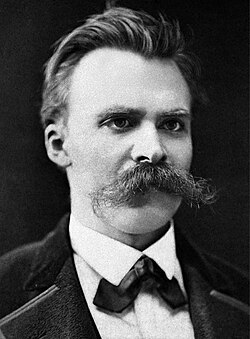 Friedrich Nietzsche — Philosopher and cultural critic. His challenges to inherited assumptions offer an illustration of independent inquiry, personally distinctive ideas and resistance to intellectual conformity.
 David Lynch — Filmmaker and visual artist. His surreal imagery and carefully constructed sound worlds provide a creative comparison with 548's combination of private imagination, depth and an uncompromising individual vision.
 Stephen King — Horror and suspense novelist. His sustained exploration of unsettling subjects offers a literary illustration of curiosity, imaginative intensity and a willingness to examine experiences that others might prefer to avoid.
 Trent Reznor — Nine Inch Nails founder and film composer. His work brings intricate sonic experimentation together with an intensely personal artistic voice, illustrating the meeting of technical construction and individual expression.
 Roger Waters — Pink Floyd co-founder and songwriter. His concept-driven work offers a musical comparison with the profile's interest in isolation, conflict, personal meaning and resistance to external control.
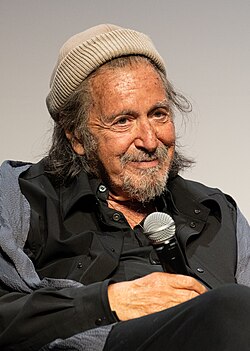 Al Pacino — Actor and filmmaker. This example concerns the performer rather than the personalities of his screen characters; an actor's roles do not establish their own personality.
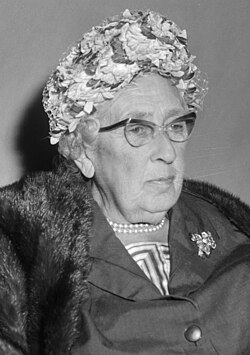 Agatha Christie — Detective novelist and creator of Hercule Poirot and Miss Marple. Her intricately constructed mysteries offer a less confrontational illustration of observation, psychological curiosity and the pleasure of finding an explanation beneath appearances.
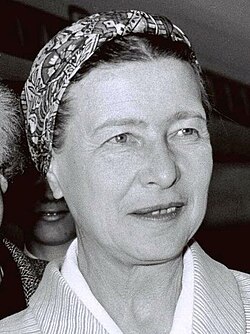 Simone de Beauvoir — Philosopher, writer and feminist thinker. Her examination of freedom, identity and social expectations provides an intellectual comparison with the profile's concern for autonomy and resistance to inherited roles.
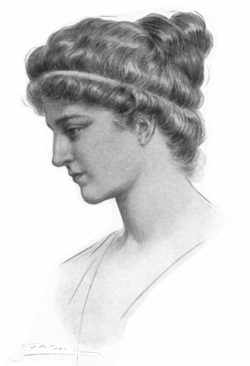 Hypatia — Mathematician, astronomer and philosopher of ancient Alexandria. She adds a scholarship-centred historical example to the selection, although a retrospective typing should not be mistaken for a personality assessment of the historical person.
 Banksy — Anonymous street-art identity. The work's visual invention and pointed social criticism offer an artistic comparison with individuality and resistance to convention. The typing is especially tentative because the public persona reveals little about its creator's private personality.
Fictional Characters Associated with 548
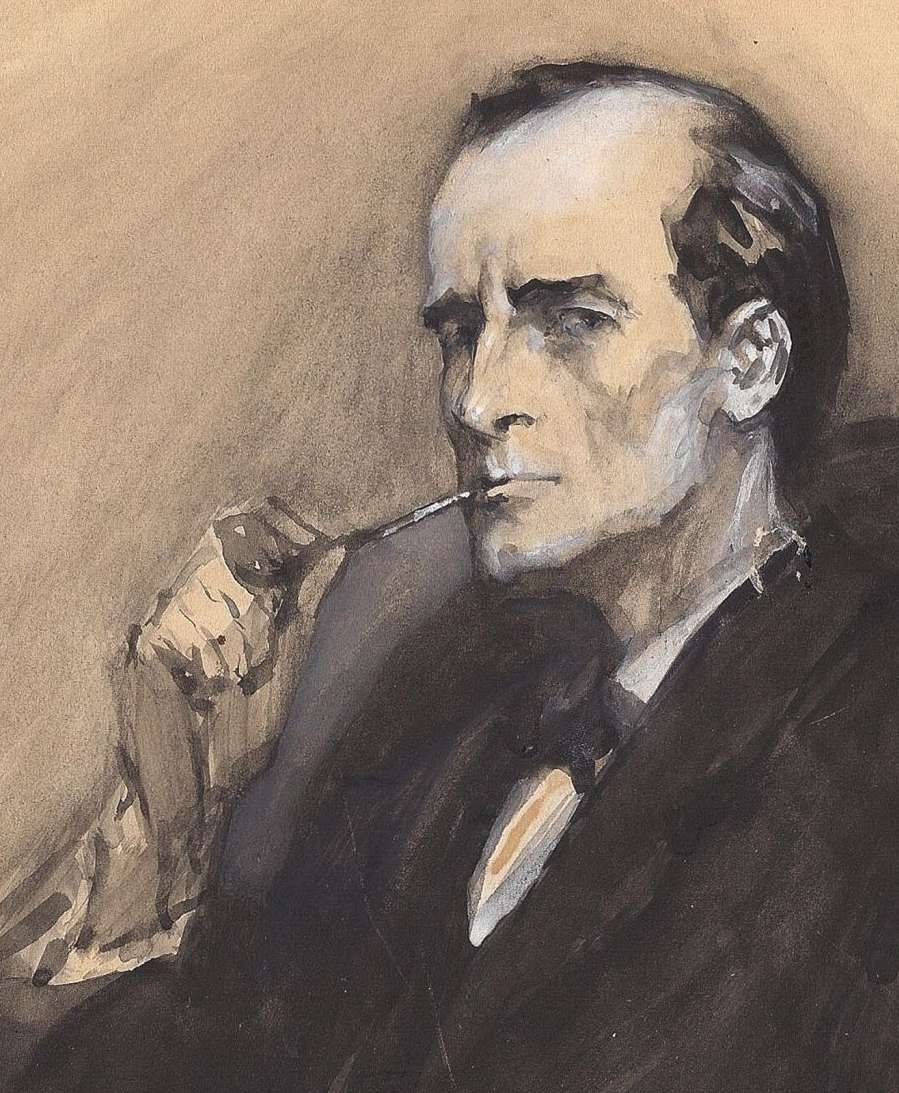 Sherlock Holmes — Arthur Conan Doyle's detective stories. His specialised knowledge, independent deductions and impatience with weak reasoning offer a familiar investigative example, rather than a claim about every screen adaptation.
 Alice — Alice in Wonderland (1951). Her questioning curiosity and frustration with arbitrary rules provide a more playful comparison with the profile's independent-mindedness, showing that a 548 interpretation need not always look severe or intimidating.
 Peter Parker / Spider-Man — The Amazing Spider-Man films, portrayed by Andrew Garfield. Scientific curiosity, private emotional concerns and resistance to being controlled provide points of comparison; this entry does not apply the same typing to every version of Spider-Man.
 Raven — Teen Titans (2003). Her reserve, intense inner life and strong need for personal boundaries make her an accessible animated example of the tension between emotional depth and protective distance.
 Rohan Kishibe — JoJo's Bizarre Adventure. The manga artist's relentless research and determination to work on his own terms offer an especially vivid creative example of curiosity, individual expression and forceful independence.
 Rustin “Rust” Cohle — True Detective, first season. His investigative detachment, philosophical preoccupations and abrasive independence make the profile's withdrawal-versus-confrontation tension easy to recognise, without making him a model of healthy development.
 Wednesday Addams — The Addams Family. This is a general comparison with the character, rather than a claim about every adaptation. Her dry critical perspective, preference for privacy and resistance to social conformity provide a darkly comic comparison.
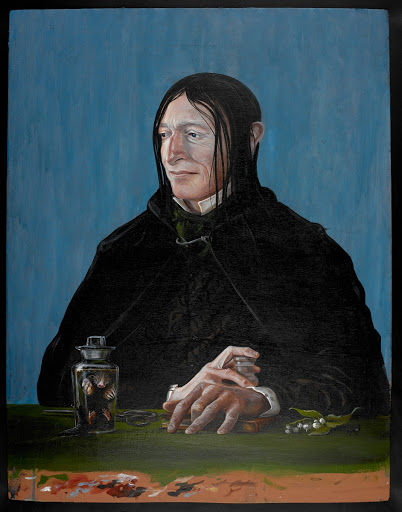 Severus Snape — Harry Potter, book series. Specialised knowledge, guarded feelings and sharp defensiveness offer another way to recognise the pattern's themes. This is the book-character profile, not a separate assessment of Alan Rickman or his portrayal.
 Rick Deckard — Blade Runner, portrayed by Harrison Ford. A reserved investigator confronting questions of identity, humanity and institutional control offers a quieter, more action-oriented comparison with the profile's central concerns.
 Tae Takemi — Persona 5. The doctor's specialist knowledge, independent research and blunt manner provide a game-based example of expertise combined with personal autonomy, broadening the selection beyond detectives and solitary artists.
548 in One Sentence
548 combines intellectual independence, individualistic depth and strong personal boundaries into a private but formidable personality that seeks to understand reality without surrendering autonomy or authenticity.


