Some people approach relationships through trust, cooperation and mutual benefit. Others see the social world as a contest of influence, in which information, loyalty and even friendship can become instruments of personal advantage.
Machiavellianism is a personality trait characterised by calculated self-interest, interpersonal manipulation and a cynical view of human nature. People with elevated Machiavellian tendencies are generally more willing to deceive, exploit or influence others when doing so serves their objectives. They may regard honesty and loyalty as useful principles under certain circumstances rather than obligations that should always be respected. Their approach to relationships can be pragmatic and transactional, with considerable attention given to what other people can provide, how they might be influenced and whether their cooperation can be secured.
The trait takes its name from Niccolò Machiavelli, the sixteenth-century Italian political thinker whose writings examined the acquisition and maintenance of political power. Although Machiavelli himself was a more complex figure than the modern term suggests, his association with political calculation and the strategic use of deception inspired the psychological concept. Today, Machiavellianism is recognised as one of the three original Dark Triad personality traits, alongside narcissism and psychopathy, and also forms part of the expanded Dark Tetrad model.
Importantly, Machiavellianism does not simply mean being ambitious, intelligent or good at planning. Strategic thinking is an ordinary and often valuable human ability. What distinguishes Machiavellianism is the willingness to pursue personal advantage through manipulation or exploitation, particularly when the interests of other people become obstacles to one's objectives.
Core characteristics
A central characteristic of Machiavellianism is the tendency to view social relationships in terms of advantage, influence and opportunity. Rather than approaching interactions primarily through mutual trust, someone high in the trait may continually evaluate the motives, weaknesses and usefulness of those around them. They may be attentive to differences in status, recognise who possesses influence within a group and consider how alliances can be formed or discarded according to changing circumstances. This does not mean that every social interaction involves a conscious scheme, but that calculated self-interest can exert an unusually strong influence over their decisions.
Machiavellianism is also associated with interpersonal cynicism, particularly the belief that other people are fundamentally self-interested and cannot be relied upon to act honestly. Someone with this outlook may assume that generosity conceals an ulterior motive, that loyalty lasts only while it remains convenient or that people who appear morally principled are simply concealing their own ambitions. Such beliefs can encourage manipulative behaviour by making it seem like a reasonable response to an already untrustworthy world. If everyone is assumed to be playing a game of self-interest, an individual may see little reason to follow rules that appear to disadvantage them.
Another important feature is the separation of personal objectives from ordinary moral considerations. A Machiavellian individual may recognise that a particular action is dishonest or unfair while nevertheless regarding it as acceptable because it produces a desirable result. This does not necessarily imply a complete absence of conscience or emotional concern for others. Rather, personal advantage may be given greater weight when it conflicts with fairness, loyalty or the welfare of another person. An individual might therefore justify misleading a colleague, withholding useful information or betraying a confidence by focusing upon the benefits of doing so rather than the harm involved.
Emotions and empathy
Machiavellianism has traditionally been associated with a degree of emotional detachment, particularly in situations where personal feelings might interfere with the pursuit of an objective. Someone with elevated Machiavellian tendencies may be less inclined to allow sympathy, affection or feelings of obligation to determine their behaviour when these considerations conflict with personal advantage. This can create an interpersonal style that appears unusually pragmatic or emotionally distant, especially when difficult decisions affect people with whom the individual has established relationships.
Such detachment does not necessarily mean that Machiavellian people lack emotions or remain exceptionally calm under pressure. They may experience anger, anxiety, affection and disappointment much like anyone else, and individuals differ considerably in how effectively they regulate their feelings. The more relevant characteristic is the relative importance attached to emotional considerations when making decisions. A person may understand that their actions will disappoint or distress someone while nevertheless deciding that the anticipated personal benefit justifies the consequences. In some circumstances, maintaining an appearance of warmth and concern can itself become part of a calculated interpersonal strategy.
The relationship between Machiavellianism and empathy is particularly interesting. Psychologists commonly distinguish between cognitive empathy, the ability to understand another person's thoughts and emotional experiences, and affective empathy, which involves sharing or responding emotionally to those experiences. It is sometimes assumed that highly Machiavellian individuals possess unusually strong cognitive empathy but relatively little affective empathy, allowing them to understand another person's vulnerabilities without being troubled by the distress they might cause. Although this provides an appealing explanation of manipulation, research does not consistently support the idea that Machiavellian individuals are exceptionally skilled at understanding other people's minds.
Instead, Machiavellianism is generally associated with lower affective empathy, while cognitive empathy tends to show a weaker and more complicated relationship. Some manipulative individuals may be perceptive and skilled at recognising the motives of others, but others may be suspicious, insensitive or prone to misinterpreting social situations. Someone who habitually assumes dishonesty may even misunderstand genuinely cooperative behaviour because it does not fit their expectations. The defining characteristic is therefore not superior insight into human psychology, but a greater willingness to use whatever interpersonal understanding they possess to pursue personal advantage.
Strategy and the long game
One of the most recognisable features of the traditional Machiavellian personality is a willingness to pursue objectives indirectly, sometimes over considerable periods of time. Rather than demanding immediate rewards, a calculating individual may cultivate useful relationships, gather information, conceal their intentions or accept temporary disadvantages in anticipation of a more favourable opportunity. Such behaviour reflects an emphasis on strategy and the ability to regard present circumstances as part of a larger sequence of events.
In a workplace, for example, someone might spend months developing a reputation for loyalty and helpfulness while quietly positioning themselves for promotion. They may support influential colleagues, learn about disagreements within management and avoid publicly expressing opinions that could damage their prospects. Only when a suitable opportunity arises might they reveal their ambitions or use the information they have accumulated. The strategy depends partly upon appearing trustworthy, since open displays of manipulation would undermine the very relationships on which their plans rely.
This capacity to play the long game helps distinguish the traditional conception of Machiavellianism from the more impulsive characteristics sometimes associated with psychopathy. However, the distinction should not be exaggerated. Not everyone with elevated Machiavellian traits is patient, disciplined or particularly effective at planning, and some questionnaires emphasise manipulation and cynicism more strongly than self-control. The image of the endlessly patient strategist is therefore better understood as one possible expression of Machiavellianism rather than an inevitable characteristic of everyone who scores highly on the trait.
Manipulation in everyday life
Machiavellian behaviour is often subtle. Rather than relying upon direct threats or obvious dishonesty, manipulation may involve carefully chosen information, selective friendliness, flattery or the cultivation of trust. Someone with elevated Machiavellian tendencies might take a particular interest in influential colleagues, present different versions of themselves to different audiences or encourage disagreements that weaken potential rivals. They may avoid revealing their own intentions while attempting to learn as much as possible about the intentions of others. In such circumstances, appearing cooperative can be an effective means of pursuing decidedly uncooperative objectives.
Consider a workplace in which two employees are competing for promotion. One approaches the situation by improving their performance and making a case for their abilities. The other cultivates a close relationship with the manager, quietly undermines their colleague's reputation and takes opportunities to exaggerate their own contribution to successful projects. Both employees are ambitious and strategically aware, but the second is displaying more recognisably Machiavellian behaviour because personal advancement is being pursued through manipulation and the deliberate exploitation of social relationships.
Similar tendencies can appear in friendships and romantic relationships. A person may offer attention or assistance primarily because they anticipate a future benefit, use confidential information to gain leverage during disagreements or maintain relationships only while they remain personally advantageous. Some individuals may employ guilt, selective affection or carefully constructed explanations to influence others while avoiding responsibility for their intentions. However, these behaviours are not exclusive to Machiavellianism, and an isolated instance of dishonesty or selfishness is insufficient to establish an enduring personality trait. What matters is the broader pattern of attitudes and behaviour across different circumstances.
Manipulative behaviour can also have consequences for the individual employing it. Relationships depend upon a certain degree of trust, and repeatedly treating other people as instruments can gradually undermine that trust. A person who becomes known for deception or opportunism may find that colleagues withhold information, friends become reluctant to confide in them or potential allies question their sincerity. Even when manipulation produces immediate advantages, it can damage the relationships and reputation needed for longer-term success. Machiavellian behaviour is therefore not necessarily an effective strategy, particularly in environments where cooperation and repeated interactions are important.
Are Machiavellian people master strategists?
The popular image of a Machiavellian individual is that of a cold, exceptionally intelligent strategist who understands other people better than they understand themselves. Fiction frequently reinforces this impression through characters who anticipate every development, manipulate entire organisations and remain several moves ahead of their opponents. Although some individuals who exhibit Machiavellian behaviour may indeed be clever or socially perceptive, psychological research does not establish that people with elevated Machiavellian traits are necessarily more intelligent or better at manipulation than everyone else.
In fact, a person can possess a strong desire to manipulate others without having the judgement or interpersonal skills required to do so successfully. Cynicism may cause them to misinterpret genuine kindness as deception, while excessive calculation can undermine trust and damage relationships that would otherwise have been beneficial. A willingness to lie or exploit may produce immediate advantages but also create lasting reputational problems when the behaviour is discovered. The distinction is therefore between wanting to manipulate others and being particularly good at it. Machiavellianism primarily concerns the former, even though popular culture often emphasises the latter.
This distinction also explains why Machiavellianism should not be confused with ordinary political awareness or strategic intelligence. Someone can be exceptionally perceptive, understand complicated social relationships and anticipate the actions of others without being particularly willing to deceive or exploit them. Equally, a person may be distrustful, self-interested and manipulative while possessing relatively poor judgement about other people's intentions. The morally questionable aspect of Machiavellianism lies less in the possession of strategic abilities than in the willingness to use interpersonal relationships primarily for personal advantage.
Historical and fictional examples
The characteristics associated with Machiavellianism are especially visible in political history and dramatic fiction, where competition for power provides opportunities for manipulation, intrigue and calculated betrayal. Historical figures can illustrate such behaviour through their documented actions, although their underlying personality cannot be established through retrospective diagnosis. Fictional characters provide particularly clear examples because their motives and strategies are often made explicit within the story.
 Joseph Fouché (1759–1820) — French politician and minister of police. Fouché survived successive political upheavals during the French Revolution, Napoleonic Empire and Bourbon Restoration, frequently adapting his alliances to changing circumstances. His use of intelligence networks, political intrigue and carefully maintained relationships illustrates the importance of information and strategic adaptability in the pursuit of power. He is a striking historical example of someone who repeatedly navigated dangerous political circumstances while preserving considerable personal influence.
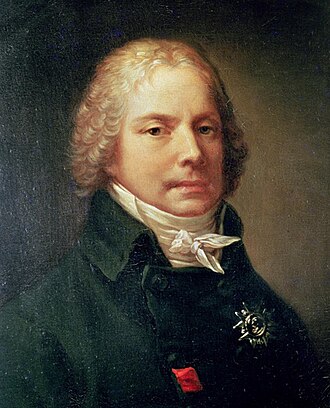 Charles-Maurice de Talleyrand (1754–1838) — French diplomat and statesman. Talleyrand maintained an influential political career through several radically different French governments, becoming renowned for his diplomatic skill, discretion and ability to anticipate political developments. His shifting alliances and careful cultivation of relationships demonstrate the strategic possibilities of political influence, although his actions also reflected broader diplomatic principles and cannot simply be reduced to personal opportunism.
 Richard Nixon (1913–1994) — American president. Nixon's involvement in the Watergate cover-up illustrates how political power can be protected through secrecy, manipulation and the attempted obstruction of accountability. Recordings from his presidency documented efforts to interfere with the investigation, making the episode a particularly clear example of calculated political deception. These actions illustrate Machiavellian tactics without establishing Nixon's overall personality profile.
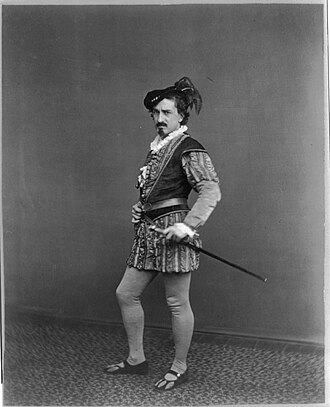 Iago — Shakespeare's Othello. Iago is one of literature's most memorable manipulators. Presenting himself as a trustworthy adviser, he gradually undermines Othello's confidence in his wife through insinuation, carefully arranged misunderstandings and calculated appeals to jealousy. His effectiveness depends upon understanding the insecurities of other people and influencing their behaviour while concealing his own intentions. The character also displays cruelty and vindictiveness, illustrating how different dark tendencies can overlap.
 Petyr Baelish (Littlefinger) — A Song of Ice and Fire and Game of Thrones. Baelish advances through political society by cultivating influential relationships, exploiting rivalries and concealing his ambitions behind an apparently helpful manner. He repeatedly turns the conflicts of others into opportunities for personal advancement, treating information and alliances as valuable instruments of power. His combination of outward cooperation and private calculation makes him a particularly recognisable fictional example of Machiavellianism.
 Frank Underwood — House of Cards. Underwood's political ambitions are pursued through deception, calculated alliances, manipulation and the exploitation of personal weaknesses. He frequently presents himself as loyal or sympathetic while privately pursuing objectives that conflict with the interests of those who trust him. His willingness to subordinate relationships and moral considerations to the acquisition of power provides a deliberately exaggerated but memorable illustration of the trait.
Machiavellianism and the other dark traits
Although Machiavellianism shares certain characteristics with narcissism and psychopathy, the three traits place different emphases on interpersonal behaviour. Machiavellianism is primarily associated with calculated manipulation and the pursuit of personal advantage, while narcissism is more closely concerned with self-importance, entitlement and the desire for admiration. Psychopathy-related characteristics, meanwhile, include callousness, limited remorse and behavioural disinhibition. A Machiavellian individual may manipulate someone to obtain a promotion, a narcissistic individual may be particularly concerned with receiving recognition for their supposed superiority, and someone displaying psychopathy-related callousness may show relatively little concern about the harm their actions cause.
These distinctions are not absolute, and an individual may exhibit several tendencies simultaneously. Nor is every manipulative person patient and calculating, just as not every narcissistic person is openly boastful or every person with psychopathy-related characteristics is impulsive. The boundaries between these personality constructs remain a subject of scientific discussion, particularly because some questionnaires measuring Machiavellianism and psychopathy capture substantially overlapping characteristics. Nevertheless, the distinction between strategic exploitation, self-enhancement and callous disinhibition remains useful when considering why different individuals may behave in superficially similar ways.
Higher and lower Machiavellianism
Machiavellianism exists along a continuum rather than dividing people into two distinct categories. Someone with relatively low levels of the trait may generally favour openness, trust and cooperation, while someone with elevated tendencies may be more suspicious of others and more willing to employ manipulation when it serves their interests. Most people fall somewhere between these extremes, and their behaviour will also be shaped by other personality characteristics, social circumstances and personal values. Low Machiavellianism does not necessarily mean being naïve or easily influenced, just as high Machiavellianism does not automatically imply exceptional cunning or emotional control.
The trait is not necessarily synonymous with intelligence, emotional detachment or political competence. Nor does possessing some Machiavellian characteristics mean that a person is incapable of genuine affection, loyalty or cooperation. Personality traits describe general tendencies rather than absolute rules governing every interaction. A person may be calculating in professional competition while behaving quite differently towards close friends or family members, and manipulative attitudes do not inevitably translate into manipulative actions.
Conclusion
Ultimately, Machiavellianism concerns a particular approach to human relationships: one in which trust, influence and cooperation may be evaluated primarily according to their usefulness in achieving personal objectives. Its darker aspects emerge when other people cease to be treated as individuals with legitimate interests of their own and become instruments to be managed, deceived or exploited. Understanding the trait therefore helps illuminate an important distinction in human social behaviour: the difference between using intelligence and strategy to work successfully with other people, and using those same abilities primarily to gain an advantage over them.
References
-
Christie, R., & Geis, F. L. (1970). Studies in Machiavellianism. Academic Press.
-
Paulhus, D. L., & Williams, K. M. (2002). The Dark Triad of personality: Narcissism, Machiavellianism, and psychopathy. Journal of Research in Personality, 36(6), 556–563. Read the paper
-
Collison, K. L., Vize, C. E., Miller, J. D., & Lynam, D. R. (2018). Development and preliminary validation of a five factor model measure of Machiavellianism. Psychological Assessment, 30(10), 1401–1407. Read the paper
-
Blötner, C., Steinmayr, R., & Bergold, S. (2021). Malicious mind readers? A meta-analysis on Machiavellianism and cognitive and affective empathy. Personality and Individual Differences, 181, 111023. Read the paper


