Skip to content
Famous & Fictional Types · INTP

Famous & Fictional INTPs

Explore public figures and fictional characters through INTP-like curiosity, independent reasoning and open-ended investigation.

These are editorial interpretations. Real people did not complete a verified assessment for these pages; fictional characters may be interpreted differently across stories and adaptations. Quotations add context; they cannot establish a type.

INTP The Logician

4 examples

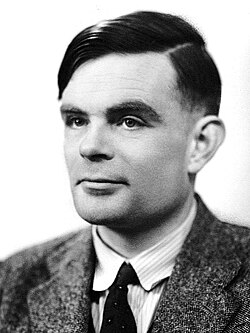
Portrait of Alan Turing
INTP · The Logician Real person

Alan Turing

Mathematician and computer scientist

Key patterns

  • Foundational questions about computation
  • Independent theoretical exploration
  • Connections across scientific problems

Personality interpretation

Turing’s work on computation, intelligence and biological patterns offers an example of sustained, independent conceptual exploration.

Turing moved between foundational questions about what a machine can compute, wartime cryptanalysis and the mathematical explanation of patterns in living organisms. His work connected practical problems with unusually far-reaching theoretical questions.

An INTP reading emphasises his independent reasoning and willingness to investigate a problem beyond established assumptions. Mathematical achievement alone does not establish a type; this is an interpretation of his intellectual approach.

“Machines take me by surprise with great frequency.”

Alan Turing · Computing Machinery and Intelligence (1950), p. 450; via Wikiquote

“we can see plenty there that needs to be done.”

Alan Turing · Computing Machinery and Intelligence (1950), p. 460 (excerpt); via Wikiquote
Sources and image credits

Sources document the biography, work or character portrayal; the personality interpretation is TypologyOnline’s editorial reading.

Image: Elliott & Fry, Public domain. Displayed as a cropped thumbnail.
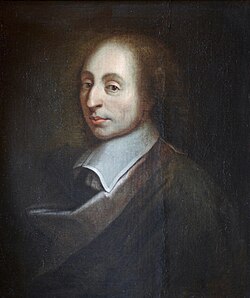
Portrait of Blaise Pascal
INTP · The Logician Real person

Blaise Pascal

Mathematician, inventor and philosopher

Key patterns

  • Mathematical and experimental investigation
  • Interest in the limits of reason
  • Movement between technical and philosophical questions

Personality interpretation

Pascal’s movement between mathematical problems, experiments and questions of belief illustrates broad analytical curiosity.

Pascal worked on geometry and probability, developed a calculating machine and investigated atmospheric pressure. His later philosophical writing explored human reasoning, belief and the limits of certainty rather than remaining within a single technical specialism.

An INTP interpretation foregrounds his interest in difficult questions and the boundaries of explanation. Religious conviction and scientific creativity do not imply any particular type; this example concerns the pattern of enquiry across his work.

“I would have written a shorter letter, but I did not have the time.”

Blaise Pascal · Provincial Letters, Letter XVI, English translation; via Wikiquote

“The eternal silence of these infinite spaces alarms me.”

Blaise Pascal · Pensées, C. Kegan Paul translation (1885); via Wikiquote
Sources and image credits

Sources document the biography, work or character portrayal; the personality interpretation is TypologyOnline’s editorial reading.

Image: Unknown artist, after François II Quesnel, Public domain. Displayed as a cropped thumbnail.
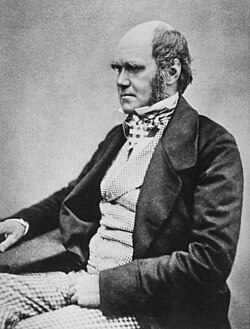
Portrait of Charles Darwin
INTP · The Logician Real person

Charles Darwin

Naturalist and evolutionary theorist

Key patterns

  • Wide-ranging natural-history questions
  • Theory developed through accumulated evidence
  • Sustained investigation at home

Personality interpretation

Darwin’s patient observation and continuing revision of explanations make him a useful illustration of an INTP-like investigative approach.

Darwin combined observations from the Beagle voyage with decades of experiments, correspondence and research at home. His enquiries extended beyond evolution to plants, inheritance and emotional expression, drawing many kinds of evidence into a developing explanation.

The INTP interpretation rests on explanatory curiosity and an openness to investigating how a system works. His meticulous habits also support more structured readings; a scientific method is not itself a personality classification.

“I love fools’ experiments. I am always making them.”

Charles Darwin, recalled by E. Ray Lankester · Darwin Correspondence Project: Fool’s experiments

“without speculation there is no good & original observation”

Charles Darwin · Letter to A. R. Wallace (excerpt), Darwin Correspondence Project
Sources and image credits

Sources document the biography, work or character portrayal; the personality interpretation is TypologyOnline’s editorial reading.

Image: Maull and Fox; restoration by Beao, Public domain. Displayed as a cropped thumbnail.
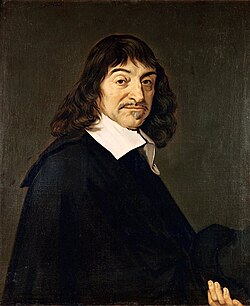
Portrait of René Descartes
INTP · The Logician Real person

René Descartes

Philosopher and mathematician

Key patterns

  • Reasoning from first principles
  • Questioning inherited assumptions
  • Connecting mathematics and philosophy

Personality interpretation

Descartes’s search for reliable foundations of knowledge illustrates an inwardly directed, analytical approach to ideas.

Descartes questioned what could be accepted as certain and sought a method for reasoning from dependable foundations. His mathematical work connected algebra and geometry, while his philosophy examined knowledge, mind and the physical world.

INTP is a plausible reading of this emphasis on conceptual consistency and first principles. His preference for systematic foundations could also suggest an INTJ interpretation; the distinction cannot be settled from the work alone.

“I think, therefore I am.”

René Descartes · Discourse on the Method, English translation; via Wikiquote

“to doubt, as far as possible, of all things.”

René Descartes · Principles of Philosophy, English translation (excerpt); via Wikiquote
Sources and image credits

Sources document the biography, work or character portrayal; the personality interpretation is TypologyOnline’s editorial reading.

Image: After Frans Hals, Public domain. Displayed as a cropped thumbnail.