Skip to content
Famous & Fictional Types · INFP

Famous & Fictional INFPs

Explore public figures and fictional characters through INFP-like imagination, personal meaning and commitment to values that resist easy compromise.

These are editorial interpretations. Real people did not complete a verified assessment for these pages; fictional characters may be interpreted differently across stories and adaptations. Quotations add context; they cannot establish a type.

INFP The Mediator

5 examples

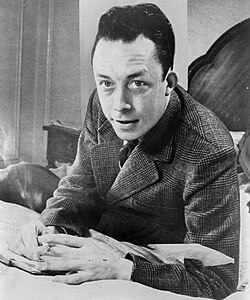
Portrait of Albert Camus
INFP · The Mediator Real person

Albert Camus

Writer and philosopher

Key patterns

  • Dignity treated as a moral concern
  • Individual responsibility amid uncertainty
  • Resistance to easy ideological answers

Personality interpretation

Camus’s concern with dignity and moral responsibility without easy certainty supports an INFP-style interpretation.

Camus explored how people might respond to suffering and absurdity without relying on reassuring ideological answers. His literary work places responsibility, compassion and the individual’s choices alongside questions that do not yield a tidy resolution.

An INFP interpretation centres on an internally held ethical concern rather than the absence of analytical thought. An INTP reading is also possible where the philosophical argument takes priority; neither label exhausts the work.

“In the depths of winter, I finally learned that within me there lay an invincible summer.”

Albert Camus · Return to Tipasa, Lyrical and Critical Essays translation; via Wikiquote

“With rebellion, awareness is born.”

Albert Camus · Quoted in A. T. Padovano’s The Estranged God (1966), via Wikiquote
Sources and image credits

Sources document the biography, work or character portrayal; the personality interpretation is TypologyOnline’s editorial reading.

Image: Photograph by United Press International, Public domain. Displayed as a cropped thumbnail.
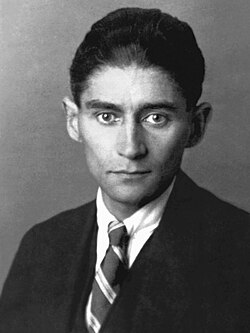

Portrait of Franz Kafka
INFP · The Mediator Real person

Franz Kafka

Writer

Key patterns

  • Private experience in conflict with expectations
  • Attention to estrangement and identity
  • Imagination used to expose human tensions

Personality interpretation

Kafka’s exploration of estrangement and the difficulty of being understood offers an INFP-like interpretation of his literary concerns.

The Metamorphosis places an extraordinary transformation inside a recognisable family and working life. Its emotional force comes partly from the gap between an individual’s experience and the roles or expectations through which other people understand him.

The INFP reading emphasises alienation, private experience and the tension between identity and obligation. These are themes in the work, not proof of Kafka’s type; an INTP reading can emphasise its unsettling conceptual construction.

“A book must be the axe for the frozen sea inside us.”

Franz Kafka · Letter to Oskar Pollak, 27 January 1904 (translation, excerpt); via Wikiquote
Sources and image credits

Sources document the biography, work or character portrayal; the personality interpretation is TypologyOnline’s editorial reading.

Image: Unknown photographer, Public domain. Displayed as a cropped thumbnail.
Frodo Baggins in Mark J. Ferrari’s book-inspired illustration
INFP · The Mediator Fictional character

Frodo Baggins

Hobbit and Ring-bearer · The Lord of the Rings

Key patterns

  • Responsibility accepted through personal conviction
  • Compassion towards a difficult companion
  • Values maintained under mounting pressure

Personality interpretation

Frodo’s compassion and willingness to bear a difficult responsibility support an INFP reading of the character.

In The Lord of the Rings, Frodo accepts the task of carrying the Ring despite having little conventional power. His treatment of Gollum makes compassion consequential to the story, even when mercy is difficult and others question it.

An INFP reading emphasises a personally felt obligation and sympathy that survives pressure. Courage and kindness belong to no single type; the interpretation concerns how his values guide choices rather than simply identifying him as a hero.

“I will take the Ring, though I do not know the way.”

Frodo Baggins — character dialogue · The Fellowship of the Ring, The Council of Elrond; via Wikiquote

“But where shall I find courage?”

Frodo Baggins — character dialogue · The Fellowship of the Ring, Three is Company; via Wikiquote
Sources and image credits

Sources document the biography, work or character portrayal; the personality interpretation is TypologyOnline’s editorial reading.

Image: Mark J. Ferrari, CC BY-SA 4.0. Displayed as a cropped thumbnail.

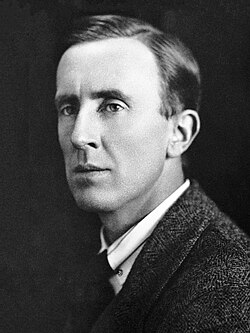
Portrait of J. R. R. Tolkien
INFP · The Mediator Real person

J. R. R. Tolkien

Author and philologist

Key patterns

  • Language linked with imagined worlds
  • Creative work shaped by personal meaning
  • A sustained vision beyond a single story

Personality interpretation

Tolkien’s connection between invented languages, imagined histories and deeply valued stories illustrates an INFP-like creative orientation.

Tolkien’s interest in languages helped generate an extensive imagined world rather than serving only as decoration for an existing plot. His letter to publisher Milton Waldman describes the relationship between language, myth and the stories that became his legendarium.

An INFP reading emphasises imaginative depth and a personally meaningful creative vision. The detailed organisation of that world also allows more structured readings; an invented mythology is not evidence of a verified psychological type.

“Usually I compose only with great difficulty and endless rewriting.”

J. R. R. Tolkien · Letter to Stanley Unwin, 18 March 1945 (excerpt); via Wikiquote

“I am in fact a Hobbit (in all but size).”

J. R. R. Tolkien · Letter to Deborah Webster, 25 October 1958 (excerpt); via Wikiquote
Sources and image credits

Sources document the biography, work or character portrayal; the personality interpretation is TypologyOnline’s editorial reading.

Image: Unknown studio photographer, 1925–1926, Public domain. Displayed as a cropped thumbnail.
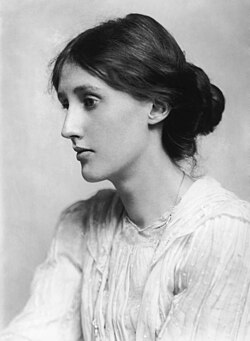
Portrait of Virginia Woolf
INFP · The Mediator Real person

Virginia Woolf

Novelist and essayist

Key patterns

  • Inner experience given narrative importance
  • Meaning found in ordinary moments
  • Sensitivity to individual perspectives

Personality interpretation

Woolf’s attention to inner experience and the private meaning of ordinary moments provides an INFP-like lens on her writing.

Mrs Dalloway moves through memory, perception and the thoughts of people whose inner lives cannot be reduced to their outward circumstances. Woolf’s narrative gives apparently small experiences significance through the associations and feelings they awaken.

An INFP interpretation foregrounds subjective meaning and the individuality of experience. This is an interpretation of literary interests, not a claim that a novelist shares every narrator’s temperament or that her private personality is established by a novel.

“I think writing, my writing, is a species of mediumship. I become the person.”

Virginia Woolf · Diary, 11 July 1937 (excerpt); via Wikiquote

“One cannot grow fine flowers in a thin soil.”

Virginia Woolf · Women and Writing (1979), p. 54; via Wikiquote
Sources and image credits

Sources document the biography, work or character portrayal; the personality interpretation is TypologyOnline’s editorial reading.

Image: George Charles Beresford / Adam Cuerden, Public domain. Displayed as a cropped thumbnail.