Skip to content
Famous & Fictional Types · ENTP

Famous & Fictional ENTPs

Explore public figures and fictional characters through ENTP-like experimentation, intellectual independence and connections between unexpected possibilities.

These are editorial interpretations. Real people did not complete a verified assessment for these pages; fictional characters may be interpreted differently across stories and adaptations. Quotations add context; they cannot establish a type.

ENTP The Debater

4 examples

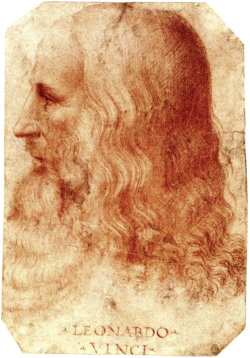
Portrait of Leonardo da Vinci
ENTP · The Debater Real person

Leonardo da Vinci

Artist, inventor and investigator

Key patterns

  • Connections between artistic and technical problems
  • Wide-ranging exploratory notebooks
  • Ideas developed beyond disciplinary boundaries

Personality interpretation

Leonardo’s notebooks connect art, engineering and natural observation in a pattern of unusually broad possibility-seeking.

Leonardo’s notebooks range across geometry, mechanisms, architecture and the observation of bodies and movement. Rather than separating artistic and technical questions, he explored how understanding one field might illuminate another.

The ENTP reading concerns cross-domain experimentation and a readiness to pursue new possibilities. The notebooks reveal interests, not a social-energy preference, so an INTP interpretation remains a reasonable alternative.

“Painting is poetry which is seen and not heard”

Leonardo da Vinci · A Treatise on Painting, translated excerpt; via Wikiquote

“A life well spent is long.”

Leonardo da Vinci · Thoughts on Art and Life (1906 translation), excerpt; via Wikiquote
Sources and image credits

Sources document the biography, work or character portrayal; the personality interpretation is TypologyOnline’s editorial reading.

Image: Attributed to Francesco Melzi, Public domain. Displayed as a cropped thumbnail.
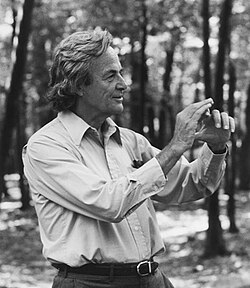
Richard Feynman, photographed by Tamiko Thiel in 1984
ENTP · The Debater Real person

Richard Feynman

Theoretical physicist

Key patterns

  • Fresh approaches to difficult ideas
  • Curiosity about how things work
  • Explanations that challenge familiar assumptions

Personality interpretation

Feynman’s curiosity and interest in understanding problems for himself illustrate an ENTP-like exploratory approach.

Feynman’s career combined theoretical physics with an unusually lively interest in how things work. His scientific contributions and teaching made difficult ideas approachable through fresh explanations rather than relying only on established ways of presenting them.

An ENTP interpretation emphasises exploratory thought and intellectual play. An INTP reading is also plausible when focusing on his theoretical work; a distinctive teaching persona does not establish a verified preference for extraversion.

“A very great deal more truth can become known than can be proven.”

Richard Feynman · Nobel lecture (1965), via Wikiquote

“Science is the belief in the ignorance of experts.”

Richard Feynman · What is Science? (1966), via Wikiquote
Sources and image credits

Sources document the biography, work or character portrayal; the personality interpretation is TypologyOnline’s editorial reading.

Image: © Tamiko Thiel, 1984, CC BY-SA 3.0. Displayed as a cropped thumbnail.

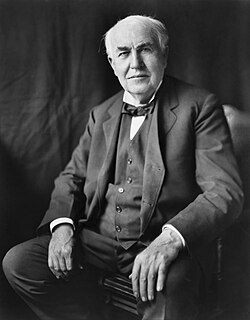
Portrait of Thomas Edison
ENTP · The Debater Real person

Thomas Edison

Inventor and entrepreneur

Key patterns

  • Repeated testing of technical alternatives
  • A laboratory built around experimentation
  • Movement from ideas to workable inventions

Personality interpretation

Edison’s repeated experimentation and development of inventions with a research team support an ENTP-style interpretation.

Edison worked on technologies including the phonograph and electric lighting, building a laboratory around practical experimentation. His work involved testing alternatives and developing inventions into usable systems rather than treating a first idea as a finished answer.

An ENTP reading highlights invention through iteration and the pursuit of multiple technical possibilities. His commercial organisation can also support an ESTJ or ENTJ reading; neither inventiveness nor business success settles a type.

“I would construct a theory and work on its lines until I found it was untenable.”

Thomas Edison, interviewed by George Parsons Lathrop · Harper’s, February 1890 (excerpt), via Wikiquote
Sources and image credits

Sources document the biography, work or character portrayal; the personality interpretation is TypologyOnline’s editorial reading.

Image: Louis Bachrach, Bachrach Studios , restored by Michel Vuijlsteke, Public domain. Displayed as a cropped thumbnail.
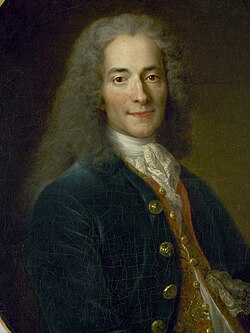
Portrait of Voltaire
ENTP · The Debater Real person

Voltaire

Writer and Enlightenment thinker

Key patterns

  • Argument across many literary forms
  • Wit used to question authority
  • Resistance to dogmatic conclusions

Personality interpretation

Voltaire’s wit, argumentative range and resistance to dogmatic thinking illustrate an ENTP-like public intellectual style.

Voltaire used plays, stories, essays and philosophical argument to engage with religious and social authority. His writing and public interventions challenged intolerance, often using irony and accessible literary forms rather than a single formal philosophical system.

The ENTP interpretation rests on argumentative agility and a willingness to unsettle received ideas. It is an editorial reading of his public work, not a retrospective test result or a claim that every critic of convention is ENTP.

“One always speaks badly when one has nothing to say.”

Voltaire · Commentaires sur Corneille, translation; via Wikiquote

“to the dead we owe only the truth.”

Voltaire · Critique de l’Œdipe, translation (excerpt); via Wikiquote
Sources and image credits

Sources document the biography, work or character portrayal; the personality interpretation is TypologyOnline’s editorial reading.

Image: Nicolas de Largillière, CC0. Displayed as a cropped thumbnail.